算法

Search documents
废掉一个人最隐蔽的方式:让他一直困在自己的算法里
洞见· 2026-03-30 12:21
Core Viewpoint - The article discusses the impact of algorithms on individual thought processes and societal perspectives, emphasizing how they create "information cocoons" and "echo chambers" that limit exposure to diverse viewpoints [4][16][32]. Group 1: Algorithmic Influence - Algorithms filter information based on user preferences, leading to a narrow understanding of the world and reinforcing existing biases [5][16]. - The "filter bubble effect" occurs when algorithms exclude opposing viewpoints, trapping users in a limited informational environment [16]. - The "echo chamber effect" results in users only hearing opinions that align with their own, causing them to believe their views are mainstream and dismiss other perspectives [18][33]. Group 2: Consequences of Information Isolation - Individuals may become increasingly closed-minded and extreme in their views due to the repetitive nature of algorithmically curated content [32][34]. - The article highlights a personal anecdote illustrating how a person became entrenched in a belief system (e.g., flat Earth theory) through algorithm-driven forums [8][12]. - The tendency to seek emotional validation over complex reasoning leads to a lack of critical thinking and susceptibility to manipulation [22][30]. Group 3: Breaking Free from Cognitive Constraints - To counteract the effects of algorithms, individuals are encouraged to read diverse materials and engage with opposing viewpoints [35]. - The article cites Ray Dalio's characteristics of "closed-minded individuals," emphasizing the importance of being open to challenges and differing opinions [36][42]. - The concept of "pet people" is introduced, referring to those who lack independent thought and are overly reliant on algorithmic affirmation [44][46].


7年挣了900多万,又一互联网大厂程序员打算回老家躺平。。
猿大侠· 2026-02-03 04:11
Salary Structure of Tencent Employees - A Tencent employee with 7 years of experience earned over 9 million yuan, with a remaining 5 million after paying off a mortgage, indicating the potential for high earnings in the company [2][3] - Salary ranges for different levels at Tencent are as follows: - Level 4-5 (Junior Engineer): Average monthly salary around 18,000 yuan [3] - Level 6 (Engineer): Total annual salary approximately 400,000 to 700,000 yuan [4] - Level 7-8 (Senior Engineer): Total annual salary around 500,000 to 1,300,000 yuan [5] - Level 9-10 (Senior Engineer/Expert): Level 9 earns about 800,000 to 1,200,000 yuan, while Level 10 earns 1,000,000 to 1,600,000 yuan, with stock options becoming a significant part of compensation [5] - Level 11-12 (Senior Expert): Level 11 earns approximately 1,200,000 to 2,000,000 yuan, and Level 12 can earn between 2,000,000 to 3,000,000 yuan [5] - Level 13-14 (Director and above): Level 13 earns around 2,000,000 to 3,000,000 yuan, while Level 14 can exceed 3,000,000 yuan [5] Employee Experience and Market Trends - The experience of the Tencent employee reflects broader trends in the tech industry, where organizational restructuring can lead to layoffs, impacting employee decisions regarding career paths [2] - The high earning potential at Tencent, especially for higher-level positions, highlights the competitive nature of the tech job market in China [3][5]


张维为《这就是中国》318期:营造风清气正的网络空间
Guan Cha Zhe Wang· 2026-02-01 00:47
Core Viewpoint - The discussion emphasizes the importance of understanding the internet ecosystem from a higher perspective, highlighting both its benefits and challenges in governance and cultural dynamics [1][3]. Group 1: Internet Ecosystem - The internet has become an integral part of daily life, influencing various aspects such as communication, entertainment, and production [3]. - The concept of "network ecology" is introduced, which refers to the dynamic balance of various entities within the internet, similar to a biological ecosystem [4][5]. - The "tropical rainforest model" is used as a metaphor for a healthy industrial ecosystem, where diverse entities coexist and innovate through competition and cooperation [5][7]. Group 2: Governance and Management - The governance of the internet is a complex task that requires a balance between different voices and the promotion of mainstream values [10][11]. - Key principles for effective internet governance include maintaining party leadership, prioritizing the people's needs, ensuring legal protection, fostering innovation, and adopting a systemic perspective [8][9]. - The importance of a comprehensive governance framework that involves multiple stakeholders and utilizes various methods such as education and law enforcement is emphasized [11]. Group 3: Cultural Dynamics - The internet serves as a platform for diverse cultural expressions, where different interest groups contribute to a rich cultural ecosystem [7][10]. - The need for a positive online environment is highlighted, where mainstream voices can thrive while allowing for diverse opinions [20][21]. - The concept of "net sense" is introduced, which refers to the ability to discern and navigate the complexities of online information [32][41]. Group 4: Challenges and Solutions - The challenges posed by algorithms and emotional content in shaping online discourse are acknowledged, with a call for more critical engagement from users [37][40]. - The necessity for individuals to develop a discerning mindset and engage with a variety of perspectives to combat information bubbles is stressed [31][41]. - The role of algorithms in influencing user experience and the importance of understanding their impact on information consumption are discussed [30][38].

互联网治理要有“生态思维”
Guan Cha Zhe Wang· 2026-02-01 00:45
Core Viewpoint - The discussion emphasizes the importance of understanding the internet ecosystem from a higher perspective, focusing on the need for effective governance and the cultivation of a positive online environment [1][3]. Group 1: Internet Ecosystem and Governance - The internet has become an integral part of daily life, providing connectivity and convenience, but it also presents challenges such as misinformation and divisive content [3][4]. - Since the 18th National Congress of the Communist Party, the overall internet ecosystem in China has improved, but governance remains a significant challenge [3][8]. - The concept of "network ecology" is introduced, highlighting the need for an ecological mindset in internet governance, which involves maintaining balance and fostering innovation [4][5][7]. Group 2: Key Principles for Governance - The speech by the General Secretary outlines five key principles for internet governance: adherence to party leadership, prioritizing the people, maintaining integrity and innovation, ensuring legal protection, and adopting a systemic perspective [7][8]. - Seven keywords are identified to aid in understanding governance methods: mainstream, innovation, pattern, people, ideological education, decisive action, and mindset [8][9]. Group 3: Mainstream and Innovation - Emphasis is placed on the need for positive mainstream voices and innovative content to shape the online space, making it a platform for moral cultivation and cultural transmission [9][10]. - The importance of adapting mainstream content to resonate with contemporary issues faced by youth is highlighted [9][10]. Group 4: Role of the People - The collective effort of internet users is crucial in creating a vibrant online culture, with netizens actively engaging in cultural creation and combating negative phenomena [10][12]. - The need for understanding generational differences in internet culture is stressed, as many older individuals may not grasp the nuances of youth culture [12][13]. Group 5: Ideological Education and Content Regulation - The necessity for targeted ideological education in online spaces is emphasized, with a call for platforms to guide content effectively [13][14]. - The concept of "decisive action" is introduced, advocating for a proactive approach to address online conflicts and misinformation [13][14]. Group 6: Dynamic Nature of Internet Ecosystem - The internet ecosystem is described as dynamic and self-regulating, requiring continuous monitoring and adjustment by governance bodies [26][27]. - The role of algorithms in shaping user experiences and the need for regulatory oversight of these algorithms are discussed [26][27]. Group 7: Balancing Freedom and Regulation - The discussion contrasts different international models of internet governance, highlighting the need for a balanced approach that allows for innovation while ensuring regulatory oversight [24][25]. - The importance of fostering a healthy online environment through a combination of market forces and regulatory frameworks is emphasized [25][26].

中小学生寒假进高校,北航开放实验室助力青少年科技素养提升
Xin Lang Cai Jing· 2026-01-31 06:05
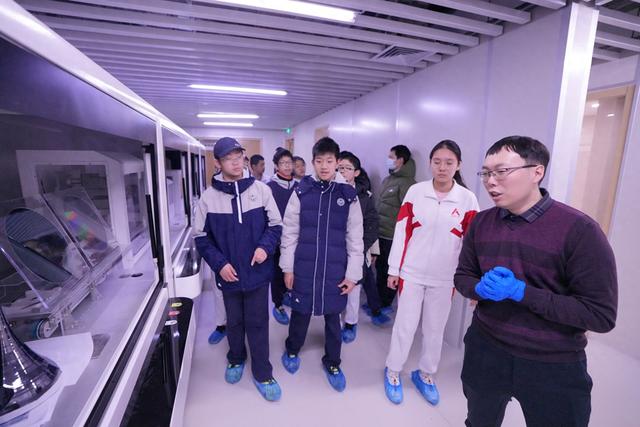
Core Insights - The event "Smart Chip Navigation, Building Dreams for the Future" is a 5-day AI-themed science popularization learning activity held at Beihang University, attracting 35 young technology enthusiasts from 10 high schools across the country [1][3]. Group 1: Event Overview - The activity is organized by the Beihang Micro-Nano Center, focusing on core technology fields such as artificial intelligence, chips, and algorithms, integrating knowledge from multiple disciplines including physics, chemistry, biology, humanities, and medicine [3]. - A three-tiered cultivation model involving professors, university students, and high school students is established, creating an integrated growth path of "cognition-practice-innovation" [3]. Group 2: Learning Activities - Participants will explore the mysteries of AI through thematic lectures, technical practices, research visits, and creative competitions, with expert and engineer sharing sessions covering diverse fields [5]. - The event includes hands-on chip-making practices, discussions on AI technology's application in geology and resource development, and practical tasks related to significant national projects [8][10]. Group 3: Engagement and Outcomes - The final day will feature an exhibition and evaluation session where technology teachers from universities and high schools will assess the students' science popularization learning outcomes [10][12]. - The event concludes with an award and closing ceremony, providing certificates to participants and fostering enthusiasm for exploration in the field of artificial intelligence [12].
校招因为延毕被华为hr卡了。。。
猿大侠· 2026-01-30 04:43
Group 1 - The article discusses the challenges faced by a student who delayed graduation and subsequently faced difficulties in job applications, particularly with Huawei's HR [2] - It highlights that delaying graduation is often viewed negatively in the job market, as it can be seen as a red flag for potential employers [2] - The author reflects on their own experience, noting that only students with academic issues typically delay graduation, which reinforces the stigma associated with it [2] Group 2 - The article includes an algorithm problem from LeetCode, specifically problem 2685, which involves counting the number of complete connected components in an undirected graph [4] - It defines a complete connected component as a subgraph where every pair of nodes is connected by an edge, and no node in the subgraph shares an edge with nodes outside of it [4][13] - The solution approach involves checking the relationship between the number of vertices and edges in each connected component to determine if it is a complete connected component [13]

协同共生,智能跃迁的算力“密码”
Xin Lang Cai Jing· 2026-01-27 12:25
Core Insights - The evolution of artificial intelligence (AI) is increasingly reliant on computational power, which transcends its traditional role as a mere tool, becoming essential for the realization and development of intelligent forms [1][9] - The emergence of intelligent paradigms is fundamentally rooted in the specific "computational space-time" provided by computational power, which shapes the boundaries of intelligent possibilities [1][9] Group 1: Computational Power as the "Possibility Space" for Intelligence - The emergence of intelligence can be viewed as a complex optimization activity within a high-dimensional parameter space, where computational power defines the radius of AI's cognitive capabilities [2][10] - As parameter scales increase from millions to billions, there is not only a quantitative accumulation but also a qualitative leap in the complexity of intelligence [2][10] - Models with trillions of parameters can accommodate richer knowledge graphs and establish more complex connections between knowledge, enabling AI to exhibit remarkable creativity in reasoning processes [2][11] Group 2: The Transition of AI Learning Paradigms Driven by Computational Power - AI learning has evolved from supervised learning to self-supervised learning and then to generative learning, revealing that qualitative changes in computational supply drive transformations in learning paradigms [4][13] - The limitations of supervised learning, which requires extensive manual labeling, can hinder the speed and breadth of intelligent development, while self-supervised learning allows systems to autonomously discover patterns in vast amounts of unlabeled data [4][13] - Breakthroughs in generative AI, such as diffusion models and generative adversarial networks, rely on modeling high-dimensional data distributions, necessitating substantial computational resources for iterative generation and discrimination [4][13] Group 3: The "Co-evolution" of Computational Power and Algorithms - The history of intelligent development is characterized by the mutual adaptation and co-evolution of algorithms and computational power, continuously driving technological advancement [7][16] - Innovations in computational architecture influence algorithm design, as seen with the rise of the Transformer architecture due to the effective utilization of GPU parallel computing [7][16] - The demand for algorithms also propels innovations in computational architecture, leading to the development of AI acceleration chips and high-bandwidth memory technologies [7][16] Group 4: Future "Ecological Evolution" - The deep coupling of intelligent technologies and computational resources is leading to an exponential increase in computational demand and the formation of an intelligent ecosystem [8][17] - This ecosystem exhibits multi-layered characteristics, with new computing architectures like quantum and optical computing exploring breakthroughs beyond traditional limits [8][17] - Future competition will not be about individual technologies but rather about entire ecosystems, where entities with complete technology stacks capable of end-to-end optimization will hold advantageous positions in the intelligent era [8][17]
刚刚!TikTok美国方案尘埃落定,张一鸣又赢了
Sou Hu Cai Jing· 2026-01-23 04:21
Core Viewpoint - TikTok has announced a new operational structure in the U.S., involving a joint venture with three investment firms while retaining control over its core algorithm and intellectual property [1][3][9]. Group 1: Company Structure - TikTok U.S. will be operated by two entities: TikTok U.S. LLC, fully owned by ByteDance, and a newly formed joint venture with Silver Lake, Oracle, and the UAE's MGX, each holding 15% [3]. - ByteDance retains a 19.9% stake in the joint venture, making it the largest single shareholder [3]. Group 2: Data Security and Operations - The joint venture will oversee data security, including user data protection, algorithm security, and content moderation, while TikTok U.S. will manage the more profitable sectors like e-commerce and advertising [3][9]. - ByteDance maintains ownership of the algorithm's intellectual property, allowing it to charge licensing fees to the joint venture [3][9]. Group 3: Regulatory Background - The U.S. government has been scrutinizing TikTok since 2019, citing concerns over the illegal collection of minors' data, leading to a fine of $5.7 million [4]. - In 2020, the Trump administration issued executive orders requiring either the sale of TikTok's U.S. operations or a complete ban [4]. Group 4: Market Impact - The regulatory pressure led to a significant user migration to other platforms like Xiaohongshu, which saw a surge in downloads during TikTok's uncertain period [4][7]. - The new operational model is compared to Apple's data localization strategy in China, where local entities manage data while the parent company retains technology control [7][9]. Group 5: Conclusion - The new arrangement is seen as a favorable solution for all parties involved: ByteDance secures its market presence and core technology, the U.S. addresses security concerns, and users continue to access the platform [9].

电力基建,为AI算力“充电”!
Xin Lang Cai Jing· 2026-01-16 11:59
Core Insights - China is projected to have more electricity than any other country and potentially more chips, leading to a significant advantage in AI computing power by 2026, with an estimated electricity generation three times that of the US [1][6][9] Group 1: Importance of Energy in AI Development - The rapid growth of AI is shifting energy supply from a traditional support role to a critical factor influencing industry competitiveness, with data centers' electricity demand increasing significantly [3][9] - A robust and continuously upgraded power system is essential for leading AI computing capabilities, as AI activities are highly energy-intensive [3][9] - The relationship between energy, chips, and algorithms forms a "computing power triangle," where energy supports scaling, chips are the output carriers, and algorithms enhance efficiency [4][9] Group 2: Collaborative Optimization Pathways - The industry is developing a collaborative optimization path among energy, chips, and algorithms, utilizing strategies like "cluster breakthroughs" to enhance performance in specific scenarios [4][10] - Distributed training of large models requires substantial chip clusters, which depend on stable energy supply for optimal performance [10][12] Group 3: Advantages from Energy Supply and Policy - The large-scale development of renewable energy sources like wind and solar enhances electricity supply stability and reduces costs, creating favorable conditions for AI computing expansion [6][12] - Forward-looking policies are guiding the construction of computing hubs and data center clusters, aligning energy supply with computing demand and improving energy efficiency [6][12] Group 4: Innovation and Ecosystem Collaboration - Companies are leveraging technological innovations to enhance computing efficiency and create a comprehensive AI industry ecosystem, driving rapid growth in the digital economy [7][13] - The modernization of the energy system is seen as a key competitive factor in the AI era, with China's focus on energy transformation supporting its economic and carbon neutrality goals [7][13]

百度10年最终还是被裁。。
猿大侠· 2026-01-11 04:11
Group 1 - The article discusses the misconception that long tenure at a company guarantees job security, highlighting that layoffs can affect entire project teams regardless of individual performance or contributions [2] - It shares personal experiences of layoffs during the pandemic, emphasizing that being indispensable does not protect one from being laid off if the entire team is cut [2] - The narrative includes anecdotes from individuals who faced unexpected layoffs after many years of service, illustrating the unpredictable nature of job security in the corporate environment [2]