
算电协同

Search documents
电算一体化的“山高模式”:山高控股(00412.HK)从投资平台到产业建筑师
Xin Lang Cai Jing· 2025-08-05 03:07
Core Insights - The 2025 World Artificial Intelligence Conference (WAIC) highlighted the dual challenges of extreme demand for computing power and high energy consumption in AI development, emphasizing the need for efficient collaboration between energy and computing power [1][2] - Shanhigh Holdings (山高控股) is positioned as a "industry architect" with its forward-looking "integrated energy and computing" strategy, addressing the energy challenges of AI development [1][2] Industry Trends - The WAIC showcased various AI computing solutions, indicating a trend towards maximizing computing power through cluster and system engineering [2] - The "AI energy paradox" was noted, with predictions that by 2030, China's computing centers could consume over 700 billion kilowatt-hours, accounting for 5.3% of total electricity consumption [2] - Global leaders like Equinix and Blackstone are actively pursuing strategies to reduce operational costs through renewable energy agreements and acquisitions [2] Company Strategy - Shanhigh Holdings has established a systematic top-level design for "integrated energy and computing," securing clean energy resources through its subsidiary Shanhigh New Energy and investing in established IDC player Century Internet [3][6] - The collaboration with the Ulanqab government aims to create a closed-loop ecosystem for energy and computing, with projected annual electricity generation of approximately 860 million kWh from the Ulanqab project [3][4] Competitive Advantages - Shanhigh Holdings has built three core barriers: 1. Green energy resource barrier through extensive investments in wind and solar projects, making it a leading renewable energy provider in Shandong Province [6] 2. Synergistic effects of energy and computing integration, optimizing resource allocation and reducing carbon emissions [7] 3. Proven operational capabilities from the Ulanqab project, enhancing efficiency and customer loyalty [7] Market Recognition - The market has responded positively to Shanhigh Holdings, with stock prices increasing over 200% since April, and the company’s market capitalization surpassing HKD 100 billion [8] - Strategic partnerships, such as the one with Huawei, further enhance Shanhigh's technological breadth and solidify its leadership in the integrated energy and computing sector [8]
2025 WAIC丨加速规模化应用,与施耐德电气共赢“AI+产业”时代机遇
Guan Cha Zhe Wang· 2025-08-01 11:56
Core Insights - Schneider Electric showcased its leadership in AI technology at the WAIC 2025, emphasizing the theme "Intelligent Connection and Collaborative Impact" [1][2] - The company aims to drive digital and green transformation across various industries in China through technological and ecological innovation [2][4] Group 1: AI Technology and Industrial Transformation - AI technology is rapidly evolving, with its large-scale application expected to drive structural changes in key sectors such as energy and industry, unleashing significant technological innovation [4] - Schneider Electric has been deeply engaged in machine learning and AI algorithms for over 20 years, launching AI applications tailored to energy management and industrial automation [4][7] Group 2: Lighthouse Factories and AI Applications - Schneider Electric's "Lighthouse Factories" demonstrate successful AI applications: the Shanghai Putuo factory achieved an 82% increase in per capita production efficiency, while the Wuxi factory reduced carbon emissions by 90% through AI-driven solutions [7] - The company is integrating AI technology into digital and green solutions across critical industries, including packaging, oil and gas, data centers, smart buildings, and future power grids [7] Group 3: Product Innovations - The EcoStruxure™ Edge Intelligence Box was launched to enhance data collection, management, real-time computation, and intelligent decision-making in industrial settings [8] - The EcoStruxure™ Building GPT, an AI agent, was introduced to improve HVAC operations and energy efficiency in smart buildings [13] - Schneider Electric unveiled the EcoStruxure™ Energy Operation system, designed for comprehensive power management in China, covering low and medium voltage distribution and microgrid monitoring [16] Group 4: Reports and Research - The company released a report titled "Computing Power and Electricity Collaboration: Challenges and Solutions for Data Centers," addressing the pressures of power stability, cost control, and carbon emissions management in the face of rising computing demands [22] - Another report, "AI: The Core Force Driving a Sustainable Future," highlights AI's transformative potential in key sectors [25] Group 5: Ecosystem and Partnerships - Schneider Electric is expanding its "AI + Industry" ecosystem in China, collaborating with developers, system integrators, and research institutions to foster innovation [28] - The company has initiated the "Winning Plan" to accelerate the application of cutting-edge digital technologies, focusing on the "AI + Industry" track for sustainable development [37] Group 6: Industry Insights and Future Directions - The company emphasizes that AI technology is a core engine driving new quality transformation in industries, aiming to share successful experiences and insights to build a robust AI ecosystem in China [47][48]


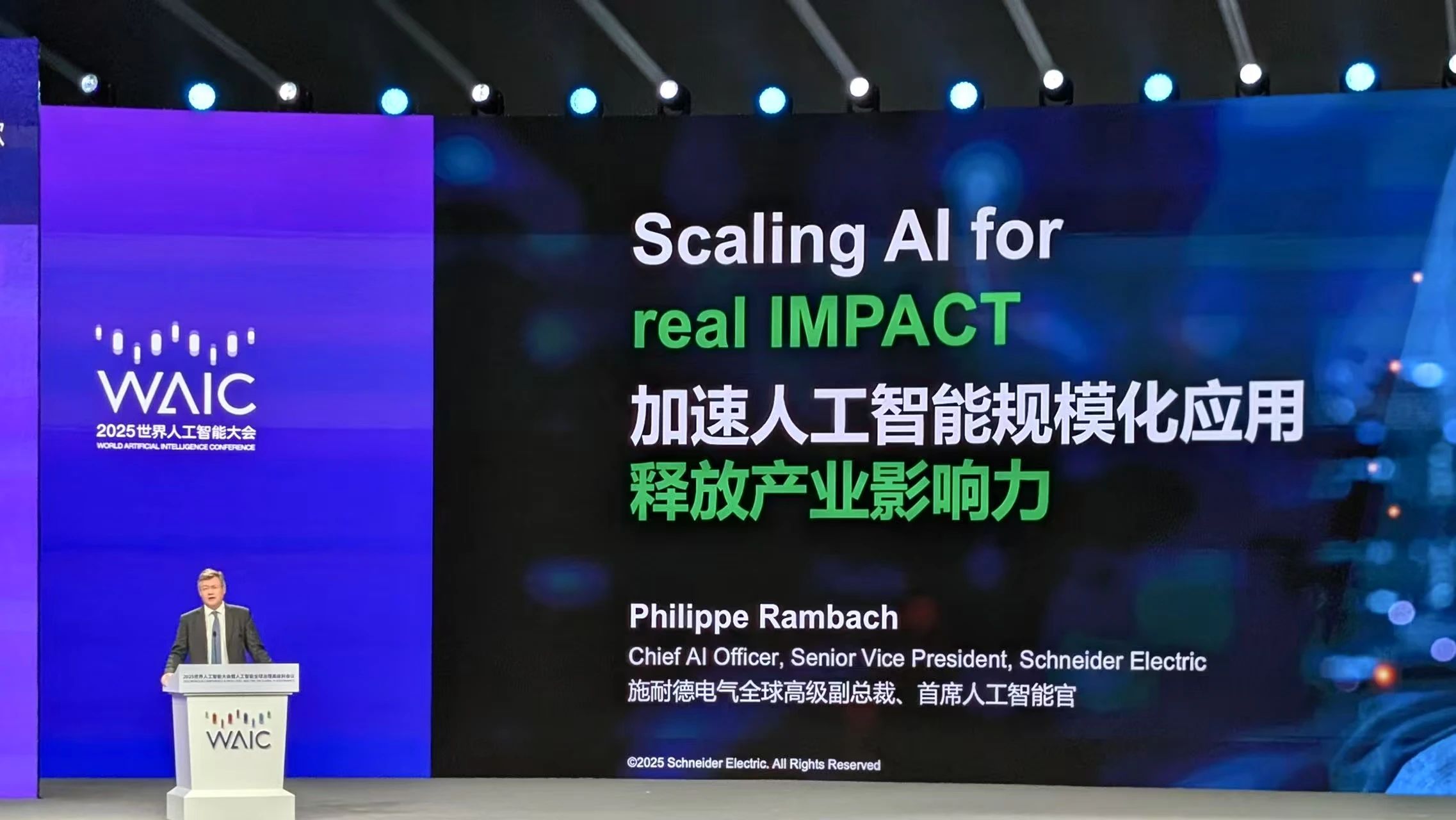
加速规模化应用,与施耐德电气共赢“AI+产业”时代机遇
Guan Cha Zhe Wang· 2025-08-01 11:52
Core Insights - The 8th World Artificial Intelligence Conference (WAIC 2025) commenced in Shanghai, with Schneider Electric showcasing its leadership in industrial technology under the theme "Intelligent Connection and Collaborative Influence" [1][2] - Schneider Electric emphasizes the deep integration of AI technology into industrial scenarios, driving digital and green transformation across various sectors in China [2][12] Group 1: AI Applications and Innovations - Schneider Electric has been a pioneer in AI applications for over 20 years, focusing on machine learning and AI algorithms tailored for energy management and industrial automation [3] - The company presented two "Lighthouse Factories" at WAIC, demonstrating significant AI application results: the Shanghai Putuo factory achieved an 82% increase in per capita production efficiency, while the Wuxi factory reduced carbon emissions by 90% through AI-driven ecological design [4][12] - The integration of edge intelligence, large models, and Agentic AI is accelerating penetration into specific industries, creating greater value through the deep fusion of industry-specific knowledge and AI technology [5] Group 2: Product Launches and Solutions - Schneider Electric launched the EcoStruxure Edge Intelligence Box, enhancing data collection, management, real-time computation, and intelligent decision-making capabilities in industrial automation and energy management [7] - The EcoStruxure Open Automation Platform (EAE) was showcased, featuring advanced AI algorithms that optimize the control of multiple motors, highlighting the potential for efficiency and quality improvements in complex industrial production lines [8] - The EcoStruxure Building GPT was introduced as an AI agent for smart building operations, integrating knowledge graphs with large language models to enhance HVAC operations and energy efficiency [9] - A new generation of the EcoStruxure Energy Operation system was tailored for the Chinese market, covering low and medium voltage distribution, microgrid monitoring, and comprehensive energy management [10] - The SmartCool 2.0 solution for data centers utilizes advanced machine learning to optimize cooling output based on IT load demands, significantly reducing energy consumption [11] Group 3: Strategic Collaborations and Research - Schneider Electric's collaboration with various partners aims to enhance AI applications in key industries, focusing on packaging, oil and gas, data centers, smart buildings, and future power grids [6][19] - The company released a report on the energy challenges faced by data centers, proposing a "computing and electricity collaboration" framework to optimize power supply and management [14] - Schneider Electric continues to explore AI's role in driving efficiency and sustainability across critical sectors, reinforcing its commitment to innovation and collaboration in the AI landscape [17][19]
施耐德电气首席人工智能官:AI技术规模化应用推动产业变革
2 1 Shi Ji Jing Ji Bao Dao· 2025-07-30 11:14
AI技术的规模化应用,将全面推进全球能源、工业等关键领域的结构性变革,从而重塑全球产业格 局。 2025年,在大模型争相迭代、算力竞争加剧的喧嚣背后,如何切实推动AI技术与实体产业的融合,成 为全球各界关注的焦点。 相关调研表明,2024年78%的全球企业已开始使用AI技术驱动运营升级与商业创新。随着技术的快速迭 代、场景的深度适配和产业生态的繁荣,AI向着千行百业的细分场景加速落地的条件已越来越成熟。 第八届世界人工智能大会(WAIC 2025)上,行业模型、智能体、具身智能层出不穷,充分体现出AI正 从前沿技术突破,逐步进入"大规模应用部署"的实用阶段。 作为全球产业技术领先者,施耐德电气在今年WAIC上聚焦AI技术在包装消费品、油气化工、数据中 心、智慧楼宇、未来电网等关键行业的落地应用与生产力转化。 "AI并不只是一项前沿技术。它的核心价值在于落地千行百业的真实应用场景,激发效率潜能和绿色发 展动能,推动各界共同创造一个更绿色、更高效、更富有能源韧性的未来。"近日,施耐德电气全球高 级副总裁、首席人工智能官菲利普 兰巴赫(Philippe Rambach)在接受21世纪经济报道记者采访时表 示。 从工 ...
数据中心加速绿色低碳建设,助力中国产业新质转型 | WAIC 2025
Hua Xia Shi Bao· 2025-07-29 16:01
Core Insights - The WAIC 2025, held in Shanghai, showcased over 3,000 cutting-edge exhibits and more than 100 global and Chinese product launches, marking the largest scale in its history [1][2] - Schneider Electric emphasized the importance of "computing and electricity synergy" in addressing the energy challenges faced by data centers amid the rapid growth of AI technology [1][5] Group 1: AI Technology Applications - Numerous exhibitors focused on the practical applications of AI technology across various industries, with Schneider Electric introducing several AI-driven solutions for sectors like consumer goods, oil and gas, data centers, and smart buildings [2] - The EcoStruxure Building GPT, an AI agent, enhances HVAC operations and building energy efficiency, supporting green development [2][3] Group 2: Energy Challenges in Data Centers - Data centers are facing unprecedented energy challenges due to the rapid expansion of intelligent computing centers, with electricity demand increasing exponentially and carbon emissions pressures rising [5][6] - A report from Schneider Electric predicts that by 2030, the electricity consumption of data centers in China could exceed 700 billion kilowatt-hours, accounting for 5.3% of the national total [6] Group 3: Schneider Electric's Initiatives - Schneider Electric has established AI innovation labs in China and has built 20 "zero-carbon factories" and 15 national-level "green factories," showcasing its commitment to sustainability [4] - The company is promoting a three-layer architecture for "computing and electricity synergy" to optimize energy management in data centers, addressing challenges such as supply stability, cost control, and carbon emissions [6][7]
东兴证券晨报-20250728
Dongxing Securities· 2025-07-28 09:27
Economic Overview - In June, the profit of large-scale industrial enterprises in China decreased by 4.3% year-on-year, with a total profit of 715.58 billion yuan, showing a narrowing decline compared to May's 5.1% drop [1] - The Ministry of Agriculture and Rural Affairs released a plan to promote agricultural product consumption, focusing on optimizing supply, innovating circulation, and activating market demand [1] - The U.S. and EU reached a new trade agreement, with the U.S. imposing a 15% tariff on EU products and the EU committing to invest an additional $600 billion in the U.S. [1] - The National Development and Reform Commission announced the issuance of 69 billion yuan in special bonds to support the consumption of old goods [1] - The Ministry of Finance reported a slight decline in public budget revenue by 0.3% year-on-year, while expenditures increased by 3.4% [1] Agricultural Sector - The Ministry of Agriculture's plan aims to enhance the supply of high-quality agricultural products and improve market satisfaction through better quality and branding [1] - The agricultural sector is expected to benefit from increased consumer demand for diverse and high-quality products [1] Robotics Industry - Wuhan Investment Holding Group and partners are establishing a 10 billion yuan fund to invest in humanoid robotics, focusing on core technologies and applications in various sectors [1][6] Pharmaceutical Industry - The National Medical Products Administration reported a significant increase in the approval of innovative drugs and medical devices, with approvals for 43 innovative drugs and 45 medical devices in the first half of the year, marking increases of 59% and 87% respectively [1][9] Silver Market - The global silver market is entering a new phase of structural supply-demand gap expansion, with industrial demand being the primary driver [7] - Silver demand is projected to grow from 31,241 tons in 2019 to 36,207 tons by 2024, with industrial silver demand increasing significantly [8][10] - The electronic and electrical sectors are the largest consumers of silver, with demand expected to rise due to growth in the photovoltaic and automotive industries [9][13] Construction and Infrastructure - The commencement of the Yarlung Tsangpo River hydropower station project signals increased government investment in infrastructure, with an estimated total investment of 1.2 trillion yuan [19][20] - The project is expected to significantly boost demand for construction materials, particularly cement and steel, benefiting local companies [20] E-commerce and Food Industry - Lotus Holdings is expanding into the smart computing sector while maintaining its core business in seasoning products, capitalizing on the growing demand for convenience foods [24][25] - The company is leveraging digital marketing and e-commerce platforms to enhance brand visibility and sales [25][26] Logistics and Delivery Sector - The express delivery industry in China saw a 15.8% year-on-year increase in business volume in June, with significant differentiation in growth rates among major companies [30][31] - The ongoing focus on reducing internal competition may lead to a stabilization of pricing strategies in the logistics sector [31]


WAIC观察|施耐德电气:以AI赋能产业转型,以算电协同破解能源挑战
Huan Qiu Wang Zi Xun· 2025-07-28 01:47
Core Insights - AI technology is rapidly evolving and its large-scale application is expected to drive structural changes in key sectors such as energy and industry, unleashing significant technological innovation [1] - Schneider Electric emphasizes its commitment to AI innovation in China, aiming to collaborate with local partners to embrace the AI wave and contribute to the transformation of Chinese industries [1][8] Group 1: AI Application and Impact - Schneider Electric showcased its AI application results at the World Artificial Intelligence Conference, highlighting an 82% increase in per capita production efficiency at its Shanghai factory, which was recognized as an "end-to-end lighthouse factory" [2] - The company’s Wuxi factory achieved a 90% reduction in carbon emissions through AI-driven ecological design and machine learning models, earning the title of "sustainable lighthouse factory" [2] - Schneider Electric integrates AI technology into diverse digital and green solutions to meet the transformation needs of various industries, focusing on sectors like packaging, oil and gas, data centers, smart buildings, and future power grids [2] Group 2: Energy Management Challenges - The rapid expansion of data centers poses significant energy management challenges, with projections indicating that by 2030, data centers in China could consume over 700 billion kilowatt-hours, accounting for 5.3% of the national electricity consumption [4] - A survey revealed that 93% of data center managers identified power supply stability as a primary concern, while 85% faced cost pressures, with electricity costs comprising nearly 60% of operational expenses [4] Group 3: Collaborative Ecosystem Development - Schneider Electric proposes a "collaborative energy computing" framework to address energy management challenges, focusing on power supply infrastructure, IT load flexibility, and a dual-regulation decision-making framework [6] - The company aims to support this framework through hardware, software, and customized services, including energy-saving solutions like the SmartCool data center air conditioning system [6] - Schneider Electric is actively building an AI ecosystem in China by collaborating with developers, system integrators, industry partners, and research institutions to enhance the "AI + industry" ecosystem [7][8]
【2025WAIC】施耐德电气首发“算电协同”三层架构,破解AI数据中心能源困局
Huan Qiu Wang Zi Xun· 2025-07-27 06:15
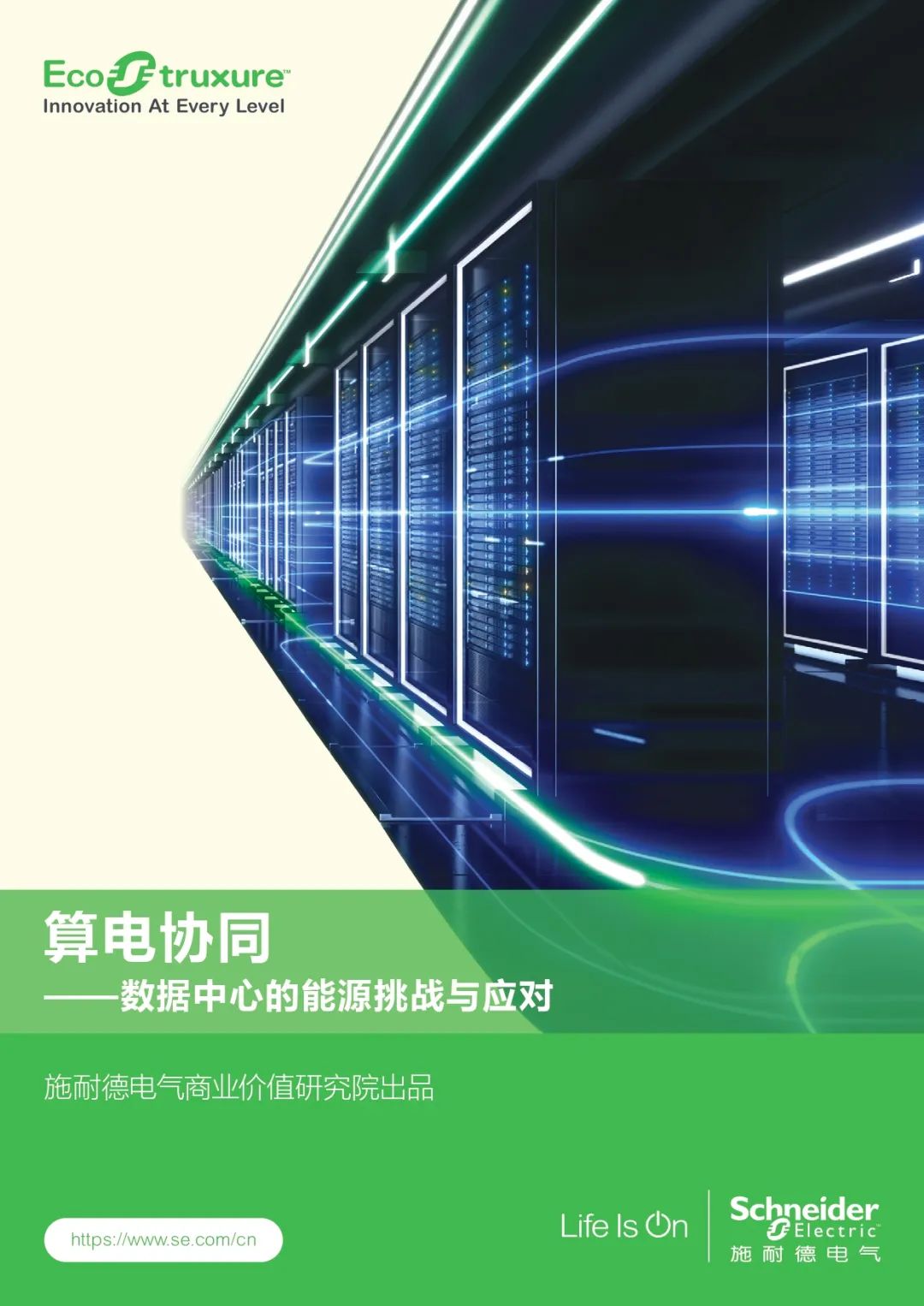
Core Insights - Schneider Electric released a report titled "Coordinated Computing and Power - Energy Challenges and Responses in Data Centers" during the WAIC 2025, based on in-depth research involving 117 data center managers and experts [1] - The report highlights three major energy challenges faced by the industry: stability, cost, and sustainability, proposing an innovative "Coordinated Computing and Power" three-layer architecture and systematic solutions [1][3] Group 1: Energy Challenges - The rapid expansion of AI has led to an explosive growth in global computing power demand, resulting in increased energy consumption in data centers and highlighting the urgency for coordinated optimization of computing and power systems [3] - According to the report, 93% of surveyed companies identified power supply stability as their primary concern, influenced by load fluctuations, unstable renewable energy integration, and backup power limitations [4] - 85% of respondents reported cost pressures, with electricity costs accounting for nearly 60% of operational expenses, making cost reduction a critical issue [4] - 77% of companies face challenges in carbon emission management, creating a progressive pressure system from "survival" to "operation" and then to "development" [4] Group 2: Solutions and Innovations - Traditional energy usage models, which rely heavily on rigid power supply and lack dynamic coordination between computing and power, are inadequate for modern data center needs [5] - The report proposes a "Coordinated Computing and Power" framework that integrates power supply, computing loads, and coordination mechanisms to achieve deep integration of computing and power resources [7] - 56% of surveyed data centers are already utilizing renewable energy sources, such as solar, wind, and nuclear, to enhance power supply stability while reducing costs and carbon emissions [7] - The report emphasizes the need for flexibility in computing demand management, including predicting power consumption and optimizing non-IT loads to ensure efficient use of computing resources [7] - Schneider Electric aims to leverage its expertise in energy management and data centers to help companies build efficient and sustainable next-generation data center infrastructure, promoting the large-scale implementation of coordinated computing and power practices [7]
直击WAIC | 施耐德电气发布“算电协同”三层架构及系统化解决方案
Xin Lang Ke Ji· 2025-07-27 02:25
Core Insights - Schneider Electric released a report titled "Collaborative Computing and Power: Energy Challenges and Solutions for Data Centers" during the WAIC 2025, emphasizing the need for a new energy paradigm to support the rapid growth of the AI industry [1][2] - The report outlines a systematic framework for "Collaborative Computing and Power," aiming to provide actionable insights for enterprises and stimulate industry innovation [1] Group 1: Energy Management Challenges - 93% of surveyed companies identified power supply stability as their primary concern, influenced by fluctuating loads in intelligent computing centers and unstable renewable energy integration [1] - 85% of respondents reported cost pressures, with electricity costs accounting for nearly 60% of operational expenses, highlighting the importance of cost reduction and efficiency [1] - 77% of companies face challenges in carbon emission management, creating a progressive pressure system from "survival" to "operation" and then to "development" [1] Group 2: Collaborative Computing and Power Framework - The report introduces a three-tier architecture for "Collaborative Computing and Power," integrating power supply, computing load, and collaborative mechanisms to enhance the synergy between computing and power resources [2] - The foundational layer focuses on power supply infrastructure to manage energy quality and integrate various energy sources, ensuring stable power for data centers [2] - The middle layer explores the flexibility of IT loads to adjust non-IT loads based on power signals, while the top layer establishes a decision-making framework for bidirectional regulation of computing and power [2] - Schneider Electric aims to leverage its expertise in energy management and data centers to help enterprises build efficient and sustainable next-generation data center infrastructures, promoting the large-scale implementation of collaborative computing and power practices [2]
施耐德电气发布“算电协同”洞察报告:以三层架构破局数据中心能源挑战
news flash· 2025-07-26 11:07
Core Insights - Schneider Electric released a report titled "Coordinated Power and Computing: Energy Challenges and Responses for Data Centers" during the WAIC 2025, highlighting the energy challenges faced by data centers in China [1] Group 1: Energy Consumption Projections - By 2030, China's data centers may exceed 700 billion kilowatt-hours in electricity consumption under high usage scenarios, accounting for 5.3% of the country's total electricity consumption [1] - Nearly 70% of surveyed companies expect their electricity consumption to grow at an annual rate exceeding 15% over the next three years [1] - 61% of surveyed companies plan to build or expand intelligent computing centers in the next three years [1] Group 2: Energy Management Challenges - The report identifies three main challenges in energy management for data centers: power supply stability, cost control, and carbon emission management [1] - To address these challenges, Schneider Electric proposes a "Coordinated Power and Computing" three-layer framework that integrates power supply, computing load, and collaborative mechanisms [1]