
长期护理保险制度

Search documents
经观头条|长护险来了!
Jing Ji Guan Cha Bao· 2025-09-27 02:49
Core Insights - The long-term care insurance (LTCI) system in China is transitioning from local trials to a nationwide implementation, aiming to provide essential support for families dealing with long-term disabilities [3][4][10] - The LTCI is designed to alleviate the financial and emotional burdens on families caring for disabled individuals, with a focus on home care services [2][8][20] Policy Development - The LTCI system has been piloted for nine years and is now set for national rollout, with various regions like Guizhou and Tianjin actively developing implementation plans [4][5][7] - The National Medical Insurance Administration has issued a service project directory, clarifying the payment scope and enhancing the system's design [4][10] Financial Structure - The LTCI funding mechanism involves contributions from individuals, employers, and government subsidies, with a proposed low contribution rate of around 0.3% [13][15][18] - Current pilot cities have varying funding standards, with personal contributions typically between 100 to 200 yuan annually, and the government providing significant subsidies [16][19] Coverage and Benefits - The LTCI aims to cover a broad demographic, starting with urban employees and gradually including rural residents and retirees [17][18] - Benefits for eligible individuals include monthly subsidies ranging from 800 to 1700 yuan, depending on the level of care required [20][21] Service Expansion - The LTCI will expand to include home care services, allowing families to choose from a range of professional care options [20][21] - The system is expected to evolve to include smart care services and assistive devices in the future [21]
长护险来了!
Jing Ji Guan Cha Wang· 2025-09-26 15:42
Core Insights - The long-term care insurance (LTCI) system in China is transitioning from local trials to a nationwide implementation, aiming to provide essential support for families dealing with long-term disabilities [3][9][10] - The LTCI is designed to alleviate the financial and emotional burden on families caring for disabled individuals, with a focus on home care services [2][7][19] Group 1: Implementation and Coverage - As of April 1, 2025, Karamay City will introduce home care services under the LTCI, expanding the existing care subsidy [2][7] - The LTCI system is expected to cover more individuals, with a clear timeline for nationwide rollout, including specific plans from regions like Guizhou and Ningxia [3][6][12] - The National Medical Insurance Administration has issued a service project directory for LTCI, refining the payment scope and service details [3][20] Group 2: Financial Structure and Contributions - The LTCI funding mechanism involves contributions from individuals, employers, and government subsidies, with a proposed rate of around 0.3% for contributions [12][14][15] - In Karamay, the LTCI premium for urban residents has significantly decreased from 342 yuan to 53 yuan, a reduction of 84.5% [15] - The funding structure aims to balance contributions among various stakeholders, including retired individuals who will also be required to contribute [17][18] Group 3: Service Scope and Benefits - The LTCI provides a range of services, including basic life care and medical support, with monthly subsidies varying based on the level of disability [19][20] - The introduction of home care services is expected to improve the quality of care for disabled individuals, reducing the burden on family caregivers [8][19] - The system is designed to adapt to the growing elderly population, with projections indicating that by 2024, 15.6% of the population will be aged 65 and above [8]
首个国家长护服务项目目录发布(附文件及解读)
蓝色柳林财税室· 2025-09-26 12:45
Core Viewpoint - The National Healthcare Security Administration has released the "National Long-term Care Insurance Service Project Directory (Trial)" to standardize long-term care services and improve service quality, covering 36 service items categorized into daily living care and medical care [1][2]. Summary by Sections Service Project Content - The directory includes 36 service items, divided into 20 daily living care projects (e.g., dietary care, hygiene care) and 16 medical care projects (e.g., basic nursing, rehabilitation) [2][5]. - Service costs included in the directory will be covered by the long-term care insurance fund, while basic medical insurance will not cover costs related to medical care projects listed in the directory [2][5]. Management of Service Directory - The National Healthcare Security Administration is responsible for the creation, adjustment, and publication of the service directory, establishing a dynamic adjustment mechanism for regular updates [4][5]. - Local regions must align their existing directories with the national one within approximately three years, ensuring consistency in project codes and names [6][7]. Implementation of the Service Directory - Local healthcare departments are required to lead the implementation of the directory by the end of December 2025, ensuring proper payment management and service quality supervision [7][8]. - The directory aims to enhance the efficiency of fund usage and ensure that the benefits for insured individuals meet basic care needs [7][8]. Coverage and Financial Aspects - The long-term care insurance system currently covers 190 million people, with expenditures exceeding 85 billion yuan [2][4]. - The directory is part of a broader strategy by the central government to address population aging and improve the social security system [2][4].


护险国家版服务目录发布 36个服务项目由基金支付
Zhong Guo Jing Ying Bao· 2025-09-25 11:23
Core Viewpoint - The National Healthcare Security Administration (NHSA) has issued the first national directory for long-term care insurance services, which includes 36 service items aimed at standardizing the long-term care insurance system in China [2][4]. Summary by Categories Long-term Care Insurance Service Directory - The directory is divided into two main categories: daily living care and medical care, encompassing a total of 36 service items [2]. - Daily living care includes 8 categories such as dietary care, excretion care, and safety care, covering 20 specific tasks like assistance with eating, bathing, and functional training [2]. - Medical care includes 4 categories such as general examination care and rehabilitation, covering 16 specific tasks like suctioning and cognitive function training [2]. Implementation and Transition - A transition period of approximately 3 years has been set for regions that have already piloted long-term care insurance to align with the national directory [3]. - New regions implementing long-term care insurance must strictly adhere to the national directory without arbitrary adjustments [3]. Future Developments - The NHSA plans to explore the inclusion of smart services and supportive assistive devices into the payment scope based on demographic changes and system development [4]. - Since the pilot program began in 2016, nearly 1.9 billion people are enrolled in long-term care insurance, with over 100 billion yuan raised and more than 85 billion yuan spent [4]. Principles of Directory Development - The directory development is based on three principles: ensuring basic coverage, demand-oriented service, and coordinated transition with existing pilot projects [4]. Financial Responsibility - The NHSA has clarified the financial responsibilities between long-term care insurance and basic medical insurance, stating that costs related to medical care in the directory will be covered by the long-term care insurance fund [5].
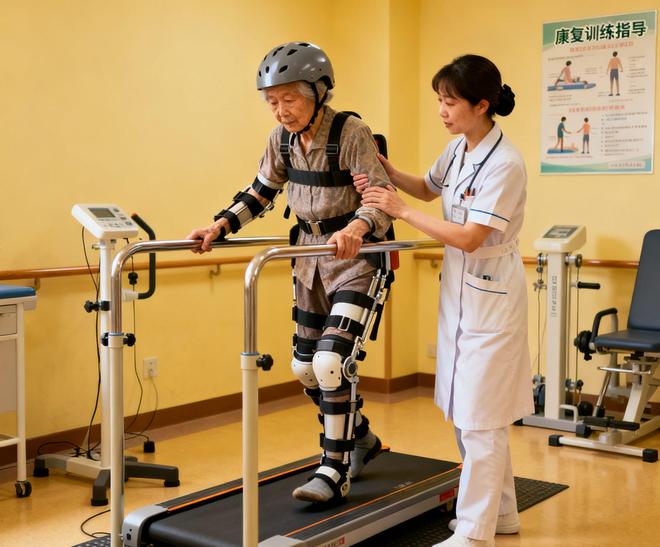
首个国家长护服务项目目录发布
Xin Hua She· 2025-09-25 10:27
Group 1 - The National Healthcare Security Administration released the "National Long-term Care Insurance Service Project Directory (Trial)" to standardize long-term care services and improve service quality [1][2] - The directory includes 36 service items categorized into 20 living care items (e.g., dietary care, excretion care, cleaning care) and 16 medical care items (e.g., general examination care, basic nursing, specialized nursing, rehabilitation) [1] - Long-term care insurance fund will cover the costs of services included in the directory, while basic medical insurance fund will not cover these costs [1][2] Group 2 - The establishment of a long-term care insurance system is a significant decision by the central government to address population aging and improve the social security system [2] - Currently, the long-term care insurance system covers 190 million people, with expenditures exceeding 85 billion yuan [2]
九省(市)联考启动 长期照护师制度建设加速
Jin Rong Shi Bao· 2025-09-24 04:28
Core Points - The first inter-provincial examination for long-term care practitioners in China was held simultaneously in nine provinces, marking a significant step towards a standardized and collaborative evaluation system for long-term care professionals [1][2] - The long-term care insurance system in China, initiated in 2016 and expanded in 2020, currently covers 49 pilot cities with approximately 180 million insured individuals, and over 2.35 million people have received benefits [1][2] Group 1 - The inter-provincial examination attracted 1,009 candidates from 11 provinces, indicating a growing interest in the long-term care profession [1] - The new classification of long-term care practitioners aims to address the shortage of qualified personnel, which is a critical factor for the sustainable development of the long-term care insurance system [2][3] - Long-term care practitioners are required to possess a unique set of skills that differentiate them from other care roles, including the ability to provide basic life care, emergency medical knowledge, and an understanding of long-term care insurance [3] Group 2 - The certification process enhances the professionalism and standardization of care services, facilitating better service regulation and insurance fund audits [4] - Future efforts will focus on increasing training and examination opportunities for long-term care practitioners, aiming to integrate the long-term care insurance system with the service framework [4]
人保财险:因地制宜打造长期护理险十大模式
Ren Min Ri Bao· 2025-09-18 21:47
Core Viewpoint - The establishment of a long-term care insurance system is a crucial measure to address the challenges of an aging population in China, with China People's Property Insurance Company (PICC) actively participating in pilot projects and developing various models for long-term care insurance [1] Group 1: Long-term Care Insurance Participation - As of June 2025, PICC has undertaken 117 long-term care insurance projects, covering 58 cities across 20 provinces [1] - PICC participates in 32 out of 49 national pilot cities for long-term care insurance, maintaining a participation rate of 65.3%, leading the industry [1] Group 2: Service Models - Jiangsu Nantong has established a "three-level" convenient service network to address the distance and technology usage issues for disabled individuals in rural areas [2] - Jiangsu Huai'an has developed a smart service center with various facilities to meet the needs of insured individuals, including an APP experience area and a monitoring center [2] - Jiangsu Nanjing has implemented a cross-regional service model allowing users to enjoy benefits based on their residence while adhering to the standards of their insurance location [3] Group 3: Management and Operations - Zhejiang Huzhou has created a digital management platform for comprehensive oversight of care services, integrating with the provincial smart medical insurance platform [4] - Shandong Yantai has established a dynamic assessment mechanism for disability, conducting unannounced inspections to ensure proper management and prevent over or under-provision of benefits [5] Group 4: Comprehensive Insurance Solutions - Zhejiang Jinhua has designed a comprehensive insurance package that includes various risk coverages related to long-term care, extending to newborn disability insurance and flexible employment insurance [6] - Hainan has provided hospitalization care for approximately 54,000 impoverished individuals, with total claims exceeding 33.35 million yuan [8] Group 5: Collaborative Development - Shandong Dezhou has innovated a collaborative model combining care insurance with supportive services, partnering with local healthcare institutions to enhance service delivery [8] - Sichuan Chengdu has developed an integrated service model that combines insurance with healthcare services, creating a multi-faceted support system for care [8] - Hebei Xingtai has initiated a village doctor management model to enhance rural care services, facilitating cooperation between village doctors and designated care service companies [8] Group 6: Future Directions - PICC aims to continue enhancing service quality and fund management while iterating on its insurance solutions to contribute to a multi-tiered social security system [9]
商务部等九部门:加快推进长期护理保险制度建设
Bei Jing Shang Bao· 2025-09-16 10:55
北京商报讯(记者 胡永新)9月16日,商务部等九部门联合印发的《关于扩大服务消费的若干政策措施》提出,加快推进长期护理保险制度建设,扩大长期 护理保险制度覆盖面。加强对养老护理、家政服务、长期照护等领域从业人员培养培训,落实有关支持政策。 ...
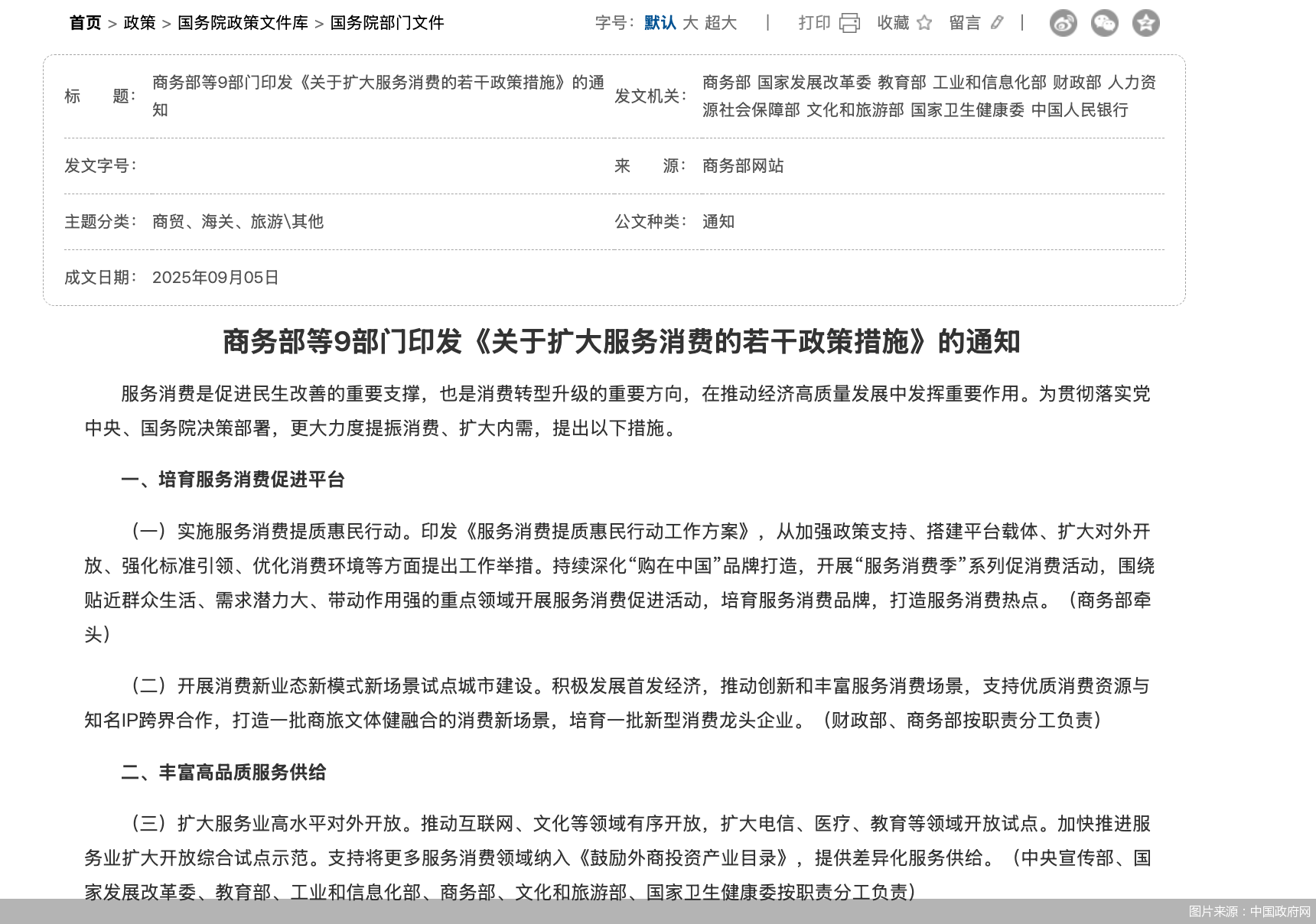
商务部等9部门印发《关于扩大服务消费的若干政策措施》的通知
Shang Wu Bu Wang Zhan· 2025-09-16 08:55
Core Viewpoint - The article emphasizes the importance of service consumption in improving people's livelihoods and driving economic transformation, proposing measures to boost consumption and expand domestic demand [1] Group 1: Cultivating Service Consumption Promotion Platforms - Implementation of the "Service Consumption Quality Improvement and Benefit Action" plan to enhance policy support, build platforms, and optimize the consumption environment [2] - Development of pilot cities for new service consumption formats and scenarios, promoting innovative service consumption landscapes [2] Group 2: Enriching High-Quality Service Supply - Expansion of high-level openness in the service industry, particularly in internet, culture, telecommunications, and healthcare sectors [3] - Support for cultural and artistic creation, optimizing cultural product supply through various venues and events [3] - Encouragement of foreign sports events and local mass sports events to enhance brand recognition and tourism [3] - Development of a diversified education and training market, including vocational skills training and community education [3] - Promotion of long-term care insurance and training for caregivers in the elderly care and domestic service sectors [3] - Support for community-based childcare services and facilities [3] Group 3: Stimulating New Service Consumption Growth - Attraction of foreign visitors through visa policy optimization and promotion of cultural tourism resources [4] - Expansion of digital service consumption and encouragement of e-commerce platforms to innovate [4] - Adjustment of school holiday schedules to increase service consumption opportunities [4] Group 4: Strengthening Financial Support - Utilization of various funding channels to support the construction of service facilities in culture, tourism, and sports [5] - Support for service trade innovation and investment in service consumption enterprises [5] - Encouragement of financial institutions to increase credit support for service consumption sectors [5] - Promotion of consumer credit support through government and financial institution collaboration [5] Group 5: Improving Statistical Monitoring Systems - Optimization of service consumption statistical methods to reflect regional development accurately [6] - Encouragement of the use of big data for monitoring and analysis of service consumption [6]
保障民生走在前!中国人寿探索打造长护险“三高”经办服务新范式
Xin Lang Cai Jing· 2025-09-11 02:39
Core Insights - The long-term care insurance (LTCI) policy has significantly alleviated the burden on families caring for elderly individuals with disabilities, as evidenced by testimonials from beneficiaries like Liu Granny [1] - The implementation of LTCI is crucial in addressing the challenges posed by an aging population in China, with projections indicating that by the end of 2024, the elderly population (aged 60 and above) will reach 310 million, accounting for 22% of the total population [1] - The Chinese government is actively promoting the establishment of a long-term care insurance system as part of its strategy to improve social security and support for vulnerable elderly groups [1] Company Involvement - China Life Insurance Company has been proactive in participating in the national LTCI pilot program, having engaged in 80 LTCI projects by the end of last year, covering over 7.3 million insured individuals in Shandong province [2] - The company has established standardized comprehensive service centers and has been involved in disability assessments and policy training, thereby enhancing service delivery and supporting the national strategy to address population aging [2] - In January 2024, China Life's Jining branch won the bid to manage LTCI for over 1.5 million residents and employees in Jining, demonstrating its commitment to high-quality service delivery [5] Service Innovation - The Jining branch of China Life has implemented a new service model for LTCI, which has been recognized as one of the top ten innovative products in elder care finance [3] - The company has developed a multi-tiered management service strategy focusing on key areas such as institutional access, disability assessments, and service management to ensure efficient and effective LTCI operations [7] - A comprehensive evaluation service system has been established to ensure fair and objective assessments of disability levels, thereby ensuring that the right beneficiaries receive the LTCI benefits [8] Community Engagement - China Life has organized various community outreach activities, including health check-ups and policy awareness campaigns, to promote LTCI and enhance public understanding of the program [9] - The company has also introduced innovative insurance products, such as accident insurance for caregivers, to address the specific needs of care institutions and personnel [9] - By integrating various insurance programs, China Life aims to improve resource utilization and provide greater convenience to insured individuals [9] Overall Impact - The collaboration between commercial insurance providers like China Life and government agencies has led to improved service efficiency and increased satisfaction among insured individuals [11] - The LTCI initiative is seen as a win-win situation, benefiting the government, insurance institutions, and the elderly population [11] - The ongoing efforts to enhance the LTCI management service system aim to expand coverage and ensure high-quality service delivery for the elderly [11]

