RWA

Search documents
对话朱啸虎:培养一个真正的合伙人,学费至少是1亿美元
Xin Lang Cai Jing· 2025-12-29 03:39
Core Insights - The article discusses the evolution of venture capital in China, emphasizing the significance of "dollars" in its history and the challenges faced as the industry moves beyond the dollar era [4][36] - It highlights the need for a new approach to talent development in venture capital, as the traditional methods associated with dollar funds are no longer applicable [5][36] - The conversation features insights from prominent venture capitalist Zhu Xiaohu, who reflects on the lessons learned from past investments and the changing landscape of the industry [6][36] Group 1: Historical Context - Venture capital in China has its roots in the dollar economy, with early investments primarily coming from dollar funds, which played a crucial role in shaping the industry [4][35] - The initial wave of venture capital in China was influenced by the experiences and methodologies of American dollar funds, which served as a learning platform for local investors [4][35] - The current investment themes, such as semiconductors and commercial aerospace, are seen as new challenges for dollar funds, lacking established success stories [36] Group 2: Talent Development and Investment Philosophy - Zhu Xiaohu states that cultivating a true partner in venture capital may require an investment of at least $100 million to assess their capabilities, indicating the high cost of developing talent in the industry [5][21] - The article discusses the shift in investment strategies, with a focus on the importance of financial data and profitability over brand recognition in making investment decisions [47][49] - Zhu emphasizes the need for a clear investment philosophy, prioritizing projects that demonstrate strong financial fundamentals and sustainable business models [47][50] Group 3: Lessons from Past Investments - Zhu shares experiences from past investments, such as the challenges faced with companies like LaShou and the importance of timing in entering markets [21][23] - The article highlights the pitfalls of investing in advanced technologies without considering market readiness and the maturity of the technology [25][23] - Zhu reflects on the significant returns from investments in companies like Ele.me and Didi, noting the importance of understanding user acquisition costs and market dynamics [49][50]



对话朱啸虎:培养一个真正的合伙人,学费至少是1亿美元
投中网· 2025-12-29 03:30
Core Viewpoint - The article discusses the evolution of venture capital in China, particularly the influence of dollar funds and the challenges faced in the current investment landscape as the industry transitions away from the dollar-centric model [3][4]. Group 1: Historical Context of Dollar Funds - Dollar funds have been pivotal in the development of China's venture capital industry, serving as both a starting point and a learning resource for local investors [3]. - The initial wave of venture capital in China was heavily influenced by successful dollar funds, which provided essential knowledge and experience to local entrepreneurs and investors [4]. Group 2: Challenges in the Current Investment Landscape - The current investment environment presents difficulties in nurturing new talent, as the high costs associated with training potential partners (estimated at $100 million) deter firms from investing in human capital [4][22]. - There is a growing concern about the lack of successors in the venture capital space, prompting a need to revisit and redefine investment strategies and philosophies [4]. Group 3: Investment Philosophy and Strategies - The investment philosophy emphasizes the importance of clear viewpoints over brand recognition, suggesting that a strong personal brand can lead to better investment opportunities [15][16]. - The article highlights the significance of understanding financial data and the risks associated with different investment cycles, particularly in the context of technology and hardware investments [17][21]. Group 4: Lessons from Past Investments - Historical investment experiences, such as the early decisions regarding companies like 拉手网 (Lashou) and 宁德时代 (CATL), illustrate the importance of timing and market readiness in investment success [23][25]. - The article reflects on the lessons learned from past failures, emphasizing the need for a balance between technological advancement and market maturity [27][28]. Group 5: Future Outlook and Investment Trends - The current trend in venture capital is to avoid highly concentrated investment areas, advocating for a strategy that diverges slightly from mainstream consensus to find better value opportunities [35]. - The discussion includes the potential for high-return investments in emerging technologies, stressing the importance of understanding customer needs and pricing strategies [36].

币圈科学家-Web3科学家地狱级实战课|旺仔大神|价值3万+
Sou Hu Cai Jing· 2025-12-29 03:10
Core Insights - The Web3 ecosystem in 2025 is transitioning from "proof of concept" to "value realization," with X to Earn and RWA reshaping the digital economy's foundational logic [2] Group 1: X to Earn - The evolution of the X to Earn model is moving from a "Ponzi trap" to a sustainable ecosystem, addressing the flaws of early Play to Earn (P2E) games [3] - X to Earn is expanding its boundaries from entertainment to productivity, creating a more integrated economic model [3] Group 2: RWA (Real World Assets) - RWA's core value lies in using blockchain technology to reshape asset circulation logic, enabling the tokenization of traditional assets [3] - Future Star platform exemplifies the integration of various activities with NFT mining, creating a closed-loop of "creation-consumption-reinvestment" [3] - The introduction of a "staking + yield reinvestment" mechanism encourages long-term participation, with users who staked for six months earning 370% more than short-term speculators [3] - Community governance through DAO allows users to participate in rule-making, significantly increasing project retention rates compared to traditional centralized platforms [3] Group 3: Challenges and Innovations - RWA's large-scale application faces three main hurdles: creating a value closed loop, integrating technology, and ensuring asset authenticity [4][5] - The integration of AI with blockchain is becoming essential for the evolution of X to Earn and RWA, acting as an "intelligent hub" [5] Group 4: Future Outlook - The competition in Web3 by 2026 will focus on "value creation capability" and "ecosystem integration capability," with X to Earn and RWA driving a new economic paradigm [5] - Developers need to evolve from "code artisans" to "economic system designers," while investors should shift from "speculators" to "value discoverers" [5] Group 5: Regulatory and Technical Framework - Hong Kong's stablecoin cross-border payment monitoring platform serves as a compliance model for RWA, utilizing real-time transaction monitoring and encryption [6] - Multi-dimensional verification methods are being adopted to ensure the authenticity of on-chain assets, significantly reducing the time for receivables confirmation [6] - Dynamic pricing models for non-standard assets are being developed, enhancing liquidity by 40% for certain platforms [6]

2025投资问卷:近六成人整体盈利,在场老油条占比超六成
3 6 Ke· 2025-12-26 06:43
Core Insights - The cryptocurrency market is experiencing a quieter Christmas compared to previous years, with Bitcoin (BTC) fluctuating between $85,000 and $90,000, and Ethereum (ETH) showing a decline from its previous highs [2][3] - A survey conducted over a month gathered insights from various participants in the crypto community, focusing on their investment experiences and reflections on the past year [3][4] Group 1: Survey Demographics - Over 60% of survey respondents have been in the crypto space for more than three years, indicating a predominance of experienced investors [5] - Newer investors, defined as those with less than three years of experience, make up approximately 38% of the respondents, suggesting a decline in new market entrants [6] Group 2: Investment Performance - More than 57% of respondents reported making a profit, with 17.2% achieving over 50% gains and 39.7% seeing gains between 0-50% [8] - Approximately 27% of participants experienced losses, with 12.1% facing significant losses of over 50% [8] Group 3: Profitability by Sector - Meme coins remain a popular and profitable investment, with about 34% of respondents indicating they earned profits primarily from this sector [10] - Mainstream cryptocurrencies like BTC, ETH, BNB, and SOL accounted for profits for around 26% of investors, reflecting their performance during the year [10] - DeFi projects attracted about 16% of respondents as a source of profit, while 12% reported earnings from airdrop interactions [10] Group 4: Losses by Sector - Approximately 28% of investors reported significant losses in meme coins and altcoins, highlighting their high-risk nature [14][15] - Contract trading resulted in losses for about 26% of participants, which is lower than expected given the volatility of the market [14] - NFT and GameFi projects were also significant sources of losses, with around 22% of respondents indicating they suffered due to these investments [14] Group 5: Reflections on Losses - About one-third of respondents attributed their losses to not cutting losses in time, a common issue among crypto investors [16] - Over 45% of participants cited slow reactions, conservative trading, or following market trends as reasons for their losses [16] Group 6: Future Outlook - The most promising sectors for 2026 include Real World Assets (RWA), AI, and meme coins, with RWA being mentioned by 31% of respondents [22][23] - Many participants advocate for a dollar-cost averaging strategy, particularly in BTC, as a sound investment approach [24]

X @Messari
Messari· 2025-12-23 20:07
RT Jay Yu 🐟 (@0xfishylosopher)i read + annotated the entire 300+ page Messari 2026 thesis on a long-haul flight so you didn’t have to…my thoughts + takeaways:> the entire thing took me about 3hrs to cover back to back (better than expected). My 3 fav essays were “crypto money”, “tradfi x crypto”, and “decentralized Internet finance”. Covers 80% of the trends that happened this year. Honorable mentions on the crypto x AI and DePIN pieces. there’s an entire encyclopedia of the top50 chains that you can skim, ...
X @Solana
Solana· 2025-12-23 15:28
RT Capital Markets (@capitalmarkets)Institutional-grade RWA growth on Solana is accelerating.The PRIME market on @kamino has surpassed $130M in deposits in less than 3 weeks since launch.PRIME is a yield-bearing token backed by U.S. home equity loans (HELOCs), originated by @Figure. https://t.co/CQy4JSbr9w ...
X @Cointelegraph
Cointelegraph· 2025-12-22 17:00
⚡️ LATEST: Ethereum treasury firm ETHZilla disclosed a 24,291 $ETH sale worth $74.5M, shifting focus from mNAV tracking to RWA-driven growth. https://t.co/Ba3JrZj3Fn ...
X @Cointelegraph
Cointelegraph· 2025-12-22 13:00
We’re going LIVE in 1 hour with @BeatXswap. From Oracle-based IP verification to shared royalty ownership, we’ll break down how IP-Rights RWAs work and why BeatSwap is building a full-stack ecosystem around them. Bring your questions.🕜 9:00 am EST[Brought to you by @BeatXswap] ...
X @Cointelegraph
Cointelegraph· 2025-12-22 11:00
🔥 NEW: DWF Labs has completed its first physical gold trade with a 25kg test tranche and plans to expand into silver, platinum, and cotton as part of its RWA strategy. https://t.co/QsuIJ272K9 ...
巴曙松:探索新的环境下资本市场的结构性融合趋势
Xin Lang Cai Jing· 2025-12-22 10:07
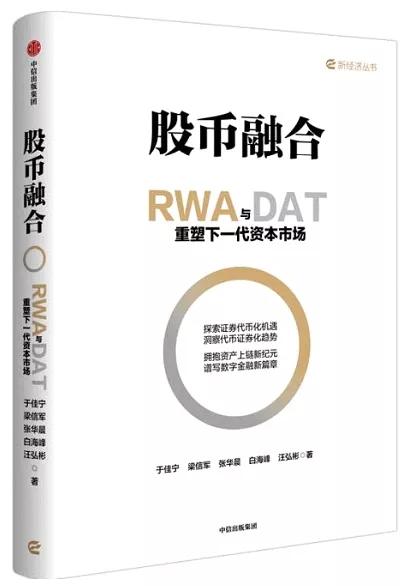
Core Insights - The article discusses the structural transformation of global capital markets, highlighting the convergence of traditional financial systems and blockchain-based digital asset markets, leading to the formation of a new generation of capital market architecture [1][2]. Group 1: Market Evolution - Capital markets have undergone several paradigm shifts, with technological advancements driving changes in asset definition and recording, moving from reliance on specific national registries to a global distributed ledger [2]. - The current fourth paradigm evolution is characterized by the ability to standardize, segment, and exchange various asset types, including stocks, bonds, and native digital assets, on a programmable protocol layer [2][3]. Group 2: Driving Forces of Convergence - The convergence process is driven by technological innovations and market practices, such as the tokenization of Real World Assets (RWA) under regulatory compliance, which enhances liquidity and combinability of traditional financial instruments [3]. - Compliant digital asset financial products, like Bitcoin ETFs, provide institutional pathways for native digital assets to enter mainstream investment portfolios [3]. - Stablecoins have established a near-real-time payment and settlement network globally, serving as critical infrastructure for the new market [3][4]. Group 3: Bidirectional Interaction - The integration is not one-sided; traditional securities are exploring issuance and trading on decentralized systems, while native digital assets are being integrated into traditional financial frameworks through compliant pathways [3]. - Companies are beginning to include cryptocurrencies like Bitcoin and stablecoins in their balance sheets, raising new questions for traditional corporate valuation models [3]. Group 4: Liquidity and Governance Changes - Stablecoins act as a "digital cash layer" connecting fiat and crypto assets, enabling near-real-time cross-border capital allocation and altering the traditional financial market's segmented structure [4]. - Decentralized Autonomous Organizations (DAOs) and on-chain voting mechanisms are transforming static shareholder registries into dynamic governance participation maps, prompting new considerations for corporate boundaries and regulatory frameworks [4]. Group 5: Regulatory Developments - Recent advancements in regulatory frameworks across major financial jurisdictions are pushing the convergence trend to a critical point, reducing compliance uncertainties for institutional investors [5][6]. - The U.S. Congress passed several significant acts in 2025, providing clearer institutional frameworks for the definition, issuance, and trading of digital assets, which facilitates the transition to a next-generation market structure [6]. Group 6: Analytical Framework - The book "Stock-Coin Convergence: RWA and DAT Reshaping the Next Generation Capital Market" aims to provide a systematic analysis framework for the changes in the financial sector, covering technology, market, and policy dimensions [8]. - It explores the historical context of digital assets entering traditional finance and the mechanisms of core elements like digital currency ETFs, RWA tokenization, and stablecoins [8][9]. Group 7: Future Perspectives - The book emphasizes the need for a clear analytical tool for policymakers, financial practitioners, and investors to navigate the profound changes in capital markets [8]. - It presents a dual narrative approach, discussing both "tokenization of securities" and "securitization of tokens" as two sides of the same coin, while embedding numerous case studies and interviews to provide a comprehensive understanding of market dynamics [9].