
多边主义

Search documents
学习手记丨在亚太这片大海中扬帆前行
Xin Hua She· 2025-10-27 20:15
Core Points - Xi Jinping will attend the 32nd APEC Leaders' Informal Meeting in Gyeongju, South Korea, marking his 12th participation in APEC meetings [4] - APEC has played a significant role in promoting economic globalization and has contributed to the "APEC miracle," with the region accounting for over 60% of global economic output and nearly half of global trade [4] - The success of APEC is attributed to its commitment to regional peace, true multilateralism, and open regionalism, as well as its alignment with the trends of economic globalization [4] Group 1 - The world is entering a new period of turbulence and transformation, with unilateralism and protectionism posing challenges to global economic stability [5] - APEC countries must respond responsibly to global challenges and work together to ensure a prosperous future for the region [5] - The history of APEC demonstrates that cooperation is essential for development, and non-cooperation poses the greatest risk [5] Group 2 - The recent 20th Central Committee meeting emphasized the importance of expanding high-level opening-up and creating win-win cooperation [6] - China will continue to share opportunities from its modernization with APEC partners, fostering a collaborative environment [6] Group 3 - The vast Pacific Ocean provides ample development space for APEC countries, emphasizing the need for steady leadership and direction to navigate global economic challenges [7]


学习手记|在亚太这片大海中扬帆前行
Xin Hua She· 2025-10-27 14:06
Core Viewpoint - The Asia-Pacific region is highlighted as a space for common development, emphasizing the importance of cooperation and multilateralism in addressing global challenges and fostering economic growth [3][4][5]. Group 1: Economic Significance of Asia-Pacific - The Asia-Pacific region accounts for over 60% of the global economy and nearly half of global trade, positioning it as a major growth engine [3]. - The region has successfully driven economic globalization, leading to what is termed the "Asia-Pacific miracle" over the past 30 years [3]. Group 2: Challenges and Responses - The world is experiencing a period of turbulence and transformation, with rising unilateralism and protectionism threatening economic cooperation [4]. - In response to these challenges, there is a call for countries to embrace cooperation and shared responsibility to ensure a prosperous future for the Asia-Pacific [4][5]. Group 3: Commitment to Openness - Openness and inclusivity remain the main themes of Asia-Pacific cooperation, with a strong emphasis on the necessity of collaboration for development [5]. - The recent 20th Central Committee meeting in China underscored the commitment to expanding high-level openness and creating win-win cooperation opportunities [5]. Group 4: Future Outlook - The Asia-Pacific region is seen as a vast space for development, with a focus on steering towards a prosperous future for all its people [6].

澳大利亚经济学家彼得·德赖斯代尔:以开放联通的多边主义促进亚太发展繁荣
Xin Hua She· 2025-10-27 13:58
记者:张淑惠、梁有昶 新华社音视频部制作 02:33 德赖斯代尔目前担任澳大利亚国立大学东亚经济研究所所长。他曾围绕东亚与太平洋地区经济合作、国际贸易及经济政策等领域撰写了大量学术著作,其研 究成果对澳大利亚、东亚及太平洋地区的政策制定产生了较大影响。 澳大利亚知名经济学家彼得·德赖斯代尔日前在堪培拉接受新华社记者专访时表示,在当今国际政策充满不确定性的背景下,维护多边主义、坚持开放联通 有助于亚太地区继续保持发展繁荣,而中国将在其中发挥关键作用。 ...

对话PIIE高级研究员:美国政策或致美元长期地位遭更多质疑
2 1 Shi Ji Jing Ji Bao Dao· 2025-10-27 13:15
Group 1 - The article discusses the decline of the US dollar's dominance as a global reserve currency, highlighting that trust in the dollar is wavering due to US domestic policies [1] - Jeffrey Schott emphasizes that the current challenges in multilateral negotiations stem from a lack of trust in the enforcement of agreements, which has led to an increase in regional and bilateral agreements [2] - The article notes that the US withdrawal from the Trans-Pacific Partnership (TPP) is viewed as a significant mistake, as the subsequent Comprehensive and Progressive Agreement for Trans-Pacific Partnership (CPTPP) has improved trade transparency and provided benefits to its member countries [3] Group 2 - The global trade volume has increased from approximately $5 trillion in 1994 to an estimated $33 trillion in 2024, reflecting a more than fivefold growth [2] - The average global tariff has decreased from about 40% in 1947 to below 5% currently, indicating significant progress in trade liberalization [2] - China is preparing to join the CPTPP and has conducted extensive analysis and discussions with member countries to demonstrate its commitment to meeting the agreement's high standards [3]
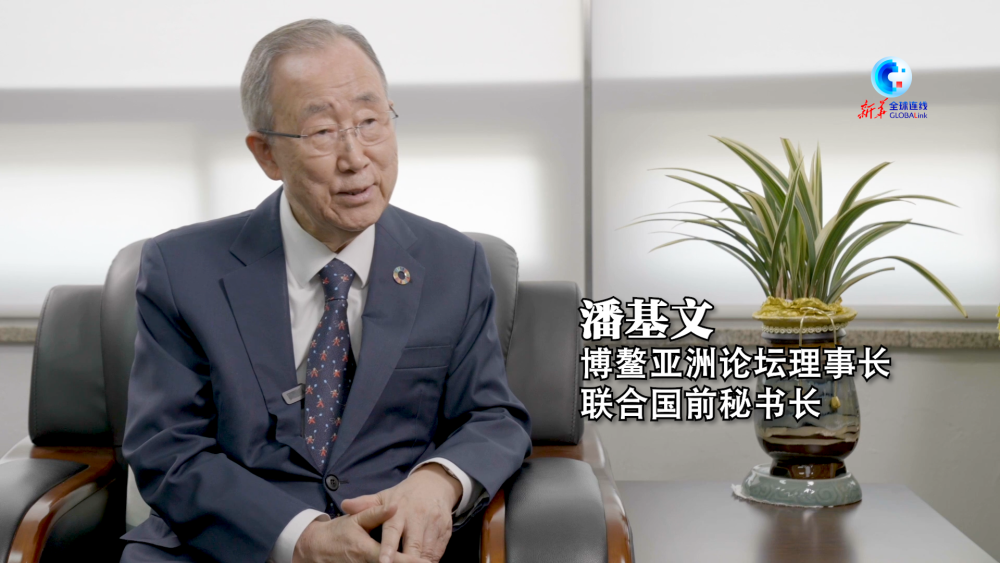
高端访谈 | 联合国前秘书长潘基文:APEC应坚守多边主义引领亚太合作
Xin Hua She· 2025-10-27 12:51
亚太经合组织第三十二次领导人非正式会议将在韩国庆州举行。这是韩国继2005年主办APEC釜山会议后时隔20年再次担任东道主。 博鳌亚洲论坛理事长、联合国前秘书长潘基文日前在首尔接受新华社专访时表示,当前多边主义危机日益加深,亚太经合组织(APEC)应通 过携手应对气候变化、确保供应链稳定、共同制定数字化标准等举措,引领亚太地区经济合作与发展繁荣。 记者:陈怡 陆睿 摄像:金颢旼 新华社音视频部制作 新华社国际传播融合平台出品 ...
李强出席第20届东亚峰会
Xin Hua She· 2025-10-27 12:26
Core Points - The East Asia Summit, established 20 years ago in Kuala Lumpur, has played a constructive role in promoting regional stability and rapid development [1] - Current global challenges include geopolitical conflicts, rising protectionism, and the need for multilateral cooperation to address issues like energy security, food security, and climate change [3] Group 1 - China is committed to upholding the original intent of the East Asia Summit and actively promoting the global governance initiative to inject positive energy into regional peace and development [2] - Emphasis on mutual respect, equality, and fairness as foundational principles for international relations, highlighting the irreversible trend of economic globalization and multipolarity [2] - The need to address pressing issues such as economic development and improving livelihoods, with a focus on maintaining a free trade system and advancing regional integration [2] Group 2 - The importance of reforming and improving the rules-based international system, particularly in maintaining the authority of international law and supporting ASEAN's central role in regional architecture [2] - Leaders at the summit called for a return to the original intent of the East Asia Summit, adhering to multilateralism and the principles of the UN Charter [3] - The summit resulted in the adoption of the "Kuala Lumpur Declaration on the 20th Anniversary of the East Asia Summit" and a statement on enhancing disaster preparedness and response [3]
美财长:不再考虑对华加征100%关税
Sou Hu Cai Jing· 2025-10-27 12:04
Core Points - The recent two-day trade talks between China and the U.S. in Kuala Lumpur resulted in a basic consensus on key economic issues, including maritime logistics, shipbuilding, and agricultural trade [1][2][3] - Both sides emphasized the importance of mutual respect and cooperation to resolve trade disputes, highlighting the significance of the U.S.-China economic relationship on a global scale [2][5] - The discussions were described as constructive, with both parties expressing a commitment to further detail and internal approval processes for the agreements reached [1][4] Group 1 - The talks were led by China's Vice Premier He Lifeng and U.S. Treasury Secretary Steven Mnuchin, lasting over five hours on the first day [2][3] - The U.S. Treasury Secretary stated that a "very successful framework" was established during the negotiations, which could pave the way for a meeting between the two countries' leaders [3][4] - The outcome of the talks is seen as a sign of easing tensions between the two largest economies, with the current suspension of tariffs set to expire on November 10 [4][5] Group 2 - The discussions covered a wide range of topics, including export controls, the extension of tariff suspensions, and cooperation on fentanyl issues, indicating a comprehensive approach to trade relations [2][5] - Analysts noted that the timing of the talks before the APEC meeting could signal a positive development in U.S.-China relations, which is crucial for global economic stability [5][6] - The upcoming APEC meeting is expected to be influenced by the outcomes of the U.S.-China discussions, with South Korea playing a pivotal role as the host [6][7]
“全球治理与亚太共繁荣”对话会在北京举行
Yang Guang Wang· 2025-10-27 10:43
在圆桌讨论环节,与会各界人士一致认为,坚持多边主义,推动经贸领域合作平台建设,加强科技 领域国际合作等是促进亚太地区共同繁荣发展的关键。 当天,"APEC青年行动"全球征集活动同步启动。 央广网北京10月27日消息 据中央广播电视总台中国之声《新闻和报纸摘要》报道,在中国国家主 席习近平将赴韩国庆州出席亚太经合组织第三十二次领导人非正式会议并对韩国进行国事访问之际,由 中国中央广播电视总台与韩国延世大学、韩国YTN电视台联合主办的"全球治理与亚太共繁荣"对话会日 前在北京举行。 总台CGTN"繁荣亚太 中国力量"全球民意调查结果现场发布。83.4%的受访者高度肯定中国在推动 亚太经合组织可持续发展进程中的作用与贡献。 ...
王毅:全球治理倡议最坚定的立场是高举多边的旗帜
Zheng Quan Shi Bao Wang· 2025-10-27 06:25
Core Viewpoint - The core message emphasizes the importance of multilateralism in global governance and the need for collective efforts to address international challenges, rejecting unilateral actions [1] Group 1: Multilateralism - Multilateralism is highlighted as the cornerstone of the current international order and a pathway to peace and development [1] - The rise of unilateralism and the formation of exclusive groups pose unprecedented challenges to multilateralism [1] - The historical trend towards a multipolar world is acknowledged, indicating a shift in global governance dynamics [1] Group 2: Global Governance Initiative - The global governance initiative advocates for joint consultation, construction, and sharing in global affairs [1] - It calls for collective participation in building governance systems and sharing governance outcomes [1] - The initiative reflects the voices of the majority of countries and aims to strengthen confidence in multilateral principles and mechanisms [1]
王毅:全球治理倡议契合世界所需,顺应人心所向
Xin Jing Bao· 2025-10-27 06:17
Core Viewpoint - The global governance initiative proposed by China aims to reform and improve global governance, rooted in the principles of the UN Charter and reflecting China's diplomatic traditions, emphasizing shared destiny and cooperation [1] Group 1: Global Governance Initiative - The initiative is seen as an innovative and elevated understanding of global governance rules, moving beyond traditional international relations theories [1] - It has garnered explicit support from over 140 countries and international organizations, indicating its alignment with global needs and public sentiment [1] Group 2: Stability and Unity - The initiative provides stability and certainty in a world facing turmoil, advocating for unity at a time of global division [1] - It emphasizes shared governance rules rather than monopolistic approaches, aiming to address global challenges and defend multilateralism [1]