
普惠金融

Search documents
深耕缝隙市场场景金融激发银行普惠新动能
Zhong Guo Zheng Quan Bao· 2025-11-24 20:13
Core Insights - The latest data from the Financial Regulatory Bureau indicates that by the end of Q3, the balance of inclusive loans to small and micro enterprises reached 36.5 trillion yuan, a year-on-year increase of 12.1% [1] - Inclusive agricultural loans amounted to 14.1 trillion yuan, with an increase of 1.2 trillion yuan since the beginning of the year [1] - Institutions like Wuhan Zhongbang Bank and Beijing Rural Commercial Bank are leveraging digital empowerment and collaborative banking to effectively meet the financing needs of small and micro enterprises and agricultural entities [1] Group 1: Financial Inclusion and Digital Solutions - The challenge of reaching gap markets is addressed through digital means, with Wuhan Zhongbang Bank utilizing financial technology to create a credit system that converts tax and transaction data into lending power, thus solving information asymmetry [2] - The bank has achieved an agricultural loan balance of 6.359 billion yuan, with a growth rate exceeding the overall loan growth by 24.71 percentage points [2] - Shanghai Rural Commercial Bank has issued nearly 17 billion yuan in loans to support over 2,000 enterprises in parks and associations, focusing on providing warmer services to key customer groups [2] Group 2: Innovative Financing Models - Wuhan Zhongbang Bank has embedded financial services deeply into various stages of the industrial chain, issuing over 150 billion yuan in chain finance loans and serving nearly 500,000 small and micro clients [3] - A textile company in Hubei benefited from a warehouse receipt pledge loan, securing 7 million yuan in financing through a digital inventory system that enhances traceability [3] - The bank's innovative services are tailored to meet the specific needs of industries, providing efficient and reliable financing support [3] Group 3: Risk Management and Sustainable Development - The sustainable development of inclusive finance relies on a robust risk control system, with the banking sector's non-performing loan ratio at 1.52% and a provision coverage ratio of 207.15% as of Q3 [3] - Local banks are developing differentiated risk control models, with Beijing Rural Commercial Bank using a combination of regional recommendations and online verification to assess business authenticity [4] - Wuhan Zhongbang Bank has established a digital-native risk control system that integrates real-time data from core enterprises, logistics, contracts, and invoices for comprehensive online monitoring [4] Group 4: Localized Financial Services - Local banks are well-positioned to understand the economic and credit conditions of their communities, effectively reducing risks associated with information asymmetry [4] - The Financial Regulatory Bureau emphasizes the need for a multi-layered, widely covered, and sustainable inclusive financial institution system, urging local banks to focus on supporting agriculture and small enterprises [5] - There is a call for banks to adapt to changes in rural financial market demands and enhance support for key areas of rural revitalization and small micro-enterprises [5]
凝心聚力做好金融“五篇大文章” 交易商明晰证券业场外业务功能定位
Zheng Quan Ri Bao· 2025-11-24 16:51
Core Viewpoint - The report highlights the proactive role of over-the-counter (OTC) derivatives traders in supporting national strategies and the real economy, showcasing their contributions to the financial sector's "five major articles" [1] Group 1: OTC Derivatives Empowerment - A special survey conducted by China Securities Intermediary Co., Ltd. covered 44 traders, with 42 providing effective data and case studies, demonstrating the industry's achievements in the financial "five major articles" [2] - In the technology finance sector, 17 traders offered customized OTC derivatives to meet the complex needs of tech companies and investors, facilitating capital flow into the tech sector through the development of tech-focused ETFs and participation in high-tech company financing [2] - In green finance, 30 traders utilized flexible OTC derivatives to support low-carbon economy initiatives, including trading linked to green assets and developing ESG-themed indices to attract new investors [2] Group 2: Inclusive Finance and Pension Finance - In inclusive finance, 30 traders expanded service coverage and accessibility, providing affordable financial services to small and micro enterprises, farmers, and the general public, enhancing economic resilience [3] - Traders are actively developing comprehensive wealth management solutions for retirement, leveraging OTC derivatives for risk management and personalized investment strategies [3] Group 3: Digital Finance - 37 traders emphasized the use of financial technology in OTC business development, transitioning risk management from experience-driven to algorithm-driven approaches, including the creation of a fully digital platform for business operations and risk control [4] Group 4: Consensus on Function Positioning - Traders reached a consensus on the role of OTC derivatives in the high-quality development of the securities industry, recognizing their ability to connect on-market and off-market activities, serve as risk intermediaries, and provide efficient asset allocation tools [5] - The OTC derivatives business is seen as a driver for strategic transformation and service upgrades, enabling traders to evolve from channel services to multifaceted roles while strengthening risk management and digital empowerment [5] Group 5: Challenges and Recommendations - Despite achievements, traders face challenges such as limited business types, disparities in funding and innovation capabilities, and the need for improved understanding of regulatory guidance [6] - Recommendations include enhancing top-level design for OTC derivatives, supporting robust cross-border business development, increasing digital investment, and promoting positive industry image [6]
光大永明资产:以创新实践服务地方经济社会高质量发展
Sou Hu Cai Jing· 2025-11-24 15:27
今年,光大永明资产成功发行首单中保登蒸汽收费收益权资产支持计划"光大永明-新材料科技园蒸汽收 费收益权绿色资产支持计划"。该项目基础资产为南京江北新材料科技园内的工业蒸汽收费收益权,积 极助力首批省级绿色金融创新改革试验区建设,是一次绿色金融与产业升级良性互动的积极探索,有效 推动了区域绿色转型和可持续发展。目前,项目已投放10.5亿元,整体运行稳定。 中证报中证网讯(记者 薛瑾)记者近日从光大永明资产获悉,光大永明资产立足服务国家战略,充分 发挥保险资管长周期资金管理的特色优势,深度融入国家战略布局,以创新实践服务地方经济社会高质 量发展。截至目前,多个项目已投放金额达数亿元。 在推动绿色发展、低碳发展方面,光大永明资产通过多元创新手段,为绿色产业发展注入金融动力,推 动经济效益与社会价值双提升。2024年,光大永明资产设立"光大永明-循环经济产业园基础设施债权投 资计划",精准引导保险资金、城商行自有资金等多元化资本流向绿色产业,为无锡循环经济产业园建 设按下"加速键",赋能区域经济绿色转型。目前,该项目已累计投入6.55亿元,项目建设基本完工。 今年5月,央行与证监会联合发布公告,支持金融机构发行科技创 ...
首次!“金融强国”写入五年规划建议
Xin Hua She· 2025-11-24 13:27
Core Viewpoint - The "15th Five-Year Plan" marks a critical period for China to achieve socialist modernization and accelerate the construction of a financial powerhouse, with "financial powerhouse" being included in the five-year planning for the first time [2][3]. Group 1: Financial Development Goals - The proposal emphasizes the need for financial services to provide higher quality support for economic and social development, enhancing global competitiveness and influence in the financial sector [3]. - Key tasks and directions for building a financial powerhouse over the next five years include improving the central bank system, developing various types of finance (technology, green, inclusive, pension, digital), and optimizing the financial institution system [3]. Group 2: Current Financial Landscape - China has established itself as a major global financial player, with the largest banking system, the second-largest insurance, stock, and bond markets, and the world's largest foreign exchange reserves [2]. - Despite significant progress, challenges remain, such as an unbalanced financial structure, inadequate infrastructure, and an immature market mechanism, indicating that the financial system is still in a "large but not strong" phase [2][3]. Group 3: Future Financial Strategy - The planning suggests a clear roadmap for financial reform and development, focusing on risk prevention, strong regulation, and promoting high-quality development to support the construction of a modern socialist country [3].
乐山市商业银行:深耕区域协同发展 聚力金融“五篇大文章”
Sou Hu Cai Jing· 2025-11-24 12:18
Core Viewpoint - Leshan Commercial Bank is committed to integrating national strategies with its own high-quality development, focusing on serving the real economy and contributing to regional economic growth through the implementation of the "five major articles" in finance [1][7]. Group 1: Strategic Integration - The bank actively aligns with the Chengdu-Chongqing economic circle, developing special plans and enhancing policy support to accelerate major project implementation [2]. - It promotes deep cooperation with local governments and key enterprises to facilitate high-quality regional economic development [2]. - The bank employs a "dual-chain" strategy focusing on both government and industry to strengthen its financial services in key areas [2]. Group 2: New Growth Drivers - The bank targets five major industry clusters: modern agriculture, modern manufacturing, modern services, cultural tourism, and digital economy, conducting regular initiatives to support these sectors [3]. - It implements a project management model that ensures efficient collaboration between banks and enterprises throughout the project lifecycle [3]. Group 3: Financial Innovation - The bank has established a technology-focused financial service system, launching products like "Science and Technology Enterprise Loan" and "Innovation Credit Loan" to support local tech companies [4]. - It actively develops green finance products, including green loans and bonds, and has issued the first carbon emission rights pledge loan in Sichuan province [4]. - The bank has introduced innovative financing solutions for environmental and clean energy projects, significantly reducing financing costs [4]. Group 4: Inclusive Finance - The bank emphasizes inclusive finance, focusing on rural revitalization and enhancing financial support for key assistance counties [5]. - It has developed new financing models to address the challenges faced by agricultural enterprises and improved online services for small and micro enterprises [5]. - The bank is enhancing services for the elderly, establishing senior-friendly service points and promoting financial literacy among older clients [5]. Group 5: Digital Transformation - The bank is advancing its digital transformation by optimizing processes and integrating technology into its operations, aiming to create a comprehensive digital financial service system [5]. - It has initiated key digital projects across various sectors, including retail and risk control, to improve service quality and efficiency [5].
以“源文化”践初心——华源证券赋能普惠金融新实践
Zheng Quan Ri Bao Wang· 2025-11-24 11:55
金融是国之重器,乡村振兴是"国之大者"。华源证券作为武汉市属国资券商,在武汉金控集团党委和公司党委的坚强领导 下,始终坚持牢牢把握金融工作的政治性、人民性,紧密围绕中央金融工作会议提出的"科技金融、绿色金融、普惠金融、养 老金融、数字金融"五篇大文章战略方向,坚持将发挥党的思想政治工作这一"生命线"优势与践行"客户至上、合规守信、专业 稳健、开拓进取、强力执行、简单坦诚"的"源文化"核心价值观深度融合,以高质量党建引领公司普惠金融高质量发展,将文 化建设与普惠金融战略深度融合。 一是把准"方向舵",筑牢思想根基。公司党委依托党委理论学习中心组等平台,深入领会中央关于普惠金融的战略部署和 系列重要指示精神,不断增强服务国家大局的政治自觉、思想自觉和行动自觉。这一思想引领为公司的"源文化"注入了"金融 为民、服务实体"的初心灵魂,确保所有帮扶实践始终与党和国家事业发展同心同向、同频共振。自2022年12月武汉金融控股 集团成为公司实际控制人以来,公司积极履行国企社会责任,先后与湖北省蕲春县、麻城市、五峰土家族自治县、神农架林区 等地签署结对帮扶协议,持续扩大帮扶覆盖面,加大资金和资源投入力度,多措并举提升帮扶的综 ...
中国证券业君鼎奖揭晓!东方证券斩获9项大奖
券商中国· 2025-11-24 10:04
Core Viewpoint - The article highlights the achievements of Dongfang Securities at the 19th Shenzhen International Financial Expo, where it received multiple prestigious awards, showcasing its strong performance in the financial industry [2][3][6]. Awards and Recognition - Dongfang Securities won the "Honorary Award for the Five Major Financial Articles" for its commitment to practical implementation and performance in the financial sector [3]. - The company secured eight significant awards in asset management and investment banking, reflecting its excellence in these core business areas [5][6]. Financial Performance - For the first three quarters of 2025, Dongfang Securities reported a revenue of 12.708 billion yuan, representing a year-on-year increase of 39.38%, and a net profit attributable to shareholders of 5.110 billion yuan, up 54.76% year-on-year [6]. Industry Context - The awards were part of a broader recognition of financial institutions' contributions to national strategies and the development of a modern financial system in China, emphasizing the importance of technology, green finance, inclusive finance, pension finance, and digital finance [3][6].



AIC相继开业,如何成金融赋能“新王牌”?这些关卡需注意
Nan Fang Du Shi Bao· 2025-11-24 07:18
Core Insights - The core viewpoint of the article emphasizes the evolution and current state of inclusive finance in China, highlighting the transition from rapid credit growth to a focus on quality and sustainability in financial services [5][9]. Group 1: Development Stages of Inclusive Finance - The evolution of inclusive finance in China can be divided into three key stages: the "Infrastructure Foundation Period," the "Policy-Driven Period," and the current "Value Restructuring Period" [5]. - The current period is characterized by a shift from merely increasing credit volume to achieving stable growth in both quantity and quality, integrating technology, policy, and commercial sustainability [5]. Group 2: Challenges and Responses - Key challenges facing inclusive finance include the "digital divide," high operational costs in underserved markets, and a lack of differentiated products among financial institutions [6]. - Regulatory responses should include differentiated policies, expanded information sharing, and incentives for institutions effectively using AI to serve long-tail customers [6]. Group 3: Technological Integration - The integration of AI and digital currency is seen as crucial for overcoming the "last mile" challenge in inclusive finance, enabling better credit assessment and risk management [7]. - Specific paths include using AI to create dynamic credit profiles and leveraging digital currency for traceable transactions, which can enhance financial inclusion [7]. Group 4: Regional Financial Development - The article discusses the issue of product homogeneity in county-level financial services, attributing it to risk management shortcomings and a lack of tailored financial solutions [8]. - Solutions proposed include developing specialized financial products based on local industries and enhancing the capabilities of financial institutions to better serve these markets [8]. Group 5: Role of AIC in Inclusive Finance - The recent approval of Asset Investment Companies (AIC) is expected to reshape the landscape of inclusive finance by providing new solutions for small and innovative enterprises [9][11]. - AICs are seen as a means to bridge the gap in capital supply and risk-sharing mechanisms, although they face challenges in aligning their investment strategies with the high-risk nature of their target clientele [11].
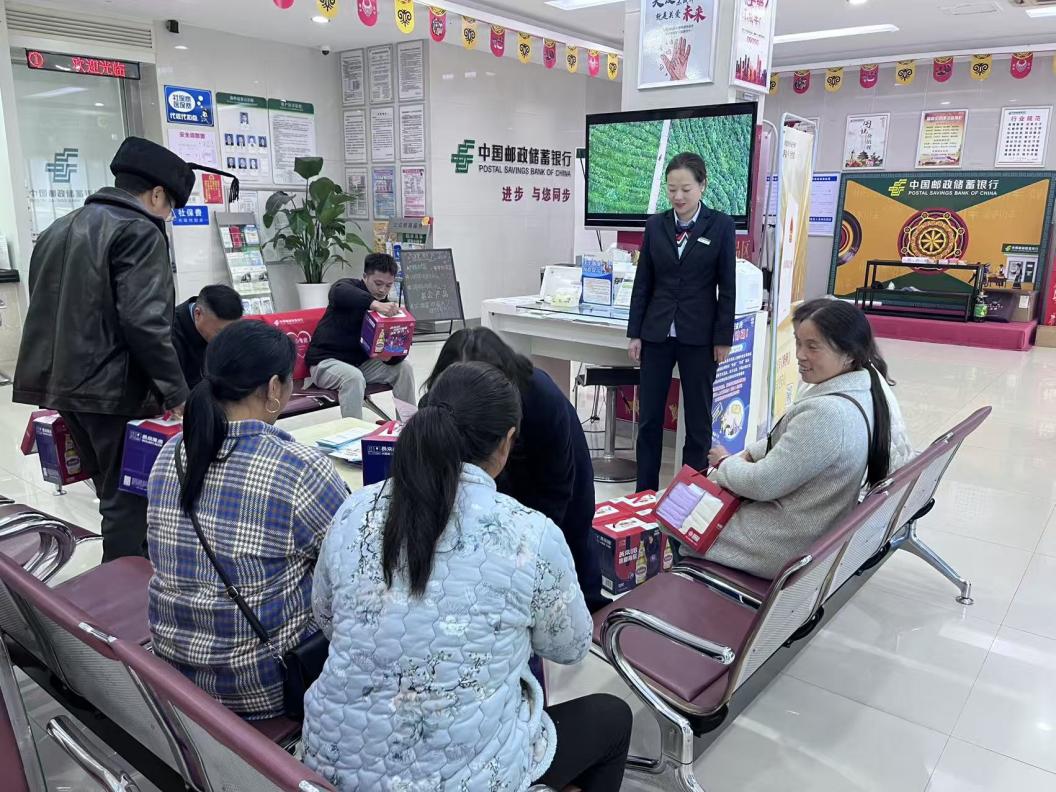
彝韵迎新年 金融暖彝乡|邮储银行马边县支行彝族年主题宣教活动
Xin Lang Cai Jing· 2025-11-24 06:04
转自:推广 彝历新年临近,烟峰镇洋溢着喜庆氛围。近日,邮储银行马边县支行以彝族年为契机,开展特色宣教活动,将彝族文化传承与金融知识普及相结合,为彝乡 群众送上节日祝福与金融"干货"。 此次彝族年主题宣传活动,是邮储银行马边县支行将民族文化传承与金融服务创新相结合的生动实践,既让大家感受了民族文化魅力,又提升了金融素养与 风险防范意识。未来,邮储银行马边县支行将持续深耕普惠金融领域,不断创新服务形式、延伸服务触角,让金融活水更好地滋润民族地区,为乡村振兴和 民族团结贡献更多邮储力量。 来源:推广 在邮储银行马边县支行网点,工作人员精心布置彝族文化展示区,通过彝绣挂饰、传统器物展示及讲解,向客户普及彝族年习俗与非遗文化。同时,结合群 众生活场景,用通俗语言拆解电信诈骗、非法集资套路,讲解人民币防伪、数字人民币应用等知识,手把手指导老年客户使用手机银行,助力跨越数字鸿 沟。 随后,宣讲团队走进烟峰镇村委会,以彝汉双语宣讲的形式,重点解读养老领域非法集资防范技巧、银行卡信息保护、征信管理等内容,现场设置咨询台答 疑解惑,切实解决群众金融需求。 ...

“十四五”奋进路 光大永明资产:服务发展大局 担当金融使命
Zheng Quan Shi Bao Wang· 2025-11-24 05:24
在国家"十四五"规划引领下,光大永明资产管理股份有限公司(以下简称"光大永明资产")以"立足保 险、重在资管"为理念,立足服务国家战略,充分发挥保险资管长周期资金管理的特色优势,深度融入 国家战略布局,以创新实践服务地方经济社会高质量发展,在惠民利民中彰显金融担当,书写金融服务 实体经济的新篇章。 深耕绿色金融,低碳惠泽民生。光大永明资产积极践行绿色金融理念,通过多元创新手段,为绿色产业 发展注入金融动力,推动经济效益与社会价值双提升。2024年,光大永明资产设立"光大永明-循环经济 产业园基础设施债权投资计划",精准引导保险资金、城商行自有资金等多元化资本流向绿色产业,为 无锡循环经济产业园建设按下"加速键",赋能区域经济绿色转型。该项目获G1绿色等级认证,并成功 入选无锡"绿色金融十佳创新案例"。目前,已累计投入6.55亿元,项目建设基本完工,成为绿色金融助 力经济、社会和环境协调发展的生动范例。 践行普惠初心,传递金融温度。光大永明资产贯彻落实做好普惠金融相关要求,通过创新金融产品和服 务模式,满足民众日益增长的金融服务需求,在促消费惠民生、扩大内需等方面发挥积极作用,推动释 放经济增长新动能。截至8月 ...