世界模型技术

Search documents
谷歌蚂蚁24小时对决:世界模型大战谁主沉浮
Sou Hu Cai Jing· 2026-02-02 12:15
Core Insights - Tech giants are engaged in a "reality simulator" arms race, with Google and Ant Group simultaneously launching world model technologies that will transform digital interactions [1] Group 1: Company Strategies - Google has introduced a subscription model at $125/month for US adult users, while Ant Group has opted for a fully open-source approach [3] - Both companies have achieved significant breakthroughs, including interaction latency under 1 second, continuous generation for up to 10 minutes, and physical collision calculation accuracy exceeding 92% [3] - Ant's model is trained on 20,000 hours of real robot data covering 9 mainstream robot configurations, while Google's relies on the collaborative computing architecture of Gemini 3 and Nano Banana Pro [3] Group 2: Technical Breakthroughs - The advancements in world models are evident in three areas: upgrading physical collision calculations from traditional video frame interpolation to real-world simulation, real-time conversion of text, images, and operational commands, and allowing users to control virtual perspectives via keyboard [3] - A significant challenge remains the computational power bottleneck, as scene drift occurs when continuous interaction exceeds 10 minutes [3] Group 3: Industry Impact - The impact on the industry is already noticeable, with 3D modeling costs in game development potentially decreasing by 70%, embodied intelligence training efficiency improving by 3 times, and autonomous driving simulation testing costs expected to drop by 85% [5] - The divergence in technical paths has led to regional characteristics in the supply chain, with US companies focusing on commercial API ecosystems and Chinese firms concentrating on vertical scene adaptation [5] Group 4: Market Response and Future Outlook - The capital market has reacted positively, with 23 new physical engine startups emerging globally in early 2026, and Nvidia launching the "Physical AI" architecture [5] - Analysts predict that by the end of the year, investments related to world models will account for 35% of total AI investments [5] - The next technological milestone is to extend continuous interaction time beyond 30 minutes, with Google aiming for this by Q4 2026 and Ant Group seeking to achieve it through distributed computing architecture [5] - As Google and Ant set examples, it is expected that companies like Microsoft and Meta will also launch their world model platforms within the year, marking the beginning of a new era in artificial intelligence focused on environmental cognition [5]



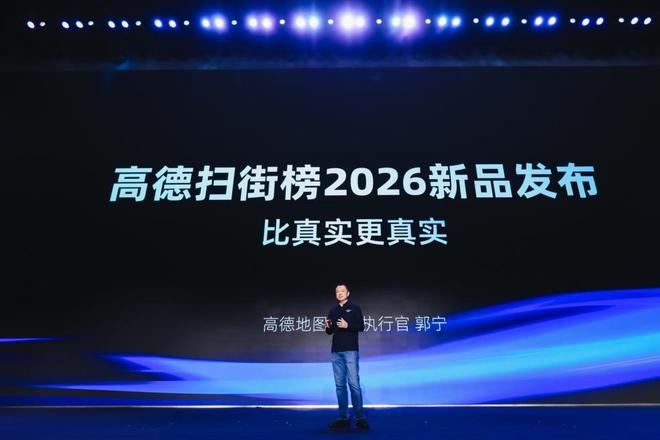
高德扫街榜上线100天后升级 要用技术重建本地生活的“真实感”
Huan Qiu Wang Zi Xun· 2026-01-08 03:54
Core Viewpoint - The launch of Gaode's "Flying Street View" marks a significant upgrade in the company's local life services, enhancing user trust and experience through advanced technology and personalized features [4][6][16]. Group 1: Product Features - Gaode's "Flying Street View" allows users to seamlessly transition from aerial views to interior scenes of establishments, addressing the trust gap in user decision-making [4][6]. - The technology behind "Flying Street View" is based on Gaode's self-developed world model, which has achieved the highest score in the WorldScore evaluation benchmark [6][7]. - The dynamic ranking system now includes over 6,553 seasonal lists and 1,550 category lists, covering 128,000 local signature dishes, allowing for personalized and user-generated rankings [12][11]. Group 2: User Engagement and Personalization - The introduction of the "personal ranking" feature enables users to create and share their own lists, enhancing the platform's engagement and personalization [12][13]. - The "friend dynamics" feature adds a layer of social trust to recommendations, allowing users to rely on personal endorsements rather than just platform ratings [12][13]. Group 3: Business Strategy and Ecosystem - Gaode aims to democratize technology by providing free access to "Flying Street View" for 1 million small businesses, shifting the focus from marketing skills to the quality of the establishments [13][14]. - The company has seen significant growth, with 46 million new monthly active users and a 330% increase in merchant order volume since the launch of the street ranking [15][16]. Group 4: Future Outlook - The main challenge for Gaode is not the technology itself but rather the ecosystem and user acceptance of the new features [14]. - The company envisions the street ranking evolving into a local life decision-making agent, providing tailored recommendations based on user preferences [14][16].
雷军:无论辅助驾驶多么先进,人驾还是非常关键
Sou Hu Cai Jing· 2026-01-03 14:52
Core Viewpoint - Xiaomi's founder and CEO Lei Jun launched the first live stream of 2026, showcasing the new Xiaomi YU7 and emphasizing the importance of safety in advanced driving assistance systems [3] Group 1: Product Launch and Features - The live stream lasted approximately four to five hours, highlighting the new features of the Xiaomi YU7 [3] - The enhanced Xiaomi HAD (Highway Assistance Driving) system incorporates reinforcement learning and world model technology, leading to significant improvements in user experience [3] Group 2: User Experience Enhancements - In terms of vertical experience, the vehicle's acceleration and braking are now smoother and more human-like, enhancing the sense of safety [3] - For lateral experience, the system demonstrates more decisive actions in acceleration, lane changes, and route planning [3] - The active safety capabilities have been upgraded, adding a new AES (Active Emergency Steering) function alongside the existing AEB (Automatic Emergency Braking) feature [3]


为何AI在物理世界走得更慢?世界经济论坛AI专家这么说
Di Yi Cai Jing· 2025-11-18 09:31
Core Insights - The year 2026 is anticipated to be a pivotal year for the deep integration of AI and robotics technologies, as AI applications evolve from reactive to proactive services [1][2] - Despite the rapid growth of AI applications, challenges remain in deploying AI in physical environments, particularly in industrial settings where precision and efficiency are critical [1] - A significant report from MIT indicates that 95% of companies have not achieved commercial returns on their generative AI investments, despite spending between $30 billion and $40 billion [4] Group 1: AI and Robotics Integration - The integration of AI, sensors, and robotics is increasingly evident in industrial and manufacturing scenarios, with expectations for advancements in world model technology [2] - The complexity of integrating robots into industrial settings is significantly higher than deploying chatbots, necessitating a better understanding of the physical world [1] Group 2: Business Strategies for AI Deployment - Companies must focus on deepening their domain expertise and integrating AI with specialized knowledge to avoid the pitfall of "AI for AI's sake" [4][5] - Maintaining innovation resilience and being willing to pivot away from non-valuable projects is crucial for companies deploying AI [4] - Successful AI implementations often begin with pilot projects that clearly define commercial value before scaling up [5] Group 3: AI Applications in China - The World Economic Forum's MINDS initiative highlights significant AI applications in key sectors, with Chinese projects making up 40% of the awards despite only representing 20% of the total applications [6] - The collaborative nature of AI applications in China, involving multiple stakeholders, accelerates the development process [6] - Chinese policymakers prioritize AI development, fostering an environment conducive to innovation and collaboration among industry and academia [6]