技术平权

Search documents
致AI时代的年轻人:你的时代来了
36氪· 2026-03-20 13:35
Core Viewpoint - The article emphasizes the importance of human insight and creativity in the AI era, suggesting that true barriers to innovation are not technological but rather the understanding of user needs and the ability to transform technology into solutions [8][14]. Group 1: Technological Empowerment - The last two years have witnessed unprecedented technological democratization, with open-source large models and cheaper computing power making AI tools accessible to the general public [5][6]. - Startups that once required millions of dollars to launch can now be initiated with just a smart mind, a computer, and countless sleepless nights [7]. Group 2: Human-Centric Innovation - The article argues that the most valuable resource in the AI era is the ability to understand user pain points and the creativity to turn technology into solutions [8]. - The focus is on finding individuals who can enhance human capabilities rather than just showcasing advanced technology [10][11]. Group 3: Competition Structure - The "Intelligent Youth Challenge" is designed to evaluate products based on their ability to empower individuals, regardless of the founder's background or the technology used [15]. - Three competition tracks are established: 1. "Second Brain" Challenge for products that enhance cognitive abilities [25]. 2. "Super Auxiliary" Challenge for hardware that helps users overcome physical limitations [27]. 3. "Super Individual" Challenge for models where one person can achieve what typically requires a team [29]. Group 4: Event Significance - The finals will take place at the WAVES conference, which is positioned as a significant platform in the Chinese venture capital landscape, providing exposure to influential investors and industry leaders [32][36]. - Participants will have opportunities for visibility, networking, and potential partnerships, enhancing their chances of success [20][22]. Group 5: Call to Action - The article invites individuals who are using AI to empower others to participate in the competition, emphasizing the need for visibility and understanding in the entrepreneurial journey [45][46]. - The registration process is straightforward, with no fees involved, encouraging broad participation [51].


比亚迪20260306
2026-03-09 05:18
Summary of BYD Conference Call Company Overview - **Company**: BYD - **Date**: March 6, 2026 Key Industry Insights - **Supercharging Platform 2.0**: BYD launched its Supercharging Platform 2.0, achieving 70% charge in 5 minutes and 97% in 9 minutes, with only an additional 3 minutes needed in extreme cold conditions at -30°C, addressing charging efficiency issues in northern regions [2][4] - **Charging Network Expansion**: BYD plans to build 20,000 megawatt charging stations by 2026, aiming for coverage of 3 km in first-tier cities and 4 km in third and fourth-tier cities, along with 2,000 high-speed charging stations [2][6] - **Battery Technology**: The second-generation blade battery has a 5% increase in energy density, exceeding 1,000 km in range, and supports 500 fast charging cycles without fire risk [2][9] Financial Projections - **Profit and Market Valuation**: BYD targets a profit of approximately 35 billion yuan by 2026, corresponding to a market valuation of 700-780 billion yuan. If domestic market share recovers to 30% with a per vehicle profit of 8,000 yuan, the overall market valuation could reach 1.2 trillion yuan [2][13][14] - **Sales Growth**: BYD aims for 1.02 million vehicle sales in 2025 and 1.5 million in 2026, with expected growth rates of 30%-50% in the long term [3][13] Technical Developments - **Charging Efficiency**: The focus of the recent launch was on improving charging efficiency to alleviate consumer anxiety regarding electric vehicle range, especially during peak times and in cold weather [4][5] - **Battery Management Improvements**: The new battery technology features a 50% reduction in internal resistance, enhancing charging speed and thermal management [8] - **Power System Upgrades**: The new motor achieves a power density of 16.4 kW/kg, supporting speeds over 300 km/h and rapid acceleration [10] Market Position and Strategy - **Market Share Recovery**: BYD's current market share is approximately 26%, with a historical high of 37%-38%. The company aims to stabilize and potentially increase its market share by addressing product homogenization through technological advancements [12] - **Regional Penetration**: Enhanced charging capabilities in cold regions are expected to improve acceptance of electric vehicles in northern areas, where current penetration is below 50% [5][6] Additional Insights - **"Dream Plan" Mechanism**: BYD's "Dream Plan" allows car owners to initiate the construction of charging stations in their locality, indicating a flexible approach to expanding its charging network [6] - **Collaborative Charging Stations**: The new charging stations will utilize a "solar-storage-charging" model to alleviate grid pressure and enhance charging efficiency [11] This summary encapsulates the critical points discussed in the conference call, highlighting BYD's strategic initiatives, technological advancements, and financial outlook in the electric vehicle market.

“像加油一样充电”?比亚迪铺设补能“新基建”
Xin Hua Cai Jing· 2026-03-09 00:57
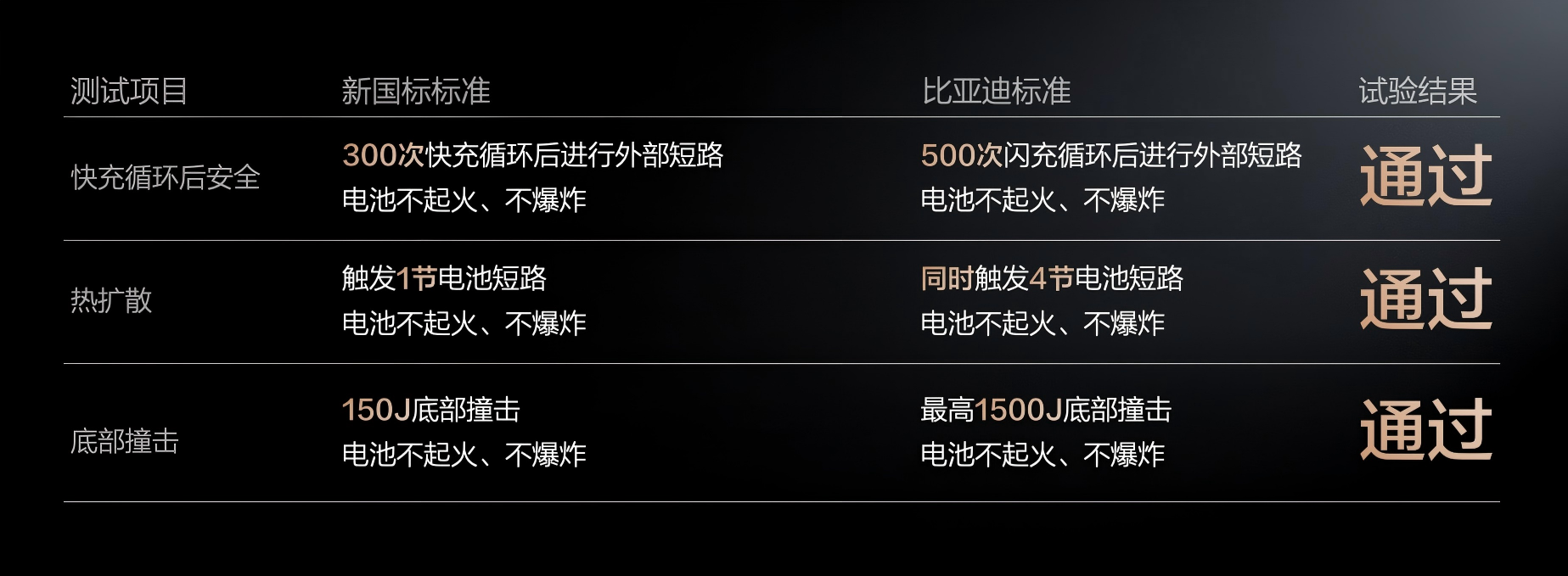
Core Insights - BYD focuses on battery technology, launching the second-generation blade battery and fast-charging technology to address challenges in electric vehicle (EV) usage [1][2] Group 1: Market Trends - The retail penetration rate of new energy vehicles (NEVs) has increased from 6% in 2020 to nearly 60% by 2025, representing a tenfold growth over five years [1] - However, in January 2026, the retail penetration rate dropped to 38.6%, attributed to increased long-distance travel demand during the Spring Festival, leading consumers to prefer fuel vehicles due to range anxiety [1] Group 2: Consumer Pain Points - Wang Chuanfu, Chairman of BYD, highlighted two main issues in the EV industry: consumer inconvenience and societal resource waste [3] - Consumers are still concerned about range anxiety despite many EVs having longer ranges than fuel vehicles, leading to additional costs and weight for extended range [3] - The societal cost to alleviate range anxiety could amount to several hundred billion yuan annually, given the current NEV ownership of approximately 45 million vehicles [3] Group 3: Charging Infrastructure Challenges - Wang criticized the inefficiency of charging infrastructure, noting that a gas pump serves about 50 vehicles daily, while a public charging station serves only about 5 [4] - The low utilization rate of electric grid resources, with only 5.6% of the capacity being used for charging, leads to significant waste [4] Group 4: Technological Innovations - BYD's second-generation blade battery aims to achieve charging speeds comparable to refueling a gasoline vehicle, with a charging time of 5 minutes to reach 70% and 9 minutes to 97% [6][9] - The battery has undergone rigorous safety testing, exceeding national standards, and offers a warranty with a higher capacity retention rate compared to the first generation [7] Group 5: Charging Station Development - BYD has developed a 1500 kW fast-charging station that can serve 50 vehicles daily, improving power utilization by tenfold [9] - The company plans to build 20,000 fast-charging stations, with 18,000 being "fast-charging stations within stations" to optimize land use [11] Group 6: Future Vision - BYD's "technology equity" concept aims to make advanced battery and charging technologies widely available across various vehicle models, enhancing accessibility [10] - The company plans to establish a comprehensive fast-charging network, with 2,000 stations by the end of 2026, to alleviate travel anxiety during holidays [10][11]
北美CSP大厂又来审厂、周末火热的openclaw、涨价的光纤
傅里叶的猫· 2026-03-08 12:10
Group 1: North American CSP Manufacturers - Major North American CSP companies, including Google, Meta, and Microsoft, are set to conduct factory audits in China, coinciding with the first quarter when large companies begin placing orders [1][2]. Group 2: Fiber Optic Price Surge - The price of G.652.D single-mode fiber has surged from 18 yuan/km before New Year's to 85-120 yuan/km, marking an increase of nearly 650%. Similarly, G.657.A1 and G.657.A2 single-mode fibers have seen price increases of approximately 487% and 557%, respectively [3]. - The current price surge is attributed to a combination of explosive demand and supply-side capacity constraints, indicating a significant shift in the market rather than a seasonal adjustment [3][6]. Group 3: OpenClaw and AI Development - OpenClaw has gained traction recently, transitioning from a niche interest among stock traders and engineers to broader attention, with companies like Tencent actively installing it [8][10]. - OpenClaw allows AI to interact directly with local file systems and terminal environments, enhancing productivity by eliminating the inefficiencies of traditional GUI-based software [10][11]. - The tool is particularly beneficial for individuals and small companies, enabling them to execute complex tasks without needing extensive programming knowledge [12]. Group 4: Skills and Economic Implications - OpenClaw's effectiveness is enhanced by its skills package, which provides essential functionalities that traditional models lack, such as search capabilities [14][15]. - The shift from traditional hiring costs to computational costs represents a significant change in how creative projects can be realized, making it easier for individuals to implement their ideas without the need for a full technical team [19]. - The focus should shift from the cost of tokens consumed to the value of time saved, as OpenClaw can drastically reduce the time required for tasks, allowing for more productive use of that time [20]. Group 5: Industry Insights and Updates - The recent updates to the knowledge platform include comprehensive daily reports that summarize news from major outlets and analyst insights across various industries, including AI, robotics, and memory technology [21].

闪充和千公里拍上桌,比亚迪摊牌了
Hua Er Jie Jian Wen· 2026-03-05 23:55
Core Viewpoint - BYD has launched its second-generation blade battery and fast-charging technology, aiming to regain its market leadership in the competitive electric vehicle sector, particularly after losing its top position to Geely in recent months [1][10]. Group 1: Product Launch and Technology - The second-generation blade battery features a system energy density of 190–210 Wh/kg, representing a 40% improvement over the first generation [3]. - The new battery maintains a low-temperature performance with a capacity retention rate of over 85% at -20°C, significantly better than traditional ternary lithium batteries [3]. - The 2026 model Yangwang U7 will be the first to use a 150 kWh battery pack, achieving a pure electric range of 1006 kilometers, marking a significant milestone for lithium iron phosphate technology [3]. - The newly introduced megawatt fast charging technology can reach peak power levels of 1500 kW, allowing for rapid charging times, such as charging from 10% to 70% in just 5 minutes [4]. Group 2: Market Strategy and Positioning - BYD's strategy involves a comprehensive rollout of its second-generation blade battery and fast-charging technology across all brands and price segments, aiming to disrupt the market by offering high-end features at lower price points [6][11]. - The company plans to establish 20,000 fast-charging stations and 2,000 fast-charging highway stations by the end of 2026, covering nearly one-third of highway service areas [5]. - The release of 10 new models, including the Yangwang U7 and Tengshi Z9 GT, demonstrates BYD's commitment to rapid product deployment and market penetration [5]. Group 3: Competitive Landscape - The recent policy changes regarding the reduction of new energy vehicle purchase tax have impacted BYD more severely than competitors like Geely, which has maintained a balanced product structure with both electric and fuel vehicles [7][8]. - The competition in the electric vehicle market is shifting from price-based competition to a focus on technological capabilities, with companies needing to provide robust technology in mainstream price ranges [8][11]. - BYD's ability to leverage its technological advancements will be crucial in determining its future market position, especially as competitors like Geely and others continue to innovate [11][12].

马斯克频繁为中国AI站台,真相被忽略了
虎嗅APP· 2026-03-05 00:19
Core Viewpoint - The article discusses Elon Musk's recent praise for Chinese AI models, particularly in the context of his business interests and competitive strategies in the AI sector. It highlights the implications of Musk's comments for both Tesla's operations in China and the broader AI landscape. Group 1: Musk's Interest in Small Models - Musk's excitement about small AI models, such as Qwen3.5, stems from their efficiency and ability to operate locally, which is crucial for applications like Tesla's Optimus robot and FSD (Full Self-Driving) technology [10][12][14]. - The Qwen3.5 models, with parameters ranging from 0.8B to 9B, can perform complex tasks while being lightweight enough for mobile and embedded devices, making them suitable for real-time applications [12][15]. Group 2: Business Implications for Tesla - Tesla's sales in China account for over one-third of its global sales, and the Shanghai factory is its largest production base. The company plans to invest over $20 billion in AI capabilities and autonomous vehicle production by 2026 [20]. - Tesla is reportedly using Chinese AI models for its in-car voice assistant, indicating a strategic shift to leverage local technology due to challenges faced by its own AI model, Grok [21][22]. Group 3: Competitive Dynamics - Musk's criticisms of competitors like Anthropic are intertwined with his business interests, as he aims to position his company, xAI, favorably in the market while undermining rivals [28][34]. - The article suggests that Musk's public support for Chinese AI serves a dual purpose: to enhance his own business prospects and to critique the limitations of American AI infrastructure [39][41]. Group 4: Broader Narrative and Strategy - Musk's comments about China's AI capabilities reflect a strategic narrative aimed at highlighting the need for reform in the U.S. energy and AI sectors, emphasizing the importance of power supply for AI development [38][40]. - By framing Chinese AI as a model of accessibility and efficiency, Musk seeks to position himself against perceived monopolistic practices in the AI industry, aligning with his long-standing anti-establishment persona [41][42].


技术平权,用户为王:上汽的“开门红”不只是一场销量胜利
Xin Lang Cai Jing· 2026-02-28 02:33
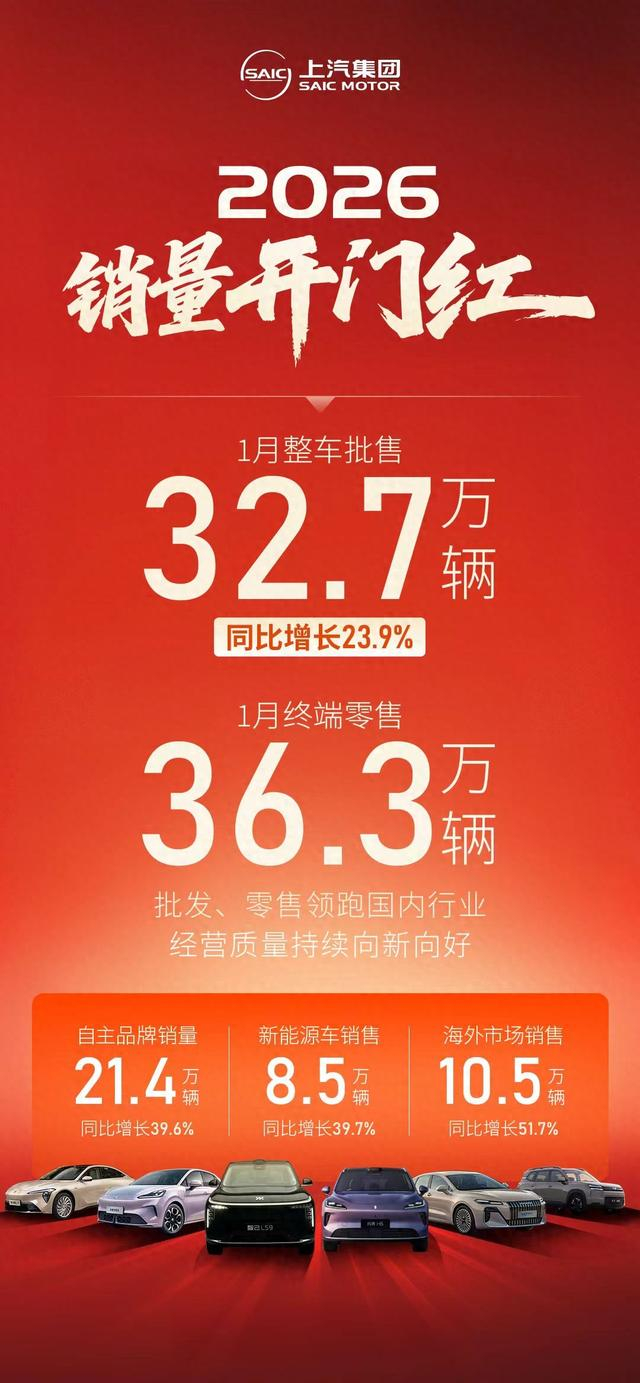
Core Insights - In January 2026, SAIC Motor Corporation achieved significant sales growth, with wholesale sales reaching 327,000 units, a year-on-year increase of 23.9%, and retail sales of 363,000 units [1] - The growth is attributed not only to scale but also to the implementation of "technology equality" and a "user-centric" approach, allowing the company to differentiate itself in a competitive market [1][5] - The company's self-owned brands played a crucial role, with sales of 214,000 units in January, up 39.6%, accounting for 65.3% of total sales, an increase of 7.3 percentage points year-on-year [1][6] Sales Performance - In the new energy vehicle segment, SAIC Motor's sales reached 85,000 units in January, marking a nearly 40% year-on-year increase, positioning the company among the industry leaders [1] - The MG4 model, featuring semi-solid-state batteries and integrated battery body technology, has become a standout product, achieving over 75,000 pre-orders and monthly sales exceeding 10,000 units [7][9] Overseas Strategy - Under the guidance of its Overseas Strategy 3.0, SAIC Motor's overseas sales reached 105,000 units in January, a 51.7% increase year-on-year, with MG delivering nearly 26,000 units in Europe, up approximately 15% [2] Reform and Innovation - The company initiated comprehensive reforms in the second half of last year, enhancing product definition, R&D, production, and marketing, which have begun to translate into improved sales and profitability [5] - SAIC Motor has invested over 150 billion yuan in electric and intelligent technologies, resulting in nearly 26,000 effective patents across various platforms [13][15] User-Centric Approach - The company has established a unified value expression of "understanding cars and understanding you," focusing on reshaping product and service logic to meet diverse user needs [12] - In early 2026, SAIC launched a series of promotional activities to enhance user experience and satisfaction, reinforcing its commitment to a user-centric philosophy [12] Future Product Launches - In 2026, SAIC plans to introduce a range of new products, including the A+ class sedan i6 and the LS9 Hyper version, which will feature advanced technologies such as line control steering [16][18] - The company aims to solidify its position in the high-end electric vehicle market with innovative models that leverage its technological advancements [18] Conclusion - The strong sales performance in January 2026 reflects the successful implementation of SAIC's reform and innovation strategies, marking a significant step towards establishing a new development paradigm focused on user needs and technological capabilities [19][21] - The company's ability to convert technological investments into user value will be crucial for maintaining its competitive edge in the evolving automotive landscape [21]

被遗忘的角落,烧起车市最猛的一把火
汽车商业评论· 2026-02-24 23:06
Core Viewpoint - The article discusses the revival of the small car market in China, highlighting a shift in consumer preferences towards smaller, more affordable vehicles that offer practicality and modern features, driven by technological advancements and policy support [7][28][58]. Group 1: Market Dynamics - In 2025, the retail volume of A0-class cars reached 1.13 million units, with a cumulative increase of 59%, making it one of the fastest-growing segments in the domestic car market [8]. - The return of the QQ brand and the rapid blind booking of the new QQ3, which received over 27,000 orders in just three hours, indicates a strong consumer interest in small cars [7][8]. - The shift from a focus on larger vehicles to smaller ones is attributed to changing market dynamics, where consumers are increasingly valuing practicality and affordability [7][10]. Group 2: Historical Context - The history of small cars in China reflects the evolution of consumer needs, where early models like the QQ addressed the demand for affordable vehicles among low-income families [10][11]. - The market saw a decline in small cars as consumer preferences shifted towards larger vehicles, driven by economic growth and urbanization, leading to a perception that bigger cars are more desirable [13][14][16]. Group 3: Technological and Policy Influences - The revival of the small car market is significantly influenced by favorable government policies, including subsidies that apply equally to low-cost and mid-range vehicles, enhancing affordability for consumers [28][49]. - Technological advancements in electric vehicle platforms have allowed small cars to offer better space utilization and features, breaking the stereotype that small cars are cramped [29][33]. Group 4: Consumer Behavior and Preferences - Modern consumers, particularly younger generations, are looking for vehicles that reflect their lifestyle and personal aesthetics rather than merely serving as utilitarian transport [39][40]. - The perception of small cars is changing, with consumers no longer viewing them as inferior options but as stylish and practical choices for urban living [40][58]. Group 5: Competitive Landscape - The competition in the small car market is intensifying, with both domestic and international brands recognizing the growth potential and investing in new models [51][57]. - Future competition will likely focus on value rather than price, with brands needing to enhance the emotional and experiential value of small cars to attract consumers [57][58].

全球用户涌入中国AI视频生成模型 AI“技术平权”加速: 1人剧组时代或将来临
Xin Lang Cai Jing· 2026-02-16 01:30
Group 1 - The core viewpoint of the article highlights the rapid adoption of ByteDance's new video generation model Seedance 2.0, which is revolutionizing video creation by allowing users to generate videos from simple text, images, or video materials [1] - Seedance 2.0 has gained popularity for its realistic visual effects and ease of use, attracting many users, including international ones who are eager to learn how to utilize the technology [1] - The model incorporates a significant amount of Eastern aesthetic materials during its training phase and demonstrates strong capabilities in controlling camera language and complex interactions [1] Group 2 - Industry experts believe that the advancements in AI video generation technology are accelerating "technological equality," enabling individuals to potentially create a 90-minute film in a single day [1] - The upgrade of AI video generation models is expected to further drive the growth of niche markets such as AI comic dramas, short dramas, and interactive films, with the comic drama market anticipated to experience rapid expansion [1] - The trend of "one-person companies" or "one-person crews" is expected to become increasingly popular as a result of these technological advancements [1]
从 Clawdbot 到 26 年 AI Coding 主题大爆发|42章经
42章经· 2026-02-13 13:04
Core Insights - The article discusses the rapid advancements in AI coding capabilities, particularly through tools like Clawdbot, which signify a shift in how coding tasks are approached and executed [3][4][5]. - The conversation highlights the diminishing need for human intervention in coding, with AI now capable of handling tasks that previously required significant human oversight [8][12][18]. - The emergence of various AI products, including Claude Code and Skills, showcases the evolving landscape of AI agents and their applications in programming and beyond [16][22][25]. Group 1: AI Coding Evolution - The capabilities of AI coding agents have crossed a significant threshold, allowing them to operate with minimal human input, reducing the need for human intervention to as low as 0.1% [8][12]. - The progression of AI coding has been marked by a transition from basic functionality to more complex project management, with AI now able to design and review code effectively [10][11]. - The productivity of AI in coding tasks is highlighted, with claims that AI can produce the equivalent of a senior engineering team's output in a fraction of the time [12][18]. Group 2: Key AI Products - Claude Code is identified as a foundational tool that enables AI to manipulate real-world tasks through programming, setting the stage for future developments in AI agents [16][22]. - Cowork is described as a plugin for Claude Code, enhancing its capabilities but not representing a major breakthrough in AI technology [19][20]. - Skills are presented as a more flexible and user-friendly alternative to previous models, allowing for easier integration and combination of functionalities [25][26][30]. Group 3: Clawdbot Overview - Clawdbot is characterized as a versatile assistant that operates on personal computers, capable of executing a wide range of tasks through natural language interaction [31][32]. - The importance of running Clawdbot locally is emphasized for security reasons, as it requires complete control over the environment to function effectively [35][36]. - Clawdbot's design includes a memory system that allows it to learn and adapt over time, enhancing user experience and task execution [41][42]. Group 4: Future Implications - The article suggests that the future of software development may involve either fully human-written code as an art form or entirely AI-generated code, with human involvement potentially complicating AI processes [16][18]. - The concept of "Box" is introduced as a way to encapsulate skills and environments, allowing for more reliable execution of tasks without side effects [68][72]. - The discussion concludes with the notion that as AI capabilities grow, the focus will shift towards leveraging these tools for efficiency and addressing long-tail needs in various sectors [55][59].