中美产业博弈

Search documents
中美航运摩擦引爆重大冲击:中企巨亏,美商承压,日韩获利全球洗牌
Sou Hu Cai Jing· 2025-10-21 17:43
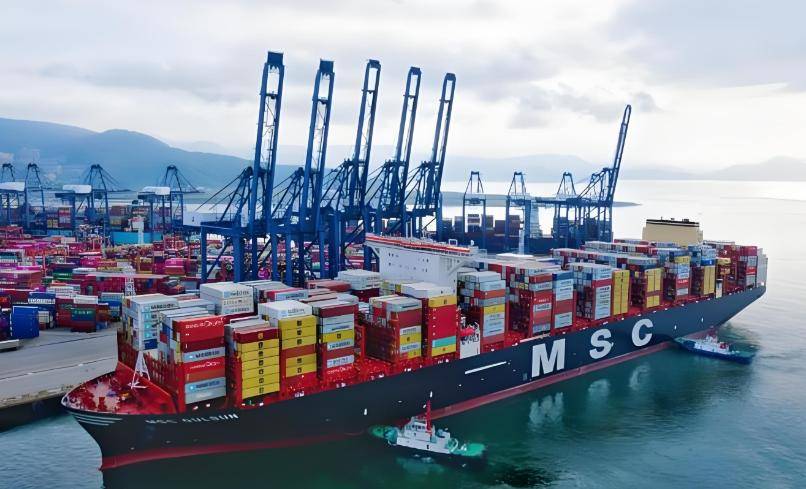
Core Insights - The ongoing trade tensions between the US and China have significantly impacted global shipping and trade dynamics, leading to increased costs and delays for consumers [1][3][12] - As a result of these tensions, countries like Mexico have emerged as new key trade partners for the US, marking a shift in global supply chains [3][5] - The situation has led to a surge in new ship orders for South Korean and Japanese shipyards, with a 20% year-on-year increase in orders [3][5] Group 1: Shipping Industry Impact - The US has imposed hefty fees on Chinese ships docking at American ports, potentially costing up to $1.2 million per vessel, which has forced Chinese shipping companies to redirect their services [5][7] - Chinese shipping giant COSCO is expected to incur an additional $2.1 billion in costs by 2026 due to these new fees, significantly affecting its profitability [7][9] - The retaliatory measures from China include a tiered port fee structure for US ships, escalating costs for American shipping companies [7][9] Group 2: Consumer and Trade Effects - Increased shipping costs are being passed on to American consumers, with prices for imported goods rising by 3% to 5% [9][12] - The Peterson Institute for International Economics estimates that a 15% increase in shipping costs could raise US inflation by 0.8% [9][12] - American farmers are particularly affected, with delays in shipping leading to higher prices for US soybeans compared to Brazilian alternatives, resulting in lost market opportunities [9][12] Group 3: Global Supply Chain Shifts - As shipping routes become congested and expensive, European ports like Hamburg and Rotterdam are experiencing increased activity, with container volumes rising significantly [11] - The China-Europe Railway Express has seen a 30% increase in freight volume, while shipping costs have decreased by 12% [11] - Major shipping companies are adapting by forming alliances to optimize routes and reduce costs, with COSCO collaborating with other firms to share resources [11][12]

美国又一轮生物安全法案,中企如何应对?
Hu Xiu· 2025-10-19 04:03
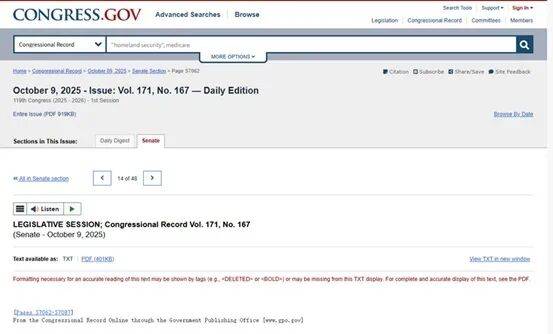
Core Viewpoint - The U.S. Senate passed the 2026 Fiscal Year National Defense Authorization Act (NDAA) on October 9, 2025, which includes a new version of the Biosecurity Act (S.A.3841) as an amendment, significantly impacting the global biopharmaceutical industry [1][2]. Legislative Path and Evolution - The 1.0 version of the Biosecurity Act was introduced in May 2024 but failed to pass due to high Senate thresholds and the impending congressional turnover [3][4]. - The 2.0 version was introduced in 2025 and successfully attached to the NDAA, significantly increasing its chances of passing due to the NDAA's mandatory nature [5][4]. Sanction Logic and Scope - The new legislation follows a "Huawei-style sanction" logic, identifying Chinese biotech companies as threats to U.S. national security, thus prohibiting U.S. federal agencies from procuring their products or services [6]. - The sanction list will include entities identified by the Department of Defense and other agencies, with a 90-day appeal period for those listed [7]. Transition Period and Exemption Rules - The 2.0 version includes a transition period of 2-3 years before sanctions are implemented, allowing time for strategic adjustments [8][9]. - Existing contracts signed before the legislation may not be retroactively exempt, which could impact companies' operational strategies [8]. Strategic Adjustments for Chinese Companies - Companies with overseas production or R&D bases should strengthen local barriers and consider relocating core projects to non-China sites [11][12]. - Companies without overseas bases should develop tiered strategies, focusing on localizing key markets and diversifying customer bases to mitigate risks associated with U.S. federal clients [14]. Industry-Wide Actions - The industry should unify efforts to create a defensive network in critical areas where China holds a monopoly, particularly in active pharmaceutical ingredients (APIs) [15]. - China's dominance in the global supply chain for APIs presents a strategic advantage that can be leveraged against unilateral restrictions [15][17].
中国一纸禁令,何以撼动韩国造船巨头?
Sou Hu Cai Jing· 2025-10-15 01:04
Core Viewpoint - The significant drop in Hanwha Ocean's stock price is attributed to a trade conflict between China and the U.S., leading to a ban on transactions with its U.S. subsidiaries by the Chinese Ministry of Commerce [1][3]. Stock Price Decline - On October 14, Hanwha Ocean's stock fell sharply, with an intraday drop exceeding 10% and closing down 8.3%, marking a rare volatility for a large shipbuilding company [3]. - The entire Hanwha Group's stocks showed weakness, with Hanwha Aerospace also declining over 3%, indicating market concerns about the group's overall risk [3]. Global Strategy of Hanwha Group - Hanwha Group, established in 1952, has built a global business network, with Hanwha Ocean being a key player in the shipbuilding industry, holding a market share of 5%-8% globally [3]. - Hanwha Ocean has focused on high-tech, high-value-added shipbuilding, particularly in the LNG carrier and ultra-large container ship markets [3]. - The company has accelerated its global expansion, establishing eight overseas entities in various countries last year and continuing to expand in India and Brazil in the first half of this year [3][5]. U.S.-China Relations Impact - Hanwha Ocean's challenges are closely linked to its deep ties with the U.S., particularly in defense and energy sectors, where it plays a crucial role in supplying military systems and supporting U.S. LNG exports [4]. - The company has made significant investments in the U.S., including a $100 million acquisition of a shipyard and taking on U.S. Navy ship repair contracts, which complicates its position in the U.S.-China trade conflict [4]. Ambitions in Emerging Markets - Hanwha Ocean is actively pursuing opportunities in emerging markets, establishing a global engineering center in India to cater to the growing offshore equipment market [5]. - In Brazil, the company has formed a subsidiary to engage in offshore equipment projects, including bidding for a significant FPSO project with Petrobras [5][6]. Control and Governance - Despite U.S. investments, Hanwha Ocean's control remains firmly in the hands of Korean stakeholders, with the Kumho Global investment company, owned by the Kim family, being the largest shareholder [8][9]. - The presence of U.S. funds in Hanwha Group is primarily as passive investors, without influence over governance or strategic decisions [9]. Complexity of Global Trade Dynamics - The intricate global network of Hanwha Group means that trade tensions can have widespread implications, affecting not just shipbuilding but also its solar panel factories and military industries [10][11]. - The stock price decline of Hanwha Ocean is a visible indicator of the broader impacts of global trade dynamics [11].