
超大型集装箱船

Search documents
从“工程师红利”到“科学家红利”,双重优势如何助力中国制造出海
第一财经· 2026-03-10 15:39
Core Viewpoint - China is transitioning from an "engineer dividend" to a "scientist dividend," indicating a shift towards advanced technology and innovation in various industries, particularly in biopharmaceuticals and shipbuilding [3]. Group 1: Biopharmaceuticals - The revenue from technology licensing in China's biopharmaceutical and gene pharmaceutical sectors reached $135 billion in the previous year, showcasing significant growth from a focus on raw materials and generic drugs [3]. - A major report on liver cancer prevention and treatment, led by Chinese scholars, was published in The Lancet, marking a historic achievement for Chinese research in global health [7]. Group 2: Shipbuilding Industry - Chinese shipbuilders, particularly Hudong-Zhonghua, have gained international orders due to superior technology and quality, with a strategic focus on high-value ship types like LNG carriers and ultra-large container ships [4]. - In 2025, China is projected to complete 53.69 million deadweight tons of shipbuilding, accounting for 56.1% of the global total, with new orders reaching 107.82 million deadweight tons, representing 69.0% of the global market [5]. - The market share of Chinese shipbuilders in the LNG sector has improved significantly, with the ratio of Chinese to Korean market share narrowing from 1:9 to 3:7 [4]. Group 3: Nuclear Energy - China has developed a fifth-generation nuclear energy system, termed "Chinese Hedianbao," which has been recognized internationally and is characterized by its small size, modularity, and long-term stable operation [7][8]. - The "nuclear treasure" technology is expected to play a crucial role in providing stable, low-carbon power for various applications, including remote areas and high-load computing centers, highlighting its potential in international markets [8].

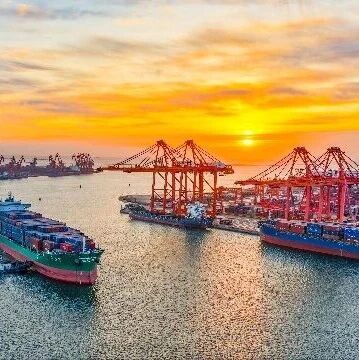
106艘巨单!中国船厂包揽
Xin Lang Cai Jing· 2025-12-12 14:20
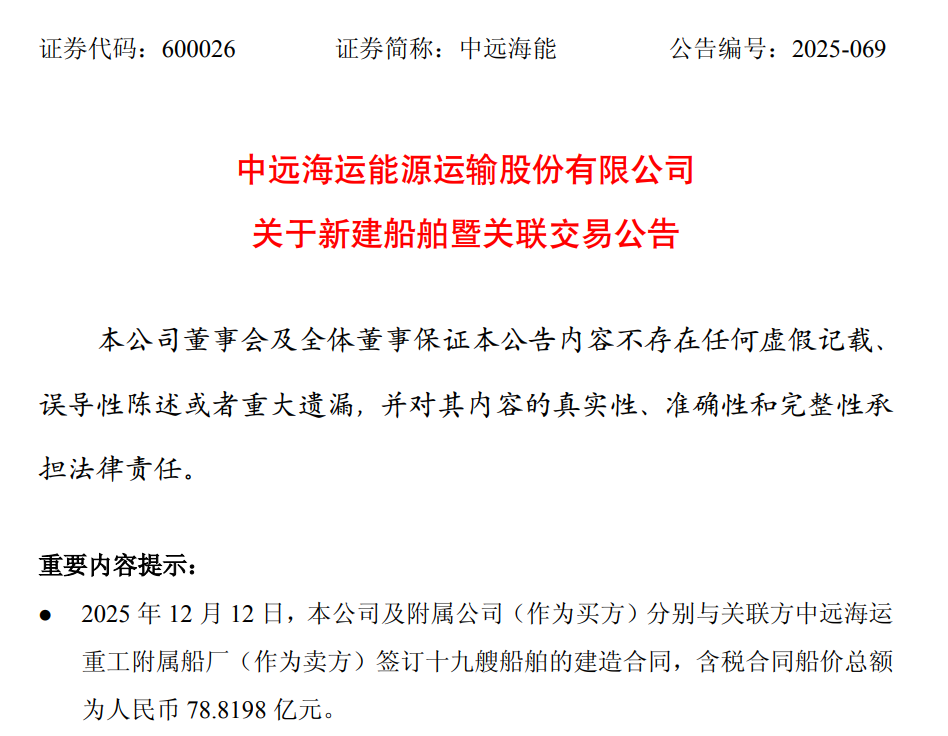
Core Insights - China COSCO Shipping Group's subsidiary, COSCO Shipping Energy Transportation Co., Ltd., announced the signing of contracts for the construction of 19 vessels with a total contract price of RMB 7.88198 billion, with total investment including capitalized costs around RMB 8.124 billion [1][8] - In a week, COSCO Shipping Group and its subsidiaries ordered a total of 106 new ships, all to be built by Chinese shipyards, with a significant order of 87 vessels worth over RMB 50 billion signed with China Shipbuilding Group [1][8] Summary by Category Contract Details - COSCO Shipping Heavy Industry's subsidiaries received orders for various types of vessels, including 10 new ships from Dalian COSCO Shipping Heavy Industry Co., Ltd., 4 new ships from Yangzhou COSCO Shipping Heavy Industry Co., Ltd., and 5 new ships from Guangdong COSCO Shipping Heavy Industry Co., Ltd. [3][11] - Specific contracts include one 9,000 cubic meter LNG dual-fuel ethylene carrier priced at RMB 327.98 million, two LR I product/oil tankers at RMB 912 million each, three MR product/oil tankers at RMB 1.047 billion each, and four MR crude oil tankers at RMB 1.37 billion each [3][11] Environmental and Operational Strategy - The new vessels will utilize clean energy systems such as LNG and methanol dual-fuel, aligning with global shipping decarbonization trends and enhancing the competitiveness of the vessels throughout their lifecycle [4][12] - The addition of new shipping capacity aims to improve the operational flexibility and efficiency of COSCO Shipping Group's fleet, thereby solidifying market share and sustainable profitability [4][12] Broader Industry Context - The 87 new ship projects signed with China Shipbuilding Group involve multiple subsidiaries and include various vessel types such as ultra-large container ships, bulk carriers, and oil tankers, indicating a robust demand in the shipbuilding sector [4][13]

中国船舶承建87艘船金额500亿 吸并中国重工后总资产达4060亿
Chang Jiang Shang Bao· 2025-12-10 23:40
Core Viewpoint - The signing of a new shipbuilding project between China Shipbuilding Group and China COSCO Shipping Group marks a historic moment for China's shipbuilding industry, involving 87 vessels with a total value of approximately 50 billion RMB, making it the highest single contract amount in the domestic shipbuilding sector [2][4]. Group 1: Project Details - The cooperation involves 87 vessels across various types, with a total contract value of about 500 billion RMB, of which approximately 470 billion RMB will be settled in cross-border RMB [2][3]. - The project will be undertaken by subsidiaries of China Shipbuilding, including Jiangnan Shipyard, Dalian Shipbuilding Industry, and others [4][5]. Group 2: Financial Performance - In the first three quarters of 2025, China Shipbuilding achieved a revenue of 107.4 billion RMB, representing a year-on-year growth of 17.96%, and a net profit attributable to shareholders of 5.85 billion RMB, up 115.41% year-on-year [8][9]. - The company has seen a significant increase in revenue and profit due to an optimized order structure and improved delivery of civil ship products [9]. Group 3: Future Outlook - The long-term contract is expected to positively impact the company's future revenue and profitability, enhancing its market competitiveness and profitability [5]. - The company plans to engage in futures and derivatives trading to mitigate risks associated with currency fluctuations and commodity price volatility, with a projected trading limit of up to 24 billion USD for 2026 [10]. Group 4: Industry Trends - The shipbuilding industry is moving towards green and intelligent development, with a focus on technological innovation and low-carbon solutions [6].
中国船舶(600150):联合研究|公司点评|中国船舶(600150.SH):中国船舶:与中国远洋海运集团签订500亿元新造船订单,全年新签订单有望持续提升
Changjiang Securities· 2025-12-09 14:15
Investment Rating - The investment rating for the company is "Buy" and is maintained [6]. Core Viewpoints - China Shipbuilding Group has signed a new shipbuilding project with China Ocean Shipping Group in Shanghai, involving 87 vessels with a total value of approximately 50 billion RMB, marking the highest single cooperation contract amount for domestic shipbuilding companies in China [2][4]. - The company has enhanced its comprehensive shipbuilding capabilities following the merger with China Shipbuilding Industry Corporation, leading to a robust order backlog and the expectation of continued growth in new orders throughout the year [2][10]. - The lifting of the U.S. 301 investigation measures has alleviated significant pressure on the sector, resulting in a substantial increase in global new orders in November, with a year-on-year growth of 32% and a month-on-month growth of 62% [10]. - The demand for shipping is improving, particularly for oil tankers, which are expected to follow container ship orders, driven by the need for fleet renewal and environmental considerations [10]. Summary by Relevant Sections Company Overview - The new shipbuilding project includes a wide range of vessel types, such as ultra-large container ships, bulk carriers, and oil tankers, with construction primarily handled by subsidiaries of China Shipbuilding [10]. - The company’s order backlog is robust, with orders scheduled until the end of 2028, and some extending to 2029, indicating strong future revenue support [10]. Financial Projections - For the years 2025 and 2026, the company is projected to achieve net profits of 10.315 billion RMB and 18.171 billion RMB, respectively, with corresponding price-to-earnings ratios of 25 times and 14 times [10]. - The total revenue is expected to grow significantly, with projected revenues of 78.584 billion RMB in 2024, increasing to 254.252 billion RMB by 2027 [14]. Market Dynamics - The global shipping industry is experiencing a recovery, with increasing demand for new vessels and rising second-hand ship prices, indicating a potential turning point for new ship prices [10]. - The company is well-positioned to attract global shipbuilding orders due to its technological, capacity, and cost advantages, reinforcing its status as a leading player in the shipbuilding sector [10].
申万宏源证券晨会报告-20251209
Shenwan Hongyuan Securities· 2025-12-09 00:45
Group 1: Market Overview - The Shanghai Composite Index closed at 3924 points, with a daily increase of 0.54% and a monthly increase of 0.26% [1] - The Shenzhen Composite Index closed at 2499 points, with a daily increase of 1.22% and a monthly increase of 0.81% [1] - Large-cap indices showed a daily increase of 0.84%, while mid-cap and small-cap indices increased by 1.13% and 1.22% respectively [1] Group 2: Industry Performance - The telecommunications equipment sector saw a significant daily increase of 5.96%, with a monthly increase of 12.58% and a remarkable 122.51% increase over the past six months [1] - Other electronic sectors and components also experienced positive growth, with increases of 4.77% and 4.08% respectively in the last day [1] - Conversely, the coking coal sector faced a decline of 1.9% yesterday, with a 6.92% decrease over the past month [1] Group 3: Policy Insights - The Central Political Bureau emphasized the need for better coordination between domestic economic work and international trade struggles, highlighting the importance of internal stability amid external uncertainties [10] - The meeting reiterated the focus on domestic demand, stating that policies will prioritize consumer and investment support to foster economic growth [10] - The "14th Five-Year Plan" was discussed, identifying ten key investment opportunities in future industries, including artificial intelligence, robotics, and aerospace [10][12] Group 4: Company-Specific Developments - China Shipbuilding Group announced a significant cooperation agreement worth approximately 500 billion RMB, involving the construction of various types of vessels [18] - The company reported a substantial increase in new orders, with a 144% month-on-month growth in November [18] - The outlook for the shipbuilding sector remains positive, driven by rising shipping rates and a favorable market environment [18] Group 5: Future Industry Trends - The report suggests that the "14th Five-Year Plan" will focus on advancing future manufacturing, information technology, and energy sectors, with specific attention to strategic resources and innovative pharmaceuticals [10][12] - The integration of the entire lithium battery supply chain is highlighted as a key growth area, with companies like Huayou Cobalt expanding their operations in nickel, cobalt, and lithium [23] - The anticipated growth in demand for clean energy and storage solutions is expected to drive profitability in the lithium sector, with projections for significant increases in production capacity [23]
中国船舶(600150.SH)实控人中国船舶集团签署约500亿元新造船项目合同 由公司下属承建
智通财经网· 2025-12-08 14:48
Core Viewpoint - China Shipbuilding (600150.SH) has signed a cooperation agreement with China COSCO Shipping Group in Shanghai for a new shipbuilding project involving 87 vessels, with a total value of approximately 50 billion RMB [1] Group 1: Project Details - The cooperation involves a total of 87 vessels across various types, with a project value of around 50 billion RMB, of which approximately 47 billion RMB will be settled in cross-border RMB [1] - The project will be undertaken by subsidiaries of China Shipbuilding, including Jiangnan Shipyard, Dalian Shipbuilding Industry Group, Wuchang Shipbuilding Industry Group, Guangzhou Shipyard International, China Shipbuilding Group Qingdao Beihai Shipbuilding, and China Shipbuilding Group [1] Group 2: Types of Vessels - The types of vessels included in the project are ultra-large container ships, ultra-large bulk carriers, ultra-large oil tankers, grain transport ships, multi-purpose heavy-lift vessels, MR tankers, passenger and roll-on/roll-off ships, and small container ships [1]
出台发展规划 上海推动海洋经济高质量发展
Zhong Guo Zheng Quan Bao· 2025-12-04 20:22
Core Insights - The Shanghai Municipal Government has released the "Shanghai Marine Industry Development Plan (2026-2035)", aiming for significant growth in marine industries and enhanced innovation capabilities by 2030, with a comprehensive marine industry system established by 2035 [1] Group 1: Marine Industry Development - By 2030, Shanghai aims to see steady growth in major marine industries, with a focus on self-innovation in marine technology and the cultivation of new productive forces [1] - The plan outlines a "3+5+X" marine industry system and a spatial layout characterized by "two cores leading, one belt linking, one corridor radiating, and multi-point support" [1] - The plan emphasizes the importance of policies that encourage the development and innovation of the marine economy, with emerging industries like offshore wind power and marine biomedicine driving structural optimization [1][7] Group 2: Key Industry Focus Areas - In the shipbuilding and offshore engineering sector, the plan calls for accelerated development of high-tech vessels such as large LNG carriers and cruise ships, as well as a robust system for high-end marine equipment [2] - The marine renewable energy sector will focus on the development of offshore wind turbines and photovoltaic technologies, promoting diverse and integrated development of marine renewable energy [2] - Future marine industries will include deep-sea resource industries and innovative sectors, with an emphasis on deep-sea oil and gas development and marine nuclear power vessels [2][3] Group 3: Strategic Tasks and Infrastructure - The plan outlines five strategic areas: building high-energy clusters, leading with high-efficiency innovation, ensuring high-quality infrastructure, advancing digital intelligence, and fostering high-level cooperation [3][4] - To create a world-class shipbuilding and offshore equipment industry cluster, the plan encourages the cultivation of globally leading marine groups and innovation across the entire industry chain [3] - The development of a modern shipping service system includes building international hub ports and enhancing shipping insurance capabilities, alongside establishing a green fuel supply center for shipping [4] Group 4: New Productive Forces in Marine Economy - The "China Marine Economic Development Report 2025" indicates that the national marine production value reached 10.5 trillion yuan, reflecting continuous expansion of the marine economy [6] - The report highlights that cities like Shanghai, Shenzhen, and Qingdao are enhancing their international competitiveness in marine sectors, while others are focusing on specialized marine development [6] - The marine economy is identified as a key area for cultivating new productive forces, with sectors like offshore wind power and marine biomedicine leading the way in structural optimization and traditional industry upgrades [7]
印度要做造船大国:理想很丰满,现实不是一般骨感
Sou Hu Cai Jing· 2025-11-12 12:12
Core Viewpoint - India's shipbuilding industry is rapidly developing, with ambitions to become a global leader in the sector, particularly in light of recent geopolitical shifts affecting Chinese shipbuilding [1][3]. Group 1: Current Developments - Indian Prime Minister Modi announced the rapid rise of India's shipbuilding industry at the international maritime exhibition in Mumbai, inspiring many [1]. - The U.S. has recently imposed high port management fees on Chinese ships, creating an opportunity for India to fill the gap in the global shipbuilding market [1][3]. - Currently, India holds only 1% of the global shipbuilding market, while major players like China, South Korea, and Japan account for 90% [3]. Group 2: Future Goals - The Indian government aims to increase its shipbuilding market share to 20% by 2047, coinciding with the centenary of India's independence [3]. - Achieving this goal could potentially allow India to surpass Japan, but overtaking South Korea or China remains highly unlikely due to existing advantages held by these countries [3]. Group 3: Dependency on Foreign Support - India's shipbuilding industry relies heavily on foreign support, particularly from South Korea and Japan, as seen in the development of the Kochi shipyard with Mitsubishi Heavy Industries' assistance [5]. - The Kochi shipyard plans to build five vessels annually from 2019 to 2024, which is comparable to China's small shipyards [5]. - A recent collaboration with South Korea's Hyundai has provided India with technical support and shipbuilding orders, yet significant challenges remain in closing the gap with China [5]. Group 4: Comparison with China - China's shipbuilding industry has thrived due to strong government support, strategic policies, and significant investments in technology and infrastructure [7]. - Cost advantages, a mature supply chain, and technological innovations have positioned China as the leading shipbuilding nation, making it difficult for India to compete [7]. - China's capabilities, including the largest dry docks and advanced lifting equipment, further enhance its competitive edge over India and other nations [7].
靠港费用暴涨3562万,美国船东:我每艘船去中国,我的心都在滴血
Sou Hu Cai Jing· 2025-11-03 12:45
Core Viewpoint - The recent escalation of Sino-U.S. trade tensions has led to the implementation of new port fees by China on U.S. vessels, significantly impacting the shipping industry and increasing operational costs for American shipowners [1][4][7]. Group 1: New Regulations and Their Impacts - On October 14, 2025, China's Ministry of Transport implemented new port fees for U.S.-related vessels, which were a direct response to the U.S. imposing additional port service fees on Chinese vessels [1][4]. - The new fees start at 400 RMB per net ton and will increase to 1120 RMB by 2028, leading to substantial costs for large vessels, such as a 16,000-ton oil tanker incurring fees of 64 million RMB in 2025 and potentially 179 million RMB by 2028 [4][7]. - The U.S. has been conducting investigations into China's maritime and logistics sectors since April 2025, aiming to curb China's dominance in shipbuilding, which accounts for over 60% of global new ship orders [4][7]. Group 2: Reactions from the Shipping Industry - American shipowners are facing severe financial strain due to the new fees, with some reporting losses that could consume nearly half of their annual profits [11][13]. - The shipping industry is experiencing a shift, with companies considering various strategies to mitigate costs, including changing vessel flags and ownership structures to avoid the new fees [13][15]. - Major shipping companies, including Matson and Hapag-Lloyd, have begun rerouting vessels to avoid Chinese ports, leading to increased operational costs and delays [15][17]. Group 3: Broader Economic Implications - The new port fees are expected to increase consumer prices in the U.S., with estimates suggesting a 3% to 5% rise in retail prices due to higher shipping costs being passed on to consumers [15][20]. - The shipping fee conflict has led to a shift in global shipping patterns, with Southeast Asian ports experiencing increased activity as cargo is rerouted away from China [17][20]. - The situation highlights the vulnerabilities in U.S. maritime interests and the potential for increased competition from South Korean and Japanese shipbuilders, who are benefiting from the sanctions against China [18][22].

船舶“智”造主题采访行启动
Zhong Guo Zi Ran Zi Yuan Bao· 2025-10-30 08:07
Core Insights - China Shipbuilding Group launched its brand promotion week and open day event, showcasing advancements in smart shipbuilding and innovations in the LNG sector [1][2] - The event included media interactions with frontline employees and technology achievements, highlighting the company's role in the LNG industry and its commitment to green energy solutions [1] Group 1: Company Achievements - China Shipbuilding Group has developed a world-class advanced industrial cluster for marine equipment, including large cruise ships, very large crude carriers (VLCCs), large LNG carriers, and ultra-large container ships [2] - The company is continuously extending its reach into the high-end global industrial and value chains, enhancing its international competitiveness [2] Group 2: Technological Innovations - The event featured various technological advancements, including breakthroughs in optical, navigation, quantum measurement, and semiconductor manufacturing [1] - The company is focusing on low-carbon and zero-carbon ship engines, aiming to lead in green energy and drive the "Deep Blue" vision [1] - The Shanghai Shipbuilding Research Institute is leading the development of green low-carbon ship design and smart ship trends [1]