
生物安全法案

Search documents
涉及华大,美国知名法案“搭车”发布,态度“缓和”但风险仍在
仪器信息网· 2025-12-15 09:07
Core Viewpoint - The revised version of the Biological Safety Act has been incorporated into the National Defense Authorization Act (NDAA) for fiscal year 2026, marking a significant legislative step since its introduction in 2024 [2]. Group 1: Legislative Changes - The revised act eliminates direct naming of specific companies, such as WuXi AppTec and BGI, and instead allows the White House and the Office of Management and Budget (OMB) to create a dynamic list of "biotechnology companies of concern" within one year after the act's passage [3]. - A three-year grace period is established for existing contracts to avoid immediate impacts, and Medicare Part B is explicitly exempted from restrictions, reducing opposition from large pharmaceutical companies [3]. - The act limits its scope to contracts governed by the Federal Acquisition Regulation (FAR), excluding commercial retail or non-federal funding transactions [3]. Group 2: Immediate and Long-term Implications - The removal of direct naming helps avoid "labeling" companies, providing them time to adjust their supply chains, while the grace period and existing contract exemptions lessen the act's immediate impact on current operations [4]. - However, long-term risks remain as the dynamic list created by the OMB may still include Chinese companies, which would prevent them from participating in federal direct procurement contracts [4]. - The core aim of the act is to "cut off federal funding to identified 'biotechnology companies of concern'," which could still affect Chinese firms due to potential associations with foreign adversaries [4]. - The act may trigger a ripple effect, leading to restrictions on Chinese companies in other sectors, such as medical IT and biological data [4].



美国又一轮生物安全法案,中企如何应对?
Hu Xiu· 2025-10-19 04:03
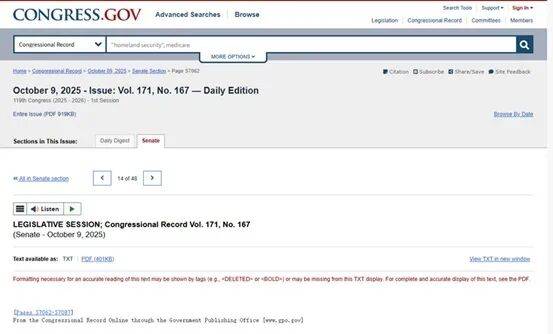
Core Viewpoint - The U.S. Senate passed the 2026 Fiscal Year National Defense Authorization Act (NDAA) on October 9, 2025, which includes a new version of the Biosecurity Act (S.A.3841) as an amendment, significantly impacting the global biopharmaceutical industry [1][2]. Legislative Path and Evolution - The 1.0 version of the Biosecurity Act was introduced in May 2024 but failed to pass due to high Senate thresholds and the impending congressional turnover [3][4]. - The 2.0 version was introduced in 2025 and successfully attached to the NDAA, significantly increasing its chances of passing due to the NDAA's mandatory nature [5][4]. Sanction Logic and Scope - The new legislation follows a "Huawei-style sanction" logic, identifying Chinese biotech companies as threats to U.S. national security, thus prohibiting U.S. federal agencies from procuring their products or services [6]. - The sanction list will include entities identified by the Department of Defense and other agencies, with a 90-day appeal period for those listed [7]. Transition Period and Exemption Rules - The 2.0 version includes a transition period of 2-3 years before sanctions are implemented, allowing time for strategic adjustments [8][9]. - Existing contracts signed before the legislation may not be retroactively exempt, which could impact companies' operational strategies [8]. Strategic Adjustments for Chinese Companies - Companies with overseas production or R&D bases should strengthen local barriers and consider relocating core projects to non-China sites [11][12]. - Companies without overseas bases should develop tiered strategies, focusing on localizing key markets and diversifying customer bases to mitigate risks associated with U.S. federal clients [14]. Industry-Wide Actions - The industry should unify efforts to create a defensive network in critical areas where China holds a monopoly, particularly in active pharmaceutical ingredients (APIs) [15]. - China's dominance in the global supply chain for APIs presents a strategic advantage that can be leveraged against unilateral restrictions [15][17].
医药股延续近期跌势 君实生物跌近8% 康龙化成跌超6%
Zhi Tong Cai Jing· 2025-10-13 02:28
Group 1 - Pharmaceutical stocks continue to decline, with CRO sector leading the drop, including significant declines in Junshi Biosciences (down 7.98%), Kanglong Chemical (down 6.3%), Kelaiying (down 5.69%), and Tigermed (down 3.48%) [1] - Recent market trends in the pharmaceutical sector are attributed to several factors, including a deal between the Trump administration and Pfizer to lower drug prices in the U.S., which is seen as a reconciliation signal between U.S. pharmaceutical companies and the government [1] - The U.S. Senate's consideration of a bill to prohibit certain Chinese biotech companies from receiving federal funding has led to a significant pullback in the CXO sector [1] Group 2 - Recent tensions in U.S.-China trade relations have escalated, with a renewed tariff war expected; however, the pharmaceutical market is not overly concerned as the industry has shown resilience since the first tariff war in April [2] - The innovative drug and CXO sectors have outperformed other sub-industries, driven by China's rising independent innovation and ongoing overseas business development, which are less affected by tariffs [2] - The CXO sector benefits from strong upstream and downstream relationships and a service pricing model that allows companies to pass on tariff pressures relatively freely [2]

港股异动 | 医药股延续近期跌势 君实生物(01877)跌近8% 康龙化成(03759)跌超6%
智通财经网· 2025-10-13 02:27
Group 1 - Pharmaceutical stocks continued to decline, with CRO sector leading the drop, including significant declines in companies like Junshi Biosciences (-7.98%), Kanglong Chemical (-6.3%), and others [1] - Recent market trends in the pharmaceutical sector are attributed to several factors, including a deal between the Trump administration and Pfizer to lower drug prices in the U.S., which is seen as a reconciliation signal between U.S. pharmaceutical companies and the government [1] - The U.S. Senate's consideration of a bill to prohibit certain Chinese biotech companies from receiving federal funding has led to a significant pullback in the CXO sector [1] Group 2 - Tensions in U.S.-China trade relations have escalated, with renewed tariff battles expected; however, the pharmaceutical market is not overly concerned as the industry has shown resilience [2] - The innovative drug and CXO sectors have performed exceptionally well since the first tariff battle in April, driven by China's rising independent innovation and ongoing overseas business development [2] - The CXO sector's strong business model allows companies to transfer tariff pressures relatively freely due to strong upstream and downstream relationships [2]
复盘《生物安全法案》对CXO行业影响,BD政策对创新药行业无实质影响
Huafu Securities· 2025-09-14 06:36
Investment Rating - The industry rating is "stronger than the market" indicating that the overall return of the industry is expected to exceed the market benchmark index by more than 5% in the next 6 months [6][75]. Core Insights - The report analyzes the impact of the "Biological Safety Act" on the CXO industry and concludes that the BD policies will not have a substantial effect on the innovative drug sector [4][28]. - The CXO companies have shown resilience, with stock prices recovering and reaching new highs despite the changes in the Biological Safety Act [4][17]. - The report emphasizes the advantages of China's innovative drug industry, including talent resources, research efficiency, and cost-effectiveness, which are expected to mitigate the impact of external policies [4][28]. Summary by Sections Market Review - During the week of September 8-12, 2025, the CITIC Pharmaceutical Index fell by 0.3%, underperforming the CSI 300 Index by 1.7 percentage points, ranking 28th among CITIC's primary industry classifications [3][30]. - Year-to-date, the CITIC Pharmaceutical and Biotechnology Index has risen by 27.8%, outperforming the CSI 300 Index by 12.9 percentage points, ranking 8th among CITIC's industry classifications [3][30]. - The top five performing stocks for the week included: Zhend Medical (+41.3%), Haooubo (+28%), Jimin Medical (+25.9%), Kangwei Century (+23.2%), and Ao Jing Medical (+20.5%) [3][44]. Impact of the Biological Safety Act - The report details the evolution of the Biological Safety Act since December 30, 2023, noting that the stock price reactions of representative CXO companies have become desensitized over time, with current prices surpassing levels from December 29, 2023 [4][17]. - The performance of CXO companies in the U.S. market has remained strong, with significant growth in orders and revenue despite the act's implications [24][28]. Investment Focus - The report suggests focusing on three main areas in the innovative drug and its supply chain: companies with revenue and commercialization capabilities, potential BD opportunities based on technological trends, and exploring cutting-edge technologies such as gene therapy and CAR-T [5][28]. - The medical device sector is also highlighted as a key area for investment, with expectations of a policy turning point and improving fundamentals [5][28]. Stock Recommendations - The report recommends a focus on specific stocks including Kangfang Biotech, Baiji Shenzhou, Xinda Biotech, Enhua Pharmaceutical, and others for the upcoming month [5][12].
中航证券医药生物行业周报:CXO复苏进程开启,AI赋能新药研发潜力可期-2025-02-26
AVIC Securities· 2025-02-26 08:19
Investment Rating - The investment rating for the industry is maintained at "Buy" [3] Core Insights - The report highlights a recovery process for the CXO sector, driven by a rebound in global healthcare investment and the potential of AI in drug development [6][9][10] - The FDA has granted priority review status to a potential "first-in-class" small molecule for cancer treatment, indicating significant advancements in the pharmaceutical pipeline [3][43] Market Performance Review - The Shanghai Composite Index closed at 3379.11, up 0.97%, while the Shenzhen 300 Index rose by 1.00% [1] - The pharmaceutical industry index increased by 0.96%, ranking 8th among 31 primary industry indices [1] - Weekly performance of various segments within the pharmaceutical industry showed mixed results, with traditional Chinese medicine down by 2.30% and medical services up by 6.87% [1] CXO Recovery Process - Global healthcare investment is showing signs of recovery, with 2024 global pharmaceutical investment amounting to $57.747 billion, a slight decline of 1% year-on-year, significantly narrowing from a 34% drop in 2023 [7][22] - Domestic investment in the pharmaceutical sector for 2024 is projected at 517.97 billion yuan, also reflecting a narrowing decline [7][22] - The failure of the 2024 Biodefense Act to pass is expected to alleviate valuation pressures on CXO companies [8][28] AI Empowerment in Drug Development - The rise of artificial intelligence is transforming drug development, addressing challenges such as long development cycles and high costs [9][29] - Companies that achieve breakthroughs in AI applications within the CXO sector are likely to gain competitive advantages in future drug development [9][29] Industry News - The RuiPath pathology model, developed by Huawei and Ruijin Hospital, aims to enhance diagnostic accuracy and efficiency in pathology [2][43] - Chimerix's dordaviprone has received FDA priority review, marking a significant milestone for potential cancer therapies [3][43]