中轴线申遗

Search documents
西城区区长郅海杰:做好中轴线申遗“后半篇文章”
Xin Jing Bao· 2026-01-28 04:40
Core Viewpoint - The economic development of Xicheng District during the "14th Five-Year Plan" period has been significant, with a GDP exceeding 600 billion yuan and a focus on high-quality development in the upcoming "15th Five-Year Plan" period [1][2]. Economic Development - Xicheng District's GDP surpassed 600 billion yuan during the "14th Five-Year Plan," with an average annual growth rate of approximately 5.2% [2]. - The district's per capita disposable income remains among the highest in the city [2]. - The financial sector has solidified its role as a stabilizing force, with asset management institutions expected to manage over 21 trillion yuan by 2025, accounting for about half of the city's total and one-eighth of the national total [2]. - The establishment of a national-level financial technology demonstration zone has led to a tax revenue contribution that is 36 times greater than before the relocation of the "Animal Garden Wholesale Market" [2]. Development Goals for the "15th Five-Year Plan" - The district aims to enhance the financial sector's role, improve various financial services, and strengthen the capital market ecosystem centered around the Beijing Stock Exchange [3]. - There is a focus on developing new productive forces, particularly in data industries and artificial intelligence, with plans to create high-energy data industry clusters [3]. - The district will promote domestic demand and openness through various cultural and economic events, enhancing consumer potential [3]. Urban Environment and Cultural Heritage - The successful application for UNESCO World Heritage status for Beijing's central axis presents both an honor and a responsibility for Xicheng, emphasizing the importance of cultural heritage protection and utilization [5]. - Plans include the establishment of two demonstration zones for cultural heritage protection and utilization, with efforts to open historical sites to the public [7]. Urban Renewal and Living Conditions - In the past year, over 1,000 households participated in a rental application program, and 126 old residential areas were renovated, covering 205 million square meters [8]. - The district plans to deepen the "whole courtyard retreat" model, encouraging social capital participation in urban renewal [8]. - There are ongoing efforts to improve urban infrastructure, including the construction of new parking facilities and the enhancement of public transport systems [10]. Environmental Quality - Xicheng achieved a historic low in PM2.5 annual average concentration at 29.3 micrograms per cubic meter, with over 80% of days classified as good air quality [11]. - The district will continue to implement measures to improve air quality and promote green urban development [11].
北京建设面向世界的文明交流互鉴窗口
Zhong Guo Xin Wen Wang· 2026-01-25 13:16
Group 1: Core Urban Quality Enhancement - Beijing aims to continuously improve the quality of its core urban areas, creating an internationally first-class harmonious and livable capital [1][2] - The city will enhance the service guarantee level for central government activities and optimize the spatial layout of government functions along Chang'an Avenue [2][3] - A focus will be placed on reducing building density and promoting the transformation of commercial areas towards high-quality development [3] Group 2: Historical Preservation and Urban Renewal - Strict adherence to the principle that "the old city cannot be further demolished" will guide the protection and renewal of old residential areas [4] - The implementation of a detailed control plan for the core area will unify the improvement of the government environment with the enhancement of residents' quality of life [3][4] - Initiatives will include the restoration of historical patterns and traditional styles, as well as the creation of pocket parks and rest areas to enhance community livability [4] Group 3: Cultural Heritage and Identity - Beijing will promote systematic protection of cultural heritage, integrating ancient and modern elements, and enhancing the cultural landscape along key historical axes [5][6] - The city plans to strengthen the protection of the Grand Canal, Great Wall, and Western Hills cultural belts, showcasing the capital's historical and cultural significance [7] - Efforts will be made to enhance the quality of historical cultural districts while preserving the traditional street and alley patterns [6] Group 4: International Cultural Exchange - The city will establish a multi-channel, three-dimensional external communication system to enhance Beijing's image and promote cultural exchange [8] - Initiatives will include expanding the international influence of cultural events such as the Beijing Cultural Forum and the Beijing International Film Festival [8] - The promotion of Chinese culture through various media, including literature and digital content, will be prioritized to enhance global understanding of China [8]
琉璃阁院落腾退移交,北海公园“西天梵境”何时向公众开放?
Xin Jing Bao· 2026-01-22 08:28
Core Viewpoint - The relocation and handover ceremony of the Liuli Pavilion courtyard to Beihai Park marks the restoration of the "Western Heaven" cultural heritage, which has a history of over 400 years, aiming to enhance public access and cultural appreciation [1][2]. Group 1: Cultural Heritage Restoration - The Liuli Pavilion courtyard is a significant part of the "Western Heaven" architectural complex in Beihai Park, featuring notable structures such as the Huayan Qingjie Hall and the Seven Buddha Pagoda Pavilion, showcasing the architectural excellence of the Qing Dynasty [1][2]. - The courtyard covers over 4,000 square meters, with an actual usable area of more than 1,600 square meters, previously serving as an office and storage for cultural relics [2]. Group 2: Archaeological and Cultural Significance - The Liuli Pavilion is adorned with 1,424 glazed figures of the Infinite Life Buddha, making it a rare example of Qing Dynasty official glazed architecture, while the Seven Buddha Pagoda Pavilion features inscriptions that highlight ancient Chinese architectural skills [2]. - The Beijing Archaeological Research Institute has moved to a new location, continuing its commitment to archaeological research and the protection of cultural heritage, emphasizing the importance of the Liuli Pavilion in the historical narrative of Beijing [3]. Group 3: Future Plans for Public Access - The Beijing Municipal Bureau of Cultural Heritage aims to expedite the opening of the Liuli Pavilion courtyard to the public, facilitating the living transmission of cultural heritage and enhancing visitor experiences [4][6]. - Future activities may include immersive experiences related to the history of the Liuli Pavilion, with plans for exhibitions and improved visitor facilities to enhance the overall experience [6][7].
城区面貌焕新提质 北京西城以城市更新提升综合承载力
Zhong Guo Xin Wen Wang· 2025-10-14 06:49
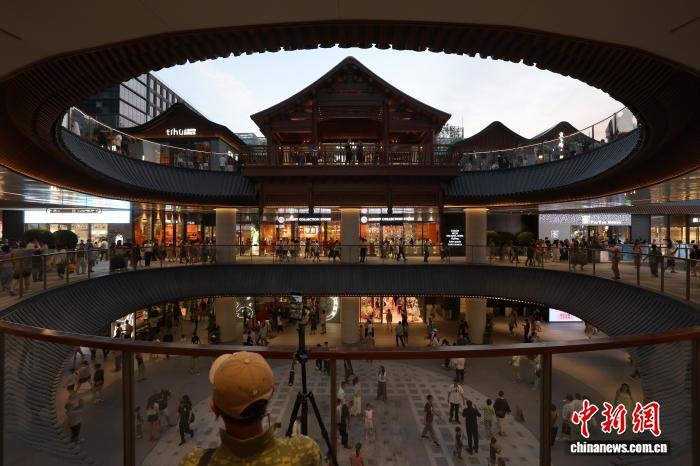
Core Points - Beijing's Xicheng District is undergoing systematic and large-scale urban renewal to enhance its overall carrying capacity [1][2] - The district has completed significant infrastructure improvements, including the renovation of 84 roads and the removal of 153 kilometers of guardrails [2] - Xicheng has transformed 148 old residential communities, covering an area of 2.68 million square meters, and has implemented various renewal models [2][3] Urban Environment Enhancement - The district features 238 boutique streets, 878 beautiful streets, and 150 tree-lined slow-moving roads, contributing to a refined urban environment [3] - PM2.5 average concentration has improved by 33.8% compared to the end of the 13th Five-Year Plan, with water quality compliance rates at 100% [3] Economic Development - Xicheng is upgrading traditional commercial areas like Xidan and Dashilar while fostering new business districts such as Financial Street [6] - The district has introduced 328 "first stores" and established 53 "ten-minute convenient living circles" covering 263 communities [6] Cultural Heritage Promotion - The district has completed 21 tasks related to the application for World Heritage status for the central axis and has released 20 projects for the revitalization of cultural relics [7] - Cultural events such as the "Haitang Poetry Festival" have attracted international participation, showcasing the district's rich cultural heritage [7]