
主办银行制

Search documents
银行正式下场卖房!2026房价信号已现,普通人提前应对
Sou Hu Cai Jing· 2026-02-18 21:36
Core Insights - The banking sector is transitioning from merely providing loans to actively selling properties, including distressed and existing homes, at prices significantly lower than market rates, indicating a shift in strategy to manage real estate assets [1][3] - The government is implementing policies to stabilize the real estate market, focusing on reducing inventory and supporting housing demand, with a clear aim to maintain market stability and expectations [3][4] Group 1: Market Dynamics - In 2026, banks are expected to regularly engage in the marketization of real estate non-performing assets, improving efficiency in asset disposal by nearly 100% compared to traditional auction methods [3] - Properties sold directly by banks are priced 16% to 31% lower than similar properties in the same area, emphasizing clear ownership and transparent transactions [3] Group 2: Policy Measures - The Ministry of Housing and Urban-Rural Development has set goals for 2026 to control new supply, reduce inventory, and improve housing quality, with a focus on supporting first-time buyers and those seeking improved housing [3] - Recent tax reforms have reduced the value-added tax on personal sales of homes held for less than two years from 5% to 3%, and cities like Beijing, Shanghai, Guangzhou, and Shenzhen are exempting sales of homes held for over two years from this tax, aimed at stimulating the second-hand housing market [3] Group 3: Recommendations for Buyers - First-time buyers are encouraged to take advantage of low interest rates and low down payment opportunities by prioritizing bank-direct sales of quality properties with clear ownership [4] - Families looking to upgrade should focus on core areas with quality amenities and utilize tax incentives for reasonable property exchanges without overextending [5] - Investors holding multiple properties are advised to optimize their assets in light of improving market liquidity, suggesting timely sales rather than holding onto high-priced properties [6] Group 4: Market Outlook - The 2026 real estate market is characterized by neither explosive growth nor panic-driven declines, with banks selling properties signaling a rational return to market conditions [7] - Understanding policies and utilizing data effectively can help individuals navigate the market without anxiety or following trends blindly [8]


房企接连大额“找钱”
第一财经· 2026-02-10 09:56
Core Viewpoint - Real estate companies are actively seeking diverse financing methods to address cash flow challenges, with notable actions including share placements and high-yield overseas bonds [2][4]. Financing Actions - Huafa Group plans to raise up to 3 billion yuan through a private placement of A-shares, aimed at funding various real estate projects and improving liquidity [2][3]. - New City Development intends to raise 469 million HKD through a discounted share placement, with proceeds allocated for future development, debt repayment, and general working capital [3]. - Dalian Wanda Commercial Management issued a 360 million USD bond with a coupon rate of 12.75%, marking its return to overseas debt issuance after three years [4][5]. Financing Environment - The financing environment for real estate companies remains challenging, with a significant divide between state-owned enterprises and private firms, the latter experiencing a sharp decline in financing since 2022 [8]. - Recent actions by some private firms indicate a push for public market financing to alleviate liquidity issues, with a marginal improvement in the financing environment noted [8][9]. - The introduction of a "main bank system" for project financing is seen as a potential new model, allowing for better risk-sharing and support for project development [9][10]. Future Outlook - Companies that adapt to the new financing model are expected to exhibit three key characteristics: quality inventory, healthy financing structure, and stable cash flow from operational properties [10].

又发债又配股 房地产的融资渠道宽了吗?
Di Yi Cai Jing· 2026-02-10 08:58
Group 1 - Real estate companies are actively seeking financing through various methods, including private placements and overseas high-yield bonds, to address cash flow challenges [1][2][4] - Huafa Group plans to raise up to 3 billion yuan through a private placement to support project construction and improve liquidity [2][3] - New City Development intends to raise 469 million HKD through a discounted share placement for future development and debt repayment [2][3] Group 2 - Wanda Commercial Management issued a high-yield dollar bond of 360 million USD with a coupon rate of 12.75%, indicating a challenging financing environment [4][5][6] - The issuance of high-interest bonds reflects the need for refinancing existing debt and maintaining access to overseas financing channels [5][6] - The average yield of 12.75% significantly exceeds the previous year's average of 4.33% for Chinese real estate companies, highlighting the high-risk nature of current financing options [6] Group 3 - The overall financing environment for real estate companies remains challenging, with a total financing volume of 414.31 billion yuan in 2025, indicating a low level of activity [7] - There is a noticeable divergence in financing capabilities between state-owned enterprises and private firms, with the latter experiencing a significant decline in financing since 2022 [7][9] - Recent regulatory changes, including the easing of reporting requirements for certain projects, suggest a marginal improvement in the financing environment [7][8] Group 4 - The introduction of a "lead bank system" for project financing is expected to become a primary model, ensuring that projects have a dedicated bank to manage financing needs [8][9] - Companies that can demonstrate strong asset quality and stable cash flow are more likely to benefit from improved financing conditions [9]
又发债又配股,房地产的融资渠道宽了吗?
Di Yi Cai Jing· 2026-02-10 08:57
Core Viewpoint - Real estate companies are actively seeking various financing methods to address cash flow challenges, with recent actions including share placements and high-yield overseas bonds [2][3][5]. Financing Actions - Huafa Group plans to raise up to 3 billion yuan through a private placement of A-shares, primarily to fund ongoing projects [3]. - New City Development intends to raise 469 million HKD through a discounted share placement, with proceeds aimed at future development and debt repayment [3]. - Dalian Wanda Commercial Management issued a high-yield USD bond worth 360 million USD at a coupon rate of 12.75%, marking its return to overseas debt issuance after three years [5][6]. Financing Environment - The financing environment for real estate companies remains challenging, with a significant disparity between state-owned enterprises and private firms in accessing funds [8][10]. - Recent data indicates that financing for 65 typical real estate companies totaled 240.78 billion yuan in December 2025, with an annual total of 4,143.14 billion yuan, reflecting a low level of financing activity [8]. - The introduction of a financing coordination mechanism by regulatory authorities aims to improve the financing landscape, allowing certain projects to extend loan terms significantly [8][9]. Future Trends - The "lead bank system" is emerging as a new financing model, where a designated bank or syndicate will oversee project financing, ensuring that funds are managed effectively [9][10]. - Companies that can demonstrate strong asset quality and stable cash flows are expected to benefit from improved financing conditions in the future [10].

房地产融资协调“白名单”机制两周年:主办银行制成核心
Feng Huang Wang· 2026-02-03 00:41
Group 1 - The core viewpoint of the article highlights the establishment and implementation of a coordinated financing mechanism for urban real estate, which aims to streamline financing processes and ensure that reasonable financing demands are met by banks [1][3] - The "white list" mechanism has been in place for two years, with the main bank system being recognized as a key component for real estate project financing, ensuring that information sharing among banks is improved and reducing the risk of over-lending [2][3] - Recent data indicates that while the financing support for "white list" projects has been significant, the growth rate of new loans has slowed down considerably compared to the initial year of implementation [4][5] Group 2 - As of the end of last year, banks in Beijing had provided loans totaling 215.6 billion yuan for 219 "white list" projects, while Hunan province reported 1,830.9 billion yuan in loans for 1,386 projects, demonstrating the effectiveness of the financing coordination mechanism [4][5] - The overall loan amount for "white list" projects exceeded 7 trillion yuan, supporting nearly 20 million housing units, but the growth in loan amounts has significantly decreased, with only 1.4 trillion yuan added in the last six months of the previous year [4][5] - The recent adjustments to the "white list" financing mechanism include allowing for a five-year extension on loans for qualifying projects, which aims to alleviate short-term repayment pressures for real estate companies while maintaining cautious lending practices for new projects [6][7]

多家房企已不用上报“三道红线”指标
Feng Huang Wang· 2026-01-29 23:32
Core Viewpoint - The regulatory requirement for real estate companies to report the "three red lines" indicators monthly has been lifted for many firms, indicating a shift in oversight and a potential easing of financial pressures in the industry [1][3]. Group 1: Regulatory Changes - Many real estate companies are no longer required to report the "three red lines" indicators monthly, a change communicated verbally by regulatory authorities [1][3]. - Some distressed firms are still required to report financial indicators such as asset-liability ratios and operational recovery progress to local government task forces [1][3]. - The "three red lines" policy, introduced in 2020 to control the debt levels of real estate companies, has seen its reporting requirements relaxed as of 2026 [2][3]. Group 2: Industry Trends - The shift away from monthly reporting of the "three red lines" suggests that the policy is no longer being used as a tool for window guidance, indicating that the initial goals of limiting debt growth have been achieved [3]. - The real estate market has undergone significant adjustments over the past four years, leading companies to prioritize high-quality development over aggressive expansion [3][4]. - Analysts note that many developers have already reduced their debt levels to within the "three red lines," reflecting a broader industry trend towards lower leverage and a focus on asset management [4][5]. Group 3: Future Financing Landscape - The future of financing in the real estate sector is expected to shift towards a "lead bank system," where a single bank or syndicate is designated to manage project financing, ensuring that funds are allocated appropriately [4]. - The focus on optimizing existing debt and supporting "white list" projects is anticipated to continue, with potential extensions of loan terms for quality private firms [5]. - Overall, the financing pressure on real estate companies is expected to ease, influenced by ongoing adjustments within the industry and supportive financial policies [5].
房企“三道红线”不再上报,专家:房地产新融资模式正在形成
Feng Huang Wang· 2026-01-29 23:18
Core Viewpoint - Regulatory authorities have ceased the requirement for real estate companies to report the "three red lines" indicators, which were initially introduced to manage real estate financing and limit debt growth [1][2]. Group 1: Regulatory Changes - The "three red lines" policy was first introduced in August 2020 to monitor and manage financing for key real estate companies, with specific thresholds for debt metrics [1]. - Companies were categorized into four tiers based on their compliance with the "three red lines," which determined their debt growth limits [1]. - Multiple real estate executives confirmed that reporting on the "three red lines" has not been required since last year [1]. Group 2: Market Analysis - The real estate market has undergone a significant adjustment over the past four years, leading to a fundamental shift in the operational strategies of real estate companies towards high-quality development rather than debt-driven growth [2]. - Despite the cessation of the "three red lines" reporting, the financing environment for the real estate sector is unlikely to improve significantly in the short term due to prevailing market conditions and cautious attitudes from financial institutions [2]. Group 3: New Financing Models - A new financing model is emerging in the real estate sector, characterized by the implementation of a "lead bank system," where a designated bank or syndicate oversees project financing [3]. - This new model is expected to become the primary method for real estate financing, ensuring that companies can meet their reasonable financing needs and support project development [3]. - Real estate companies are shifting from a total-to-total financing approach to a project-based model, with limited financing options available for group-level financing, particularly for private firms [3].
多股涨停!地产股集体冲高,房企告别“三道红线”监管
Nan Fang Du Shi Bao· 2026-01-29 06:25
Core Viewpoint - The real estate sector is experiencing a significant rebound in stock prices, with many companies seeing substantial gains, indicating a potential recovery in the market [1][2]. Group 1: Stock Performance - A-share real estate companies such as Zhujiang Holdings, Dayuecheng, Sanxiang Impression, and Shen Shen Fang A have risen over 10% [1]. - In the Hong Kong market, Contemporary Land has surged over 61%, while China Aoyuan and Longguang Group have increased by over 34% and 25%, respectively [1][2]. Group 2: Regulatory Changes - Reports indicate that some real estate companies are no longer required to report the "three red lines" indicators to regulatory authorities, which were previously mandatory since mid-2020 [2][3]. - The "three red lines" policy aimed to control leverage and prevent financial risks in real estate, with key metrics including asset-liability ratios and net debt ratios [3]. Group 3: Market Dynamics - The current market environment has led to a decline in funding for real estate companies, with a four-year average decrease of 17.5% in funds received, surpassing the 15.7% decline in new housing sales [4]. - The shift in the market has resulted in a focus on low-leverage, high-quality asset management by leading real estate firms, moving away from previous high-leverage expansion models [4][5]. Group 4: Future Financing Models - A new financing model is emerging, characterized by the "lead bank system," where a designated bank or syndicate oversees project financing, ensuring that funds are allocated appropriately [6]. - As of December 2025, 21 distressed real estate companies have undergone debt restructuring, with a total debt relief of approximately 1.2 trillion yuan, easing short-term repayment pressures [6].




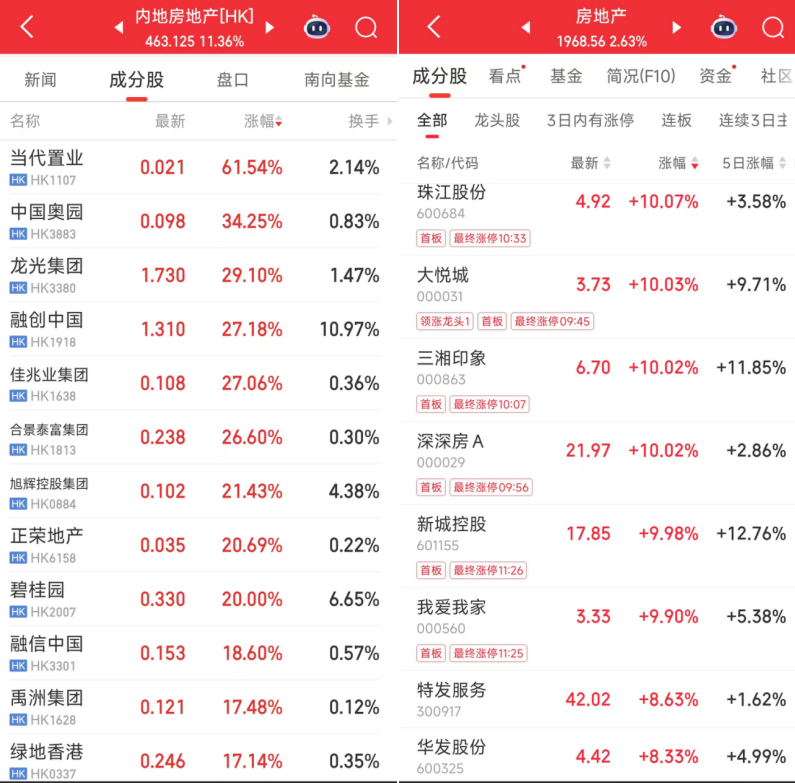
多家房企已不用上报“三道红线”指标 部分企业仍需向地方提交资产负债率数据
Feng Huang Wang· 2026-01-29 00:36
Core Viewpoint - The regulatory requirement for real estate companies to report the "three red lines" indicators monthly has been lifted for many firms, indicating a shift in oversight and a potential easing of financial constraints in the industry [1][3]. Group 1: Regulatory Changes - Several real estate companies are no longer required to report the "three red lines" indicators monthly, a requirement that was previously enforced since 2021 [1][3]. - Some distressed firms are still required to report financial indicators such as asset-liability ratios and operational recovery progress to local government departments [1][3]. - The "three red lines" policy, introduced in 2020 to control the debt levels of real estate companies, has seen its enforcement relaxed as the industry adapts to new market conditions [2][3]. Group 2: Industry Trends - The shift away from the "three red lines" reporting suggests that the policy's original goals of limiting debt growth have been largely achieved, as firms are now focusing on high-quality development rather than aggressive expansion [3][4]. - Many developers have successfully reduced their debt levels to within the "three red lines" thresholds, indicating a broader trend of deleveraging in the industry [4]. - The industry is transitioning from a growth-focused model to one centered on asset management and operational efficiency, with a reduced emphasis on scale [4][5]. Group 3: Future Financing Landscape - The future of financing in the real estate sector may involve a "lead bank system," where a single bank or syndicate is designated to manage project financing, ensuring that funds are allocated effectively [4]. - The focus on optimizing existing debt and supporting "white list" projects is expected to continue, with potential extensions in loan terms for quality firms [5]. - Overall, the financing pressure on real estate companies is anticipated to ease, supported by ongoing adjustments in the market and regulatory environment [5].
独家|多家房企称已不被要求上报三道红线 仍需提交资产负债率指标
Xin Lang Cai Jing· 2026-01-28 23:31
Core Viewpoint - The regulatory requirement for real estate companies to report the "three red lines" indicators monthly has been lifted for many firms, indicating a shift in oversight and a potential easing of financial constraints in the industry [1][6]. Group 1: Regulatory Changes - Many real estate companies are no longer required to report the "three red lines" indicators monthly, with some firms receiving verbal notifications that this requirement will cease in 2026 [1][6]. - Out of the companies interviewed, some are still required to report financial indicators such as asset-liability ratios to local government departments instead of central regulatory bodies [1][6]. - The "three red lines" policy, introduced in 2020 to control the debt levels of real estate firms, has seen its reporting requirements relaxed as the industry adapts to new financial realities [2][7]. Group 2: Industry Trends - The implementation of the "three red lines" aimed to limit the growth of corporate debt and prevent aggressive expansion, which has been largely achieved as firms shift focus towards high-quality development rather than scale [3][9]. - Analysts note that many developers have successfully reduced their debt levels to within the "three red lines," indicating a transition from an incremental market to a stock market [4][9]. - The future of financing in the real estate sector may involve a "lead bank system," where a single bank or syndicate is designated to manage project financing, reflecting a more structured approach to funding [4][9]. Group 3: Financial Management - Leading real estate firms are now focusing on refined asset management strategies, emphasizing low leverage and operational efficiency, moving away from high-debt expansion models [5][9]. - Even with the potential lifting of the "three red lines," funds from development loans and pre-sale funds are now being utilized in a more controlled manner, ensuring project delivery and reducing risks [10]. - The optimization of existing debt is expected to be a significant trend moving forward, particularly for projects on the "white list," with extended loan terms anticipated for quality private firms [10].