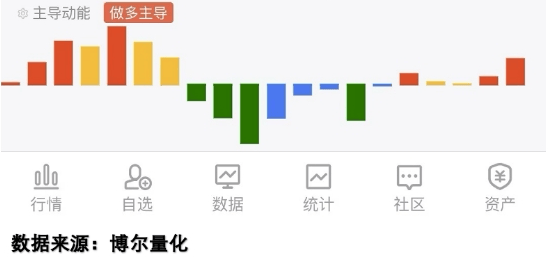
交易行为分析

Search documents
监管再出重拳,调整还要延续?
Sou Hu Cai Jing· 2026-02-14 20:07
Core Insights - Recent market fluctuations have prompted regulatory bodies to implement self-regulatory measures to maintain fair trading practices and market order [1] - The core drivers of price changes are often overlooked, with many investors focusing solely on surface-level news and price movements [1] - Quantitative data tools reveal multiple trading behaviors that contribute to price volatility, challenging the conventional understanding of market dynamics [1] Group 1: Four Core Trading Behaviors - Quantitative analysis identifies four core trading behaviors that correspond to different market states: 1. "Bullish Dominance": Increased participation in buying activities [3] 2. "Profit Taking": Increased activities focused on realizing existing gains [3] 3. "Bearish Dominance": Decreased participation in buying activities [3] 4. "Short Covering": Increased participation from previously cautious investors [3] Group 2: Characteristics of Profit Taking Behavior - The prevalence of "Profit Taking" behavior during price increases indicates a shift in market dynamics rather than a simple upward push [5] - This behavior often appears hidden, as it coincides with rising prices, leading many to misinterpret it as normal market consolidation [5] - Quantitative data can accurately capture these subtle behavioral changes, helping to avoid cognitive biases [6] Group 3: Significance of Short Covering Behavior - "Short Covering" behavior typically emerges during market panic, signaling a potential reversal despite falling prices [9] - This behavior indicates that previously cautious funds are beginning to enter the market, serving as a key indicator of structural change [12] - Continuous "Short Covering" suggests that panic has been absorbed, marking a transition towards a more positive market sentiment [14] Group 4: Value of Quantitative Data - In a complex market environment driven by emotions, quantitative data provides an objective view of real trading behaviors, free from subjective biases [14] - By analyzing behaviors such as profit taking and short covering, market participants can anticipate changes in trading structures and make more rational decisions [14] - This data-centric investment approach offers a new pathway for investors to understand market dynamics amidst volatility [14]

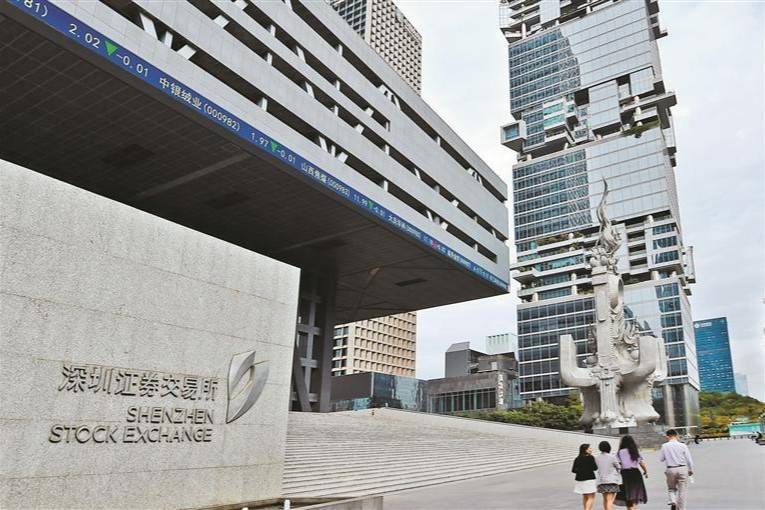
全球配置成共识,换个维度看标的
Sou Hu Cai Jing· 2026-01-20 02:18
Group 1 - The core consensus in the market is that global multi-asset allocation is becoming a key strategy to cope with uncertainty due to profound changes in the global economic landscape [1] - Major economies are experiencing shifts in growth momentum, adjustments in monetary policy, and a reshaping of geopolitical dynamics, making it increasingly difficult to manage the volatility risks of single assets [1] - A new FOF product has been launched by a fund company to help ordinary investors access global multi-assets without needing to research each market's rules or select individual assets [1] Group 2 - The focus should be on identifying suitable assets that investors can understand and hold, rather than getting caught up in the search for "good assets" which can vary greatly among different investors [3] - Many investors fail to profit from assets that have shown good overall performance due to frequent trading during periods of volatility, leading to losses from transaction fees [3][7] Group 3 - Understanding the trading behavior behind price fluctuations is crucial; organized trading can create opportunities for investors to acquire assets at lower prices during market corrections [8] - Quantitative big data can help break down invisible trading behaviors into visible objective data, allowing investors to see the underlying trading logic rather than relying on subjective guesses [14] Group 4 - In the current market environment, global multi-asset allocation aims to address uncertainty, while using quantitative data to analyze trading behavior helps identify assets with sustained interest from capital [15] - Investors should focus on the long-term intentions of capital participation rather than being overly concerned with short-term price fluctuations, enabling them to navigate market changes more effectively [15]
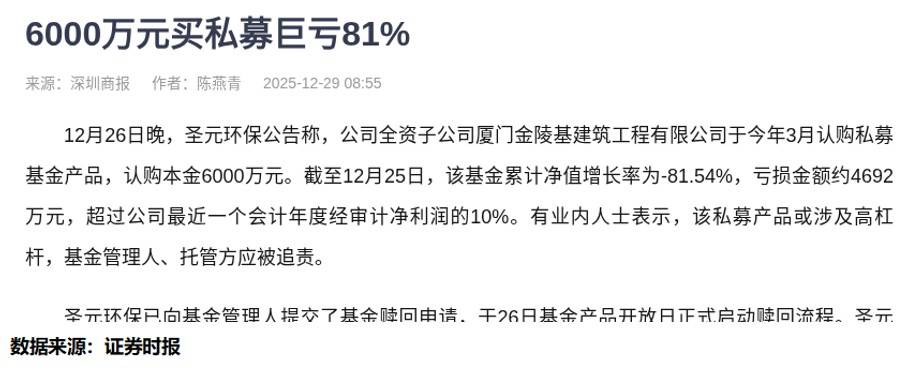
买私募亏4692万?看交易行为才不慌
Sou Hu Cai Jing· 2025-12-29 11:27
Group 1 - The core point of the news is that Shengyuan Environmental Protection's subsidiary, Xiamen Jinlingji, suffered a significant loss of approximately 46.92 million due to a private equity fund investment that dropped 81.54% in value within nine months, exceeding the company's audited net profit for 2024 by 10% [1] - Following the loss, Shengyuan Environmental Protection took immediate actions including applying for fund redemption, attempting to recover 2 million from an individual, and reporting the incident to the Shenzhen Securities Regulatory Commission [1] - The controlling shareholders of Shengyuan Environmental Protection pledged to cover the remaining loss after accounting for the redeemed amount and recovered funds, but the Xiamen Securities Regulatory Bureau issued a warning letter for the company's failure to disclose the situation in a timely manner [1] Group 2 - The article emphasizes the importance of understanding the underlying trading behavior rather than just focusing on surface trends or news, highlighting that many investors fall into the trap of misinterpreting market signals [3] - It discusses common experiences where investors misjudge stock movements, leading to losses, and suggests that perceived trends may not reflect true market intentions [4][6] - The article advocates for the use of quantitative data to assess whether institutional investors are actively participating in trades, which can provide clearer insights into market dynamics [7][10] Group 3 - The article identifies two types of market traps: "false declines" where institutional activity indicates potential recovery, and "false rallies" where lack of institutional involvement suggests unsustainable price increases [11] - It stresses that understanding trading behavior is crucial for making informed investment decisions, rather than relying on speculative news or expert opinions [12][13] - The case of Shengyuan Environmental Protection serves as a lesson on the importance of recognizing genuine trading activity to avoid significant losses in investments [13]

国产GPU上市 机构踏空超80亿
Sou Hu Cai Jing· 2025-12-25 16:40
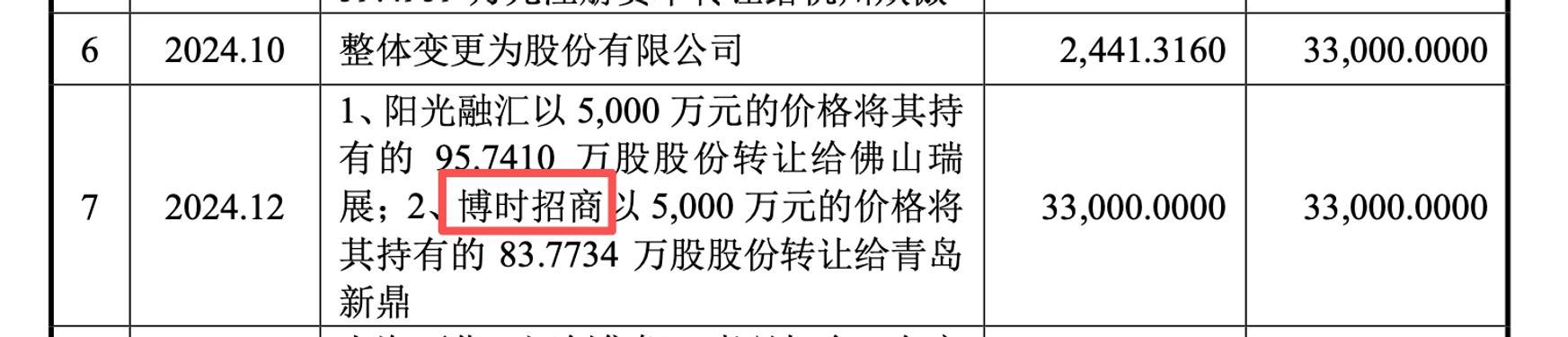
Group 1 - The core issue in the domestic GPU industry is that institutions regret selling their shares early, missing out on significant profits, with losses exceeding 8 billion yuan collectively [1][3]. - The case of Moer Thread is highlighted, where an institution sold 837,734 shares for 50 million yuan before the IPO, only to see the shares soar to a market value of 567 million yuan on the first trading day, resulting in a missed profit of 517 million yuan [2][3]. - Another leading GPU company, Muxi Co., also experienced a similar situation, where shares sold for 50 million yuan appreciated to over 300 million yuan on the first trading day [3]. Group 2 - The reasons for institutions selling early mirror those of retail investors, often due to a lack of confidence in the industry outlook or the need to liquidate investments, indicating a failure to understand the underlying trading behaviors [4][14]. - The current bull market in 2025 has seen a 20% index increase, but only 40% of stocks outperformed the index, suggesting that many investors missed opportunities not due to poor stock selection but due to misunderstanding market dynamics [4][15]. - Understanding trading behavior through data analysis can help investors avoid premature selling and identify genuine market movements, as institutions often engage in tactics like "shaking out" weaker hands to accumulate shares at lower prices [14][15].
外资疯狂加仓大A,调研26股
Sou Hu Cai Jing· 2025-08-12 12:23
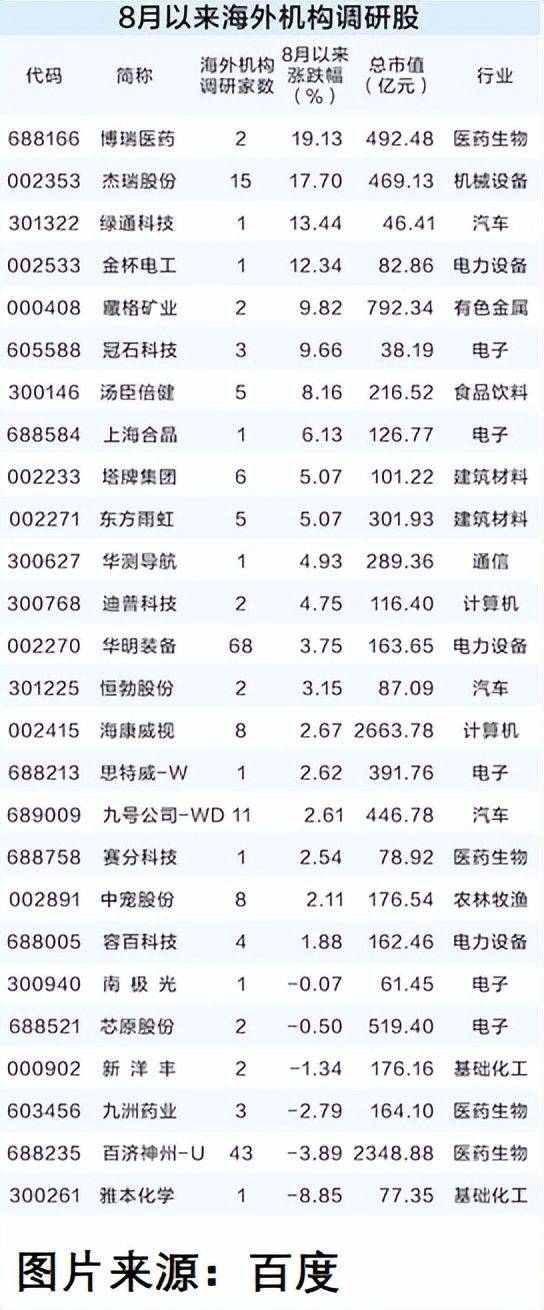
Group 1 - Foreign capital has significantly increased its holdings in A-shares, with a net increase of over $10 billion in the first half of the year [1] - The electronics and pharmaceutical industries have become the focus of foreign capital research, with the average stock price increase of researched companies reaching 4.62%, and some stocks like Borui Pharmaceutical seeing increases over 12% [1][2] - The data indicates that stocks such as Borui Pharmaceutical and Jereh Holdings have shown substantial price increases of 19.13% and 17.70% respectively since August [2] Group 2 - Many investors mistakenly believe that a bull market guarantees easy profits, but many end up losing money due to a lack of understanding of market behaviors [3] - The market's reaction to events, such as the 2025 conflict between Iran and Israel, often reflects institutional trading strategies rather than just external shocks [3][5] - Understanding trading behaviors, such as the significance of institutional inventory data, is crucial for long-term survival in the stock market [5][7] Group 3 - Successful stocks in the 2025 market rally share a common characteristic of undergoing multiple rounds of shakeouts, which can mislead investors who do not recognize these signals [8][14] - The importance of distinguishing between institutional and retail investor behaviors is emphasized as a key to making informed trading decisions [15]
黄金赛道崩塌,倒车接人快上车!
Sou Hu Cai Jing· 2025-04-30 17:22
Group 1 - The core viewpoint is that there is uncertainty surrounding the future of gold prices, with potential profit-taking occurring at current levels [2][5][11] - The main factors influencing gold prices include ongoing trade disputes and geopolitical tensions, particularly involving the U.S. [2][4] - The article emphasizes the importance of understanding market data to discern true trading behaviors and avoid emotional decision-making [6][11] Group 2 - The article suggests that the current market sentiment is heavily influenced by emotions, leading to indecision among investors [5][11] - It highlights the phenomenon of "profit-taking," where investors begin to cash in on gains, causing price fluctuations [9][11] - The need for clarity in market trends is stressed, as confusion can lead to poor investment decisions [5][11]