产业生态培育

Search documents
破“纸”谋势 向“新”突围
Xin Lang Cai Jing· 2026-02-02 18:02
Core Insights - The article highlights the ongoing industrial expansion in Longyou, Zhejiang, with companies like Xinjiasuo Technology and Fajia Food actively increasing their production capacities to adapt to market demands and technological advancements [1][2]. Group 1: Company Developments - Xinjiasuo Technology has completed the main steel structure of its second-phase expansion project, which occupies 40 acres, and anticipates a production value of 270 million yuan in 2025, reflecting a 10% increase from 2024 [2]. - Fajia Food's new factory, covering 172 acres, has reached the roof completion stage and is set to enter the installation phase for new production lines, aiming for an annual production value of 2.5 billion yuan [2]. - Both companies are benefiting from favorable government policies and infrastructure support, which enhance their operational efficiency and growth potential [2][3]. Group 2: Industry Trends - Longyou's industrial structure is evolving, with a focus on high-quality development and the integration of traditional industries like specialty paper with emerging sectors such as intelligent manufacturing [1][2]. - The county aims to achieve an industrial output value of 42.7 billion yuan by 2025, with specialty paper accounting for one-third of this total, indicating a strong reliance on traditional industries while fostering innovation [1]. - The local government is implementing strategies like "supply chain procurement" to support small and micro enterprises, addressing their financial challenges and enhancing their competitiveness [3].
会展业综合带动效应不断放大
Xin Lang Cai Jing· 2026-01-31 22:37
Group 1 - The core viewpoint of the news is that China's exhibition economy is expected to continue its growth, with a projected 4,095 trade exhibitions and a total exhibition area of 159 million square meters by 2025, marking a year-on-year increase of 6.53% and 2.5% respectively, both setting historical records [1] - The exhibition industry is recognized as a crucial vehicle for guiding industrial development and promoting economic cooperation, with China's complete industrial and innovation systems providing a broad market space for deepening cooperation in the exhibition sector [1] - The report highlights that the actual transaction value of self-organized overseas exhibitions is expected to grow by 19.09% in 2025, with the average transaction value increasing by 14.16% year-on-year [1] Group 2 - Various regions, including Guangdong, Jiangxi, Tianjin, and Chongqing, are integrating the exhibition industry into consumption-boosting initiatives, encouraging the hosting of consumer exhibitions and activities to transform exhibition scenarios into consumption scenarios [2] - The exhibition industry is evolving from merely fulfilling trade demands to nurturing industrial ecosystems, with a focus on collaboration across the entire industrial chain, promoting synergies among enterprises of different sizes [2] - In 2025, numerous policy documents will be introduced to support the development of the exhibition industry, creating a multi-faceted support system that includes rewards, subsidies, and tax reductions, aimed at matching the diverse needs of the exhibition sector [2] Group 3 - Hubei province plans to host nearly 2,000 exhibitions in 2025, with over 100 exhibitions exceeding 10,000 square meters, attracting participants from over 120 countries and regions, and generating contracts worth over 300 billion yuan [3] - The exhibition industry is increasingly integrating with key sectors such as automotive, biomedicine, and modern agricultural processing, fostering a positive cycle of mutual promotion between exhibitions and industries [3] - The development of China's exhibition economy is characterized by a competitive landscape among international, regional, and specialized cities, with each focusing on different aspects to enhance their exhibition capabilities and drive urban development [3]
江水边的创新土壤
Di Yi Cai Jing· 2026-01-11 01:27
Core Insights - Shanghai has exceeded its "14th Five-Year Plan" development goals, with the integrated circuit industry expected to surpass 460 billion yuan by 2025, effectively doubling its scale within five years [5] - In the early stages of the "15th Five-Year Plan," five AI companies have gone public in Shanghai, indicating a burgeoning AI industry ecosystem [5] - Shanghai is establishing a comprehensive AI innovation ecosystem that includes infrastructure, policy guidance, open scenarios, and capital linkage, which is a feat not achieved by Silicon Valley [8][9] Industry Development - The AI industry in Shanghai is rapidly evolving, with significant advancements in integrated circuits, aerospace, and other core industries, supported by a robust vertical industry landscape [8] - Shanghai's AI ecosystem is characterized by a collaborative approach, where various stakeholders, including government and private enterprises, work together to foster innovation and growth [32][36] Comparison with Silicon Valley - Unlike Silicon Valley, which is increasingly dominated by a few major players, Shanghai is cultivating a more inclusive industrial ecosystem that supports a wider range of enterprises [9] - Startups in Silicon Valley face significant challenges, including high costs for computing power and legal fees, which can hinder their growth [10][15][16] - In contrast, startups in Shanghai benefit from supportive policies, public resources, and a collaborative environment that facilitates access to necessary resources and funding [21][32] Success Stories - Companies like Yingxi Intelligent and Biran Technology have received strategic investments from Shanghai's government-backed funds, which have helped them navigate challenging market conditions [23] - The success of companies such as Xizhi Technology and Yiyuan Robotics illustrates how Shanghai's ecosystem provides essential support, including access to application scenarios and trial customers [25][31] Future Outlook - The "15th Five-Year Plan" emphasizes the integration of AI across various industries, indicating a strong commitment to advancing the AI sector in Shanghai [37][38] - Shanghai's approach to industrial cultivation is expected to yield significant returns, not only for the city but also for the broader Chinese and global markets [34][36]


上海打造“产业生态”营商环境迎新年首发政策 占GDP8%的“支柱”挖增量育生态
Jie Fang Ri Bao· 2026-01-10 01:00
Core Viewpoint - Shanghai has launched its first policy for creating an "industrial ecosystem" business environment, focusing on the leasing and business services industry, aiming for revenue to exceed 1.5 trillion yuan by 2028, maintaining its national leadership in this sector [1][2]. Group 1: Industry Overview - The leasing and business services industry is a significant pillar of Shanghai's economy, with expected revenue surpassing 1.3 trillion yuan in 2025, accounting for over 8% of the city's economic output [2]. - The growth rate of this industry has slowed in recent years, lagging behind the national average, prompting the need for strategies to stimulate growth [2]. Group 2: Action Plan Details - The "Action Plan" outlines a clear "industrial map" with specific revenue targets for various sectors by 2028, including advertising, human resources, and legal services, with designated districts for each sector [3][4]. - Seven key districts will focus on the leasing and business services industry, with targeted revenue contributions from each area to avoid homogeneous competition and resource misallocation [3][4]. Group 3: Spatial Development - The plan emphasizes not only the establishment of business parks but also the creation of an ecosystem that fosters interaction and innovation among businesses [5][6]. - Specific types of business spaces will be developed, including mixed-use spaces and specialized industry parks, to enhance operational efficiency and collaboration [6][7]. Group 4: Factor Aggregation - The focus on factor aggregation highlights the importance of talent, data, and professional service platforms tailored to the needs of the service industry [8]. - The plan includes targeted measures for attracting talent in critical areas such as international law and tax services, along with incentives for businesses to expand internationally [8][9]. Group 5: Policy Innovations - The "Action Plan" encourages districts to implement unique supporting policies, such as service vouchers for professional services, to stimulate growth in the leasing and business services sector [9]. - The initiative reflects a shift in Shanghai's service industry development strategy, aiming to create a closed loop of "industry leadership - spatial support - factor empowerment" for high-quality growth [9].
“千亿会战”告捷 解码“眉山引力”
Xin Lang Cai Jing· 2025-12-25 22:30
Core Insights - The article highlights the significant achievements of Meishan in attracting investment, with a total of 200 new projects signed and a contract amount of 1,105 billion yuan from January to November 2025, marking a historic breakthrough in both quantity and quality of investments [4][5]. Investment Attraction - Meishan has successfully attracted 49 projects in the new energy and new materials sector, with a contract amount of 566.69 billion yuan, accounting for over 51% of the total signed amount [4][5]. - The city has implemented an innovative "Hundred Merchants Attract Enterprises, Hundred Enterprises Share Chains" investment model, creating a dynamic management mechanism with over 150 businesses in the resource pool and over 300 in the demand pool [4][6]. Industry Focus - The new energy and new materials industry is identified as the core component of the investment success, supported by a well-established industrial chain from upstream lithium resources to downstream battery integration and applications [5][6]. - Meishan's strategy has shifted from merely attracting projects to nurturing an industrial ecosystem, focusing on core enterprises and their associated supply chain partners [6][8]. Future Directions - The city plans to implement a "New Quality Productive Forces Investment Offensive" in 2026, targeting advanced fields such as new energy storage, low-altitude economy, biomanufacturing, and general intelligence [9][10]. - Meishan aims to enhance its competitive advantage by fostering industrial clusters and strengthening the resilience of its industrial ecosystem [9][10].
从价值发现到价值创造:成都东部新区如何赢得千亿耐心资本青睐?
Mei Ri Jing Ji Xin Wen· 2025-10-31 10:55
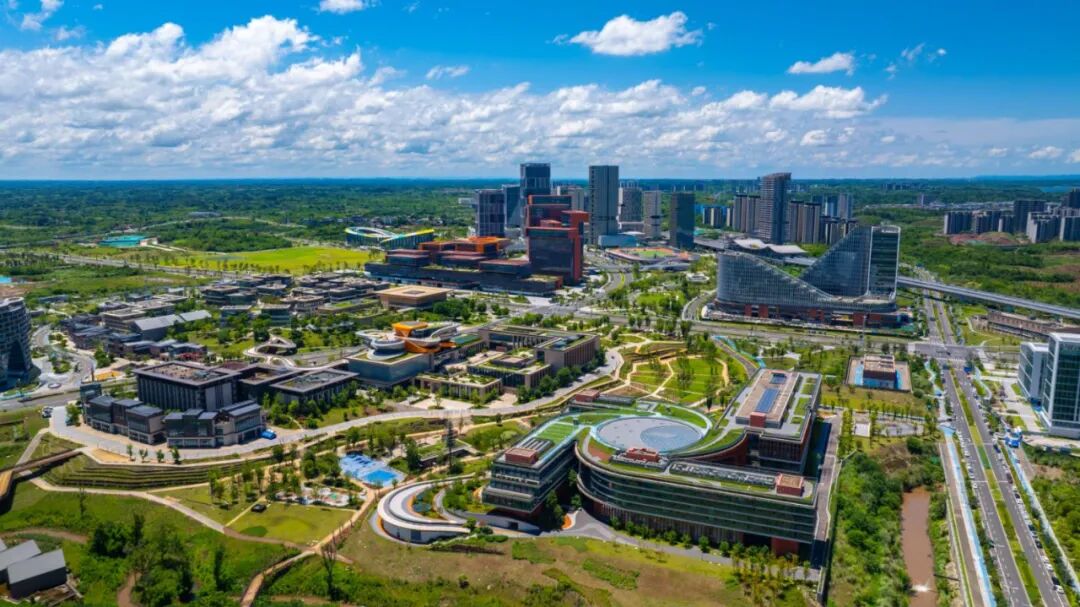
Core Viewpoint - The strategic cooperation agreement between Chengdu Eastern New Area and Sichuan Industrial Fund aims to enhance regional economic development through deep collaboration in investment operations, industrial park development, technology transfer, and talent support [3][17]. Investment and Economic Development - Sichuan Industrial Fund has a managed fund scale of 122.4 billion, playing a crucial role in the province's industrial layout and financial ecosystem [3][10]. - Chengdu Eastern New Area has attracted 84 major industrial projects with a total investment of 160 billion, shifting the industrial investment ratio from 2:1 to 1:4 [9]. - The region's GDP has a compound annual growth rate of 33.8%, with a projected growth rate of 11% for 2024, maintaining the highest growth in the city [9][22]. Strategic Cooperation Details - The cooperation will focus on six key areas: fund investment operations, industrial park development, technology transfer, project linkage, digital city construction, and talent support [17][18]. - A new "mother fund-leverage-child fund-cluster-project direct investment" model is expected to attract multiple times the initial investment in social capital [18]. Industrial Focus and Future Prospects - Chengdu Future Medical City has successfully gathered 21 research teams and launched 12 cutting-edge results into the market within three years [5][21]. - The International Airport Economic Zone plans to develop specialized industrial parks focusing on sustainable aviation fuel and nuclear technology applications [21]. - Sichuan Industrial Fund aims to increase investment in the Eastern New Area, focusing on strategic industries such as new energy and aerospace [22].
GP完成返投最头疼的事:带项目来,却落不下
母基金研究中心· 2025-08-11 09:10
Core Viewpoint - The article discusses the challenges faced by General Partners (GPs) and Limited Partners (LPs) in the context of investment fund reinvestment recognition, highlighting difficulties in project landing and the impact of performance assessments on management fees [1][2]. Group 1: Reinvestment Challenges - Many GPs and LPs are focusing on reinvestment recognition as funds approach expiration, with difficulties in project landing being a significant issue [1]. - The challenges include the potential mismatch between project offerings and local investment needs, as well as bureaucratic delays that hinder timely financing [1]. - A GP partner noted that failing to meet reinvestment tasks can lead to a 20% deduction in management fees, and in some cases, previously received fees may need to be returned if performance metrics are not met [2]. Group 2: Policy Changes and Trends - Recent government policies, such as the "Guiding Opinions on Promoting the High-Quality Development of Government Investment Funds," encourage a reduction or elimination of reinvestment ratios, indicating a shift in focus away from purely attracting investments [3]. - Over the past six years, the average reinvestment multiplier requirement in the guiding fund industry has decreased by over 40%, with many funds now requiring less than 1.5 times the reinvestment [4]. Group 3: GP Transformation and Strategy - GPs are adapting to new market conditions by enhancing their capabilities in project evaluation and investment empowerment, focusing on building internal industrial ecosystems [5]. - There is an increasing preference among state-owned LPs for GPs that possess industry resources and service capabilities, as well as those that can create unique value through resource integration and differentiated services [5]. - GPs are required to consider regional industrial planning and strategies, which adds pressure for transformation and resource optimization [6].