产业聚集

Search documents
从“产业聚集”到“价值共生”,看千亿镇的发展新动能→
Sou Hu Cai Jing· 2026-02-09 15:43
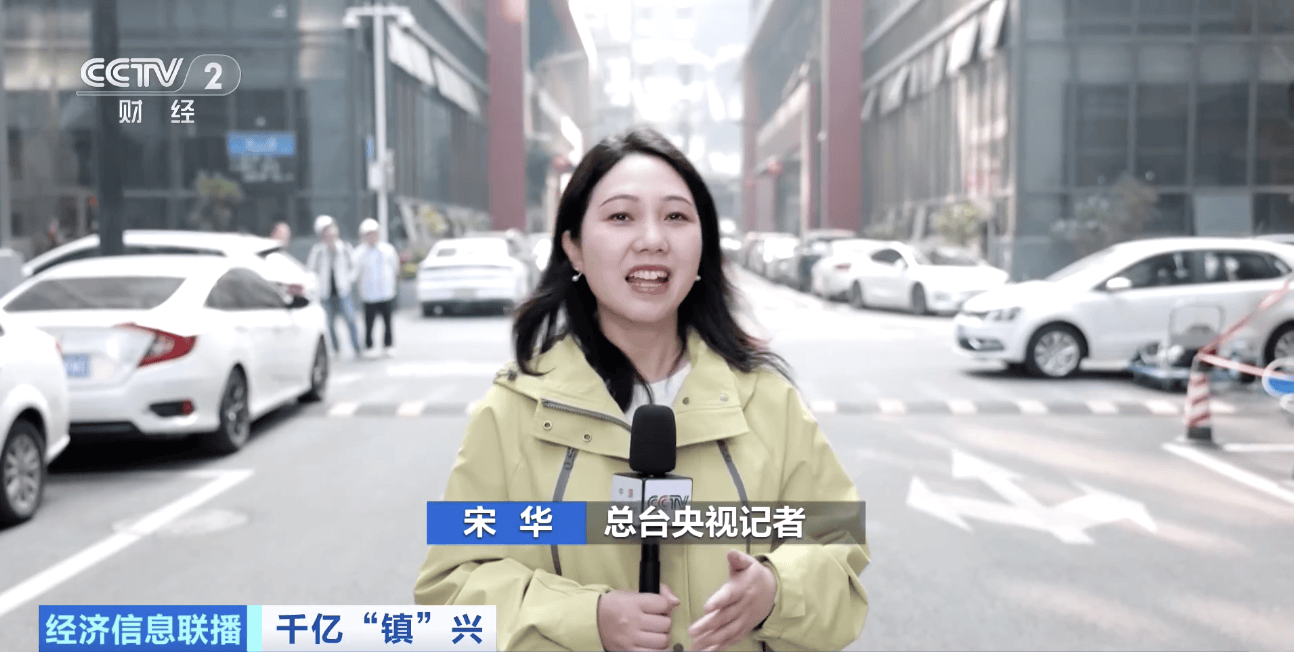
Core Insights - The "14th Five-Year Plan" outlines a new blueprint for rural revitalization and urban-rural integration, highlighting the increasing importance of town economies in driving regional economic development [1] Group 1: Town Economic Development - A number of "super towns" in China have emerged, each with a GDP exceeding 100 billion yuan, playing a crucial role in regional economic growth [1] - The focus is on how these towns leverage cluster advantages to strengthen core leading industries, injecting robust momentum into local economic development [1] Group 2: Robotics and Automation - In Foshan's Beijiao Town, robots are prevalent in various applications, including cleaning and maintaining solar panels, showcasing the integration of technology in industrial parks [3] - The rapid transformation of robot concepts into reality is driven by a "scene"-driven industrial ecosystem that provides rich testing environments and a complete closed loop of demand, R&D, supply chain, and validation [5] Group 3: Industrial Collaboration - Companies in these industrial parks operate in a symbiotic relationship, where components produced by one company quickly become parts for another, significantly shortening the entire process from design to validation [7] - A complete industrial chain acts as a powerful magnet, attracting numerous system integrators seeking one-stop solutions [9] Group 4: Hydrogen Energy Industry - In Zhangjiagang's Yangshe Town, the intelligent production line of Guofu Hydrogen Energy can produce 500 sets of electrolysis hydrogen production devices annually, demonstrating the town's role in the hydrogen energy sector [11] - The collaboration between Guofu Hydrogen Energy and a company from Ningbo to build a production line on-site reduces logistics costs and fosters joint R&D for new materials [11] Group 5: Mobile Phone Manufacturing - Chang'an Town in Dongguan is a global hub for mobile phone manufacturing, where a lean production system has led to significant improvements in production efficiency and cost reduction [13][16] - Since the implementation of this system in 2020, production efficiency has increased by an average of 20% annually, while production costs have decreased by over 8% each year [16] - The lean production system has enabled a 90% reduction in production cycle time and a 30% increase in product quality, with one supplier reducing defect rates from 12% to 2% [24]

沪加快发展租赁和商务服务业
Xin Lang Cai Jing· 2026-01-10 08:11
Core Viewpoint - The Shanghai Municipal Government has issued a three-year action plan (2026-2028) to promote the rental and business service industry, aiming for a revenue target of over 1.5 trillion yuan by 2028, with an annual growth rate exceeding the city's overall economic growth and the industry average [1] Group 1: Industry Growth Targets - By 2028, the rental and business service industry in Shanghai is expected to achieve a revenue of over 1.5 trillion yuan, with growth rates higher than the city's economy and the industry average [1] - The plan aims to maintain the industry's leading position nationally and increase its share of the national market [1] Group 2: Industry Aggregation and Competitiveness - The action plan focuses on accelerating the aggregation of advantageous sub-industries in key districts and high-quality business entities in important spatial carriers [1] - By 2028, seven key aggregation areas (Putuo, Changning, Huangpu, Xuhui, Jing'an, Pudong, and Qingpu) are expected to account for over 70% of the city's revenue [1] - The plan aims to gather a number of high-energy leading enterprises and high-growth companies, with the top 200 companies in the rental and business service industry expected to account for 60% of the total industry revenue by 2028 [1] Group 3: Talent and Ecosystem Development - The plan emphasizes the need to enhance the integration of the industry ecosystem, aiming to attract professionals familiar with international rules and build platforms that empower and enhance professional services [1]
上海打造“产业生态”营商环境迎新年首发政策 占GDP8%的“支柱”挖增量育生态
Jie Fang Ri Bao· 2026-01-10 01:00
Core Viewpoint - Shanghai has launched its first policy for creating an "industrial ecosystem" business environment, focusing on the leasing and business services industry, aiming for revenue to exceed 1.5 trillion yuan by 2028, maintaining its national leadership in this sector [1][2]. Group 1: Industry Overview - The leasing and business services industry is a significant pillar of Shanghai's economy, with expected revenue surpassing 1.3 trillion yuan in 2025, accounting for over 8% of the city's economic output [2]. - The growth rate of this industry has slowed in recent years, lagging behind the national average, prompting the need for strategies to stimulate growth [2]. Group 2: Action Plan Details - The "Action Plan" outlines a clear "industrial map" with specific revenue targets for various sectors by 2028, including advertising, human resources, and legal services, with designated districts for each sector [3][4]. - Seven key districts will focus on the leasing and business services industry, with targeted revenue contributions from each area to avoid homogeneous competition and resource misallocation [3][4]. Group 3: Spatial Development - The plan emphasizes not only the establishment of business parks but also the creation of an ecosystem that fosters interaction and innovation among businesses [5][6]. - Specific types of business spaces will be developed, including mixed-use spaces and specialized industry parks, to enhance operational efficiency and collaboration [6][7]. Group 4: Factor Aggregation - The focus on factor aggregation highlights the importance of talent, data, and professional service platforms tailored to the needs of the service industry [8]. - The plan includes targeted measures for attracting talent in critical areas such as international law and tax services, along with incentives for businesses to expand internationally [8][9]. Group 5: Policy Innovations - The "Action Plan" encourages districts to implement unique supporting policies, such as service vouchers for professional services, to stimulate growth in the leasing and business services sector [9]. - The initiative reflects a shift in Shanghai's service industry development strategy, aiming to create a closed loop of "industry leadership - spatial support - factor empowerment" for high-quality growth [9].
3年冲1.5万亿,上海系统性“下注”租赁与商务服务业
Di Yi Cai Jing· 2026-01-09 05:44
Core Insights - The production service industry is viewed as a key driver for GDP growth, with Shanghai leading the initiative to enhance this sector through a comprehensive action plan aimed at achieving a revenue target of over 1.5 trillion yuan by 2028 [1][2] Group 1: Industry Overview - The rental and business service industry in Shanghai is the largest in the country, with an expected revenue of over 1.3 trillion yuan by 2025, accounting for more than 8% of the GDP [2] - This sector includes various services such as advertising, exhibitions, legal, and consulting, and is well-aligned with Shanghai's urban functions and resource endowments [2][3] - Despite its leading position, the growth rate of Shanghai's rental and business service industry has slowed, lagging behind the national average, necessitating strategies to accelerate growth [2][3] Group 2: Action Plan and Strategies - The action plan introduces a "three-gathering" logic focusing on industry, space, and resource aggregation, with 28 measures aimed at enhancing industry concentration and quality [3][4] - Key objectives include accelerating the concentration of advantageous sub-industries in specific districts, with a focus on high-quality business entities and essential resources [3][4] - The plan aims to create a closed-loop logic of "industry leading - space carrying - resource empowering" to systematically restructure the service industry [3][4] Group 3: Focus Areas and Differentiation - The action plan outlines specific revenue targets for various sectors by 2028, such as achieving 50% of total revenue from digital advertising in designated districts [4][5] - Each of the seven key districts will have defined focus areas to avoid homogeneous competition and resource misallocation, promoting distinctive regional strengths [5][6] - By 2028, the revenue from these districts is expected to exceed 70% of the city's total, with significant contributions from key areas like Pudong and Jing'an [5][6] Group 4: Future Goals and Competitiveness - The plan aims for the rental and business service industry's annual revenue growth to exceed the city's overall economic growth and the industry average by 2028 [6] - Strategies to enhance competitiveness include digital transformation, brand upgrading, and international expansion, with a goal to cultivate high-growth and unicorn enterprises [6] - The initiative also focuses on building a professional service talent pool and creating benchmark events to foster a conducive environment for the industry [6]
促进租赁和商务服务业产业、空间、要素聚集,上海发布三年行动计划
Xin Lang Cai Jing· 2026-01-09 02:52
Core Viewpoint - The Shanghai Municipal Government has released a three-year action plan (2026-2028) to promote the aggregation of the leasing and business services industry, focusing on industry, spatial, and resource aggregation to enhance competitiveness and operational efficiency [1] Group 1: Development Goals - The plan aims to strengthen district responsibilities, optimize industrial layout, and enhance resource integration, targeting a total revenue of over 1.5 trillion yuan for the leasing and business services industry by 2028, maintaining a leading position nationwide [2] Group 2: Industry Aggregation Actions - The plan includes specific targets for various sectors, such as achieving over 450 billion yuan in advertising revenue by 2028, with key districts contributing 50% of the total [3] - The human resources service industry is expected to reach 300 billion yuan in revenue, with targeted districts contributing 60% [3] - The organizational management services sector aims for 300 billion yuan in revenue, with key districts contributing 55% [3] - The consulting and investigation industry is projected to generate 200 billion yuan, with targeted districts contributing over 70% [4] - The travel agency sector is expected to exceed 55 billion yuan, with a focus on high-value tourism products [5] - The convention and exhibition industry aims for over 25 billion yuan in revenue, with key districts contributing 60% [5] - The legal services sector is projected to grow to over 20 billion yuan, with targeted districts contributing 80% [6] Group 3: Spatial Aggregation Actions - The plan emphasizes the creation of integrated business spaces along the Huangpu River, promoting the clustering of management and professional service organizations [7] - Development of specialized industry parks for digital advertising and human resources services is prioritized, with a focus on enhancing service capabilities [8] Group 4: Resource Aggregation Actions - The plan aims to cultivate and attract business talent, enhancing training systems and creating a one-stop service platform for overseas talent [11] - It emphasizes the importance of professional service platforms to facilitate industry connections and resource aggregation [13] - The plan supports the digital transformation of industries, encouraging the use of AI and data resources to improve service quality [14] Group 5: Enterprise Development Actions - The plan focuses on attracting high-quality enterprises and supporting their growth through mergers, acquisitions, and public listings [15] - It aims to promote high-growth enterprises and establish a nurturing ecosystem for potential unicorns [15] Group 6: Policy Integration Actions - The plan encourages districts to develop unique policies to support industry-specific needs, enhancing investment attraction and service integration [16] - It emphasizes the need for efficient policy coordination at the municipal level to support the leasing and business services industry [18]
特写|“高精尖”企业聚集荆州的三个故事
Xin Lang Cai Jing· 2025-09-25 20:46
Core Insights - The article highlights the emergence of Jingzhou as a significant industrial hub in Central China, driven by a unique industrial ecosystem and strategic investments in high-tech sectors [1][12] - Key players such as XianDao Technology, MingShi High Purity Materials, and Henglong Automotive have established operations in Jingzhou, leveraging local resources and favorable conditions to enhance their competitive edge [1][12] Group 1: Company Developments - XianDao Technology has invested 20 billion yuan in a semiconductor materials project, marking it as the largest semiconductor core materials project in Jingzhou [1][3] - The company utilizes a "wet separation" technology that requires significant amounts of electronic-grade acids and bases, which are available at nearly half the cost compared to coastal cities, enhancing profit margins [3] - MingShi High Purity Materials focuses on producing high-purity quartz sand essential for semiconductor manufacturing, addressing a critical supply chain issue dominated by U.S. companies [4][6] - Henglong Automotive has transformed from a small workshop in 1993 to a leading supplier of steering systems, achieving sales of 8.2 million units and revenue of 6.5 billion yuan [7][9] Group 2: Industrial Ecosystem - Jingzhou's industrial ecosystem is characterized by a collaborative network of companies, including XianDao and MingShi, which collectively reduce costs and enhance production efficiency [6][12] - The region's geographical advantage allows for efficient logistics, with a central location facilitating access to major markets within approximately 1,000 kilometers [6][12] - The local government has played a crucial role in optimizing the business environment, offering incentives such as rent-free periods to support research and development [12] Group 3: Historical Context and Cultural Influence - The industrial history of Jingzhou is rooted in its long-standing manufacturing tradition, with a cultural emphasis on resilience and dedication reflected in the workforce of companies like Henglong [10][12] - Henglong's strategic shift towards product upgrades and international markets has been supported by a strong local industrial base, with nearly 90 companies in the automotive supply chain [10][12]

跨年夜一个电话,外资企业从顺路考察到扎根常州
2 1 Shi Ji Jing Ji Bao Dao· 2025-09-19 10:19
Group 1 - The number of newly established foreign-invested enterprises in China increased by 14.1% year-on-year in the first seven months of 2025, despite challenges from global economic slowdown and geopolitical conflicts [1] - In Changzhou High-tech Zone, seven foreign investment projects have been attracted this year, including new projects from Japan, the UK, and Germany [1] - A notable project is the establishment of a production base by a UK medical device company in the China-Switzerland (Changzhou) International Industrial Innovation Park, marking its first investment in China [1] Group 2 - The story of the foreign enterprise settling in Changzhou began on December 31, 2024, when the investment promotion team received a call from the project company expressing interest in a site visit [2] - The investment promotion team prepared extensively for the visit, showcasing their professionalism and knowledge in medical devices, which helped to engage the foreign team [2][3] - The foreign team initially showed little interest but became increasingly engaged as they toured facilities and learned more about the local advantages [2][4] Group 3 - The foreign team extended their stay in Changzhou to explore more about the local supply chain and talent resources, indicating a growing interest in the region [4][5] - The investment promotion team facilitated multiple visits to local enterprises and educational institutions, highlighting the region's talent pool and industrial capabilities [4][6] - The foreign enterprise ultimately chose Changzhou over other locations due to the competitive policies and the region's stability as an industrial base [5][6] Group 4 - The successful attraction of the foreign enterprise underscores the importance of professionalism, sincerity, and speed in investment promotion [6] - Changzhou has been receiving industrial projects from Suzhou as it undergoes industrial transformation, positioning itself as a stable base for foreign investments [6][7] - The Changzhou High-tech Zone is home to several renowned foreign medical device companies, indicating a strong foundation in the medical device industry [7]
从贴牌到创牌,从单打独斗到抱团出海,从受制于人到自主研发——青岛外贸企业的“突围密码”
Sou Hu Cai Jing· 2025-06-30 05:39
Group 1: Transformation of Qingdao's Foreign Trade Enterprises - Qingdao's foreign trade enterprises are shifting from traditional OEM models to brand creation and independent R&D due to increasing uncertainties in the international trade environment [2][3] - Companies are adopting diverse strategies such as collaboration, customization, and flexible services to enhance competitiveness and resilience against external pressures [5][6] Group 2: Case Study of Qingdao Lvqinxin International Trade Co., Ltd. - Qingdao Lvqinxin International Trade Co., Ltd. transitioned from traditional foreign trade to a comprehensive cross-border enterprise, focusing on R&D, production, and sales [3][4] - The company has experienced a 40% annual growth in revenue despite tariff pressures, thanks to its focus on customized, high-value products [6][7] Group 3: Breakthroughs in High-End Materials - Qingdao Cixing New Materials Co., Ltd. has become the first domestic company to independently develop and export silicon nitride materials for the new energy vehicle industry, breaking foreign monopolies [8][9] - The company achieved significant cost advantages, selling products at one-third the price of Japanese competitors, leading to a 70% export ratio of its sales [10] Group 4: Eyelash Industry in Pingdu - Pingdu produces 70% of the world's false eyelashes, with over 5,000 market entities and 20,000 processing points, making it a global production hub [11][12] - The establishment of the Pingdu Eyelash Association has fostered collaboration among local businesses, enhancing production standards and market competitiveness [13] Group 5: Qingdao Wanqing Group's E-commerce Strategy - Qingdao Wanqing Group has successfully integrated cross-border e-commerce into its operations, significantly contributing to its revenue [14][15] - The company has developed a comprehensive business model that includes R&D, design, production, and logistics, positioning itself as a leader in the high-end textile market [15] Group 6: Advancements in Robotics - Qingdao Baojia Intelligent Equipment Co., Ltd. has developed advanced robotic solutions, exporting over 7,000 sets of equipment to more than 20 countries [16][17] - The company invests over 5% of its revenue in R&D, resulting in a robust pipeline of new products and numerous patents [18]