
产融共生

Search documents
大任观银龄 | 金融“国家队”双轮驱动,养老产业迎资本新篇
Sou Hu Cai Jing· 2026-01-16 06:16
Group 1 - The core viewpoint of the article emphasizes the systematic gathering of capital resources towards the aging economy in China, supported by long-term policy investments and forward-looking guidance from the central bank [1][6] - The recent policy releases have created a logical support loop, transitioning from improving the institutional and market environment to injecting capital into the aging industry [2] - The People's Bank of China (PBOC) has signaled a strong guiding role by including the health industry in the "service consumption and elderly re-loan" support scope, which will provide favorable credit support to recognized quality elderly health enterprises [3] Group 2 - The China Development Bank (CDB) reported nearly 20 billion yuan in its investment and loan linkage, reflecting the tangible results of developmental finance aimed at supporting the construction of the national elderly service system [4] - CDB's funding focuses on enhancing community-based elderly care services and supporting technological upgrades in the aging sector, aiming to cultivate new productive forces within the industry [5] - The coordinated efforts of financial institutions signify a fundamental shift in the relationship between the elderly industry and the financial system, moving towards a new ecosystem of deep integration between industry and finance [6][8]


金融“国家队”双轮驱动,养老产业迎资本新篇
Yang Zi Wan Bao Wang· 2026-01-16 05:54
Core Insights - The long-term investment in policy-based finance and the forward guidance from central bank credit tools are injecting certainty into China's silver economy, indicating a systematic gathering of capital towards this future industry [1] Group 1: Policy Support and Financial Framework - The policy support system for the elderly care industry is deepening, with multiple ministries releasing policies to optimize access and cultivate main bodies [1] - The National Development Bank announced a nearly 20 billion yuan investment-loan linkage scale for the elderly care sector, showcasing the tangible results of developmental finance [4] - The People's Bank of China signaled future policy intentions by indicating that the health industry will be included in the special re-lending support scope [1][3] Group 2: Financial Sector Dynamics - Recent policy releases have formed a logical support loop, transitioning from improving the institutional and market environment to injecting capital into the core phase of support [2] - The central bank's tools and policy banks are addressing the critical capital factor in industrial upgrades, creating a comprehensive support system from nurturing to growth [2] Group 3: Central Bank's Role - The inclusion of the health industry in the "service consumption and elderly re-lending" support indicates that recognized quality elderly health enterprises may receive favorable credit support [3] - The central bank aims to lower financing thresholds for enterprises by providing low-cost re-lending funds to financial institutions, sending clear signals about industry priorities [3] Group 4: Developmental Achievements - The National Development Bank's nearly 20 billion yuan investment is aimed at supporting community home care services and enhancing elderly care institutions, forming the physical foundation for a comprehensive service system [4] - The bank is also exploring support for smart care devices and digital health applications, aiming to cultivate new productive forces within the industry [4] - Support for industrial clusters in key regions like Beijing-Tianjin-Hebei and the Yangtze River Delta is intended to optimize industrial chain layouts and create competitive silver economy clusters [4] Group 5: Long-term Implications - The coordinated efforts of the financial "national team" signify a fundamental shift in the relationship between the elderly care industry and the financial system, moving towards a new ecosystem of deep symbiosis [5] - A modern elderly health industry that is standardized, professionalized, and technological will provide stable, high-quality assets for the financial system, while comprehensive financial support will accelerate technological iterations and scale expansions [5] - The combination of long-term investments from policy banks and forward-looking credit guidance from the central bank indicates that the development of the silver economy is a clear long-term strategic focus for financial resource allocation [5]

解读深圳“十五五”:资本锚定新质生产力,构建产业金融中心
Nan Fang Du Shi Bao· 2025-12-30 00:55
Core Viewpoint - Shenzhen has officially proposed the establishment of an "Industrial Financial Center" as an independent strategic goal in its 15th Five-Year Plan, marking a significant shift in its financial development logic and aiming to enhance the synergy between finance and industry [1][2][3]. Financial Center Development - The proposal signifies a fundamental change from traditional financial centers focused on capital allocation and liquidity to a model where financial success is measured by its ability to catalyze specific industrial clusters like advanced manufacturing and hard technology [2][3]. - Shenzhen aims to differentiate itself from other financial hubs like Shanghai and Beijing by creating a model that directly supports industry through finance, leveraging its strong industrial base [2][3]. Focus on Patient Capital - The plan emphasizes the cultivation of "patient capital" to address the inherent conflicts between the long-term nature of hard technology ventures and the short-term returns typically sought by traditional finance [4][5]. - Patient capital is defined as capital that is willing to endure longer investment horizons and support early-stage technology companies, thus becoming a partner in their development [4][5]. Systemic Innovations - The proposal outlines a comprehensive financing system that includes angel investment, venture capital, equity investment, and credit financing, aiming to reconstruct risk-sharing mechanisms [5][10]. - Innovations in the conversion of assets, particularly through intellectual property and data resources, are highlighted as critical to improving capital accessibility for technology firms [5][10]. Collaboration with Hong Kong - The plan emphasizes the importance of collaboration with Hong Kong's international financial center, aiming to create a synergistic effect that combines Shenzhen's industrial strengths with Hong Kong's capital market capabilities [9][10]. - Specific initiatives include enhancing cross-border financial services and developing a complete innovation financial chain that integrates financing, research, and market application [9][10]. Risk Management and Regulatory Framework - The proposal stresses the need for a robust risk prevention system tailored to the unique risks of industrial finance, including the establishment of a comprehensive debt monitoring system [10][11]. - Regulatory innovations, such as the "regulatory sandbox" for cross-border asset verification, are essential for addressing financing challenges faced by light-asset companies [10][11]. National Implications - Experts believe that Shenzhen's approach to building an industrial financial center could serve as a replicable model for other regions in China, promoting deeper integration of finance and industry [11][12]. - The strategic focus on patient capital, market-driven mechanisms, and intellectual property capitalization is seen as a pathway for enhancing the overall financial ecosystem in China [11][12].
从“风投之城”到“育林之城” “合肥经验”跃迁记
Shang Hai Zheng Quan Bao· 2025-12-04 19:24
Core Insights - The "Hefei Experience" has evolved through three stages, focusing on attracting leading enterprises, nurturing high-potential startups, and creating an innovative ecosystem for sustainable growth [2][4][6] Investment Strategy - During the 14th Five-Year Plan, Hefei's state-owned assets completed project investments exceeding 430 billion yuan, with over 45% allocated to strategic emerging industries [3][7] - The "Investment-Driven Attraction" model has successfully cultivated clusters in integrated circuits, new displays, and new energy vehicles, leading to a continuous expansion of the Hefei capital market [3][7] Ecosystem Development - The Hefei Experience emphasizes a "tropical rainforest" innovation ecosystem, maximizing resource aggregation and efficient linkages, transitioning from traditional investment models to a full lifecycle support for enterprises [6][12] - Hefei's investment promotion bureau has segmented the industry into 11 sub-tracks to systematically identify potential projects, resulting in over 600 new project leads exceeding 100 million yuan [5][11] Financial Innovation - Hefei has introduced various financial tools, including merger loans, intellectual property securitization, and special purpose vehicles (SPVs), to support the capital needs of technology enterprises [12][13] - The establishment of a "buyer's library" and "seller's library" aims to facilitate mergers and acquisitions, focusing on companies with strong integration capabilities and high acquisition value [11][10] Future Outlook - Hefei is advancing its investment strategy by emphasizing the role of state-owned assets and market-oriented fund management to enhance resource integration capabilities [4][12] - The city is also exploring new models for industry introduction through acquisitions, ensuring a win-win scenario for government, listed companies, and industry operators [9][10]




从价值发现到价值创造:成都东部新区如何赢得千亿耐心资本青睐?
Mei Ri Jing Ji Xin Wen· 2025-10-31 10:55
Core Viewpoint - The strategic cooperation agreement between Chengdu Eastern New Area and Sichuan Industrial Fund aims to enhance regional economic development through deep collaboration in investment operations, industrial park development, technology transfer, and talent support [3][17]. Investment and Economic Development - Sichuan Industrial Fund has a managed fund scale of 122.4 billion, playing a crucial role in the province's industrial layout and financial ecosystem [3][10]. - Chengdu Eastern New Area has attracted 84 major industrial projects with a total investment of 160 billion, shifting the industrial investment ratio from 2:1 to 1:4 [9]. - The region's GDP has a compound annual growth rate of 33.8%, with a projected growth rate of 11% for 2024, maintaining the highest growth in the city [9][22]. Strategic Cooperation Details - The cooperation will focus on six key areas: fund investment operations, industrial park development, technology transfer, project linkage, digital city construction, and talent support [17][18]. - A new "mother fund-leverage-child fund-cluster-project direct investment" model is expected to attract multiple times the initial investment in social capital [18]. Industrial Focus and Future Prospects - Chengdu Future Medical City has successfully gathered 21 research teams and launched 12 cutting-edge results into the market within three years [5][21]. - The International Airport Economic Zone plans to develop specialized industrial parks focusing on sustainable aviation fuel and nuclear technology applications [21]. - Sichuan Industrial Fund aims to increase investment in the Eastern New Area, focusing on strategic industries such as new energy and aerospace [22].
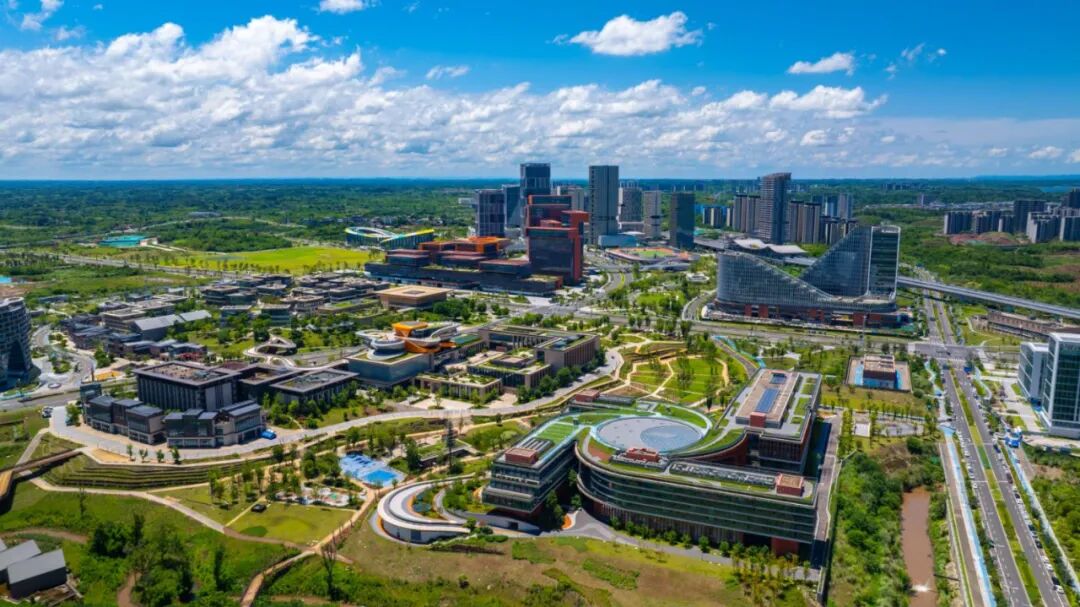
“链”筑产业根基 “贷”活山海经济——惠安农信联社绘就区域“产融共生”新图景
Zheng Quan Ri Bao· 2025-08-30 13:53
Core Viewpoint - The article highlights the role of Huian Rural Credit Union in supporting local industries through innovative financial products and services, fostering economic growth and development in the region. Group 1: Financial Support and Services - Huian Rural Credit Union has provided over 39.8 billion yuan in credit to more than 2,100 local enterprises by June 2025, focusing on three major industrial clusters and small businesses [1] - The "Chain Easy Loan" product has enabled local businesses to acquire automated equipment and expand production capacity, exemplified by a school uniform factory doubling its output after receiving 300 million yuan in loans [2] - The union has established a comprehensive financial service ecosystem by integrating various financial products tailored to different stages of enterprise growth, including "Policy Financial Package" for startups and "Specialized and Innovative Loans" for leading enterprises [2][3] Group 2: Strategic Partnerships and Collaborations - Huian Rural Credit Union has signed strategic cooperation agreements with 13 local organizations, including the Huian County Government, to enhance financial support for local industries, with a total credit exceeding 8 billion yuan [4] - The establishment of the "Farming and Business Home" platform has facilitated credit access for 51 enterprises, amounting to 1.31 billion yuan, demonstrating the union's commitment to community engagement [3][4] - The union has also collaborated with various government departments to create a "Service Station" for veterans, providing specialized loans and support for veteran entrepreneurs [10][11] Group 3: Innovation and Technology - Huian Rural Credit Union has supported the transformation of traditional industries into high-tech enterprises, such as a local company that evolved from a workshop to a national high-tech enterprise with the help of 200 million yuan in loans [6] - The union has promoted the use of knowledge property as collateral for loans, issuing 1.35 billion yuan in intellectual property pledge loans to enhance the value of local innovations [7] - The "1+N" service model has been instrumental in driving the digital transformation of local industries, with significant investments in automation and technology upgrades [6][13] Group 4: Market Expansion and Community Engagement - The union has actively engaged in outreach programs, visiting over 39,000 market entities to assess financing needs, resulting in credit approvals totaling 10.23 billion yuan [14] - Through various promotional events and online sales initiatives, the union has facilitated the sale of local products, generating significant revenue and increasing community participation [8] - The establishment of micro-loan centers has focused on serving small and micro enterprises, with 6.04 billion yuan in new loans issued since their inception [8][14]
五道集团:以产业为帆,以匠心为舵,铸就产业投资新典范
Sou Hu Cai Jing· 2025-07-24 02:27
Core Perspective - Wudao Group outlines a strategic vision of "industry-finance symbiosis and enduring value" as a comprehensive industrial investment institution, emphasizing its capital operation capabilities and deep industry engagement [1] Group 1: Cemetery Industry - Wudao Group focuses on the cemetery industry, which is characterized by its anti-cyclical nature, ensuring stable cash flow growth despite economic fluctuations. The value of its cemetery assets has reached nearly 9.5 billion yuan, with a net profit reserve of nearly 3.6 billion yuan [1] Group 2: Building Asset Management - In the core city office management sector, Wudao Group demonstrates keen industry insight, managing a total signed office area of 31,481 square meters. The occupancy rates for various projects, such as the Zhejiang University Alumni Enterprise Headquarters and Alibaba's Cainiao Industrial Park, are reported at 100% and 82% respectively [1] Group 3: Vehicle Rental Industry - In the business vehicle rental sector, Wudao Group has established an efficient and flexible operational system, achieving a monthly rental rate of over 95% and an annual profit margin exceeding 43%, reflecting its robust growth potential [2] Group 4: Consumer Experience - The "Little Elephant Experience Park" fills a gap in shopping mall consumption scenarios, creating high-frequency traffic through immersive interactions. Additionally, the group has innovated in the restaurant sector with the launch of a unique beef bone hot pot brand, establishing eight locations in Beijing and Shandong [3] Group 5: Self-Storage Market - The self-storage market in China has seen rapid growth, with an annual growth rate exceeding 30%. Wudao Group addresses modern storage needs through self-storage solutions, catering to urban residents facing space constraints [4][5] Group 6: Investment and Operation Philosophy - Wudao Group's core competitiveness lies in its dual-driven model of "industrial investment" and "industrial operation," distinguishing itself from traditional asset management institutions. The group emphasizes the importance of operational empowerment for asset appreciation, creating a warm and human-centered investment experience [6]
构建三大政府性产业母基金体系:盐城以耐心资本促产融共生
2 1 Shi Ji Jing Ji Bao Dao· 2025-04-25 08:42
Core Viewpoint - Government investment funds have become essential tools for local governments to guide emerging industries, optimize industrial upgrades, and cultivate new productive forces, with Jiangsu Yancheng leveraging patient capital to promote economic development [1] Group 1: Government Investment Funds - Yancheng is accelerating the layout of industrial funds, establishing a system of three government industrial mother funds with a total scale of 150 billion yuan, including a 100 billion yuan industrial investment mother fund, a 30 billion yuan strategic emerging industry mother fund, and a 20 billion yuan green low-carbon industry special fund [1][3] - The industrial investment mother fund focuses on major strategic implementations, supporting significant project recruitment, mergers and acquisitions of leading enterprises, and collaboration with national/provincial funds [1][3] Group 2: Industry and Financial Integration - Yancheng has established over 170 industrial investment mother and subsidiary funds with a total scale exceeding 1.4 trillion yuan, having invested in over 600 projects [3][4] - The city is focusing on the "5+2" strategic emerging industries and 23 key industrial chains, which include sectors like new energy vehicles, new materials, and digital economy [3][4] Group 3: Partnerships and Market Dynamics - The Huanghai Financial Holding Group is collaborating with various investment institutions to enhance financial support for industrial upgrades, focusing on sectors such as digital economy and green manufacturing [2][5] - Yancheng is actively seeking diverse management institution partnerships, with a focus on long-term investment strategies and enhancing post-investment management capabilities [5][6] Group 4: Mergers and Acquisitions - Yancheng is promoting the establishment of merger and acquisition funds to assist listed companies in enhancing their core business and market value, addressing issues like low market capitalization [6][7] - The merger and acquisition funds aim to integrate high-quality resources along the industrial chain, enhancing the competitiveness of leading enterprises and increasing local companies' opportunities for listing [7]