产业自主

Search documents
美企怒怼中国稀土管制:双标霸权何时休?
Sou Hu Cai Jing· 2025-12-27 15:27
Core Viewpoint - The article discusses the tension between the U.S. and China regarding rare earth materials, highlighting the U.S. accusations of China restricting supply while China shows an increase in rare earth exports, revealing contradictions in the U.S. narrative [1][5]. Group 1: U.S. Accusations and China's Response - U.S. politicians claim that China is disrupting supply chain stability, yet data shows that China's rare earth exports increased by 13% in November compared to the previous month [1][6]. - The CEO of Noveon, Scott Dunn, expressed frustration over being denied access to dysprosium oxide due to his U.S. identity, despite the overall increase in China's rare earth exports [1]. - China's Ministry of Commerce emphasized its commitment to maintaining global supply chain stability, countering U.S. claims by presenting export data that exceeds pre-pandemic levels [6]. Group 2: The Global Rare Earth Market Dynamics - The U.S. once dominated rare earth production but has faced challenges due to environmental costs and technological lag, leading to a collapse of its domestic industry in the 1990s [5][7]. - China has established a complete rare earth industry chain, from exploration to refining, which is seen as a significant competitive advantage over the U.S. [6][7]. - The article suggests that the U.S. is attempting to rebuild its rare earth industry but faces significant hurdles, including the time required to establish processing facilities and train skilled workers [5][6]. Group 3: Implications for Global Supply Chains - The ongoing conflict over rare earth materials reflects a broader struggle between hegemonic logic and a multipolar world, with the article arguing that true competition should be based on fairness and mutual benefit [10][12]. - The narrative of "supply chain wars" indicates that no party can achieve complete independence in a globalized economy, emphasizing the interconnectedness of supply chains [10][12]. - The article concludes that cooperation and open competition are essential for a balanced global supply chain, rather than unilateral actions that could lead to further fragmentation [10][12].


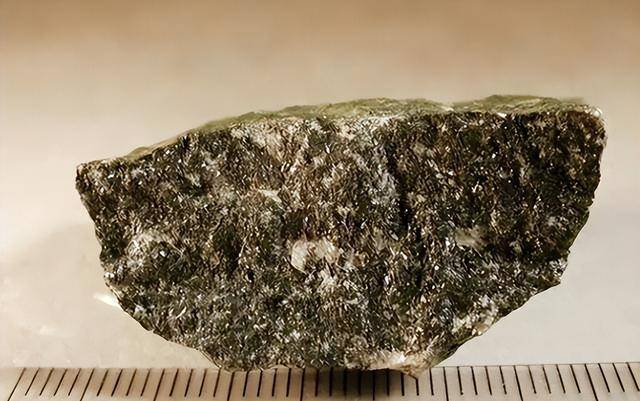
“稀世珍宝”再现我国,多国想用先进技术来换,都被我国逐一拒绝
Sou Hu Cai Jing· 2025-12-24 19:39
Core Viewpoint - The discovery of rhenium reserves in China significantly enhances the country's resource security and reduces reliance on imports, positioning China as a key player in the global rhenium market [10][25]. Group 1: Rhenium Reserves and Production - Rhenium is a rare transition metal with a very high melting point of 3186 degrees Celsius and is found in the Earth's crust at a concentration of one part per billion [2]. - Global known rhenium reserves are less than 2500 tons, primarily located in Chile (1300 tons), the USA (390 tons), and Russia (310 tons) [4]. - China has made significant strides in rhenium exploration since the 1960s, developing its own production chain and reducing dependency on imports [5]. Group 2: Recent Discoveries and Impacts - In 2010, a significant rhenium deposit of 176 tons was discovered in Shaanxi, accounting for 7% of global reserves, followed by another discovery of 30 tons in Anhui in 2017 [7][9]. - These discoveries have alleviated the rhenium supply gap in China, with domestic production capabilities improving [9]. Group 3: Global Demand and Strategic Importance - Rhenium is crucial in high-temperature applications, particularly in aerospace, where 80% of rhenium is used in turbine blade alloys [10][19]. - The global demand for rhenium is increasing, and with China's reserves, the country has gained leverage in the international market [10][17]. Group 4: International Reactions and China's Position - Following the discovery of rhenium reserves, Western countries, led by the USA, sought to exchange advanced technology for access to China's rhenium resources, but these proposals were declined [12][15]. - China's firm stance on maintaining control over its rhenium resources reflects its focus on national security and self-sufficiency [17][25]. Group 5: Future Prospects and Applications - Rhenium has diverse applications beyond aerospace, including in rocket nozzles, medical isotopes for cancer treatment, and environmental catalysts [21][23]. - China's investment in refining technology and exploration is expected to further enhance its rhenium production capabilities and secure its position in the global market [23][25].