
产业链供应链韧性和安全水平

Search documents
提升产业链供应链韧性和安全水平 第十一届电子信息行业社会责任年会成功召开
Zheng Quan Ri Bao Wang· 2026-02-04 12:26
Group 1 - The 11th Annual Conference on Social Responsibility in the Electronic Information Industry was successfully held in Beijing, focusing on the theme "Coexistence of Responsibility and Value in the New Era" [1] - The conference included five key segments: work reports, industry achievements, international perspectives, Chinese practices, and the issuance of CSR assessment results certificates [1] - The conference disclosed the 2025 work report of the Social Responsibility Working Committee and the assessment results of CSR governance levels for the 2024-2025 electronic information industry [1] Group 2 - The China Electronics Standardization Institute, as the secretariat of the Social Responsibility Working Committee, has established long-term friendly relations with major international CSR organizations, expanding its international CSR network [2] - By the end of 2025, the institute is expected to have undertaken 17 national standardization technical committees and published a total of 4,775 national standards and 5,919 industry standards, with over 1,000 new standard proposals in key areas [2][3] - The electronic information industry is seen as a driving force for integration with various sectors, including automotive, energy, and healthcare, focusing on advanced computing systems, integrated circuits, data elements, and cybersecurity [3] Group 3 - Companies are encouraged to embed social responsibility into their development plans and integrate sustainable development with CSR governance into their core strategies [4] - The emphasis is on creating a credible and sustainable CSR ecosystem through ethical governance and green innovation, transforming the relationship between technology empowerment and value collaboration [4] - Leading companies are urged to collaborate with small and medium enterprises in the supply chain, leveraging their technological and investment advantages to drive business and CSR performance [4]
这个新矿种,有何特别之处?
Ren Min Ri Bao Hai Wai Ban· 2025-12-17 22:49
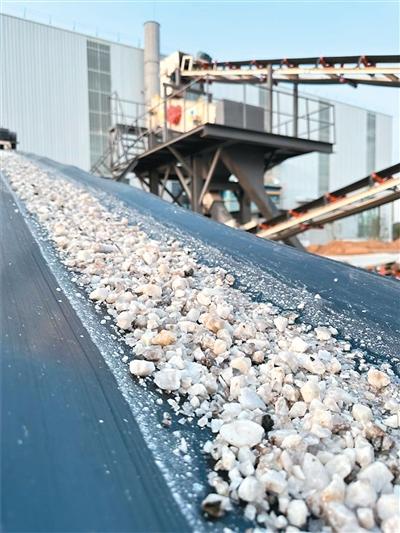
Core Viewpoint - The establishment of high-purity quartz ore as a new mineral resource in China reflects the country's industrial upgrade and is expected to significantly impact high-end manufacturing industries such as semiconductors and photovoltaics [6][12]. Group 1: Introduction of High-Purity Quartz Ore - High-purity quartz ore has been officially recognized as China's 174th mineral resource, marking it as the only new mineral type established during the 14th Five-Year Plan period [6][8]. - This mineral is characterized by its high purity, with silicon dioxide (SiO₂) purity not lower than 99.995% (4N5), making it essential for strategic emerging industries [7][9]. Group 2: Characteristics and Importance - High-purity quartz is rare in nature and possesses unique properties such as high-temperature resistance, corrosion resistance, low thermal expansion, high insulation, and transparency, making it crucial for high-tech applications [7][9]. - The mineral's establishment as a new category is aimed at enhancing resource security for critical industries, particularly in semiconductor and optical fiber production [12][14]. Group 3: Strategic Significance - The new mineral type is expected to activate the commercial exploration market and attract social capital for mining, potentially leading to new resource reserves in favorable geological areas [12][14]. - The establishment of high-purity quartz ore as a distinct mineral type is a response to the strategic and urgent demand for materials that are vital for national security and economic development [9][11]. Group 4: Future Management and Development - The Ministry of Natural Resources plans to enhance exploration efforts, develop a technical index system, and establish standards for high-purity quartz ore to ensure effective resource management and protection [14][15]. - There will be a focus on technological innovation and research to improve the extraction and utilization of high-purity quartz resources, thereby increasing the overall resource security and efficiency [14][15].

我国机械工业规上企业达13.7万家
Xin Hua Wang· 2025-12-15 04:04
Group 1 - The core viewpoint of the article highlights significant achievements in China's machinery industry during the "14th Five-Year Plan" period, including growth in industrial scale, foreign trade, and innovation capabilities [1] Group 2 - The number of large-scale enterprises in the machinery industry increased from 92,000 at the end of 2020 to 137,000 by the end of October 2025 [1] - The average annual growth rate of the added value of the machinery industry is 7.1%, with a growth rate of 8.7% in the first three quarters of this year, surpassing the national industrial and manufacturing average [1] - From January to October this year, the total import and export volume of goods in the machinery industry reached $1.03 trillion, a year-on-year increase of 7.6%, with expectations for a record high for the year [1] - A total of 4,487 national and industry standards were published during the "14th Five-Year Plan," with an international standard conversion rate exceeding 92% [1] - The machinery industry accounts for one-quarter of the national-level characteristic industrial clusters for small and medium-sized enterprises [1] - Thirteen Chinese companies have entered the top 50 global engineering machinery manufacturers [1] Group 3 - Looking ahead to the "15th Five-Year Plan," the machinery industry aims to enhance the resilience and security of the industrial supply chain, accelerate the development of new productive forces, and focus on the transformation towards intelligence, greenness, and integration [1]
吴华清:提升产业链供应链韧性和安全水平
Jing Ji Ri Bao· 2025-12-04 23:57
Core Viewpoint - The article emphasizes the importance of ensuring the resilience and security of industrial and supply chains as a fundamental principle for national governance and economic stability, highlighting the need for a modern industrial system centered on advanced manufacturing to support high-quality development and address internal and external risks [1][2]. Group 1: Importance and Urgency - The recent technological revolution and industrial transformation have led to significant changes in the global industrial and supply chain landscape, shifting focus from cost efficiency to national interests and security [2]. - The urgency of ensuring the stability and security of China's industrial and supply chains has become increasingly prominent due to complex international dynamics and challenges [2]. Group 2: Economic Resilience and National Competitiveness - The resilience and security of industrial and supply chains are directly linked to a country's economic resilience and risk management capabilities, with a focus on maintaining uninterrupted operations during external shocks [3]. - A robust industrial and supply chain enhances domestic economic circulation and international competitiveness, contributing to a virtuous cycle of technology, industry, finance, and consumption [4]. Group 3: Pathways to Self-Reliance and Security - To maintain industrial and supply chain stability, a focus on self-reliance and security is essential, integrating current needs with long-term goals [5]. - Emphasizing the development of new productive forces, the article advocates for aligning industrial chain layouts with technological advancements, particularly in cutting-edge fields like AI and biotechnology [5]. Group 4: Modernization and Upgrading - Transitioning from a manufacturing power to a manufacturing stronghold requires continuous elevation of the industrial system towards high value-added segments [6][7]. - The development of strategic emerging industries, such as information technology and new energy vehicles, is crucial for enhancing the overall efficiency and intelligence of industrial chains [7]. Group 5: International Cooperation and Global Governance - Active participation in international cooperation and global governance is vital for stabilizing global industrial and supply chains amidst rising protectionism and geopolitical tensions [8]. - China aims to support multilateral trade systems and enhance global economic integration, leveraging its large market to create shared development opportunities [8]. Group 6: Infrastructure and Institutional Innovation - Strengthening infrastructure support is necessary for enhancing supply chain resilience, including optimizing global logistics and establishing resource distribution centers [9]. - Institutional innovation is required to create a comprehensive risk prevention system, ensuring alignment with international standards and enhancing resource allocation capabilities [10]. Group 7: Technological Independence and Optimization - Achieving technological self-reliance is critical in the face of intense international competition, focusing on mastering key technologies and promoting smart, green, and integrated industrial transformations [11]. - Collaborative optimization of industrial layouts is essential for risk dispersion and efficiency enhancement, both domestically and internationally [12]. Group 8: Ensuring Security in Key Areas - Strengthening security capabilities in critical sectors like food and energy is fundamental to maintaining stable industrial and supply chains [13]. - Implementing a series of practical measures and institutional innovations is necessary to ensure the reliable supply of essential resources [13].
开展“人工智能+有色金属”行动 建设行业大模型
Zheng Quan Ri Bao· 2025-09-28 23:52
Core Viewpoint - The Ministry of Industry and Information Technology and seven other departments have issued a work plan for the non-ferrous metals industry aimed at achieving an average annual growth of around 5% in value-added output from 2025 to 2026, with a focus on enhancing resource development and promoting high-quality growth in the sector [1] Summary by Sections Industry Growth Targets - The non-ferrous metals industry is expected to achieve an average annual growth of approximately 5% in value-added output from 2025 to 2026, with a 1.5% annual growth in the production of ten major non-ferrous metals [1] - The production of recycled metals is projected to exceed 20 million tons, with advancements in domestic resource development for copper, aluminum, and lithium [1] Key Initiatives - **Resource Utilization**: Implement a new round of mineral exploration strategies and support the efficient extraction of low-grade and complex resources [2] - **Technological Innovation**: Promote breakthroughs in high-purity metals and advanced materials, enhancing product quality and supporting the construction of pilot platforms for new materials [2] - **Investment Expansion**: Accelerate the development of mineral resource projects and promote energy-saving and emission-reduction transformations in the industry [2] - **Market Demand**: Stimulate consumption of bulk metals and expand applications for high-end aluminum, copper, and magnesium alloys [3] - **International Cooperation**: Assist enterprises in responding to foreign trade restrictions and support the import of primary products while promoting overseas projects [3] Implementation Measures - **Organizational Support**: Local governments are encouraged to refine growth targets and policies, while industry associations are to promote collaboration across the supply chain [4] - **Policy Support**: Utilize existing funding channels and tax reduction policies to support the industry, along with national reserves for key products [4] - **Monitoring and Analysis**: Employ big data and AI to enhance monitoring of industry performance and global trends, ensuring timely responses to market changes [4]
聊城装备制造产业链展现强劲动能
Qi Lu Wan Bao· 2025-08-20 06:28
Core Insights - The equipment manufacturing industry in Liaocheng is experiencing rapid growth, with projected revenue of 31.84 billion yuan in 2024, representing a growth rate of 7.1%, and a revenue of 17.688 billion yuan in the first half of 2025, showing a year-on-year increase of 18.9% [1][2] Industry Growth and Development - The industry has established a complete and distinctive supply chain, including segments such as agricultural machinery, engineering machinery, laser equipment, and wire and cable, with market share continuously increasing under the leadership of key enterprises like Shifeng Group [1][2] - The brand influence of the equipment manufacturing sector is growing, with 12 national-level "little giant" enterprises, 29 provincial-level "gazelle" enterprises, 21 provincial-level single champion enterprises, and 104 specialized and innovative enterprises [1] Export and Market Expansion - The equipment manufacturing industry is actively expanding into overseas markets, with significant export growth in agricultural and engineering machinery. In the first quarter, Shifeng Group's foreign trade increased by 97%, and three-wheeled vehicle exports rose by over 60% [2] - Diesel engine exports grew nearly 1.5 times, and tractor sales in Eastern Europe and North Africa increased by 20%. Dual Power Modern Agricultural Equipment has also expanded its foreign trade, exporting over 30 million yuan in the first half of the year [2] Project Development and Innovation - Major projects are continuously generating new development momentum and expanding industry boundaries, contributing to high-quality economic development. Key projects include the intelligent precision spring project by Xindadi and the green and intelligent electric excavator project by Kenstone Heavy Industry [2] Regulatory Support and Industry Enhancement - The Municipal Market Supervision Administration is focusing on supporting the development of the equipment manufacturing industry by implementing targeted measures to enhance quality and competitiveness. This includes a "10+7" initiative aimed at promoting high-quality development in specific sub-sectors [3][4] - The administration is adopting a service-oriented regulatory approach, providing compliance guidance and tailored service measures to improve enterprise perception and support industry quality enhancement [4]
碳酸锂市场周报:供给偏多库存高位,碳酸锂仍存有压力-20250613
Rui Da Qi Huo· 2025-06-13 10:12
Report Summary 1. Report Industry Investment Rating No investment rating information is provided in the report. 2. Core Viewpoints - The lithium carbonate market remains in a situation of weak supply and light demand, with industrial inventories slightly accumulating and remaining at a high level. The main contract of lithium carbonate showed a weak weekly oscillation, with a weekly decline of 0.83% and an amplitude of 3.81%, closing at 59,940 yuan/ton [5]. - The macro - environment aims to enhance the resilience and safety of the industrial chain. On the raw material side, overseas mines are holding firm on prices and reducing shipping willingness, while smelters have weak purchasing sentiment due to sufficient inventories. The supply is expected to be high in the short - term and then gradually decline, and the demand is weak due to the off - season [5]. 3. Summary by Directory 3.1. Weekly Highlights - **Market Review**: The main contract of lithium carbonate showed a weak weekly oscillation, with a weekly decline of 0.83% and an amplitude of 3.81%, closing at 59,940 yuan/ton [5]. - **Market Outlook**: The supply is expected to be high in the short - term and then gradually decline. The demand is weak due to the off - season, and the inventories are at a high level [5]. - **Strategy Recommendation**: Adopt a light - position oscillating strategy, selling short on rallies, and pay attention to trading rhythm and risk control [5]. 3.2. Futures and Spot Market - **Futures Market**: As of June 13, 2025, the closing price of the main contract of lithium carbonate was 59,940 yuan/ton, a week - on - week decrease of 500 yuan/ton. The near - far month spread was 40 yuan/ton, a week - on - week increase of 140 yuan/ton [10]. - **Spot Market**: As of June 13, 2025, the average price of battery - grade lithium carbonate was 60,650 yuan/ton, a week - on - week increase of 450 yuan/ton. The basis of the main contract was 710 yuan/ton, a week - on - week increase of 950 yuan/ton [17]. 3.3. Upstream Market - **Lithium Spodumene**: As of June 13, 2025, the average price of lithium spodumene concentrate (6% - 6.5%) was 697 US dollars/ton, a week - on - week decrease of 15 US dollars/ton [21]. - **Lithium Mica and Lithium Aluminum Phosphate**: As of June 13, 2025, the average price of lithium aluminum phosphate was 6,595 yuan/ton, a week - on - week increase of 55 yuan/ton. The average price of lithium mica (Li₂O: 2.0% - 3%) was 1,576 yuan/ton, a week - on - week increase of 21 yuan/ton [26]. 3.4. Industry Situation - **Supply Side**: As of April 2025, the monthly import volume of lithium carbonate was 28,335.89 tons, a month - on - month increase of 10,210.4 tons (56.33%) and a year - on - year increase of 33.63%. The monthly export volume was 734.289 tons, a month - on - month increase of 514.26 tons (233.72%) and a year - on - year increase of 112.99%. The monthly output was 47,900 tons, a month - on - month increase of 4,720 tons (10.93%) and a year - on - year increase of 2.68%. The monthly operating rate was 43%, a month - on - month decrease of 5% and a year - on - year decrease of 32% [31]. - **Demand Side** - **Intermediate Products**: As of June 13, 2025, the average price of lithium hexafluorophosphate remained flat week - on - week. The monthly output of electrolyte in April 2025 was 160,900 tons, a month - on - month increase of 4,000 tons (2.55%) and a year - on - year increase of 34.96%. The average price of lithium iron phosphate (power type) remained flat week - on - week. The monthly output of lithium iron phosphate cathode materials in April 2025 was 196,600 tons, a month - on - month increase of 18,000 tons (10.08%) and a year - on - year increase of 19.73%. The monthly operating rate was 47%, a month - on - month decrease of 10% and a year - on - year decrease of 8%. Some prices of ternary materials weakened, and the monthly output in April 2025 was 62,500 tons, a month - on - month increase of 8,450 tons (15.63%) and a year - on - year increase of 15.53%. The monthly operating rate was 53%, a month - on - month increase of 5% and a year - on - year decrease of 4%. The average price of lithium manganate remained flat week - on - week, and the monthly output in April 2025 was 10,500 tons, a month - on - month increase of 830 tons (8.58%) and a year - on - year increase of 46.65%. The average price of lithium cobaltate was 215,000 yuan/ton, a week - on - week decrease of 5,000 yuan/ton. The monthly output in April 2025 was 11,800 tons, a month - on - month increase of 4,630 tons (64.57%) and a year - on - year increase of 66.2% [34][37][42][47][50]. - **Application End**: As of May 2025, the penetration rate of new energy vehicles was 43.99%, a month - on - month increase of 1.25% and a year - on - year increase of 10.11%. The monthly output was 1,270,000 vehicles, a month - on - month increase of 1.52%, and the sales volume was 1,307,000 vehicles, a month - on - month increase of 6.61%. The cumulative export volume was 855,000 vehicles, a year - on - year increase of 64.74% [52][58]. 3.5. Options Market - The implied volatility of at - the - money lithium carbonate options is below the 50th percentile, and there is a possibility of increased volatility in the future. It is recommended to construct a long straddle option strategy to bet on increased volatility [61].
国务院国资委:要大力提升产业链供应链韧性和安全水平,着力打造现代产业链领军企业
news flash· 2025-05-26 12:04
Group 1 - The meeting emphasized the importance of focusing economic development on the real economy, aiming to consolidate and enhance traditional industries [1] - There is a call for the widespread application of digital and green technologies, accelerating the transformation of production, management, and marketing models, as well as process reengineering [1] - The integration of modern service industries with advanced manufacturing is encouraged to revitalize traditional advantageous industries [1] Group 2 - The meeting advocates for the orderly development of strategic emerging industries and future industries [1] - It highlights the need for in-depth implementation of industrial renewal actions to foster the growth of startup companies, leading enterprises, and unicorn companies [1]
【省发展改革委】陕西22条举措进一步降低全社会物流成本
Shan Xi Ri Bao· 2025-03-28 00:34
Core Viewpoint - The implementation plan by Shaanxi Province aims to effectively reduce logistics costs across society by enhancing transportation services, optimizing management systems, and promoting innovation, with specific measures outlined to achieve these goals by 2027 [1][2]. Group 1: Transportation Service Enhancement - The plan includes 22 specific measures focusing on improving railway freight service levels and optimizing the structure of freight transportation [1]. - By 2027, the railway freight volume and turnover are expected to increase significantly, contributing to a more efficient and competitive logistics market [1]. Group 2: Cost Reduction Strategies - To lower transportation costs, Shaanxi will reform the comprehensive transportation system, optimize toll policies, and implement differentiated tolls on highways [2]. - The plan promotes the use of advanced technologies such as unmanned vehicles and warehouses to enhance service efficiency in large cargo transportation [1][2]. Group 3: Infrastructure and Management Cost Reduction - Shaanxi will utilize central budget investments and long-term special bonds to support the construction of modern logistics infrastructure [2]. - The plan encourages the use of recycled materials in logistics facilities to reduce construction costs and aims to streamline customs and transportation processes to lower management costs [2]. Group 4: Overall Logistics System Improvement - The plan aims to leverage Shaanxi's logistics hub advantages to create a comprehensive open pattern that enhances the efficiency of transportation, storage, and distribution [2]. - The initiative focuses on digital upgrades across the logistics chain to improve overall efficiency and reduce costs [2].