产品竞争力下滑

Search documents
外卖大战成“利润收割机”?瑞幸净利暴跌39%
Guo Ji Jin Rong Bao· 2026-02-27 16:00
2025年,瑞幸营收创新高,却被"外卖大战"吃掉利润,若是未参与这场活动,其去年第四季度营收增速则可能大幅下滑,可谓是"难两全"的困境。 2月26日晚间,瑞幸咖啡(OTC:LKNCY)披露2025年第四季度及全年财报。 去年,公司总净收入492.88亿元,同比增长43%;归母净利润达36亿元,同比增长21.8%,但净利率仅7.3%,该指标连续两年下滑。 细看财报,瑞幸去年第三季度就开始"增收不增利",到了第四季度净利润仅5.18亿元,同比暴跌39%。随后召开的业绩电话会议上,瑞幸管理层表示这一 短期波动"符合内部预期",但资本市场给出了更真实的反馈——开盘后公司股价大幅走低,盘中最大跌幅为6.7%,最终以36.07美元收盘,较上日下滑 3.94%。 凭借庞大的门店网络和稳定的运营能力,瑞幸成为三大互联网平台发展即时零售业务冲订单的重要合作伙伴。当时有加盟商直言"要赚翻了",订单根本来 不及做,补贴不会影响他们的收入。但这场现象级商战对瑞幸公司而言,并没有赚到更多钱,由此产生的配送费和平台佣金反而侵蚀利润。 财报显示,瑞幸去年第四季度的配送费用高达16.31亿元,同比激增94.5%、近乎翻倍,正常该费用约占公司 ...


收入持续下降,将大幅关闭门店?85度C回应:仍对中国大陆市场抱有信心
Sou Hu Cai Jing· 2025-10-14 14:45
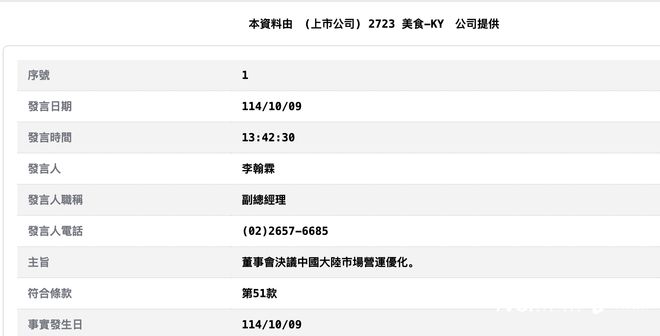
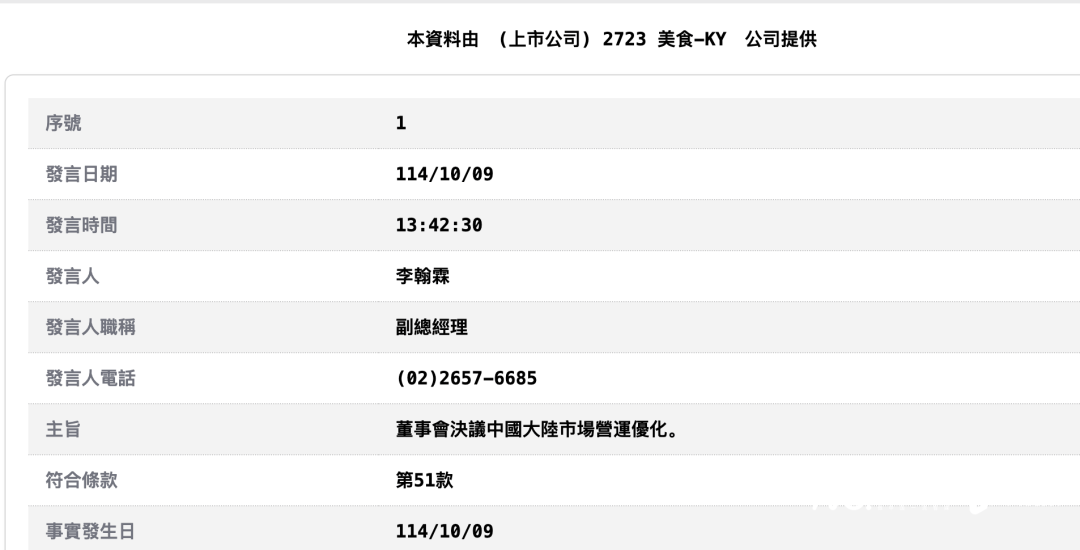
Core Viewpoint - 85度C's parent company, 美食-KY, announced a strategic adjustment in its operations in mainland China, focusing on optimizing its operational scale by closing underperforming stores in specific regions [1][3][4]. Group 1: Operational Adjustments - 美食-KY plans to terminate operations in specific areas and stores in mainland China where profitability has consistently fallen below expectations [3][4]. - The company aims to enhance resource allocation in production, logistics, and operational support to improve overall efficiency and shareholder value in the long term [3][4]. Group 2: Store Closures and Market Impact - The current adjustment represents the largest scale of closures in nearly five years, with over 40 stores expected to close in mainland China [4]. - As of September 16, 2025, the number of operating stores in mainland China has decreased to 386, down from 467 in October 2024, indicating a reduction of 81 stores [4]. Group 3: Financial Performance - 美食-KY reported a revenue of approximately 137.7 billion New Taiwan Dollars (NTD) for the first three quarters of this year, a decrease of about 2% compared to the same period last year [6]. - In the first half of this year, revenue from mainland China fell by 11.08% to 35.22 billion NTD (approximately 8.22 billion RMB), while overall revenue increased by 1.32% to 94.53 billion NTD [6]. Group 4: Brand and Competitive Challenges - The decline in revenue in mainland China is attributed to brand aging and a decrease in product competitiveness, leading to a significant drop in store performance [8][9]. - The lack of appealing new products and a declining brand presence have contributed to the challenges faced by 85度C in the competitive landscape [8][9].
将大幅关闭门店?85度C回应:仍对中国大陆市场抱有信心
Nan Fang Du Shi Bao· 2025-10-14 03:59
Core Viewpoint - 85°C, a subsidiary of Meishi-KY, is adjusting its operational strategy in mainland China by closing underperforming stores, with an expectation to close over 40 stores this year, while maintaining confidence in the market [1][2][3]. Group 1: Operational Adjustments - The board of Meishi-KY has decided to optimize its operational scale in mainland China, terminating operations in specific regions and stores where profitability has consistently fallen below expectations [2][3]. - The company aims to enhance resource allocation in production, logistics, and operational support alongside the store closures, which is expected to improve overall resource efficiency and shareholder value in the medium to long term [2][3]. Group 2: Financial Performance - 85°C has experienced a significant decline in revenue in mainland China, with a reported 11.08% decrease in revenue to approximately 35.22 billion New Taiwan Dollars (about 8.22 billion RMB) in the first half of the year [6]. - The overall revenue for Meishi-KY in the first three quarters was approximately 137.7 billion New Taiwan Dollars, reflecting a 2% decrease compared to the previous year [6]. - In 2024, revenue from mainland China is projected to drop by 22.19% to 80.53 billion New Taiwan Dollars, following a 0.25% decline in 2023 [6]. Group 3: Market Dynamics - 85°C's store count in mainland China has decreased from 467 to 386, a reduction of 81 stores, with a significant concentration in the East China market, particularly in Jiangsu, Shanghai, and Fujian [4][5]. - The brand is facing challenges due to aging brand perception and declining product competitiveness, leading to a lack of appealing new products and ultimately resulting in decreased store performance [8][9]. - The competitive landscape in the bakery sector is characterized by regional traits, which complicates supply chain management and may increase operational costs due to reduced scale effects from store closures [9].