
现烤面包

Search documents
商圈“京”彩过大年
Xin Lang Cai Jing· 2026-02-20 22:46
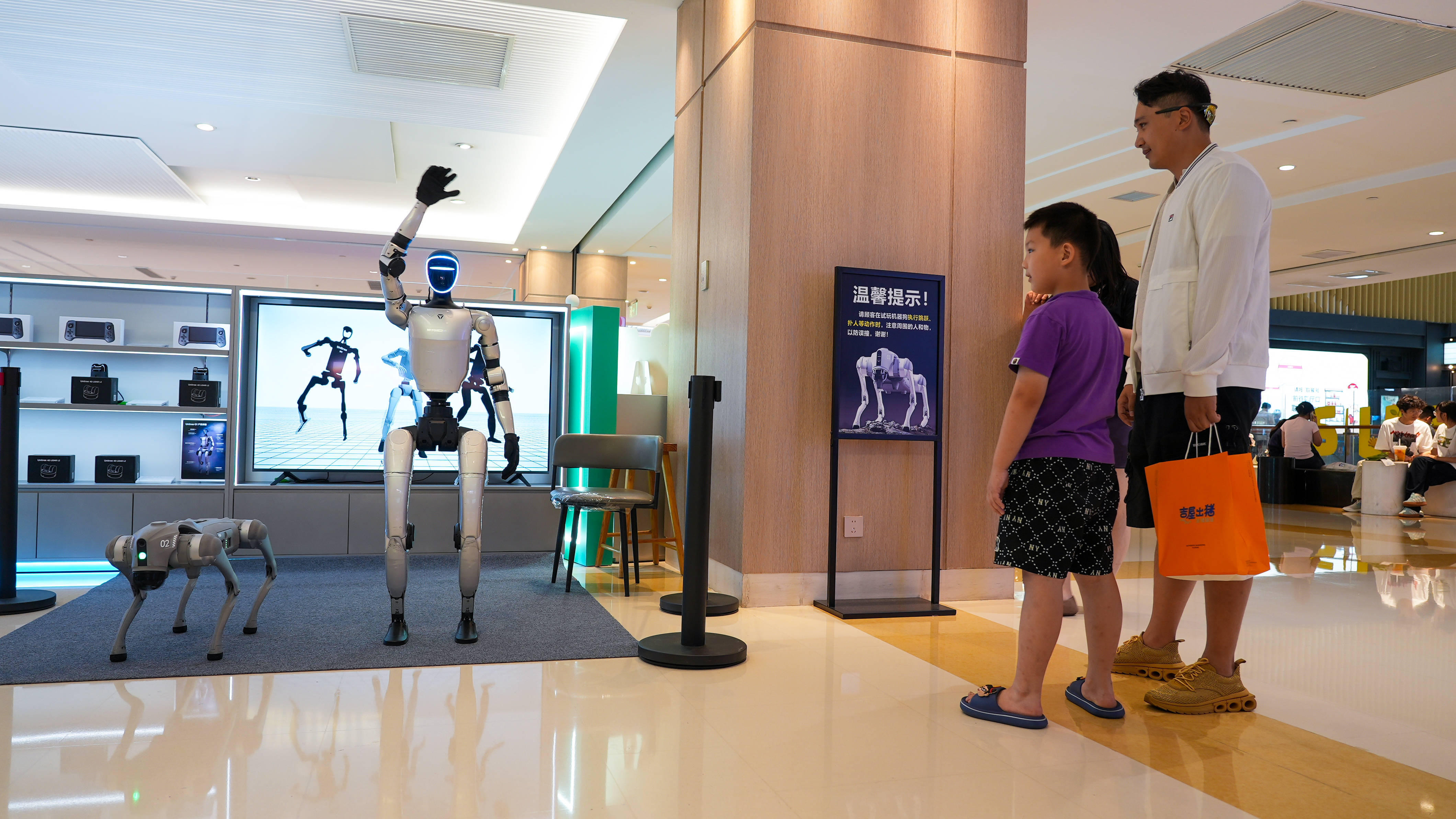
Core Viewpoint - The article highlights the vibrant atmosphere of the Lunar New Year celebrations in Beijing, showcasing a blend of traditional culture and modern retail experiences, particularly in the bustling commercial districts like the Longfu Temple area and newly opened shopping complexes [4][5][8]. Group 1: Longfu Temple Market - The Longfu Temple area has transformed into a lively market with over a hundred stalls offering traditional snacks and cultural experiences, attracting families and tourists [5][6]. - The market features a variety of traditional foods such as sugar paintings and tea soup, alongside modern attractions like a large sculpture of a horse symbolizing good fortune [5][6]. - Visitors are engaging with cultural displays, including non-material cultural heritage items like the "rabbit elder" figurines, which have been creatively reimagined for the New Year [6][7]. Group 2: New Shopping Complexes - New commercial complexes in Beijing, such as the Bay Area and the renovated Friendship Store, have become popular destinations for celebrating the New Year, offering immersive cultural experiences and festive decorations [8][9]. - The Bay Area features themed markets that showcase the cultural heritage of various Chinese regions, including performances and traditional crafts [8]. - The Friendship Store has incorporated interactive installations and festive decorations, enhancing the celebratory atmosphere for families visiting during the holiday [9]. Group 3: Technological Integration - The introduction of robotic staff in retail environments, such as the "Galbot G1" robot in a smart retail store, represents a significant technological advancement in customer service during the holiday season [10][11]. - These robots not only assist in sales but also engage with customers, creating a unique shopping experience that combines technology with traditional festivities [10][11]. - The presence of robots in commercial spaces is seen as a modern twist on traditional celebrations, appealing to both children and adults [11].


有潮流市集、非遗文化,更有科技体验:商圈“京”彩过大年
Xin Lang Cai Jing· 2026-02-20 22:46
Core Insights - The article highlights the vibrant atmosphere of the Lunar New Year markets in Beijing, particularly at the Longfu Temple, showcasing a blend of traditional culture and modern retail experiences [1][2][3] Group 1: Market Atmosphere - The Longfu Temple market is bustling with visitors enjoying traditional foods and shopping, creating a lively festive environment [1][2] - The market features a mix of traditional and contemporary elements, such as the "Longfu Horse" sculpture and various food stalls offering local delicacies [2][3] - The presence of non-material cultural heritage displays and interactive experiences enhances the festive spirit, attracting families and tourists alike [3][4] Group 2: Cultural Integration - The market integrates traditional crafts with modern design, exemplified by unique products like the "Rabbit Master" figurines and traditional toys reimagined for contemporary audiences [3][4] - Non-material cultural heritage showcases are prominent, with artisans demonstrating their skills and engaging visitors in traditional crafts [5][6] Group 3: Technological Innovation - The introduction of smart retail technology, such as the robot "Xiao Gai," enhances the shopping experience, providing efficient service and entertainment [8][9] - The robot's capabilities include autonomous operation and customer interaction, reflecting a trend towards integrating technology in retail environments [8][9]
物美调改后岗位调整幅度大吗?业态扩容+技能升级,调整只为员工与门店双成长
Jin Rong Jie· 2026-02-05 09:10
Core Viewpoint - Wumart's recent adjustments are characterized as "quality expansion" rather than traditional "downsizing," focusing on enhancing employee skills and creating new positions to meet the demands of new retail formats [1][2]. Group 1: Nature of Adjustments - The adjustments initiated by Wumart are not aimed at reducing workforce but rather at upgrading positions and expanding roles to align with new business formats [2]. - CEO Qiao Hongbing emphasized that the essence of the adjustments is the "upgrade of personnel," ensuring that no layoffs occur and that employees are empowered through training [2]. Group 2: Job Creation and Structure Optimization - The dual business formats, AI new retail stores and hard discount stores, have led to significant job creation across the entire supply chain, with positions doubling in some locations [3][4]. - In AI new retail stores, the number of employees increased from 130 to 260, with new roles such as food safety inspectors and bakers being created to meet service demands [3]. - Hard discount stores have optimized their job structures by training existing employees to become versatile "multi-skilled" workers, reducing the number of required staff while enhancing operational efficiency [4]. Group 3: Quality of Positions - Wumart is focusing on upgrading traditional roles by adding customer service and product recommendation responsibilities, enhancing the value of positions like stock clerks and cashiers [5]. - New technical and service-oriented roles have been introduced, such as AI operations assistants and food safety inspectors, to fill gaps in the new retail landscape [5]. Group 4: Employee Benefits and Training - Employee compensation has increased by 30%-50% post-adjustment, with minimum monthly salaries reaching 6,000 yuan, alongside enhanced benefits like paid annual leave and profit-sharing opportunities [7]. - Comprehensive training programs are in place to support employees in adapting to new roles, ensuring that both new and existing staff can quickly acquire necessary skills [7]. Group 5: Strategic Foundations of Adjustments - The adjustments are driven by the rigid demand for new roles to support upgraded business formats and the efficiency gains from technology integration [8]. - Wumart's strategy emphasizes viewing employees as core assets, aiming to create a positive cycle of employee satisfaction leading to improved service and customer loyalty [8]. Group 6: Outcomes of Adjustments - The adjustments have resulted in a high retention rate of over 95% for existing employees, with new roles attracting a significant number of young job seekers [9]. - Sales performance has improved significantly, with daily sales at some stores increasing from 200,000 yuan to 700,000 yuan, demonstrating the effectiveness of the adjustments [9]. Group 7: Future Prospects - The adjustments represent a proactive transformation from traditional supermarket roles to new retail positions, indicating a commitment to continuous improvement and employee development [9].
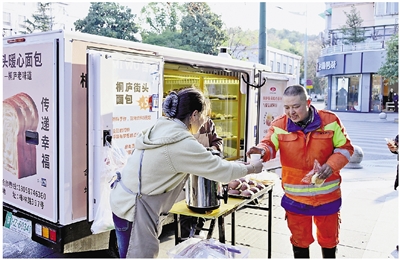
桐庐:一辆无人车 满城麦香暖
Hang Zhou Ri Bao· 2026-01-28 02:33
Core Viewpoint - The initiative of using an unmanned delivery vehicle to distribute free freshly baked bread to outdoor workers in Tonglu County represents a blend of technology and community support, driven by a local bakery owner’s desire to give back to the community after receiving help during her difficult times [1][2]. Group 1: Initiative Overview - The unmanned delivery vehicle operates every weekday from 4 PM to 6 PM, distributing no less than 100 pieces of bread to outdoor workers and special groups [1]. - The project is supported by the Tonglu County Charity Association and involves collaboration with various organizations, including the City Management Department and Rainbow Charity volunteers [2]. Group 2: Business Model and Sustainability - The bakery owner plans to sell new affordable bread through the unmanned vehicle, allocating 20% of the profits to charity, 30% to incentivize employees, and 50% to cover operational costs [2]. - The charity model is seen as a beneficial exploration of how digital tools can enhance charitable efforts, with plans to expand the service to include meal assistance in mountainous areas and support for agricultural product transportation [2].
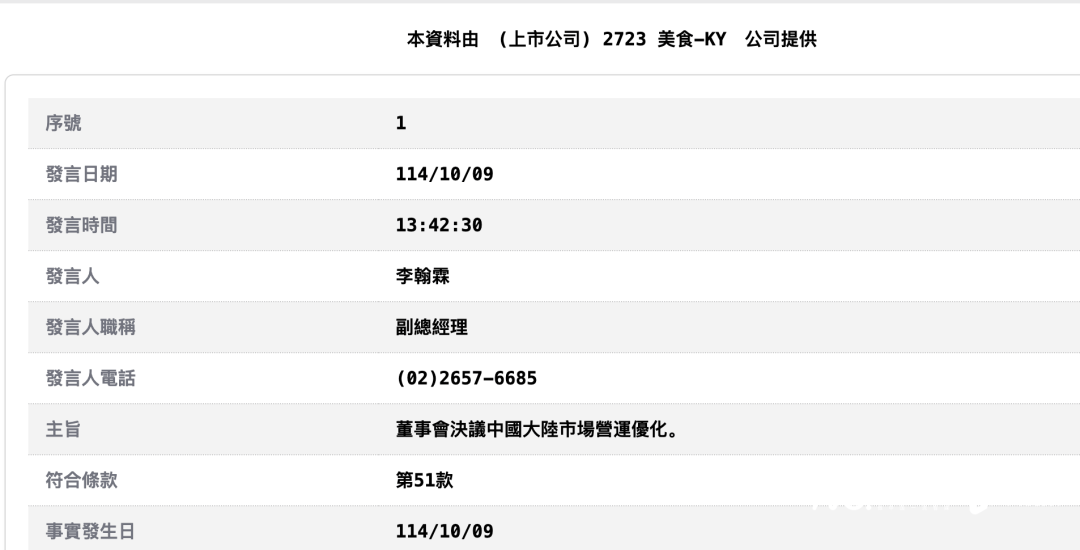
收入持续下降,将大幅关闭门店?85度C回应:仍对中国大陆市场抱有信心
Sou Hu Cai Jing· 2025-10-14 14:45
Core Viewpoint - 85度C's parent company, 美食-KY, announced a strategic adjustment in its operations in mainland China, focusing on optimizing its operational scale by closing underperforming stores in specific regions [1][3][4]. Group 1: Operational Adjustments - 美食-KY plans to terminate operations in specific areas and stores in mainland China where profitability has consistently fallen below expectations [3][4]. - The company aims to enhance resource allocation in production, logistics, and operational support to improve overall efficiency and shareholder value in the long term [3][4]. Group 2: Store Closures and Market Impact - The current adjustment represents the largest scale of closures in nearly five years, with over 40 stores expected to close in mainland China [4]. - As of September 16, 2025, the number of operating stores in mainland China has decreased to 386, down from 467 in October 2024, indicating a reduction of 81 stores [4]. Group 3: Financial Performance - 美食-KY reported a revenue of approximately 137.7 billion New Taiwan Dollars (NTD) for the first three quarters of this year, a decrease of about 2% compared to the same period last year [6]. - In the first half of this year, revenue from mainland China fell by 11.08% to 35.22 billion NTD (approximately 8.22 billion RMB), while overall revenue increased by 1.32% to 94.53 billion NTD [6]. Group 4: Brand and Competitive Challenges - The decline in revenue in mainland China is attributed to brand aging and a decrease in product competitiveness, leading to a significant drop in store performance [8][9]. - The lack of appealing new products and a declining brand presence have contributed to the challenges faced by 85度C in the competitive landscape [8][9].
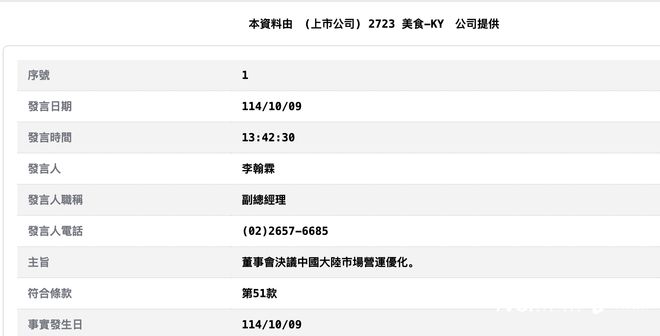
将大幅关闭门店?85度C回应:仍对中国大陆市场抱有信心
Nan Fang Du Shi Bao· 2025-10-14 03:59
Core Viewpoint - 85°C, a subsidiary of Meishi-KY, is adjusting its operational strategy in mainland China by closing underperforming stores, with an expectation to close over 40 stores this year, while maintaining confidence in the market [1][2][3]. Group 1: Operational Adjustments - The board of Meishi-KY has decided to optimize its operational scale in mainland China, terminating operations in specific regions and stores where profitability has consistently fallen below expectations [2][3]. - The company aims to enhance resource allocation in production, logistics, and operational support alongside the store closures, which is expected to improve overall resource efficiency and shareholder value in the medium to long term [2][3]. Group 2: Financial Performance - 85°C has experienced a significant decline in revenue in mainland China, with a reported 11.08% decrease in revenue to approximately 35.22 billion New Taiwan Dollars (about 8.22 billion RMB) in the first half of the year [6]. - The overall revenue for Meishi-KY in the first three quarters was approximately 137.7 billion New Taiwan Dollars, reflecting a 2% decrease compared to the previous year [6]. - In 2024, revenue from mainland China is projected to drop by 22.19% to 80.53 billion New Taiwan Dollars, following a 0.25% decline in 2023 [6]. Group 3: Market Dynamics - 85°C's store count in mainland China has decreased from 467 to 386, a reduction of 81 stores, with a significant concentration in the East China market, particularly in Jiangsu, Shanghai, and Fujian [4][5]. - The brand is facing challenges due to aging brand perception and declining product competitiveness, leading to a lack of appealing new products and ultimately resulting in decreased store performance [8][9]. - The competitive landscape in the bakery sector is characterized by regional traits, which complicates supply chain management and may increase operational costs due to reduced scale effects from store closures [9].
30元/个、喜茶猛推,蛋挞成饮品店“顶流”
东京烘焙职业人· 2025-08-16 08:33
Core Viewpoint - The beverage industry is innovating by integrating baked goods, particularly egg tarts, into their product offerings, enhancing customer engagement and increasing sales potential [20][22][34]. Group 1: Egg Tart Innovations - Beverage stores are creatively using tea-making techniques to produce egg tarts, with brands like Heytea introducing flavors such as taro mud and brown sugar [8][15]. - The average price of these egg tarts is around 30 yuan, which, while not cheap, attracts consumers due to unique flavors and appealing presentations [15][20]. - The trend of egg tarts is gaining traction, with various brands like Lele Tea and Grandpa's Tea launching their own versions, including innovative designs like "box tarts" and "giant tarts" [19][20]. Group 2: Expanding Product Lines - Beverage brands are diversifying their offerings by introducing low-cost baked goods, such as freshly baked bread priced under 10 yuan, to attract customers and increase foot traffic [24][26]. - New store formats, like Nayuki Green, are focusing on fresh and healthy ingredients, aiming to capture a broader market by offering tea, baked goods, and light meals [27][29]. - The introduction of Chinese-style snacks, such as baked buns paired with coffee, is appealing to local tastes and enhancing customer interest [31][33]. Group 3: Market Strategy - The integration of baked goods into beverage menus is seen as a strategic move to combat price competition in the beverage market, allowing stores to maintain profitability [34][35]. - The emphasis on freshly made products rather than factory-produced items is intended to create a unique selling proposition and strengthen brand loyalty [35].
经济大省新亮点|零售“焕新升级”激发新需求——河南提振消费一线观察
Sou Hu Cai Jing· 2025-08-07 20:51
Group 1 - The core viewpoint of the articles highlights the emergence of "first stores" and "first launches" in Henan as a strategy to boost consumption, with a focus on creating unique shopping experiences [1][2][8] - In the first half of the year, Henan's total retail sales of consumer goods reached 1.42 trillion yuan, a year-on-year increase of 7.2%, surpassing the national average by 2.2 percentage points [1] - The government of Henan has prioritized "boosting consumption" as a key focus for 2025, emphasizing the development of first-store economies and supporting cities like Zhengzhou and Luoyang to become international consumption centers [2][8] Group 2 - The "first store" concept has attracted significant foot traffic, with a notable example being the "Red Star Forward Bakery" in Zhengzhou, which sees daily customer traffic of 1,500 [2] - Large commercial complexes like Zhengdong Vientiane City have become popular destinations, housing over 540 brands, including more than 100 first stores and nearly 50 flagship stores [2][3] - The retail landscape in Henan is shifting from price competition to quality competition, with a focus on creating comprehensive shopping experiences that integrate art, culture, and commerce [8][12] Group 3 - The development of first-store economies in Henan has effectively tapped into consumer potential, as seen in the performance of Dennis David City, which recorded a foot traffic of 13.9 million and sales exceeding 5.5 billion yuan in the first half of the year [7] - The introduction of new retail formats, such as the "IP image flagship store" by Huayu Baijia Supermarket, has successfully combined shopping with social experiences, achieving a customer flow of 17,100 and sales of 1.98 million yuan on its opening day [15] - Henan's retail sector is experiencing a transformation, with a focus on safety and quality, supported by a robust supply chain and logistics network, which is crucial for high-quality development [12][15]
经济大省新亮点丨零售“焕新升级”激发新需求——河南提振消费一线观察
Xin Hua Wang· 2025-08-07 13:46
Group 1 - The core viewpoint of the article highlights the revitalization of consumption in Henan through the promotion of "first store" economies and tailored consumption scenarios, leading to a significant increase in retail sales [1][2][4] - In the first half of the year, Henan's total retail sales reached 1.42 trillion yuan, a year-on-year increase of 7.2%, surpassing the national average by 2.2 percentage points [1] - The government of Henan has prioritized "boosting consumption" as a key focus for 2025, emphasizing the development of first-store economies and supporting cities like Zhengzhou and Luoyang to become international consumption centers [2][4] Group 2 - The emergence of first stores has attracted significant consumer traffic, with some stores reporting daily foot traffic of up to 1,500 visitors [2] - Large commercial complexes in Henan, such as Zhengdong Vientiane City, have become popular destinations for young consumers, featuring over 540 brands, including more than 100 city-first stores [2][3] - The retail landscape in Henan has shifted from price competition to quality competition, with a focus on creating comprehensive shopping experiences that integrate art, culture, and commerce [4] Group 3 - Henan is implementing a three-year action plan to optimize the consumer environment, aiming to create a safe and reliable shopping atmosphere [5] - The success of brands in Henan is attributed to their focus on safety and quality, supported by efficient logistics and digital supply chain networks [6] - The opening of flagship stores, such as the Hua Yu Bai Jia supermarket, has demonstrated strong initial performance, with first-day foot traffic reaching 17,100 and sales exceeding 1.98 million yuan [6]
零售“焕新升级”激发新需求——河南提振消费一线观察
Xin Hua She· 2025-08-07 13:13
Group 1 - The core viewpoint of the articles highlights the emergence of "first stores" and "first launches" in Henan as a strategy to boost consumption, with a reported retail sales total of 1.42 trillion yuan in the first half of the year, reflecting a year-on-year growth of 7.2%, surpassing the national average by 2.2 percentage points [1] - The government of Henan has prioritized "boosting consumption" as a key focus for 2025, actively promoting the development of first-store economies and supporting cities like Zhengzhou and Luoyang to become international consumption centers [2] - The opening of new flagship stores and brands, such as the Honey Snow Ice City headquarters and the Dong Mingzhu Health Home in Zhengzhou, indicates a strong push towards attracting younger consumers, with first stores playing a significant role in driving consumption [2] Group 2 - The retail landscape in Henan is evolving from price competition to quality competition, with a focus on creating integrated spaces that combine art, culture, and commerce, reflecting a shift in consumer demand towards service-oriented consumption [4] - The establishment of a safe and reliable consumption environment is crucial for boosting consumer confidence, with initiatives to create trustworthy stores and markets, supported by a robust supply chain network [5] - The opening of the Huayu Baijia supermarket's flagship store, which combines shopping and social interaction, achieved impressive initial results with a customer flow of 17,100 and sales exceeding 1.98 million yuan on its opening day [6]