
产学研医深度融合

Search documents
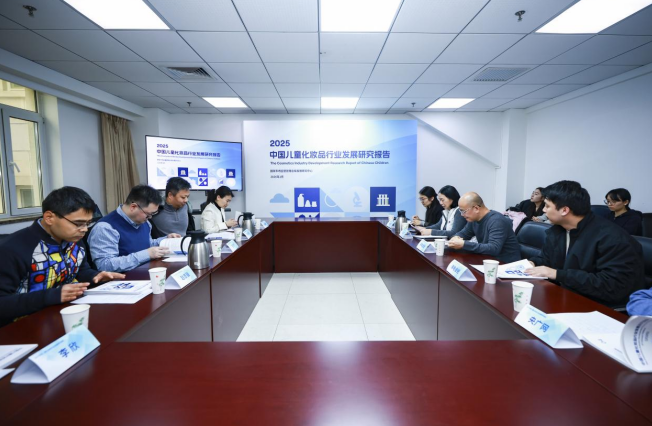
《中国儿童化妆品行业发展研究报告(2025)》在京发布
Jing Ji Wang· 2026-02-05 09:11
Core Insights - The Chinese children's cosmetics industry is experiencing rapid growth, with the market expected to exceed 50 billion by 2025, driven by the "refined parenting" concept and economic development [3][7][20] - The report highlights the importance of a comprehensive regulatory framework and the need for innovation in product safety and efficacy to meet diverse consumer demands [8][11][19] Industry Overview - As of June 2025, there are 28,168 registered ordinary children's cosmetics, with 27,219 being domestically produced and 949 imported; additionally, there are 427 registered special cosmetics, with 406 from domestic sources [3] - The children's skincare market is projected to reach 31.58 billion in 2024, with a year-on-year growth of 6.3%, and the market is expected to surpass 50 billion by 2025 [7][8] Market Trends - The children's cosmetics market is characterized by a dual evolution of scale expansion and structural upgrade, with a growing presence of both domestic and international brands [8][20] - The online sales of children's sunscreen products are projected to reach 1.83 billion in 2025, with the brand Hai Gui Ba Ba capturing a significant market share [8][9] Innovation and Quality Control - The report emphasizes the need for technological innovation and quality management as fundamental to the development of the industry, with companies encouraged to transform compliance pressures into innovation drivers [11][19] - Hai Gui Ba Ba has established a unique research laboratory focused on children's skincare and has developed a "SCIENCE-LED" research and development system to address industry challenges [13][19] Regulatory Environment - The regulatory framework for children's cosmetics is evolving, with a focus on lifecycle quality management and compliance with safety standards [20][22] - The report calls for a collaborative approach among companies to enhance quality management and ensure the safety of children's cosmetics [20][22]

山东省卫生健康委:以组合拳护航医药产业创新升级
Qi Lu Wan Bao· 2026-01-16 15:34
Core Viewpoint - The Shandong Provincial Government is implementing a comprehensive reform plan to enhance the regulation of pharmaceuticals and medical devices, aiming to promote high-quality development in the pharmaceutical industry, which is crucial for national economy and security [1][2]. Group 1: Policy Initiatives - The Shandong Provincial Health Commission will utilize a combination of policy guidance, service optimization, and regulatory assurance to inject new momentum into the high-quality development of the pharmaceutical industry [1]. - A dynamic linkage mechanism will be established between hospital drug supply and the medical insurance drug catalog, facilitating the clinical application of innovative drugs [1]. Group 2: Clinical Evaluation and Support - A comprehensive clinical evaluation system will be developed to assess the safety, efficacy, economic viability, innovation, suitability, and accessibility of drugs, particularly focusing on conditionally approved innovative drugs [2]. - Clinical trial support capabilities will be enhanced by incorporating clinical research into the evaluation of public hospitals' quality, allowing for dedicated beds for innovative drug trials not to count towards total bed numbers [2]. Group 3: Traditional Medicine and Collaboration - The "Qilu Traditional Chinese Medicine Brand Project" will be implemented to promote the quality and added value of traditional Chinese medicine, including the establishment of ecological planting bases for medicinal materials [2]. - A regular consultation mechanism will be established among the Health Commission, Medical Insurance Bureau, and Drug Administration to facilitate data sharing and address cross-sector issues related to innovative drug evaluation and clinical application [3].
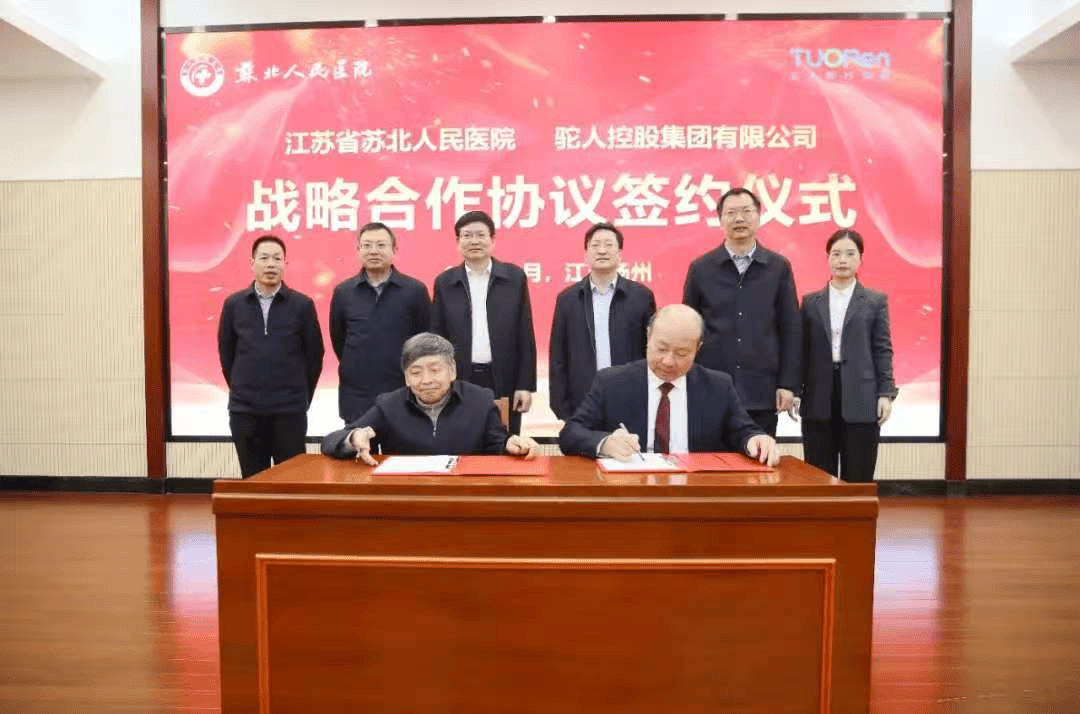
扬州:院企“联姻”医工融合 激活科创发展强引擎
Sou Hu Cai Jing· 2026-01-06 10:27
Core Viewpoint - The strategic cooperation between Su Bei People's Hospital and Tuo Ren Holding Group marks a significant step towards enhancing healthcare innovation and integration in the Yangzhou region, contributing to the "Healthy Yangzhou" initiative [1][4]. Group 1: Strategic Cooperation - The partnership is described as a "marriage" between the two entities, emphasizing the importance of technological reform and medical-industrial integration in the local healthcare system [1]. - This collaboration aims to address the bottlenecks in the transformation of scientific achievements by integrating social resources and focusing on joint technological breakthroughs and talent cultivation [4]. Group 2: Goals and Objectives - The cooperation seeks to establish a "triangular" model of collaborative development that connects clinical needs, research innovation, and industrial transformation, aligning with national strategies for technological self-reliance [4]. - The initiative is expected to significantly enhance the hospital's research innovation efficiency and clinical service capabilities, propelling it towards becoming a high-level research hospital [4]. Group 3: Impact on Local Healthcare - The partnership is seen as a model for deep integration of production, education, research, and medicine, driven by actual clinical needs, which is highly supported by local health and technology authorities [5]. - It aims to accelerate the development of innovative medical products with high clinical value, improving healthcare services in Yangzhou and surrounding areas [5]. - The collaboration is anticipated to attract and cultivate high-end talent in the biomedicine sector, enhancing the overall competitiveness and cluster effect of Yangzhou in this industry [5].
国典(北京)医药科技有限公司董事长张建民:以“产学研医”深度融合 构建生物医药创新生态
Xin Hua Wang· 2025-10-28 01:35
Core Insights - The HICOOL2025 Global Entrepreneur Summit was held in Beijing, focusing on creating a global innovation and entrepreneurship ecosystem [1] - Guodian (Beijing) Pharmaceutical Technology Co., Ltd. has been dedicated to the research and development of drugs for neurological and autoimmune diseases, targeting urgent clinical needs and large patient bases [1][2] Group 1: Company Overview - Guodian Pharmaceutical has focused on the development of exosome-based drugs, particularly in the field of neurological diseases, which are complex and often involve systemic disorders rather than single-target mechanisms [2] - The company has developed a natural exosome delivery system that allows for nasal administration to bypass the blood-brain barrier, addressing the challenge of drug delivery to the brain [2] Group 2: Research and Development Strategy - The integration of "industry, academia, research, and medicine" is crucial for innovation in the biopharmaceutical sector, with Guodian Pharmaceutical emphasizing the need for clinical pain points to drive research and product development [3] - The company’s products are a result of years of research accumulation and breakthroughs in induced pluripotent stem cells (iPSC) and exosome technology [3] Group 3: Collaboration with Academia - There is a growing emphasis on technology transfer from universities, but challenges remain in aligning academic research with industry needs [4] - Effective collaboration between universities and companies is essential for translating laboratory technologies into marketable products, requiring professionals with regulatory and practical pharmaceutical knowledge [4] Group 4: HICOOL Summit Impact - The HICOOL summit showcased over 10,000 entrepreneurial projects and talents from 139 countries, highlighting its global appeal and the strength of Beijing's innovation ecosystem [5] - Guodian Pharmaceutical has benefited significantly from the HICOOL platform, particularly in financing, resource integration, and brand promotion [5]
上海发布促进高端医疗器械产业全链条发展行动方案,多部门协同推动创新成果高效落地
Xin Lang Cai Jing· 2025-09-15 13:05
Core Insights - The Shanghai Municipal Science and Technology Commission has officially released the "Action Plan for Promoting the Full-Chain Development of High-End Medical Device Industry" aimed at overcoming industry bottlenecks and enhancing global competitiveness in the high-end medical device sector [1][2] Group 1: Action Plan Overview - The action plan focuses on a systematic layout from source innovation to clinical transformation, addressing key materials, core components, and cutting-edge technologies [2] - It emphasizes the integration of clinical needs with research and development, aiming to create a full-chain innovation system [3] - The plan includes 20 key tasks across seven major areas: innovation sourcing, clinical empowerment, regulatory approval, hospital application, enterprise cultivation, industrial ecology, and international development [1][2] Group 2: Development Goals - By 2027, the plan aims to approve over 500 new domestic Class III medical device registrations and cultivate two leading enterprises with over 10 billion yuan in output [2] - The establishment of three high-end industrial clusters in Pudong, Minhang, and Jiading is also a key objective [2] Group 3: Clinical and Regulatory Enhancements - The plan seeks to streamline the clinical research process, reducing ethical review times to an average of 5 working days for single-center reviews and 10 days for multi-center reviews [3] - New regulatory procedures for innovative medical devices will prioritize clinical value and enhance the efficiency of the approval process [4] Group 4: Market Access and Payment Reforms - The action plan addresses market access by allowing direct applications from enterprises and enabling hospitals to negotiate procurement prices [5] - It explores innovative payment models involving multiple stakeholders to ensure patients can access high-quality medical devices [5] Group 5: Capital and Industry Synergy - The plan highlights the role of capital in industry development, with state-owned funds focusing on targeted investments in key areas outlined in the action plan [6] - Companies are encouraged to accelerate core technology research and international market expansion to enhance Shanghai's global competitiveness in the medical device sector [6]

以创新为引领 构建医疗高质量发展闭环生态
Ren Min Wang· 2025-07-07 06:11
Core Viewpoint - Zhejiang University Second Affiliated Hospital (ZUSAH) has established a closed-loop ecosystem of "clinical needs - scientific research innovation - results transformation - patient benefits" in the practice of the "Healthy China" strategy, achieving high performance in national evaluations for six consecutive years [2] Group 1: Innovation in Medical Technology - ZUSAH has initiated independent research and development in the field of cardiac intervention, leading to the creation of domestic transcatheter aortic valve replacement products that significantly improve surgical precision and patient outcomes while reducing medical costs [2][3] - The hospital has developed an AI-assisted diagnostic system for coronary heart disease, which streamlines the entire process from outpatient screening to surgical planning, addressing the complexities and high costs of traditional assessment methods [3][4] Group 2: Integration of Research and Clinical Practice - ZUSAH emphasizes the integration of clinical challenges into scientific research, aiming to convert clinical problems into research questions and ultimately benefiting patients through innovative solutions [4][5] - The hospital has established a clinical research special fund and an "innovation center" model, focusing on multidisciplinary collaboration to tackle major diseases like valvular heart disease and coronary heart disease [5] Group 3: Future Aspirations and Goals - ZUSAH aims to cultivate versatile talents who can both treat patients and conduct research, ensuring that clinical research outcomes possess both scientific rigor and translational value [5] - The hospital is committed to addressing unanswered questions in the medical field and hopes to develop more innovative medical devices and technologies to serve patients in the future [5]
一季度全市医药制造业增长百分之十三点七
Nan Jing Ri Bao· 2025-05-06 02:56
Core Insights - The biopharmaceutical industry is a strategic emerging industry crucial for national economy and security, with a significant growth of 13.7% in pharmaceutical manufacturing in Nanjing during Q1 2025, driven by innovation and a vibrant ecosystem of high-tech enterprises [1][8]. Group 1: Innovation and Product Development - Jiangsu Aosai Kang Pharmaceutical Co., Ltd. launched its first class innovative drug, Liratinib tablets, approved for non-small cell lung cancer, marking it as the first innovative drug approved in the province this year [2]. - Nanjing Novozan Biotechnology Co., Ltd. plans to launch six new Alzheimer's disease testing kits, with four being the first of their kind in the country, enhancing early detection capabilities [2][3]. - The new Alzheimer's testing kits are expected to receive regulatory approval by Q3, further simplifying the testing process from cerebrospinal fluid to blood samples [3]. Group 2: Ecosystem and Collaboration - Nanjing has established a deep integration of "industry-university-research-medical" collaboration, positioning itself as a hub for biopharmaceutical innovation, with significant clinical trial and drug approval activity [4][6]. - The city has created a favorable environment for research and development, with over 200 innovation platforms supporting various stages of drug creation [7]. - A strategic cooperation agreement was signed to support biopharmaceutical research and development, with a commitment of 2 billion yuan in diversified capital investment [9][10]. Group 3: Market Growth and Future Plans - The biopharmaceutical industry in Nanjing is projected to generate over 210 billion yuan in revenue in 2024, reflecting a 5% growth, indicating simultaneous scale and quality improvements [8]. - Nanjing aims to enhance its innovation ecosystem by promoting the transformation of cutting-edge research into commercial products, while also attracting leading technology firms [10].