价值共生体

Search documents
会展业发力“走出去”“引进来”,成全球产供链“稳定锚”
Di Yi Cai Jing· 2026-01-22 13:58
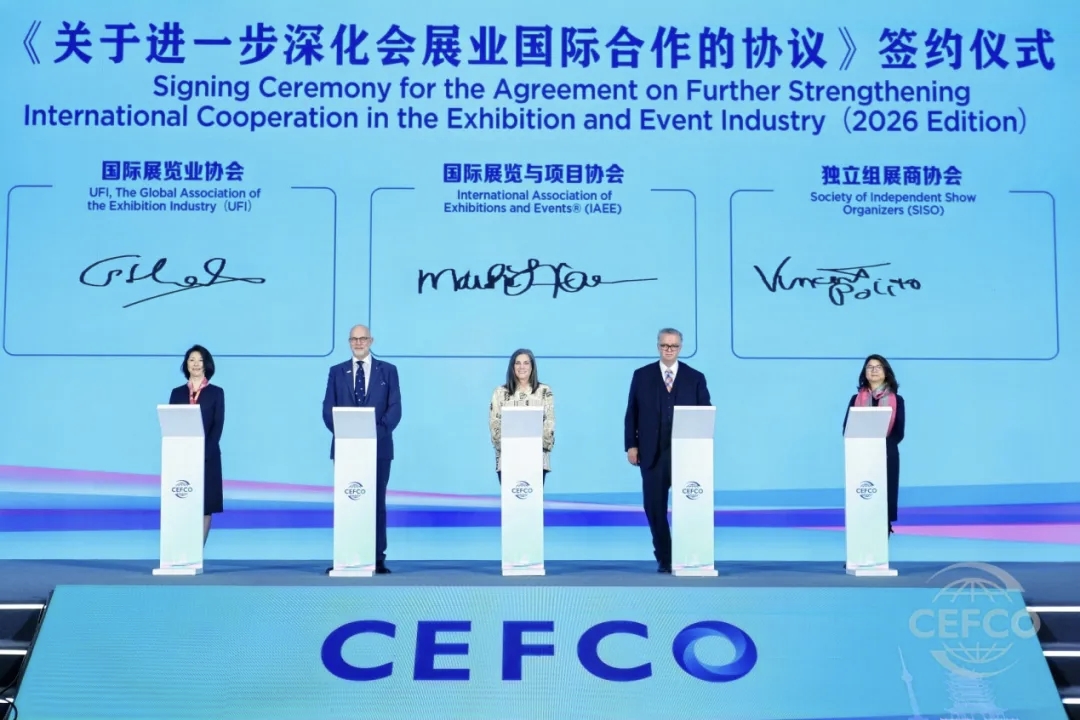
Core Insights - The 2026 China Exhibition Economy International Cooperation Forum (CEFCO Forum) opened in Wuhan, where the China Council for the Promotion of International Trade (CCPIT) signed cooperation agreements with four international exhibition organizations, promoting the "going out" of Chinese exhibition companies and the "bringing in" of international exhibition resources [1] - The exhibition industry is recognized as a crucial vehicle for guiding industrial development and promoting economic cooperation, serving as a source of innovation, an accelerator for resource flow, and a stabilizing anchor for global supply chains [3] - China has the most complete industrial system globally, with over 60 emerging industries and advanced manufacturing clusters, providing a broad market space for deepening cooperation in the exhibition industry [3] Industry Developments - The exhibition industry is evolving from merely hosting short-term events to becoming a "symbiotic partner" that nurtures industrial ecosystems and helps Chinese enterprises integrate into global industrial networks [4] - The future of the exhibition industry lies in structural changes from platforms to ecosystems, focusing on creating value through data assets rather than just providing venues [4] - The industry is transitioning from event organizers to value co-creators, emphasizing the importance of designing links within the industrial chain and facilitating interactions among various stakeholders [4] Regional Impact - The exhibition industry has a multiplier effect, driving growth across various sectors, with Hubei Province planning to host nearly 2,000 exhibitions in 2025, generating over 300 billion yuan in signed contracts [5] - The integration of the exhibition industry with local advantageous industries such as automotive, biomedicine, and modern agricultural processing is fostering a positive cycle of mutual promotion [5]

圣峰集团CEO何圣洁:定义下一代明星与品牌的共生关系
Sou Hu Cai Jing· 2026-01-04 10:14
Core Insights - The entertainment industry in China has been a powerful and imaginative sector, creating immense wealth and opportunities for individuals, companies, and brands [1] - The industry is closely linked to public sentiment and cultural shifts, acting as a "chemical laboratory" for social psychology [1] - Shengfeng Group is a new strategic public relations company focused on entertainment culture insights and cross-domain resource integration, aiming to be a strategic partner in entertainment marketing [1] Company Development - Shengfeng Group was established in 1997, initially connecting with the Hong Kong music scene and gradually expanding into concert planning, operation, and promotion [4] - The company has developed a strong foundation in entertainment marketing, particularly in the Hong Kong and Taiwan entertainment circles [4] Innovative Collaboration - Shengfeng Group differentiates itself by evolving traditional brand and artist collaborations into diversified value co-creation projects, moving beyond mere endorsement to joint investment in content creation [4][5] - An example includes the 2023 Halloween-themed pop-up event "UNDER THE CASTLE," which creatively combined brand characteristics with immersive experiences, enhancing brand visibility and fan engagement [5][8] Scene-based Marketing - The company is transforming concerts from mere performances into deeply operable cultural scenes, integrating culture, technology, and service into comprehensive experiences [9] - Shengfeng Group aims to create unique memories and social hotspots through multi-domain empowerment, especially during significant events like the 2024 Paris Olympics [9] Artist IP Development - The company focuses on developing artists' IP by converting their influence into sustainable cultural and commercial assets, including merchandise and collaborative projects [18] - Initiatives include launching personal brands, publishing autobiographies, and curating themed art exhibitions, enhancing emotional connections with fans [18] Crisis Management - Shengfeng Group employs a proactive defense system for crisis management, prioritizing the long-term image of artists and the safety of fans [24][25] - The company emphasizes transparent communication and systematic risk assessment to preemptively address potential public relations issues [25] Future Vision - The company plans to continue leveraging music as a core element while expanding cross-domain resource integration and innovative collaborations [26] - Shengfeng Group aims to redefine the symbiotic relationship between stars and brands, creating new cultural consumption experiences that resonate with fans [26]

技术赋能、生态联动与价值重塑:从iBox跨界看数字文化产业的新路径探索
Jin Tou Wang· 2025-12-17 02:27
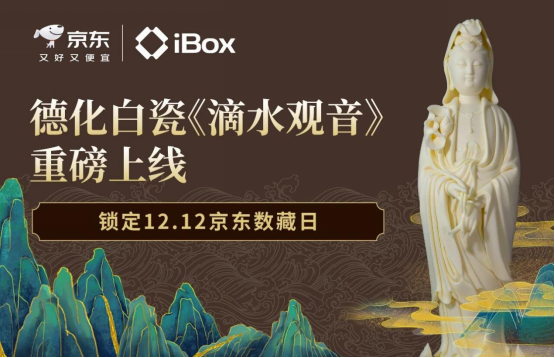
Core Insights - The article discusses how the digital cultural industry is addressing the challenge of revitalizing deep cultural heritage and creating new consumption scenarios through innovative collaborations [1] Group 1: Collaborative Ecosystem - iBox has formed a "value symbiosis" by collaborating with major players like JD.com and China Digital Culture Group, enhancing the cultural digital asset ecosystem [3] - The partnership leverages authoritative IP content, advanced digital technology, a vast user base, and professional operational support to create a complete closed loop from IP authorization to asset circulation [3] Group 2: Expanding Consumption Scenarios - iBox is broadening the scope of cultural digital assets beyond mere collection, fostering a dynamic and interactive value ecosystem [5] - Users can engage in various activities such as trading and participating in events after purchasing digital assets, enhancing the overall consumer experience [5] Group 3: Cultural and Technological Integration - iBox serves as a "converter" that connects traditional culture with modern technology, promoting sustainable development in the digital cultural industry [6] - The platform aims to modernize cultural heritage expression and dissemination, making traditional culture more accessible to contemporary audiences [7]

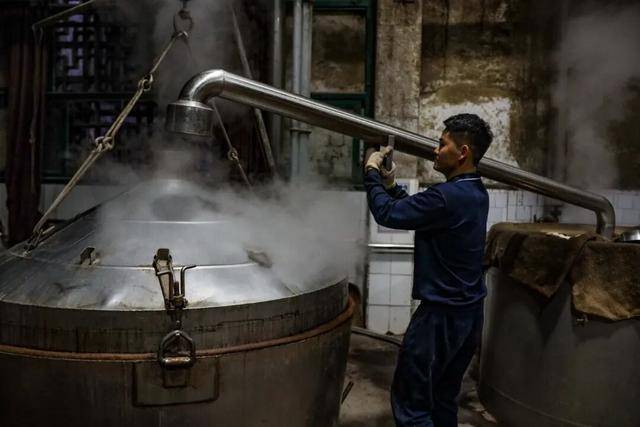
告别单打独斗,酒业亟需“群像智慧”
Sou Hu Cai Jing· 2025-12-15 16:13
Core Viewpoint - The Chinese liquor industry is experiencing a cultural disconnect and intense internal competition, contrasting with the emerging trend of collaborative narratives in cultural consumption, as seen in recent media productions [1][3]. Group 1: Cultural Disconnect - The Chinese liquor industry is in an "embarrassing state of cultural disconnection," struggling to resonate with modern consumers despite its rich brewing heritage [3]. - The industry's narrative has been one-sided and closed, focusing on self-promotion rather than engaging in dialogue with consumers [3][6]. Group 2: Internal Competition - The industry faces chaotic competition, with "low-price live streaming" and "brand-label chaos" dominating online channels, putting pressure on quality-focused companies [3]. - The current state of mutual consumption among liquor varieties contradicts the desired spirit of collaboration [3]. Group 3: Future Directions - The future of the liquor industry lies in open connections and the creation of a "value symbiosis" involving multiple stakeholders, which is essential for overcoming challenges and reshaping value [4]. - A systematic transformation is needed, shifting from isolated efforts to collaborative engagement across various dimensions [4][6]. Group 4: Collaborative Transformation - The industry should transition from "self-talk" to "dialogue co-creation," generating new meanings through interactions with users and communities [6]. - Innovation should move from "individual efforts" to "ecological collaboration," promoting open sharing of resources across the supply chain [6]. - The focus should shift from "price wars" to "value wars," enhancing user relationships through experience and service [6]. - Communication must evolve from "one-way transmission" to "two-way interaction," embedding brands into users' stories and daily lives [6]. Group 5: Collective Growth - The future success of the Chinese liquor industry depends on collective growth rather than the success of individual companies [4][6]. - A shift from "I" narratives to "we" co-creation is essential for the industry to reclaim its cultural value, allowing each product to reflect both historical depth and contemporary resonance [4][6].