价格型货币政策

Search documents
中国货币政策独立性度量及“三元悖论”适用性研究
Sou Hu Cai Jing· 2025-12-23 22:49
Core Insights - The article analyzes the independence of China's monetary policy from both quantity and price perspectives, addressing the applicability of the "trilemma" and "dilemma" concepts [2][5] - It concludes that since 2022, China's quantity-based monetary policy independence has declined, while price-based independence has significantly improved [2][28] - The article suggests that allowing greater fluctuation in the RMB/USD exchange rate can enhance the independence of price-based monetary policy [2][28] Group 1: Monetary Policy Independence - The analysis indicates that controlling the correlation between economic cycles and inflation cycles, along with global common factors, aids in better identifying price-based monetary policy independence [2][28] - Since 2022, China's quantity-based monetary policy independence has decreased, but price-based monetary policy has achieved a significant level of independence [2][28] - The article highlights that the "trilemma" phenomenon in China has shown a central tendency since the Asian financial crisis, suggesting that a moderate relaxation of the RMB/USD exchange rate can enhance price-based monetary policy independence [2][28] Group 2: Impact of Global Monetary Policy - The article discusses the significant spillover effects of U.S. monetary policy on global financial stability, particularly in the context of the COVID-19 pandemic [3] - It notes that while major economies have followed the Fed's lead, China's monetary policy has diverged, indicating a degree of independence [3][28] - The article emphasizes the importance of maintaining monetary policy independence in light of the Fed's interest rate cuts and the potential impacts on global financial markets [3][28] Group 3: Methodology and Contributions - The article constructs indices for both quantity-based and price-based monetary policy independence, improving the measurement of price-based independence by controlling for economic cycle synchronization and common factors [5][28] - It critiques existing literature for primarily focusing on interest rate independence and neglecting the significance of quantity-based monetary policy independence, especially in the context of China's transition [11][28] - The findings suggest that the current state of China's monetary policy independence is influenced by both domestic economic conditions and external shocks [28][29]


复旦大学经济学院院长张军—— 货币政策应从数量型向价格型转变
Zheng Quan Shi Bao· 2025-07-07 18:18
Core Viewpoint - The forum highlighted the need for a shift in China's monetary policy from quantity-based to price-based approaches, emphasizing the importance of nominal GDP growth over just real GDP growth [1][2] Group 1: Economic Context - China's economic growth has slowed in recent years, prompting a focus on nominal GDP growth [1] - The government's adjustment of the CPI target from 3% to 2% reflects a heightened concern for price stability [1] Group 2: Key Issues in Price Stability - International factors pose risks, particularly regarding supply chain disruptions [1] - The real estate market remains sluggish, leading to reduced local government revenues and insufficient recovery in public capital spending, which contributes to weak overall demand [1] - There is inadequate growth in household operational and asset income [1] Group 3: Monetary Policy Recommendations - Short-term monetary policy should shift focus from GDP growth to price stability and employment [1] - There is a need for better coordination with global macroeconomic policies to avoid misalignment [1] - The transition of policy tools from quantity-based to price-based approaches is essential [1][2]
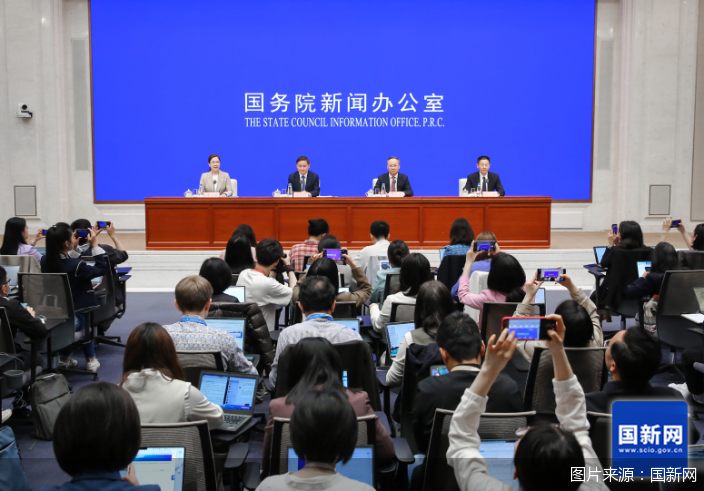
权威解读!央行十箭齐发!降准降息即将落地
Bei Jing Shang Bao· 2025-05-07 09:44
Core Viewpoint - The People's Bank of China (PBOC) has announced a comprehensive set of monetary policy measures aimed at stabilizing the market and expectations, including a combination of quantity, price, and structural policies to enhance liquidity and support economic growth [1][4]. Quantity Policies - The PBOC will reduce the reserve requirement ratio (RRR) by 0.5 percentage points, which is expected to provide approximately 1 trillion yuan in long-term liquidity to the market [3][4]. - The current average RRR for commercial banks is 6.6%, and this reduction aims to lower banks' funding costs and enhance the stability of their liabilities [3][4]. - The RRR for auto finance and financial leasing companies will be reduced to 0%, significantly boosting their credit supply capabilities [4][5]. Price Policies - Starting May 8, the PBOC will lower the 7-day reverse repurchase rate from 1.50% to 1.40%, which is anticipated to lead to a corresponding decrease in the Loan Prime Rate (LPR) by about 0.1 percentage points [5][6]. - The PBOC will also reduce the rates for various structural monetary policy tools by 0.25 percentage points, including the rate for pledged supplementary loans (PSL) from 2.25% to 2% [6][7]. - The personal housing provident fund loan rates will be lowered by 0.25 percentage points, with new rates set at 2.1% for loans under 5 years and 2.6% for loans over 5 years for first-time buyers [6][7]. Structural Policies - Five structural policies have been introduced, focusing on capital markets, technological innovation, and consumer support, with significant funding allocations such as 300 billion yuan for technology innovation loans and 500 billion yuan for service consumption and elderly care loans [9][10]. - The PBOC will merge the swap facility for securities, funds, and insurance companies with a stock repurchase loan program, totaling 800 billion yuan, to enhance liquidity in the capital market [9][10]. - A new risk-sharing tool for technology innovation bonds will be established, allowing the PBOC to provide low-cost loans to support the issuance of these bonds, thereby promoting the growth of high-quality technology enterprises [10][11].