
企业家社会责任

Search documents
曹德旺:作为企业家一定要为国家、社会负责,而不仅仅是赚钱
2 1 Shi Ji Jing Ji Bao Dao· 2025-12-01 06:35
Core Viewpoint - The founder and honorary chairman of Fuyao Glass Industry Group Co., Ltd., Cao Dewang, emphasized the responsibility of entrepreneurs to contribute to the country and society, beyond merely pursuing profits [1] Group 1 - The "Understanding China" International Conference for 2025 commenced in Guangzhou on December 1 [1] - Cao Dewang delivered a keynote speech during the conference, highlighting the importance of corporate social responsibility [1]

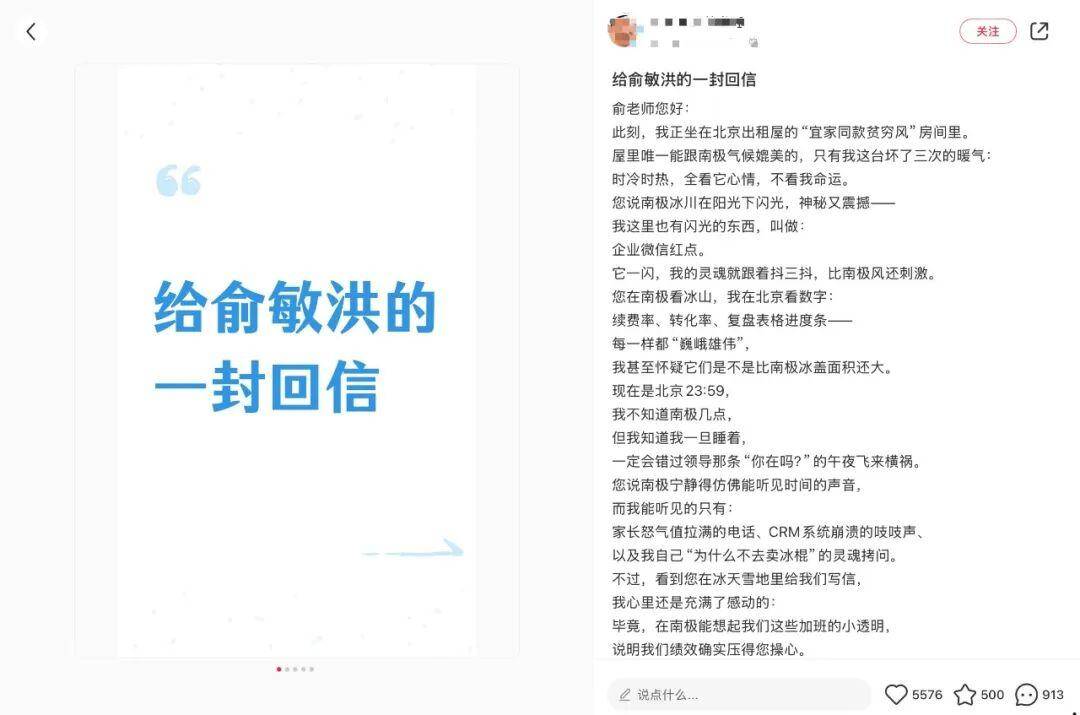
俞敏洪全员信“翻车”:企业家社会责任与教育公平的深层思考
Sou Hu Cai Jing· 2025-11-19 11:24
Core Viewpoint - The internal letter from Yu Minhong, founder of New Oriental, sparked controversy by highlighting the disconnect between the poetic imagery of his experiences in Antarctica and the harsh realities faced by employees, raising questions about the social responsibility of entrepreneurs and the fairness of education [1][2]. Group 1: Empathy Crisis and Entrepreneurial Responsibility - The controversy surrounding Yu Minhong's letter reflects a disconnect between individual narratives and collective struggles, emphasizing the lack of acknowledgment of employee pressures and challenges [1]. - Similar instances of "empathy crisis" have been observed with other entrepreneurs, indicating a trend where successful narratives overlook structural inequalities, leading to increased societal anxiety and diminished trust in business leaders [2]. Group 2: Educational Practice and Challenges - The concept of "the rich helping the poor" in education is fundamentally about ethical resource redistribution, requiring not just equal starting points but also efforts to narrow the gaps in processes and outcomes [3]. - New Oriental's transition from K12 training to diversified sectors like quality education and live commerce illustrates a response to policy changes and an extension of corporate social responsibility, yet it raises concerns about whether the focus on new business growth neglects the original mission of educational equity [3][4]. Group 3: Paths to Implement Social Responsibility - Educational enterprises can implement social responsibility through three main pathways: combining hardware investment with software empowerment, enhancing teacher training and career support, and providing targeted assistance to disadvantaged groups [4][5]. - Specific examples include funding for smart classrooms in impoverished schools, teacher exchange programs, and personalized educational plans for vulnerable populations [4][5]. Group 4: Reconstructing Social Responsibility Narratives - The controversy serves as a warning for entrepreneurs to prioritize empathy and action over mere sentiment, suggesting that educational companies should establish two-way communication mechanisms and integrate social responsibility into their core business strategies [5]. - Collaboration with government and industry to promote educational equity is essential, advocating for increased public investment and forming alliances to share resources effectively [5][6]. Conclusion - The incident with Yu Minhong's letter reflects the struggle between commercial success and social responsibility, emphasizing the need for entrepreneurs to remember that true commitment lies in the classrooms of ordinary educators and the eyes of eager learners [6].


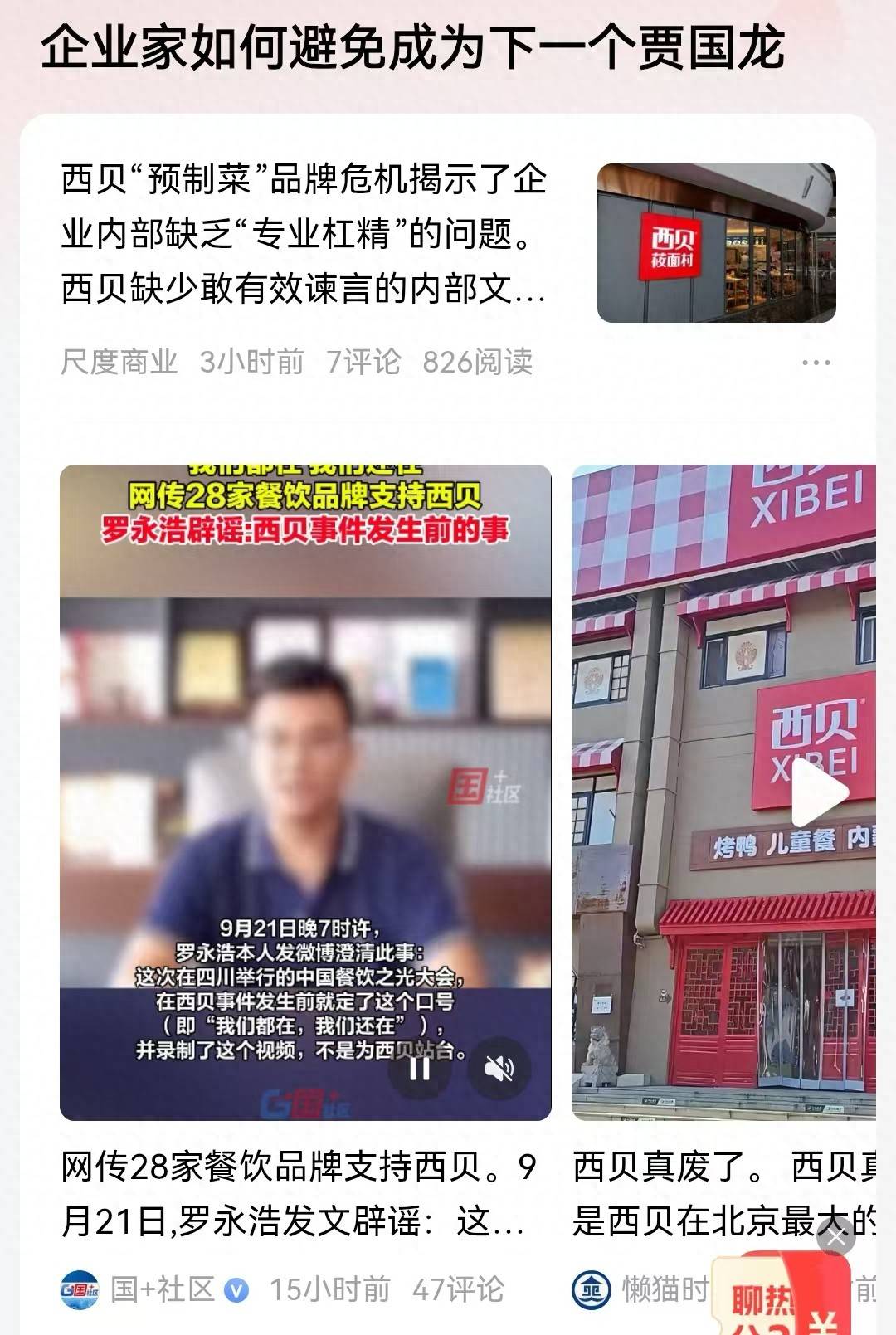
如何避免成为下一个贾国龙?企业家的道德修养应如何?
Sou Hu Cai Jing· 2025-11-13 14:23
Core Viewpoint - The article discusses the downfall of Xi Bei's chairman, Jia Guolong, highlighting the lack of empathy and humility in his leadership style, which has led to negative perceptions among consumers and employees [1][7][8]. Group 1: Leadership and Management Style - Jia Guolong was once a hardworking and customer-oriented leader, but over time, he has become increasingly critical of employees and less appreciative of their efforts [7]. - His management philosophy, which includes demanding excessive working hours (7 days a week, 15 hours a day), reflects a lack of respect for employees' work-life balance [7]. - The article suggests that Jia Guolong's arrogance and failure to maintain humility have contributed to the current crisis facing Xi Bei [8]. Group 2: Consumer Relations - The core issue in the prepared food controversy revolves around the high prices and quality of the products, which Jia Guolong has responded to with aggression rather than humility [8]. - A more low-key and practical response could have mitigated the situation, but Jia Guolong's belief in his superiority led to a more confrontational approach [8]. - The article emphasizes the importance of maintaining a humble attitude towards consumers, especially in times of crisis, to avoid further deterioration of the company's reputation [8]. Group 3: Lessons for Entrepreneurs - The article concludes that successful entrepreneurs should cultivate a sense of social responsibility, not just for their businesses but also for their employees and customers [8]. - The case of Jia Guolong serves as a cautionary tale for other business leaders about the potential consequences of losing empathy and humility [8].
79岁曹德旺退休 铸就1657亿福耀玻璃捐160亿做慈善
Chang Jiang Shang Bao· 2025-10-20 03:37
Core Viewpoint - Fuyao Glass has completed a generational transition with founder Cao Dewang officially handing over the chairman position to his son, Cao Hui, marking the end of an era for the company that has been led by Cao for 37 years [1] Company Overview - Fuyao Glass is the world's largest automotive glass manufacturer, producing one out of every three automotive glass units globally [6] - The company was founded in 1987 by Cao Dewang, who transformed a struggling glass factory into a leading player in the automotive glass market after recognizing the profit potential in this sector [3][4] - Fuyao Glass went public in 1993, becoming one of the first private enterprises listed on the Shanghai Stock Exchange, with an initial revenue of 169 million yuan [4] Financial Performance - As of the third quarter of 2025, Fuyao Glass reported a revenue of 33.302 billion yuan, a year-on-year increase of 17.62%, and a net profit of 7.064 billion yuan, up 28.93%, achieving its best historical performance [5] - By the end of 2024, the company's overseas sales revenue reached 17.555 billion yuan, accounting for 44.72% of total sales [5] Leadership Transition - Cao Dewang has expressed confidence in his son, Cao Hui, and the management team, indicating a focus on maintaining the company's values and culture as it enters a new development phase [10] - The transition emphasizes the importance of passing on not just wealth but also values and cultural principles [10] Philanthropy and Education - Cao Dewang is recognized for his significant philanthropic contributions, having donated a total of 16 billion yuan since 1983, and established the He Ren Charity Foundation to ensure transparency and effective use of funds [7][8] - His commitment to education is exemplified by the establishment of Fuyao University, with an initial investment of 10 billion yuan aimed at nurturing talent for China's manufacturing sector [9]

79岁曹德旺退休一生专注“赚钱”与“捐钱” 铸就1657亿福耀玻璃捐160亿做慈善
Chang Jiang Shang Bao· 2025-10-19 23:40
Core Viewpoint - Fuyao Glass has completed a generational transition with founder Cao Dewang officially handing over the chairman position to his son, Cao Hui, marking the end of an era after 37 years of leadership [1] Company Overview - Fuyao Glass is the world's largest automotive glass manufacturer, producing one out of every three automotive glass pieces globally [1][5] - The company was founded in 1987 by Cao Dewang, who transformed a struggling glass factory into a leading player in the automotive glass market [3][4] Financial Performance - For the first three quarters of 2025, Fuyao Glass reported revenues of 33.302 billion yuan, a year-on-year increase of 17.62%, and a net profit of 7.064 billion yuan, up 28.93%, achieving its best historical performance [5] - By the end of 2024, Fuyao Glass's overseas sales revenue reached 17.555 billion yuan, accounting for 44.72% of total sales [4] Leadership Transition - Cao Dewang, at 79 years old, has passed the leadership to his son, Cao Hui, who has been groomed for this role and is expected to uphold the company's values and culture [9] - The transition signifies a new development phase for Fuyao Glass, with a focus on maintaining its status as a long-lasting enterprise [9] Philanthropic Efforts - Cao Dewang has donated a total of 16 billion yuan since 1983, emphasizing the importance of social responsibility alongside business success [1][6] - His philanthropic initiatives include significant contributions to education, such as the establishment of Fuyao University with an initial investment of 10 billion yuan [8][9] Strategic Focus - Fuyao Glass has strategically focused on its core automotive glass business, divesting from non-core activities to enhance its global market position [4] - The company has faced challenges, including anti-dumping investigations, but has successfully navigated these to expand its international footprint [4]
《雪落长河静无声》出版:展现民营企业家的社会责任
Xin Hua She· 2025-10-16 10:00
Core Viewpoint - The publication of the report literature "Snow Falls on the Long River, Silent and Soundless" highlights the story of Yu Haiyang, a private entrepreneur embodying patriotic spirit and social responsibility, aiming to enhance understanding and respect for the entrepreneurial community [1] Group 1: Book Overview - The book is published by China Democracy and Law Press and focuses on the character of Yu Haiyang, showcasing his dedication to the country and the people [1] - The author, Kang Jinda, reflects on the creative process, emphasizing the importance of portraying an ordinary person with a significant impact on society [1] Group 2: Expert Opinions - Experts at the publication seminar describe the work as a "non-typical biography" with both literary and practical value, capturing real-life details that shape Yu Haiyang's unique entrepreneurial image [1] - The book advocates for entrepreneurs to actively fulfill their social responsibilities and hopes to foster a supportive environment for protecting their legal rights and stimulating innovation [1]