供需错位

Search documents
债市日报:1月27日
Xin Hua Cai Jing· 2026-01-27 16:20
Core Viewpoint - The bond market is experiencing a consolidation phase, with fluctuations in long-term bonds and stability in medium-term bonds, while the focus is on supply and demand dynamics affecting yield rates [1][7]. Market Performance - Government bond futures closed mostly flat, with the 30-year main contract down 0.33% at 112.09, while the 10-year, 5-year, and 2-year contracts remained unchanged [2]. - The yield on the 10-year government bond increased by 0.55 basis points to 1.8305%, and the 30-year bond yield rose by 1.55 basis points to 2.2575% [2]. International Bond Market - In North America, U.S. Treasury yields fell across the board, with the 10-year yield down 0.99 basis points to 4.211% [3]. - In Asia, Japanese bond yields mostly increased, with the 10-year yield rising by 4.5 basis points to 2.285% [4]. Primary Market - Agricultural Development Bank's 91-day and 5-year financial bonds had winning yields of 1.4896% and 1.7023%, respectively, with bid-to-cover ratios of 3.56 and 3.08 [5]. - The China Development Bank's 2-year, 5-year, and 10-year financial bonds had winning yields of 1.4877%, 1.7273%, and 1.9366%, with bid-to-cover ratios of 4.23, 3.24, and 2.45 [5]. Liquidity Conditions - The central bank conducted a 7-day reverse repo operation with a total of 4020 billion yuan at a rate of 1.40%, resulting in a net injection of 780 billion yuan for the day [6]. - Short-term Shibor rates mostly declined, with the overnight rate down 4.9 basis points to 1.371% [6]. Institutional Insights - Institutions highlight that the primary focus in the market is on the supply pressure of government bonds and the supply-demand dynamics, rather than just the central bank's liquidity measures [7]. - The current downward trend in interest rates is driven by a widening supply-demand gap, with banks increasing their allocations in the secondary market [8].
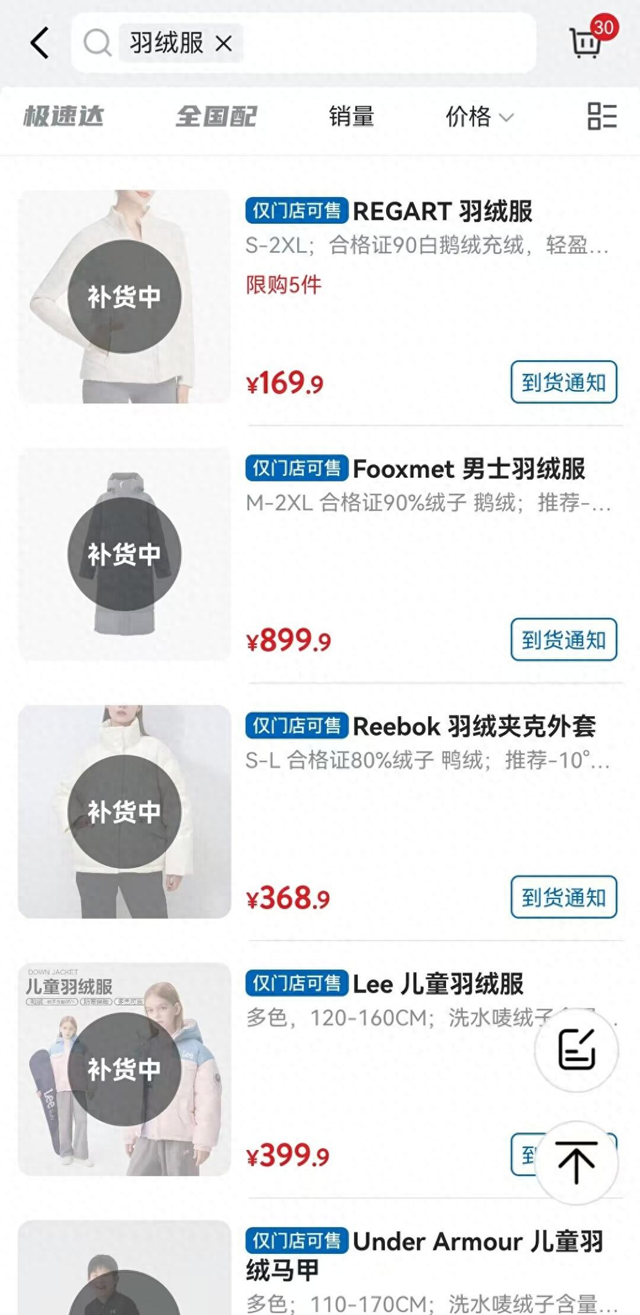
超市羽绒服爆火背后:是理性消费还是供需错位?
Zhong Guo Jing Ying Bao· 2026-01-16 20:21
Core Viewpoint - The trend of young consumers purchasing down jackets from supermarkets is rising, driven by factors such as price transparency, trust in retail channels, and the shift in consumer preferences towards cost-effective options over high-priced branded products [4][5][10]. Group 1: Market Dynamics - Supermarkets like Sam's Club and Pang Donglai are experiencing a surge in demand for down jackets, with many basic models sold out online [4][5]. - The average price of down jackets in large retail enterprises has increased from 438.6 yuan in 2015 to an expected 1,000 yuan by 2025, indicating a significant upward trend in market pricing [7][8]. - Consumers show a high sensitivity to price, with the most acceptable price range for down jackets being 401-600 yuan, which accounts for 35.70% of consumer preferences [8]. Group 2: Consumer Behavior - Young consumers are increasingly opting for down jackets from supermarkets due to their affordability, clear pricing, and quality assurance [5][6]. - The focus of consumers has shifted from merely seeking warmth to considering fit, waterproofing, and overall quality, reflecting a trend towards more fashionable and functional outerwear [12][13]. - The rise of supermarket down jackets indicates a change in commercial environments and consumer trends, with a growing demand for value-driven products [13]. Group 3: Brand and Product Differentiation - High-end down jacket brands are facing pressure as supermarket offerings provide similar quality at lower prices, leading to a potential market disruption [10][13]. - The differentiation in the down jacket market is becoming more pronounced, with high-end products competing on technology and brand prestige, while mass-market products focus on cost-effectiveness and supply chain efficiency [13]. - The quality of materials and production techniques varies significantly between high-end brands and supermarket offerings, with the latter often lacking in advanced manufacturing processes [9][10].

贺博生:10.8黄金持续上涨回踩继续多,原油晚间行情最新操作建议
Sou Hu Cai Jing· 2025-10-08 09:53
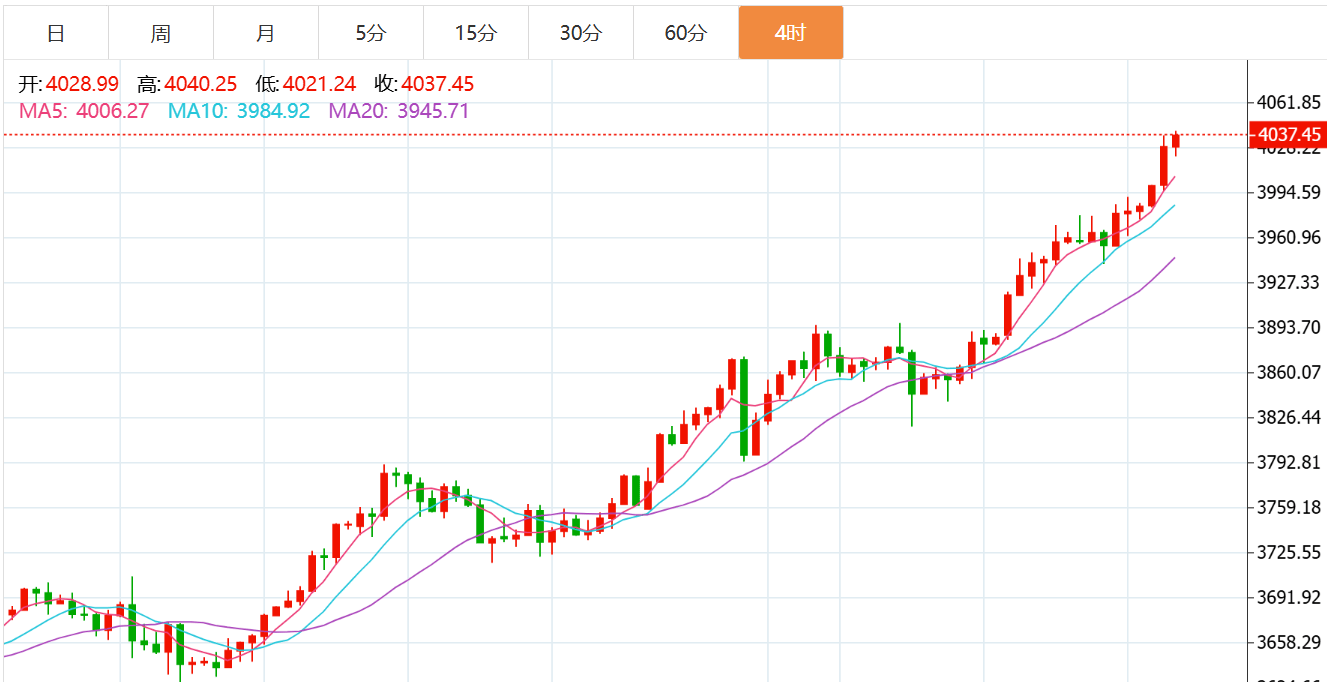
Group 1: Gold Market Analysis - The price of spot gold has reached a historic high, surpassing $4000 per ounce, with a peak at $4036.98 [1] - The Federal Reserve's shift in monetary policy is a significant driver behind the surge in gold prices, with market expectations for a 25 basis point rate cut this month and another in December [1] - Traders are increasingly optimistic about gold reaching the $5000 mark, driven by expectations of continued monetary easing [1] Group 2: Technical Analysis of Gold - The current strategy for trading gold focuses on identifying entry points rather than predicting price peaks, maintaining a bullish outlook [3] - Key support levels for gold are identified at $3983 and $3975, while resistance is noted at $4060-4070 [3] Group 3: Oil Market Analysis - U.S. crude oil prices are rebounding, supported by the American Petroleum Institute's inventory report, which showed a significant increase in crude oil stocks [4] - The report indicates a mismatch in supply and demand, with strong consumption of gasoline and distillates, providing support for oil prices [4] - The oil market is expected to remain volatile, influenced by upcoming EIA data and fluctuations in the U.S. dollar [4] Group 4: Technical Analysis of Oil - The medium-term trend for oil prices is downward, with current trading showing a lack of strength in bullish movements [5] - Short-term trading strategies suggest focusing on buying on dips, with resistance levels at $63.5-64.5 and support at $61.0-60.0 [5]