美国原油期货

Search documents
US oil prices fall on prospect of Middle East ceasefire easing supply disruption
Reuters· 2026-03-24 23:20
Core Viewpoint - U.S. crude futures experienced a decline of approximately 4% in early trading due to the potential for a ceasefire that may alleviate disruptions in global oil supply, following reports of Washington sending a proposal to Tehran [1] Group 1 - The decline in U.S. crude futures is attributed to the prospect of a ceasefire, which could ease supply disruptions [1] - The reported communication from Washington to Tehran includes a proposal that may influence oil market dynamics [1]

市场猜测美国财政部已出手!芝商所总裁:如果美国干预原油期货,这会酿成“灾难性后果”
华尔街见闻· 2026-03-13 00:37
Core Viewpoint - CME Group CEO Terry Duffy warned that any attempt by the Trump administration to intervene in the futures market to suppress oil prices could lead to a "biblical disaster" [1][2]. Group 1: Government Intervention Concerns - Duffy emphasized that government intervention in commodity pricing would severely undermine market confidence, leading to unpredictable consequences [2]. - Reports indicated that the U.S. Treasury is evaluating various options to lower oil prices, including potential intervention in the futures market, although it has not yet taken action [3]. - The oil market experienced significant volatility, with Brent crude prices soaring to nearly $120 per barrel before plummeting above $80, raising speculation about possible government involvement [4][5]. Group 2: Market Reactions and Speculations - Large, unexplained trades in the oil market prompted speculation among energy traders and consulting firms about potential government buyers or sellers [6]. - Tim Skirrow from Energy Aspects noted that clients have been inquiring whether the U.S. government was behind recent large trades, suggesting that the seller might be the Treasury [7]. - The idea of the Treasury selling near-month crude futures contracts has gained unusual attention, according to a report from Rapidan Energy Group [8]. Group 3: Confusion from Government Officials - Confusion in the oil market was exacerbated by U.S. Energy Secretary Chris Wright's social media post about the Navy escorting a tanker through the Strait of Hormuz, which was later deleted and denied by the White House [9]. - Analyst John Evans from PVM Oil Associates expressed uncertainty about whether Wright's post was a mistake or a deliberate manipulation [10]. - Wright later stated that the U.S. military was "not prepared" to implement escort operations before the end of the month, adding to the uncertainty in the market [11]. Group 4: Overall Market Volatility - The combination of these events has led oil market participants to navigate dual uncertainties regarding supply prospects and policy signals, making short-term market volatility likely to persist [12].


国际油价突破每桶100美元
第一财经· 2026-03-08 23:28
Group 1 - International oil prices have surpassed $100 per barrel for the first time since the outbreak of the Russia-Ukraine conflict in 2022, with U.S. crude futures rising by 14.7% and Brent crude futures increasing by 12.63% to $104 per barrel [2] - Following the escalation of the Iran conflict on February 28, the average price of regular gasoline in the U.S. has risen to $3.45 per gallon, reflecting a 16% increase compared to the previous week [2] - The Dow Jones index futures fell by approximately 851 points, a decline of about 2%, while S&P 500 and Nasdaq index futures dropped by 1.73% and 1.65% respectively [2]

Oil prices hit seven-month highs as tensions rise before US-Iran talks
The Guardian· 2026-02-24 09:47
Core Viewpoint - Oil prices have surged to seven-month highs due to escalating tensions between the US and Iran ahead of upcoming nuclear talks, with US crude futures reaching $67.28 per barrel and Brent crude at $72.50 per barrel [1][2]. Group 1: Oil Market Reactions - Traders are pricing in a risk premium for oil due to potential disruptions in global supplies from military conflicts [2]. - Current oil prices are driven more by anticipation of conflict rather than actual supply losses [2]. Group 2: Nuclear Talks and Military Posturing - The US and Iran are scheduled for a third round of nuclear negotiations in Geneva, indicating a potential willingness from Iran to negotiate its nuclear program [3]. - Prior to the talks, the US has increased its military presence in the Middle East, including the deployment of aircraft carriers and partial evacuation of its embassy in Beirut due to security concerns [4].

大消息,美联储存在“加息”的可能性?
Sou Hu Cai Jing· 2026-02-19 03:17
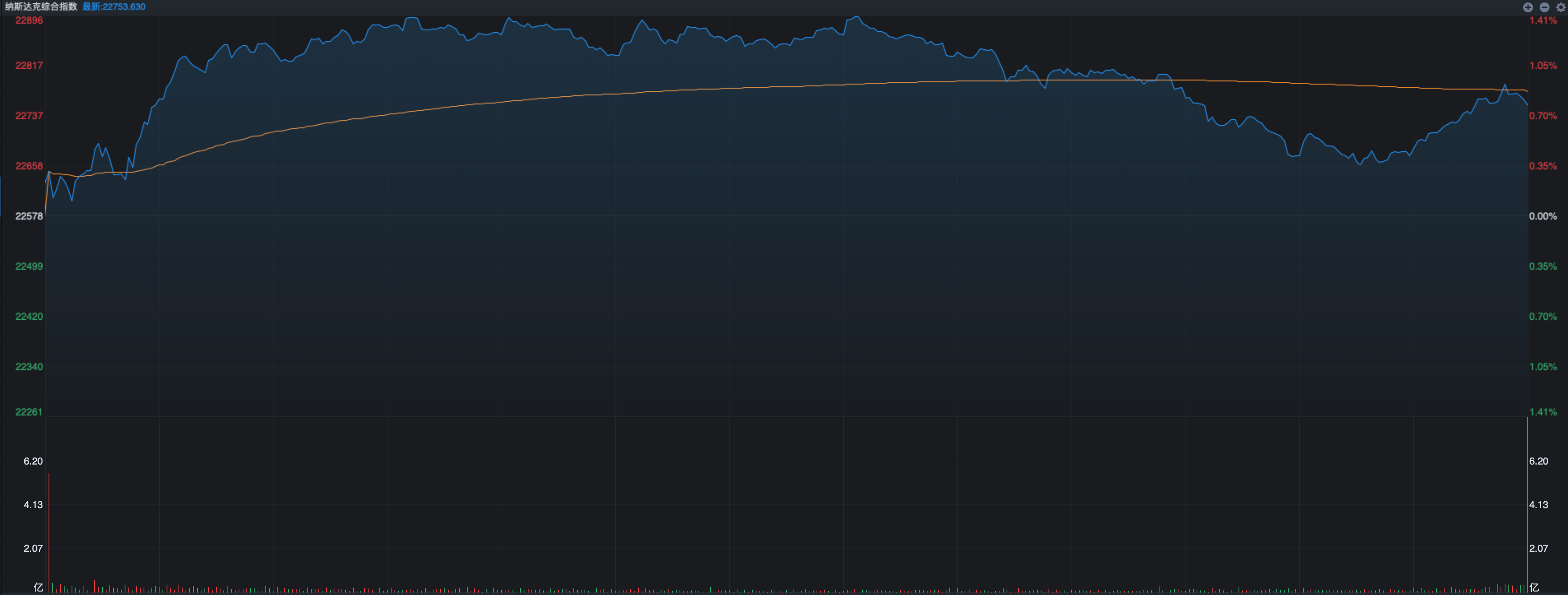
Market Performance - The three major U.S. stock indices collectively rose, with the Nasdaq index reaching a maximum intraday increase of 1.41% but closing up only 0.78% after significant fluctuations [1] - The Dow Jones showed weaker performance, initially rising 0.74% but ultimately closing with a slight gain of 0.26% [1] - The overall market exhibited a typical "conflicted" upward movement, indicating some upward momentum but also significant selling pressure leading to intraday declines [1] Economic Indicators - U.S. core capital goods orders for December exceeded expectations, and January's industrial output recorded its largest increase in nearly a year, with manufacturing output rising by 0.6%, the highest since February 2025 [1] - These positive economic indicators contributed to the initial strong performance of U.S. stocks at the market open [1] Federal Reserve Insights - The latest Federal Reserve meeting minutes revealed significant internal divisions regarding interest rate adjustments, with some members advocating for rate cuts if inflation continues to decline, while others suggested that further easing may not be appropriate until inflation trends are clearer [2][3] - This divergence in opinions among Federal Reserve members has led to mixed market reactions, including the initial rise followed by a decline and eventual recovery in stock prices [3][4] Oil Market Dynamics - U.S. crude oil futures experienced a substantial increase, peaking above $65 and closing around $64, marking a rise of 4.24% [6] - The rise in oil prices is attributed to regional geopolitical factors, which may lead to further increases in the short term, presenting potential investment opportunities [6] - The increase in oil prices has also influenced market sentiment, with a corresponding rise in precious metals like silver and gold, although their recent performance has been weaker compared to oil [7]
通胀重新点燃美联储降息希望 金价测试5000关口支撑
Jin Tou Wang· 2026-02-16 06:50
Market Overview - Gold prices experienced a decline, with the latest price reported at $4986.47 per ounce, down 0.65% from an opening price of $5019.14 per ounce, reaching a high of $5030.62 and a low of $4954.42 [1] - The U.S. inflation data for January was below expectations, reigniting hopes for a Federal Reserve rate cut this year, overshadowing the strong employment data from the previous week [1] - The S&P 500 index saw a slight increase due to favorable inflation data, while the Nasdaq index declined under pressure from major tech stocks [2] - The market is cautious ahead of the U.S. Presidents' Day holiday, with significant volatility expected as midterm elections approach and potential changes in Federal Reserve leadership loom [2] Gold Market - Gold prices rose over 2% last Friday, closing the week higher at $5022.06 per ounce, with a weekly increase of 1.2% [3] - The easing inflation concerns have alleviated market tensions, leading to a bullish sentiment for gold, with expectations of a cumulative rate cut of 63 basis points this year, the first cut anticipated in July [3] - Demand for gold remains strong in China ahead of the Spring Festival, while the Indian market has shifted to a discount [3] - ANZ has raised its second-quarter gold price forecast to $5800 per ounce, citing increased attractiveness of gold as a safe-haven asset [3] Oil Market - International oil prices saw a slight increase, with Brent crude futures rising by 0.3% to $67.75 per barrel, and U.S. crude futures up by 0.08% to $62.89 per barrel [4] - Despite the slight rebound, both benchmarks recorded weekly declines, influenced by concerns over OPEC+ potentially resuming production increases [4] - The U.S. inflation data has improved risk appetite, which may positively impact economic growth and energy demand [4] Currency Market - The U.S. dollar remained stable against major currencies, with January inflation data suggesting the Federal Reserve may keep interest rates unchanged [5] - The Japanese yen experienced its strongest weekly gain in about 15 months, supported by political stability following the recent election [6] - The Australian dollar has shown significant performance, becoming the best-performing major currency of 2026 so far, despite a slight decline at the end of the New York session [7]
布伦特原油期货下跌90美分,至每桶67.15美元
Mei Ri Jing Ji Xin Wen· 2026-02-09 02:08
Group 1 - Brent crude oil futures fell by 90 cents to $67.15 per barrel [1] - U.S. crude oil futures decreased by 80 cents to $62.75 per barrel [1]
石油ETF鹏华(159697)盘中净申购6100万份,冲刺连续13天净流入
Sou Hu Cai Jing· 2026-01-27 06:09
Group 1 - OPEC+ representatives revealed that they will decide to continue suspending oil production increases in March due to a decline in Kazakhstan's oil output, which has led to rising oil prices [1] - International oil prices experienced a slight decrease, with Brent crude futures falling by $0.29, or 0.4%, to $65.59 per barrel, and U.S. crude futures dropping by $0.44, or 0.7%, to $60.63 per barrel [1] - According to Everbright Securities, OPEC+ is expected to increase production by a cumulative 2.206 million barrels per day from January to December 2025, and the decision to pause production increases in Q1 2026 may alleviate market concerns regarding oil supply [1] Group 2 - As of December 31, 2025, the top ten weighted stocks in the National Petroleum and Natural Gas Index (399439) include China National Petroleum, Sinopec, CNOOC, and others, accounting for a total of 67.11% of the index [2] - The Penghua Oil ETF (159697) closely tracks the National Petroleum and Natural Gas Index, reflecting the price changes of listed companies in the oil and gas industry on the Shanghai and Shenzhen stock exchanges [2]

美国原油期货收于每桶60.34美元,上涨90美分,涨幅1.51%
Mei Ri Jing Ji Xin Wen· 2026-01-20 22:16
Group 1 - The core point of the article is that U.S. crude oil futures closed at $60.34 per barrel, marking an increase of $0.90, which represents a rise of 1.51% [1]
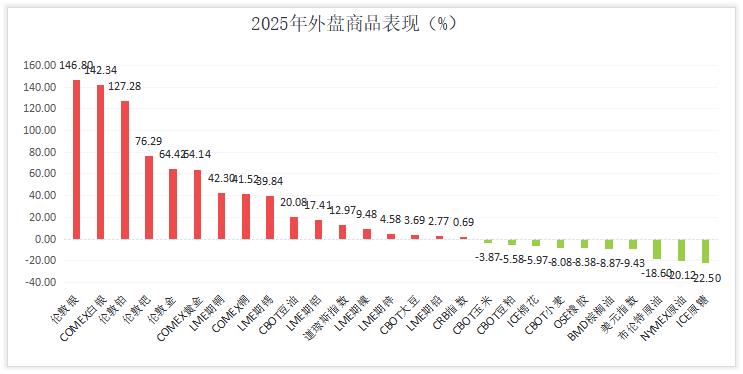
2025年外盘商品:美元创八年最大年跌幅,贵金属成为最大赢家,有色金属全面开花
Wen Hua Cai Jing· 2026-01-05 02:48
Group 1: Stock Market Performance - In 2025, the three major U.S. stock indices achieved double-digit gains, marking the third consecutive year of increases, driven by tariff uncertainties and excitement around AI stocks [3][4] - The S&P 500 index rose by 16.39%, the Nasdaq by 20.36%, and the Dow Jones by 12.97% [4] Group 2: Currency Trends - The U.S. dollar index fell by over 9% in 2025, marking the largest annual decline since 2017, influenced by interest rate cuts and trade policy uncertainties under President Trump [5] - The euro appreciated by over 13% against the dollar during the same period [5] Group 3: Federal Reserve Actions - The Federal Reserve agreed to cut interest rates after extensive discussions on economic risks, with expectations of only one more rate cut in the following year [6][7] Group 4: Precious Metals Performance - Gold experienced its largest annual increase in 46 years, rising approximately 64%, while silver surged by about 147%, marking its strongest annual performance ever [8] - Platinum and palladium also saw significant gains, with platinum increasing over 122% and palladium rising more than 75% [8] Group 5: Commodity Market Trends - LME copper prices rose by 42%, achieving the largest annual increase in 16 years, driven by supply concerns and a weaker dollar [9] - CBOT soybeans recorded their first annual gain in three years, increasing nearly 4% due to China's return to the U.S. market [10] - Oil prices fell nearly 20%, marking the largest annual decline since 2020, influenced by oversupply expectations and geopolitical tensions [11] Group 6: Agricultural Commodities - ICE cotton futures fell by 6% for the fourth consecutive year due to ample global supply and trade uncertainties [12] - ICE raw sugar prices dropped by 22% in 2025, primarily due to increased production leading to a global supply surplus [13]