
智能风控模型

Search documents
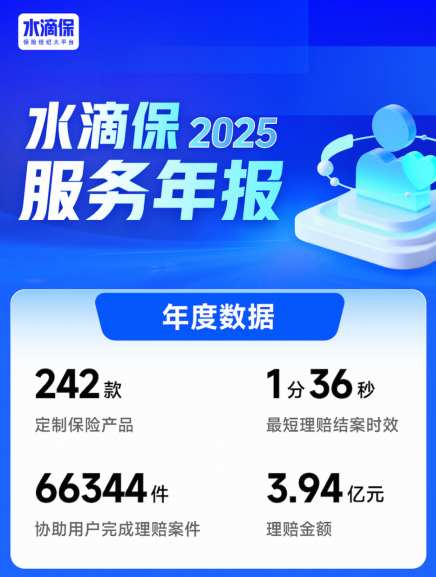
水滴保2025服务年报:AI驱动“三好服务”升级,上线242款定制产品
智通财经网· 2026-01-29 08:22
Core Insights - Waterdrop Insurance has released its 2025 annual service report, highlighting its focus on inclusive product innovation and the integration of AI technology to enhance its service system [1][15] Product Innovation - In 2025, Waterdrop Insurance launched a total of 242 customized insurance products, including 57 products that do not require health declarations [3][4] - The company is particularly focused on the needs of specific demographics such as those with pre-existing conditions, the elderly, and maternal and infant groups [3] - The average claim amount for the elderly demographic has surpassed 10,000 yuan, reaching 11,265.13 yuan, with 221 elderly-friendly products launched [4] Claims Assistance - Waterdrop Insurance assisted users in completing 66,344 claims, with a total claim amount of 394 million yuan [1] - The claims for users with pre-existing conditions amounted to 55.9852 million yuan, representing a year-on-year increase of 46.83% [4] AI Integration - The application of AI technology has significantly improved service efficiency, with a 16.49% increase in claims processing speed, and the fastest claim resolution time recorded at just 1 minute and 36 seconds [1] - AI customer service, "Bao Xiaohui," provides real-time assistance with an average response time of 1.5 seconds, available 24/7 [5] - AI-driven risk control models have been implemented to proactively prevent illegal activities, enhancing user safety [8][10] Consumer Protection - Waterdrop Insurance has taken active measures to combat insurance fraud, successfully collaborating with law enforcement to dismantle illegal operations [9][10] - The company has established a user-platform-insurer collaborative mechanism to ensure early detection and resolution of risks [10] Professional Services - The company has upgraded its online brokerage team to provide a more professional and user-centered service ecosystem, maintaining a customer satisfaction rate of over 95% [12] - The "Help Help Claim" 1V1 claims hotline served 94,079 users in 2025, a 394.68% increase year-on-year, securing 4.9693 million yuan in reasonable claims for users [12] Future Outlook - Waterdrop Insurance aims to continue enhancing its service efficiency and broadening its coverage through the integration of AI and inclusive product innovation [15]


靖江农商银行开展贷款风险模型返检
Jiang Nan Shi Bao· 2025-12-09 13:51
Core Insights - Jingjiang Rural Commercial Bank has conducted a systematic review of its loan risk models within the credit approval system to enhance risk identification accuracy and support stable business development [1] Group 1: Risk Model Optimization - The review involved a comprehensive assessment and optimization of intelligent models, crucial for loan approvals in the digital financial service era [1] - The model recalibration is necessary due to changes in market conditions and customer behavior, ensuring ongoing precision [1] - The review covered six customer segments, including small and micro enterprises, individual businesses, and farmers, evaluating the models based on differentiation ability, stability, and accuracy [1] Group 2: Service Precision and Risk Control - The optimized models have improved service precision for different customer groups while maintaining risk control, fostering a positive interaction between risk management and business growth [1] - For retail credit business, the team has enhanced the interest rate and limit models by incorporating multi-dimensional data cross-validation, aligning income assessments more closely with actual customer situations [1] Group 3: Future Developments - The bank aims to further enhance its model lifecycle management mechanism, transitioning from periodic checks to real-time monitoring to build a more intelligent risk control system [1] - This initiative is part of the bank's commitment to deepen inclusive financial services and improve the accessibility, precision, and satisfaction of financial services [1]
金融如何助力新质生产力发展?王一鸣:利用人工智能加强科技赋能
Zheng Quan Shi Bao Wang· 2025-11-13 13:38
Core Viewpoint - The forum discussed how finance can support the development of new productive forces, emphasizing the need for collaboration between commercial banks and innovative enterprises [1] Group 1: Financial System and Innovation - The current banking-dominated financial system must expand its support for technological innovation, with banks establishing specialized departments to provide tailored financial services for high-tech and specialized small and medium enterprises [3] - Long-term exploration of the investment-loan linkage model encourages banks to collaborate with external investment institutions to share risks while gaining better insights into the operational conditions of loan enterprises [3] - Development of intellectual property pledge financing is facilitated by advancements in AI and digital banking, which improve the assessment of intellectual property market value [3] Group 2: Bond Market and Venture Capital - Establishment of a technology board in the bond market is supported by the central bank, which promotes the issuance of innovation bonds for tech enterprises and provides risk compensation through structural tools [4] - The central government is advancing the establishment of a national venture capital guidance fund to address fundraising, investment, management, and exit issues, particularly focusing on improving exit channels beyond IPOs [4] - The equity market is encouraged to support innovation enterprises, enhancing the service levels of the Sci-Tech Innovation Board and the Growth Enterprise Market [4] Group 3: Technology Empowering Financial Services - The use of AI and machine learning to create intelligent risk control models can lower decision-making costs and risks for financial institutions, optimizing the efficiency of fund utilization [5] - Dynamic credit profiles can enhance risk identification capabilities, while effective risk-sharing and compensation mechanisms, such as insurance, are necessary for financing technology enterprises [5] - The integration of smart technology in financial services is expected to create effective channels for supporting the development of new productive forces [5]
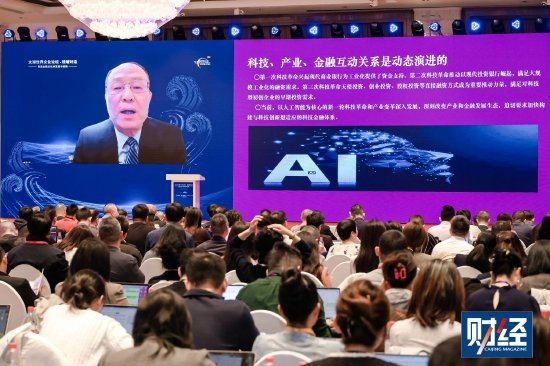
王一鸣:科技创新、产业创新离不开资本市场支持
Zheng Quan Ri Bao Wang· 2025-11-13 06:45
Core Insights - The new round of technological revolution is accelerating, with artificial intelligence as the core driving force, leading to profound changes and innovations across various fields [1] - There is a need to shift from following to leading in more areas, from innovation in end products to breakthroughs in key core technologies, and from encouraging integrated innovation to promoting original innovation [1] - The relationship between technology, industry, and finance is interdependent, with financial support being crucial for both technological and industrial innovation [1] Financial Support and Innovation - Financial markets, particularly direct financing through stocks, are more beneficial for the integration of technology and capital compared to traditional bank loans [1] - There is a call to develop the merger and acquisition market and encourage the establishment of market-oriented acquisition funds to address the exit issues faced by venture capital institutions [2] - The use of artificial intelligence and machine learning is recommended to build intelligent risk control models that dynamically assess corporate credit risks, thereby reducing decision-making costs and risks for financial institutions [2] Risk Management and Credit Assessment - Dynamic credit profiles should be constructed using intelligent technologies to enhance financial institutions' risk identification capabilities [2] - Effective risk-sharing and compensation mechanisms, such as insurance and reinsurance, should be established to support financing for technology-based enterprises [2] - Exploration of local government mechanisms for credit assessment and risk compensation for innovative enterprises is suggested [2]
民生银行:金融“活水”精准滴灌 “脱核快贷”固链强基
Zhong Guo Zheng Quan Bao· 2025-10-22 08:35
Core Insights - The article highlights the persistent financing challenges faced by small and micro enterprises, particularly in sectors like medical devices, home decoration, and packaging, which are crucial for the stability of the supply chain and regional economies [1][4][8] Financing Challenges - Small and micro enterprises often encounter difficulties in securing timely financing due to traditional banking processes that are slow and require collateral, leading to missed business opportunities [2][3][4] - The seasonal and cyclical nature of demand in industries such as education and fast-moving consumer goods exacerbates the need for quick access to funds [3][4] Innovative Financing Solutions - Minsheng Bank has introduced the "Minsheng Quick Loan - Decoupled Model," which leverages financial technology to create a more open and intelligent risk control system, moving away from reliance on a single core enterprise for credit backing [5][6] - This model allows small enterprises to apply for loans through a mobile app, streamlining the process from application to disbursement, significantly improving financing efficiency [6][8] Industry-Specific Risk Control - The "Decoupled Quick Loan" model employs differentiated risk control strategies tailored to the specific characteristics of various industries, ensuring that financing solutions are relevant and effective [6][7] - For example, the model assesses the stability of partnerships and market responsiveness for medical device distributors, while focusing on brand recognition and seasonal sales patterns for home decoration suppliers [6][7] Collaborative Financing Ecosystem - The success of the "Decoupled Quick Loan" is supported by a broader financing coordination mechanism involving local governments and financial regulators, aimed at addressing the specific challenges faced by small enterprises [7][8] - This collaborative approach enhances information sharing and credit empowerment, facilitating targeted product and service innovations to meet the needs of small and micro enterprises [7][8] Positive Social Impact - Since its launch, the "Minsheng Quick Loan - Decoupled Model" has provided financing support to over 400 small enterprises in Shanghai, contributing to job stability and economic growth [8] - The model has proven effective in reaching small enterprises that traditional supply chain financing often overlooks, thereby fostering a more inclusive financial ecosystem [8]

“数据+智力+技术” 三方携手共探金融信息服务发展新路径
Zhong Guo Jin Rong Xin Xi Wang· 2025-07-23 03:47
Core Viewpoint - The financial industry is undergoing a transformative change driven by digitalization, necessitating collaboration among government, industry, academia, and research to enhance the self-controllable capabilities of financial technology and financial information services [1][2]. Group 1: Collaboration and Objectives - A memorandum of cooperation was signed among China Economic Information Service, Renmin University of China, and China Electronics Cloud Computing Technology Co., focusing on building a comprehensive platform that integrates data, intelligence, and technology to support the construction of a strong financial nation [1][2]. - The collaboration aims to cultivate a new generation of financial talents who understand both Chinese national conditions and possess a global perspective, combining authoritative data resources, cutting-edge technology capabilities, and top-tier educational resources [2]. - The partnership will address critical challenges in the financial sector, leveraging academic research strengths and corporate engineering capabilities to tackle issues such as data security and financial risk prevention [2][3]. Group 2: Technological Development and Innovation - The three parties will jointly develop financial big data analysis and intelligent risk control models, utilizing the laboratory's flexible mechanisms to create innovative products like the professional terminal of Xinhua Finance [2]. - The initiative aims to strengthen the application of domestic digital infrastructure in the financial industry, promoting technological breakthroughs and the transformation of research outcomes into practical applications [3].