
债务 - 黄金 - 货币周期

Search documents
黄金突然跳水,桥水基金创始人:持有15%最合适
2 1 Shi Ji Jing Ji Bao Dao· 2025-10-21 12:49
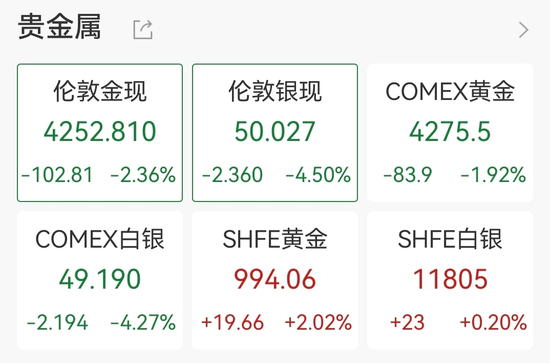
Core Viewpoint - The recent decline in precious metal prices, particularly gold and silver, has raised questions among investors about the appropriateness of holding these assets in their portfolios [1][3]. Group 1: Market Trends - On October 21, gold prices fell below $4250 per ounce, marking a 2.36% decline, while COMEX gold futures dropped by 1.92% [1] - Silver prices fell below $50 per ounce for the first time since October 10, with an intraday drop exceeding 6% and a current decline of 4.5% [3]. Group 2: Investment Strategy - Ray Dalio, founder of Bridgewater Associates, emphasizes that gold should be part of a strategic asset allocation rather than a tactical bet on price movements [5][6]. - Dalio recommends a 15% allocation to gold for most investors, which he believes optimizes the risk-return profile of an investment portfolio [9][10]. Group 3: Historical Context and Value of Gold - Dalio argues that gold has historically shown a negative correlation with other assets, particularly during periods of poor returns in stocks and bonds, making it a valuable diversification tool [9][10]. - He asserts that gold is the most mature form of currency and serves as a stable core investment, contrasting it with fiat currencies that are essentially debt [11][12]. Group 4: Gold vs. Other Assets - Dalio explains that while other metals like silver and platinum can serve as inflation hedges, they do not possess the same historical significance and stability as gold [15][16]. - He highlights that gold is increasingly being viewed as a safer asset compared to U.S. Treasury bonds, with many institutional investors reallocating towards gold [17][18].

黄金突然跳水,桥水基金创始人:持有15%最合适
21世纪经济报道· 2025-10-21 12:46
Core Viewpoint - The article discusses the recent significant decline in precious metal prices, particularly gold and silver, and highlights Ray Dalio's perspective on gold as a strategic asset allocation rather than a tactical bet [1][3][6]. Price Movements - On October 21, gold prices fell below $4250 per ounce, marking a 2.36% decline, while COMEX gold futures dropped by 1.92% [1]. - Silver prices fell below $50 per ounce for the first time since October 10, with an intraday drop exceeding 6%, ultimately down 4.5% [3]. Ray Dalio's Insights on Gold - Ray Dalio emphasizes that gold should be part of a strategic asset allocation, recommending a 15% allocation for most investors [6][10]. - He argues that gold has historically shown a negative correlation with other assets, particularly during periods of poor returns in stocks and bonds, making it an effective diversification tool [10][11]. - Dalio notes that while gold's long-term expected return is low, it serves as a hedge against economic downturns and inflation [11][14]. Gold as a Unique Asset - Dalio asserts that gold is the most mature form of currency and a stable core investment, contrasting it with fiat currencies, which are essentially debt [12][13]. - He highlights that gold's purchasing power remains intact, unlike cash, which can be devalued through excessive printing [14][21]. Comparison with Other Assets - Dalio explains that while other metals like silver and platinum have industrial uses, they do not possess the same historical and cultural significance as gold, making them less reliable for wealth preservation [18]. - He also critiques inflation-protected bonds, stating they are still debt instruments and may not provide the same level of risk diversification as gold during financial crises [18][19]. Gold vs. U.S. Treasuries - Dalio posits that gold is beginning to replace U.S. Treasuries as a risk-free asset in many investment portfolios, particularly among central banks and large institutions [20]. - He emphasizes that gold has a lower risk profile compared to government-issued debt, which is subject to default and devaluation risks [21].

达利欧警告:黄金是最成熟的货币,零配置或低配都是战略失误!
Jin Shi Shu Ju· 2025-10-20 00:40
Core Viewpoint - The founder of Bridgewater Associates, Dalio, presents a unique perspective on gold, viewing it as the most mature form of currency rather than merely a metal, and emphasizes its role as a hedge against debt and currency devaluation [1][2]. Group 1: Gold as Currency - Gold is perceived as a form of currency with purchasing power similar to cash, providing a long-term real return rate of approximately 1.2%, but it does not generate income [1][2]. - Unlike fiat currency, gold cannot be printed or devalued, making it a superior hedge during market downturns or credit system collapses [1][2]. Group 2: Investment Strategy - Dalio argues that gold is a fundamental investment rather than a regular commodity, and its unique position as a non-debt currency makes it essential in investment portfolios [2][3]. - A strategic allocation of around 15% in gold can optimize the risk-return ratio in diversified portfolios, despite potentially lowering long-term expected returns [4]. Group 3: Comparison with Other Assets - While silver and platinum have inflation-hedging properties, they lack the historical value storage and stability of gold, making them less effective for wealth preservation [2][3]. - Inflation-protected bonds are still debt commitments and may not provide the same level of security as gold during systemic financial crises [3][4]. Group 4: Market Dynamics - Gold ETFs enhance market liquidity and transparency but are still smaller in scale compared to the physical gold market and central bank holdings, thus not being the primary driver of recent gold price increases [5]. - Gold is increasingly replacing U.S. Treasuries as a "risk-free asset" in the portfolios of central banks and institutional investors, highlighting its historical stability compared to government debt [5].