
经济困境

Search documents
古巴斥责美国企图颠覆古巴政权是“野蛮攻击”,当前经济困境主要由美国造成
Xin Lang Cai Jing· 2026-01-24 16:31
Core Viewpoint - The Cuban Deputy Foreign Minister, Decosio, stated that the economic difficulties faced by Cuba are primarily caused by the United States, which has launched a "barbaric attack" on a peaceful nation that does not threaten or oppose any country [2][4]. Group 1: U.S.-Cuba Relations - The U.S. is reportedly considering a new strategy to promote regime change in Cuba, including a complete blockade on Cuban oil imports, with support from Secretary of State Rubio [4]. - The Trump administration is seeking "insiders" within the Cuban government to help in efforts to "overthrow the Cuban regime" by the end of the year [4]. - Tensions between the U.S. and Cuba are currently high, especially following recent military actions against Venezuela, with President Trump indicating that Cuba may be the next target [4]. Group 2: Cuban Government Response - Cuban President Diaz-Canel emphasized that Cuba will not initiate attacks or threats against any country but is prepared to defend its territory [4].

当年铁了心要独立,成为全球最大国中之国,现在穷的连邻国都嫌弃
Sou Hu Cai Jing· 2025-11-18 12:09
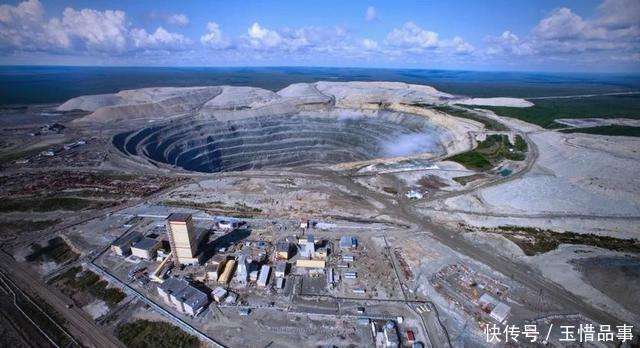
Economic Situation - Lesotho is facing a severe economic crisis due to the U.S. imposing a 15% tariff on its goods, leading to the cancellation of 80% of textile orders and approximately 13,000 job losses in the textile sector [1][14][18] - The textile industry is the largest private employer in Lesotho, providing around 36,000 jobs, predominantly for women [14] Geographical Challenges - Lesotho's geography, characterized by 75% mountainous terrain, poses significant barriers to economic development, including high transportation costs and limited agricultural land [2][4] - The country lacks deep-water ports and relies heavily on South Africa for transportation infrastructure [2] Political Instability - Since gaining independence in 1966, Lesotho has experienced political turmoil, including multiple coups and a history of electoral disputes, which have deterred foreign investment and led to reliance on international aid [6][9][13] - The political instability has created a vicious cycle, with foreign investors withdrawing and the economy remaining heavily dependent on international assistance [13] Economic Structure - Lesotho's economy is fragile, with agriculture being inefficient and unable to achieve self-sufficiency in food production [13] - The diamond mining sector, while a potential growth area, has not significantly transformed the overall economy [13] Government Response - In response to the economic crisis, the Lesotho government declared a "national disaster status" and is implementing measures such as waiving company registration fees and establishing entrepreneurship funds [18] - The government is also seeking to diversify its trade relationships and enhance connections with South Africa and other partners [23] International Support - Lesotho has secured funding from the World Bank amounting to $120 million and a €29 million financing agreement with the EU to support renewable energy development [25] - Infrastructure projects, such as the completion of the Mafeteng solar power station and the Moshoeshoe road, are expected to improve local conditions [25] Future Outlook - Despite the challenges, there is cautious optimism for economic growth in 2024 and beyond, as the government continues to explore new markets and investment opportunities [25][27]
达利欧警告:黄金是最成熟的货币,零配置或低配都是战略失误!
Jin Shi Shu Ju· 2025-10-20 00:40
Core Viewpoint - The founder of Bridgewater Associates, Dalio, presents a unique perspective on gold, viewing it as the most mature form of currency rather than merely a metal, and emphasizes its role as a hedge against debt and currency devaluation [1][2]. Group 1: Gold as Currency - Gold is perceived as a form of currency with purchasing power similar to cash, providing a long-term real return rate of approximately 1.2%, but it does not generate income [1][2]. - Unlike fiat currency, gold cannot be printed or devalued, making it a superior hedge during market downturns or credit system collapses [1][2]. Group 2: Investment Strategy - Dalio argues that gold is a fundamental investment rather than a regular commodity, and its unique position as a non-debt currency makes it essential in investment portfolios [2][3]. - A strategic allocation of around 15% in gold can optimize the risk-return ratio in diversified portfolios, despite potentially lowering long-term expected returns [4]. Group 3: Comparison with Other Assets - While silver and platinum have inflation-hedging properties, they lack the historical value storage and stability of gold, making them less effective for wealth preservation [2][3]. - Inflation-protected bonds are still debt commitments and may not provide the same level of security as gold during systemic financial crises [3][4]. Group 4: Market Dynamics - Gold ETFs enhance market liquidity and transparency but are still smaller in scale compared to the physical gold market and central bank holdings, thus not being the primary driver of recent gold price increases [5]. - Gold is increasingly replacing U.S. Treasuries as a "risk-free asset" in the portfolios of central banks and institutional investors, highlighting its historical stability compared to government debt [5].
信任投票引发市场巨震 法国股债遭抛售、法德国债利差创四月新高
智通财经网· 2025-08-26 08:26
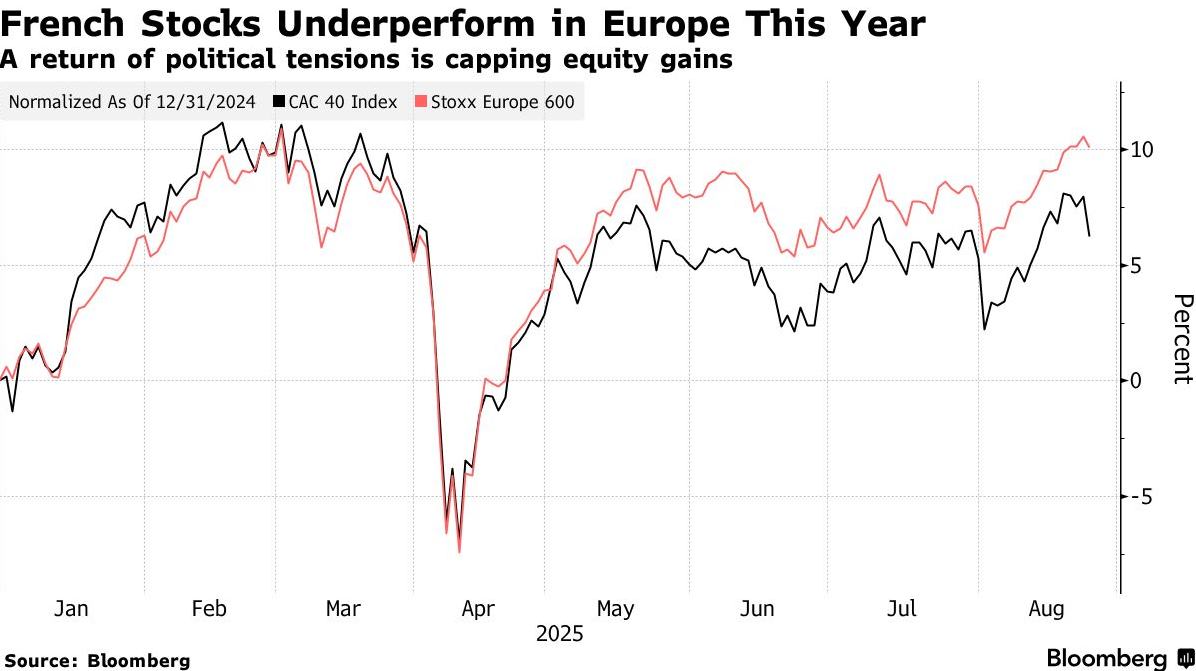
Group 1 - The core factor triggering the current market turmoil is the trust vote plan announced by French Prime Minister François Bérou. If the motion is not passed by September 8, it may lead to the collapse of the government [4] - The French CAC 40 index fell by 1.9%, leading declines among major European indices, while the pan-European Stoxx 600 index dropped by 0.8% [1][4] - The yield on French 10-year government bonds rose by 9 basis points to 3.51%, reflecting market concerns over the intertwining of economic difficulties and political crises in France [4] Group 2 - Japanese investors find French bonds attractive due to yields significantly higher than domestic markets, with French 10-year bond yields exceeding Japanese yields by nearly 200 basis points [7] - France is the third-largest offshore bond market for Japanese investors, following the US and the Cayman Islands [7] - There are differing opinions in the market, with some analysts warning that political uncertainty may lead Japanese investors to adjust their positions in French bonds [7][8] Group 3 - The political instability in France is becoming a burden on the economy, with warnings that the budget situation is being underestimated by the market [7] - European stock markets are constrained by geopolitical risks and slowing economic growth, making it difficult to surpass historical highs from March [7]
美联储主席鲍威尔:(问及关于美国人是否应当预期下半年会面临经济困境)我并不这样认为。
news flash· 2025-06-18 19:07
Core Viewpoint - Federal Reserve Chairman Jerome Powell does not believe that Americans should expect to face economic difficulties in the second half of the year [1] Group 1 - Powell's statement suggests a positive outlook for the U.S. economy, indicating confidence in economic stability [1]