全产业链自主

Search documents
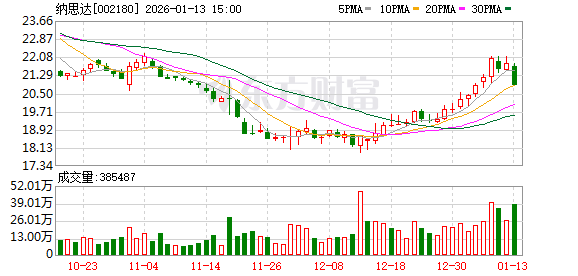
纳思达:旗下奔图品牌具备激光打印机全产业链自主能力
Zheng Quan Ri Bao· 2026-01-13 12:13
Core Viewpoint - Nasda emphasizes its capability in the laser printer industry, highlighting its full supply chain autonomy and commitment to enhancing core technology and market share [2] Group 1: Company Capabilities - The company has full supply chain autonomy for its Pantum brand laser printers, which allows for cost-effective large-scale production [2] - It actively collaborates with upstream and downstream ecosystem partners to maintain the core competitiveness of its printer products [2] Group 2: Market Strategy - The company aims to continue expanding its market share by providing safe and high-quality printing solutions to users [2]


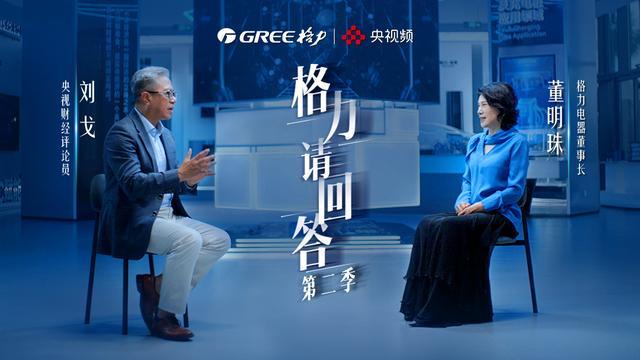
从“跟随”到“引领”解码格力电器制造的突围与坚守
Huan Qiu Wang Zi Xun· 2025-12-31 03:33
Group 1 - The core viewpoint of the news is that Gree Electric's second season of the program "Gree Electric Please Answer" has gained significant attention, with nearly 240 million exposures online, showcasing the company's commitment to high-end manufacturing and technological innovation in the context of China's transition from "Made in China" to "Intelligent Manufacturing" [2] - The program highlights Gree Electric's 30 years of experience in the manufacturing industry, focusing on various products such as central air conditioning, refrigerators, chips, and washing machines, providing a model for high-end manufacturing breakthroughs in China [2] Group 2 - Gree Electric has made significant strides in breaking monopolies and building research barriers, particularly in the central air conditioning sector, where it expanded its R&D team from hundreds to nearly 20,000 people since 2012, establishing 16 research institutes and 1411 laboratories [3] - The company has developed its own magnetic levitation and air suspension compressors, improving energy efficiency by over 30% and reliability compared to foreign brands, successfully entering national landmarks like the Beijing Daxing Airport [3] Group 3 - Gree Electric has been proactive in addressing global energy challenges since 2012 by developing a "solar-storage-air" integrated system, which can operate independently from the city power grid, saving 15 million kWh annually on a single line of the Shenzhen Metro and achieving 37% energy savings at Shanghai Airport [5] - The company emphasizes quality control with a "ten-year free repair" policy, supported by a fully automated production line that can produce an air conditioner every 15 seconds, utilizing 5G and AI technology for comprehensive quality assurance [8] Group 4 - Gree Electric has innovated a "non-blowing air" air conditioner that maintains cooling and heating efficiency while achieving 15% energy savings, and an AI energy-saving chip that enhances dynamic efficiency by 13.6%, providing a practical experience of "only two kWh overnight" [11][13] - The company has successfully expanded its product range by leveraging core component R&D, with its refrigerator production line utilizing self-designed automation and advanced insulation technology, allowing for extended preservation of food and medical supplies [15][19] Group 5 - Gree Electric's washing machine factory has adapted air conditioning heat pump technology to create a unique heat pump washing machine, which saves 60% energy and 30% time during low-temperature drying, while also providing steam care for high-end garments [19][21] - As the only white goods manufacturer with chip production capabilities, Gree Electric has achieved mass production of silicon carbide chips and established a smart factory for chip design, marking a significant transition from "manufacturing products" to "manufacturing factories" [23][25] Group 6 - Gree Electric's commitment to self-research and innovation is evident in its approach to maintaining control over the entire supply chain, avoiding OEM practices, and focusing on quality in every aspect of production, which reflects the company's responsibility and commitment to high-quality development in Chinese manufacturing [25][27] - The company's journey from breaking technological monopolies to setting industry standards illustrates the importance of meticulous attention to detail in manufacturing and the necessity of self-innovation to gain core influence in the market [27]

82岁退休的他,带出一系千亿级科技巨头,却不持有1股股权
3 6 Ke· 2025-12-01 02:12
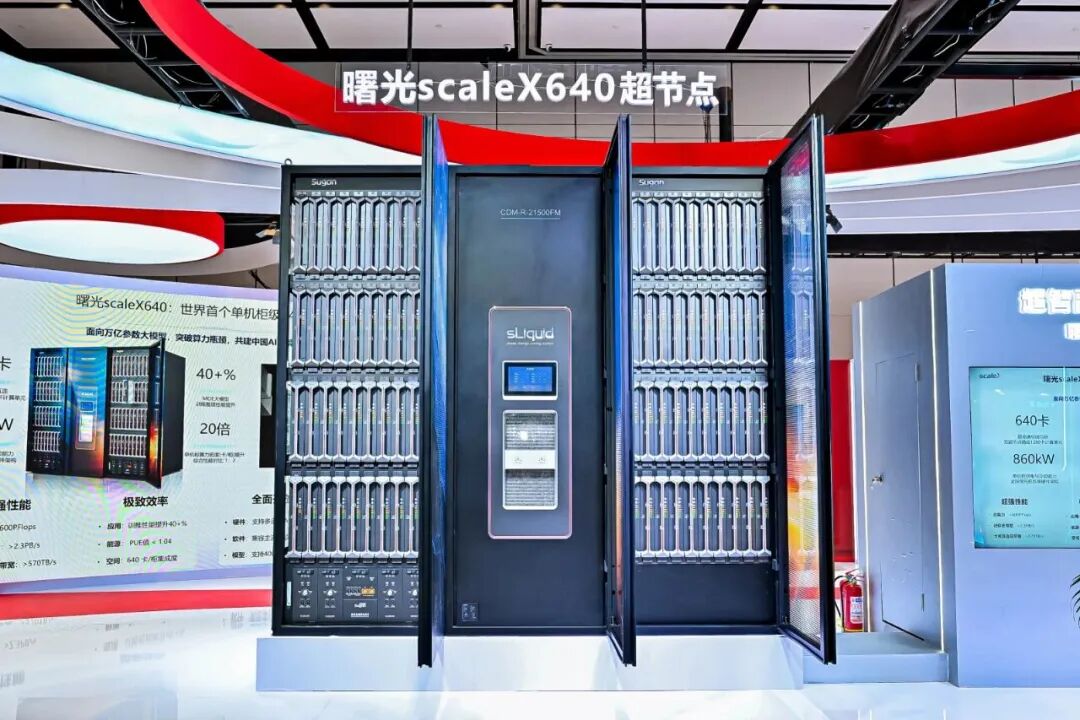
Core Viewpoint - The article highlights the evolution and achievements of the Chinese high-performance computing (HPC) industry, particularly focusing on the contributions of Sugon (中科曙光) in establishing China as a global leader in supercomputing technology. It emphasizes the importance of self-reliance in technology and the strategic significance of HPC in various sectors. Group 1: Historical Development - In 1990, the National Intelligent Computer Research and Development Center was established to promote the "863 Program," with Li Guojie appointed as the director [24] - The first project initiated by Li was the development of supercomputers, leading to the creation of "Shuguang No. 1" in 1993, marking China's entry into the HPC field [35][12] - The success of "Shuguang No. 1" led to the lifting of the ban on 10 billion calculations for China by Western countries just three days later [37] Group 2: Technological Advancements - Sugon has developed several supercomputers, including "Shuguang 4000A," "Shuguang 5000," and "Shuguang 6000," breaking the Western monopoly and establishing China as the third country capable of independently developing supercomputers [12] - The "Shuguang" series has been instrumental in various applications, from weather forecasting to space exploration, showcasing the versatility and necessity of HPC [8][10] Group 3: Market Position and Challenges - From 2009 to 2019, Sugon ranked first in the China HPC TOP100 for ten consecutive years, despite facing significant pressure from U.S. sanctions [13] - In June 2019, the U.S. Department of Commerce placed five Chinese companies on the Entity List, including four from the Sugon system, but this did not hinder Sugon's innovation [14] Group 4: Strategic Expansion - Sugon has expanded its capabilities beyond supercomputing to include a full industry chain involving chips, computing, cloud, and intelligence, enhancing its competitive edge [15] - The company has developed its own chips through subsidiaries like Haiguang Information, which produces both X86 architecture CPUs and self-developed deep computing units [16] Group 5: Financial Performance - By 2024, Sugon's gross margin and net margin reached 29.16% and 15.16%, respectively, representing increases of 159% and 293% since 2018 [91] - The net profit surged from 116 million in 2014 to 1.911 billion in 2024, marking a 16-fold increase over ten years [91] Group 6: Future Outlook - The merger of Haiguang Information and Sugon is set to create a comprehensive ecosystem for domestic chip, server, storage, and data center services, establishing a new landscape for the domestic HPC industry [80] - Sugon's strategic initiatives, including the establishment of intelligent computing centers and cloud services, position it well for future growth and resilience against external pressures [83][84]