
全客群

Search documents
进入“20元时代”,中式米饭快餐没有退路
虎嗅APP· 2026-02-01 09:08
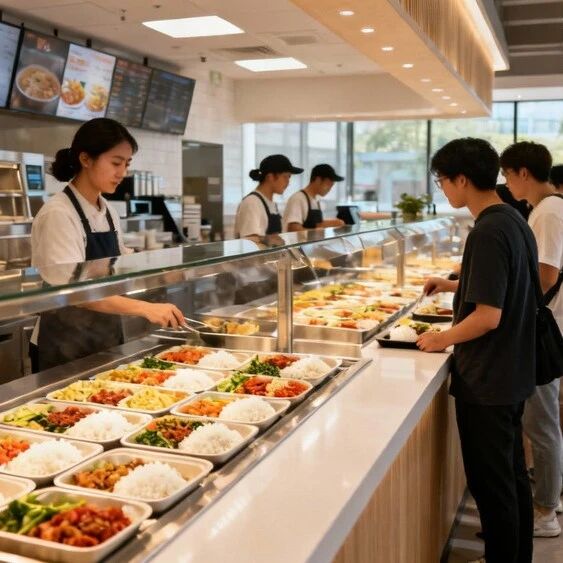
Core Viewpoint - The Chinese rice fast food industry is undergoing a significant paradigm shift in 2026, characterized by intense competition and a focus on profitability amidst rising costs and consumer rationality [4][6]. Group 1: Industry Challenges - The primary challenge for Chinese rice fast food brands remains profitability, with industry leaders like Chaoyixing reporting a mere 0.7 yuan profit on a 10 yuan meal [7]. - Rising costs for ingredients, labor, and rent, combined with a return to rational consumer spending, are squeezing profit margins, leading to a "thin profit" environment [8][9]. - The average consumer spending in the rice fast food sector has decreased from 29.7 yuan in 2022 to 27.5 yuan in 2025, with current average spending around 24 yuan [15]. Group 2: Competitive Strategies - Brands are shifting towards "all-day, all-customer, all-capable" models to attract a wider customer base and enhance profitability [5][10]. - Successful adaptations include diversifying product offerings and optimizing store formats, such as self-service models and expanded menu items to cater to different meal times and customer preferences [10][11]. - The introduction of new product lines, like "DIY" options, has proven effective in attracting both existing and new customers, as seen with brands like Yuyou and Laoxiangji [12]. Group 3: Pricing Dynamics - The industry is entering a "20 yuan era," with aggressive price reductions becoming a norm as brands compete for market share [13][14]. - Major brands have implemented significant price cuts, with Dami Xiansheng reducing its pricing from 4.6 yuan to 3.28 yuan per two [16]. - The trend indicates that if average spending exceeds 25 yuan, customer acquisition and retention will become increasingly difficult [17]. Group 4: Expansion and Market Dynamics - The market for Chinese rice fast food is projected to reach 277 billion yuan in 2024, with a potential to exceed 300 billion yuan in 2025, driven by ongoing consumer demand [21]. - While some brands are rapidly expanding, others are slowing down their growth due to the challenges of scaling operations effectively [23][25]. - Successful expansion requires a robust organizational structure and supply chain management, as evidenced by the struggles of brands like Nanchengxiang and Chaoyixing in new markets [25][26]. Group 5: Future Outlook - The next decade for the Chinese rice fast food industry will focus on a multi-faceted approach that emphasizes freshness, transparency, intelligence, low pricing, and health [27]. - Brands that can balance cost management with quality and customer experience will likely thrive in this competitive landscape [28][29].

进入“20元时代”,中式米饭快餐没有退路
虎嗅APP· 2026-01-29 00:23
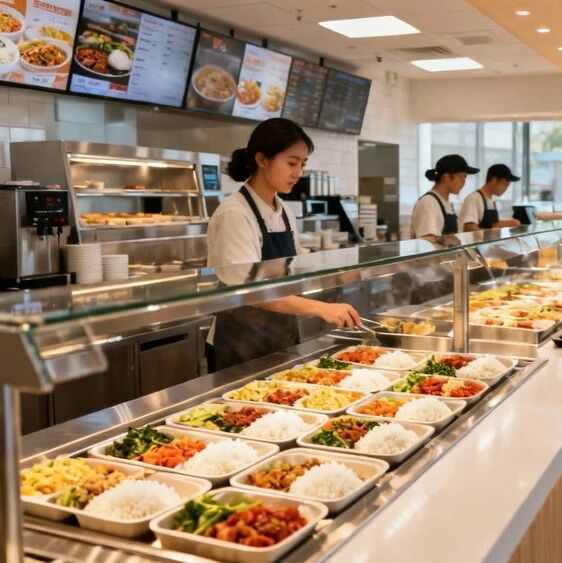
Core Viewpoint - The Chinese rice fast food sector is undergoing a significant paradigm shift in 2026, characterized by intense competition among leading brands and the entry of cross-industry players, leading to a consensus that profitability is increasingly difficult to achieve [4][6]. Group 1: Industry Challenges - The primary challenge for Chinese rice fast food brands remains profitability, with industry leaders like Chaoyixing reporting a mere profit of 0.7 yuan per 10 yuan meal [7]. - Rising costs for ingredients, labor, and rent, combined with a return to rational consumer spending, are squeezing profit margins, forcing brands to adapt their business models to survive [8][9]. - The average consumer spending in the rice fast food sector has decreased from 29.7 yuan in 2022 to 27.5 yuan in 2025, indicating a downward trend in pricing [15]. Group 2: Business Model Transformation - Brands are focusing on creating "all-day, all-customer, all-capable" stores to attract a wider customer base and improve profitability [5][10]. - Successful adaptations include diversifying product offerings and enhancing customer experience, as seen with brands like Nanchengxiang and Xiaonv Dangjia, which have introduced new menu items and self-service options [10][11]. - The shift towards a "price down, experience up" strategy is evident, with brands like Xiangcunji and Dami Xiansheng emphasizing fresh, high-quality ingredients while maintaining competitive pricing [18][19]. Group 3: Market Expansion and Competition - The market for Chinese rice fast food is projected to reach 277 billion yuan in 2024, with a potential to exceed 300 billion yuan in 2025, indicating a growing demand for this segment [21]. - Leading brands are rapidly expanding into new regions, with Nanchengxiang opening a new store every 0.85 days on average, while others like Mivun Banfan have paused their aggressive expansion due to operational challenges [23][25]. - The competitive landscape is shifting, with brands needing to adapt their models to local markets rather than relying on a one-size-fits-all approach, as evidenced by the struggles of brands like Chaoyixing and Nanchengxiang in new territories [25][26]. Group 4: Future Outlook - The next decade for Chinese rice fast food will involve a multi-faceted competition focusing on freshness, transparency, intelligence, low pricing, and health [27]. - Brands that can balance cost management with quality and customer experience will be better positioned to thrive in a market where consumer expectations are evolving [28][29].
进入“20元时代”,中式米饭快餐没有退路
3 6 Ke· 2026-01-28 13:09
Core Insights - The competition logic in the Chinese rice fast food sector is undergoing significant changes, with a shift towards a "paradigm shift" in 2026, emphasizing profitability amidst rising costs and intense competition [2][4][10] - The industry is moving towards a model that focuses on maximizing store efficiency and profitability rather than rapid expansion [5][9] Group 1: Market Dynamics - The market is experiencing fierce competition with both established brands and new entrants, leading to a scenario where profitability is increasingly difficult to achieve [2][4] - The average consumer spending in the Chinese rice fast food sector has decreased, with figures showing a drop from 29.7 yuan in 2022 to 27.5 yuan by August 2025 [10][11] - The current mainstream price range for Chinese rice fast food is between 20 to 25 yuan, indicating a trend towards lower pricing [10][11] Group 2: Business Strategies - Brands are adopting a "full-time, full-customer, all-capable store" model to attract a wider customer base and enhance profitability [3][7] - Innovations such as self-service models and diverse product offerings are being implemented to cater to different consumer needs and maximize store utilization [8][9] - The introduction of technology, such as smart cooking machines, is being leveraged to reduce labor costs and improve food quality [18] Group 3: Expansion Challenges - The expansion of Chinese rice fast food brands is entering a "deep water zone," with a projected market size of 2.77 trillion yuan in 2024, growing at 10.1% [19] - While some brands are rapidly expanding, others are slowing down due to the challenges of scaling operations effectively [20][21] - Successful expansion requires a robust organizational capability and a deep understanding of local market dynamics, as evidenced by the varied experiences of different brands [22][23] Group 4: Future Outlook - The next decade for Chinese rice fast food will focus on a multi-faceted approach that includes freshness, transparency, intelligence, low pricing, and health [24] - Brands that can maintain a balance between cost and quality while adapting to consumer demands will likely survive and thrive in this competitive landscape [24]
江苏银行零售AUM突破1.5万亿元,个人金融业务发展再上新台阶
Zhong Jin Zai Xian· 2025-04-23 14:15
Core Viewpoint - Jiangsu Bank's 2024 annual report showcases strong growth with operating income of 80.815 billion yuan and net profit attributable to shareholders of 31.843 billion yuan, highlighting its strength as a leading city commercial bank [1] Group 1: Personal Financial Business Performance - Retail asset management (AUM) has surpassed 1.42 trillion yuan, maintaining the top position among city commercial banks [1] - Retail deposit balance reached 822.9 billion yuan, a year-on-year increase of 16.21%, while retail loan balance was 674.8 billion yuan, up 3.40% from the previous year [1] - The personal loan non-performing rate is controlled at a low level of 0.88% [1] - As of the end of Q1 this year, retail AUM has exceeded 1.5 trillion yuan [1] Group 2: Professional Foundation - Jiangsu Bank focuses on a "full product" development strategy, offering a comprehensive range of high-quality financial products [2] - The bank launched the "Su Yin Jin Xuan" fund selection brand, which has outperformed market indices [2] - The bank provides efficient and convenient services through its mobile banking app and over 500 physical branches [2] Group 3: Recognition and Awards - Jiangsu Bank's personal financial services have received industry recognition, winning awards such as the "Topology Award" from Zhitong Finance and the "2024 Annual Bank Wealth Management Brand Award" from Shanghai Stock Exchange [3] Group 4: Targeted Services - The bank utilizes big data to create customer profiles, offering differentiated services to meet diverse consumer needs [4] - Jiangsu Bank has launched a 2025 consumption promotion initiative with 20 measures to stimulate consumer spending [4] - The bank has introduced various promotional activities in line with government policies to encourage consumption [4] Group 5: Elderly Financial Services - Jiangsu Bank has developed the "Su Yin Pension Finance" brand, providing a comprehensive service system for elderly customers [5] - The issuance of the "Rong Xiang Xing Fu" debit card has exceeded 1 million, and the sales of exclusive wealth management products have surpassed 260 billion yuan [5] Group 6: Entrepreneurial Services - The bank has introduced the "Qi Tou Jia" comprehensive service brand to cater to the needs of entrepreneurs, focusing on investment, financing, inheritance, and communication [6][7] - The number of financial private clients has grown at an annual rate of over 20%, exceeding 110,000 by the end of Q1 2025 [7] Group 7: Community Engagement and Cultural Finance - Jiangsu Bank has implemented a "1+N" customer acquisition model, integrating financial services into community life [8] - The bank has partnered with cultural institutions to enhance cultural finance and launched co-branded digital debit cards [9] - The bank supports major sports events and promotes community activities to create a vibrant lifestyle ecosystem [9] Group 8: Overall Strategy and Future Outlook - Jiangsu Bank emphasizes customer-centricity and aims to create value through community engagement and collaboration [8] - The bank's mobile app has over 7 million monthly active users, leading among city commercial banks [9] - Jiangsu Bank is committed to adapting to changing environments and providing warm, precise services to ensure customer satisfaction [9]
