
全时段

Search documents
进入“20元时代”,中式米饭快餐没有退路
虎嗅APP· 2026-02-01 09:08
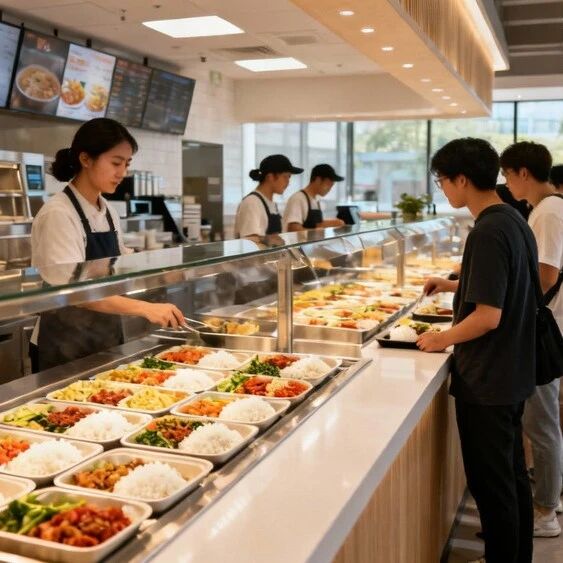
Core Viewpoint - The Chinese rice fast food industry is undergoing a significant paradigm shift in 2026, characterized by intense competition and a focus on profitability amidst rising costs and consumer rationality [4][6]. Group 1: Industry Challenges - The primary challenge for Chinese rice fast food brands remains profitability, with industry leaders like Chaoyixing reporting a mere 0.7 yuan profit on a 10 yuan meal [7]. - Rising costs for ingredients, labor, and rent, combined with a return to rational consumer spending, are squeezing profit margins, leading to a "thin profit" environment [8][9]. - The average consumer spending in the rice fast food sector has decreased from 29.7 yuan in 2022 to 27.5 yuan in 2025, with current average spending around 24 yuan [15]. Group 2: Competitive Strategies - Brands are shifting towards "all-day, all-customer, all-capable" models to attract a wider customer base and enhance profitability [5][10]. - Successful adaptations include diversifying product offerings and optimizing store formats, such as self-service models and expanded menu items to cater to different meal times and customer preferences [10][11]. - The introduction of new product lines, like "DIY" options, has proven effective in attracting both existing and new customers, as seen with brands like Yuyou and Laoxiangji [12]. Group 3: Pricing Dynamics - The industry is entering a "20 yuan era," with aggressive price reductions becoming a norm as brands compete for market share [13][14]. - Major brands have implemented significant price cuts, with Dami Xiansheng reducing its pricing from 4.6 yuan to 3.28 yuan per two [16]. - The trend indicates that if average spending exceeds 25 yuan, customer acquisition and retention will become increasingly difficult [17]. Group 4: Expansion and Market Dynamics - The market for Chinese rice fast food is projected to reach 277 billion yuan in 2024, with a potential to exceed 300 billion yuan in 2025, driven by ongoing consumer demand [21]. - While some brands are rapidly expanding, others are slowing down their growth due to the challenges of scaling operations effectively [23][25]. - Successful expansion requires a robust organizational structure and supply chain management, as evidenced by the struggles of brands like Nanchengxiang and Chaoyixing in new markets [25][26]. Group 5: Future Outlook - The next decade for the Chinese rice fast food industry will focus on a multi-faceted approach that emphasizes freshness, transparency, intelligence, low pricing, and health [27]. - Brands that can balance cost management with quality and customer experience will likely thrive in this competitive landscape [28][29].

进入“20元时代”,中式米饭快餐没有退路
虎嗅APP· 2026-01-29 00:23
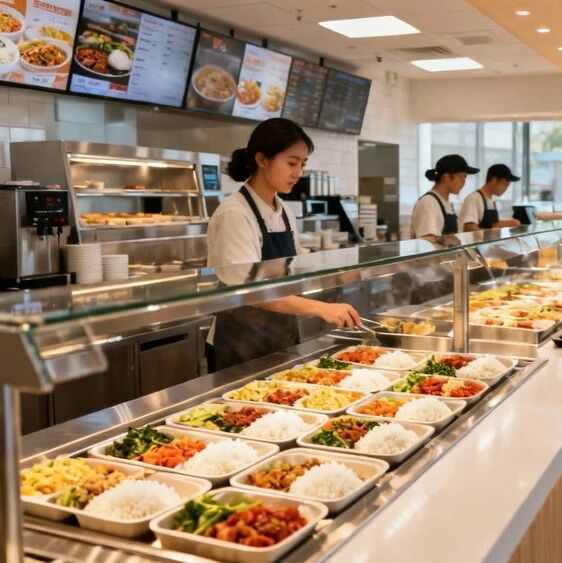
Core Viewpoint - The Chinese rice fast food sector is undergoing a significant paradigm shift in 2026, characterized by intense competition among leading brands and the entry of cross-industry players, leading to a consensus that profitability is increasingly difficult to achieve [4][6]. Group 1: Industry Challenges - The primary challenge for Chinese rice fast food brands remains profitability, with industry leaders like Chaoyixing reporting a mere profit of 0.7 yuan per 10 yuan meal [7]. - Rising costs for ingredients, labor, and rent, combined with a return to rational consumer spending, are squeezing profit margins, forcing brands to adapt their business models to survive [8][9]. - The average consumer spending in the rice fast food sector has decreased from 29.7 yuan in 2022 to 27.5 yuan in 2025, indicating a downward trend in pricing [15]. Group 2: Business Model Transformation - Brands are focusing on creating "all-day, all-customer, all-capable" stores to attract a wider customer base and improve profitability [5][10]. - Successful adaptations include diversifying product offerings and enhancing customer experience, as seen with brands like Nanchengxiang and Xiaonv Dangjia, which have introduced new menu items and self-service options [10][11]. - The shift towards a "price down, experience up" strategy is evident, with brands like Xiangcunji and Dami Xiansheng emphasizing fresh, high-quality ingredients while maintaining competitive pricing [18][19]. Group 3: Market Expansion and Competition - The market for Chinese rice fast food is projected to reach 277 billion yuan in 2024, with a potential to exceed 300 billion yuan in 2025, indicating a growing demand for this segment [21]. - Leading brands are rapidly expanding into new regions, with Nanchengxiang opening a new store every 0.85 days on average, while others like Mivun Banfan have paused their aggressive expansion due to operational challenges [23][25]. - The competitive landscape is shifting, with brands needing to adapt their models to local markets rather than relying on a one-size-fits-all approach, as evidenced by the struggles of brands like Chaoyixing and Nanchengxiang in new territories [25][26]. Group 4: Future Outlook - The next decade for Chinese rice fast food will involve a multi-faceted competition focusing on freshness, transparency, intelligence, low pricing, and health [27]. - Brands that can balance cost management with quality and customer experience will be better positioned to thrive in a market where consumer expectations are evolving [28][29].
进入“20元时代”,中式米饭快餐没有退路
3 6 Ke· 2026-01-28 13:09
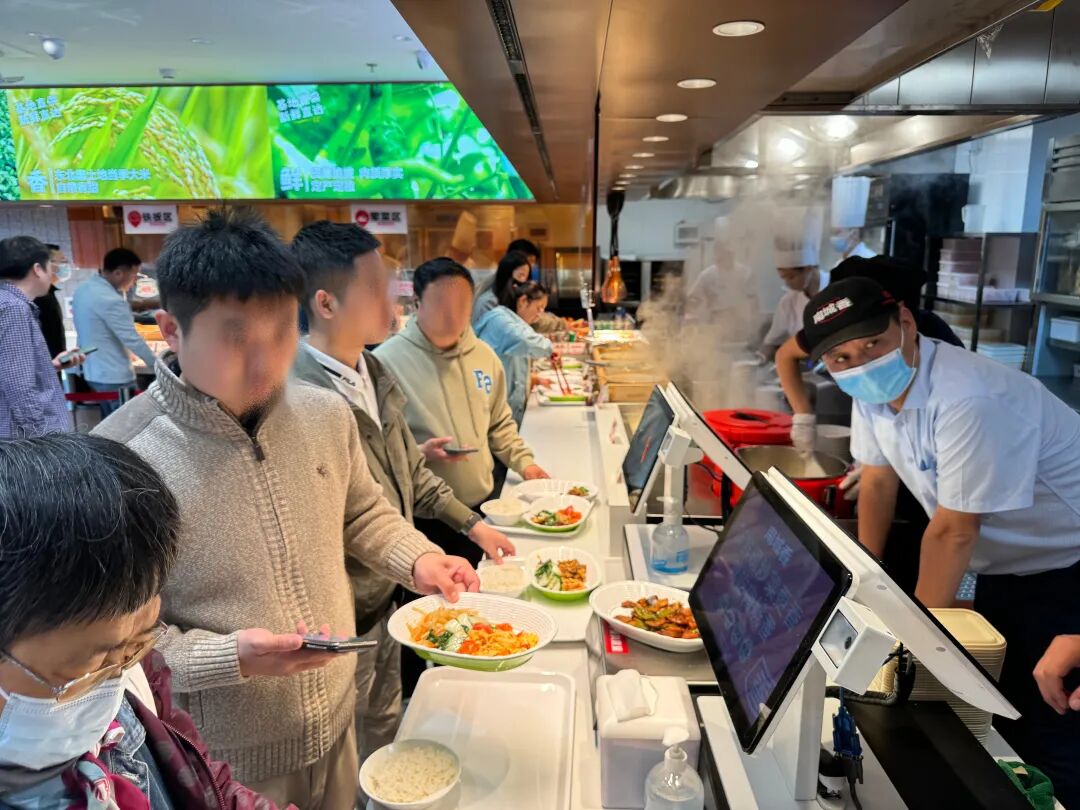
Core Insights - The competition logic in the Chinese rice fast food sector is undergoing significant changes, with a shift towards a "paradigm shift" in 2026, emphasizing profitability amidst rising costs and intense competition [2][4][10] - The industry is moving towards a model that focuses on maximizing store efficiency and profitability rather than rapid expansion [5][9] Group 1: Market Dynamics - The market is experiencing fierce competition with both established brands and new entrants, leading to a scenario where profitability is increasingly difficult to achieve [2][4] - The average consumer spending in the Chinese rice fast food sector has decreased, with figures showing a drop from 29.7 yuan in 2022 to 27.5 yuan by August 2025 [10][11] - The current mainstream price range for Chinese rice fast food is between 20 to 25 yuan, indicating a trend towards lower pricing [10][11] Group 2: Business Strategies - Brands are adopting a "full-time, full-customer, all-capable store" model to attract a wider customer base and enhance profitability [3][7] - Innovations such as self-service models and diverse product offerings are being implemented to cater to different consumer needs and maximize store utilization [8][9] - The introduction of technology, such as smart cooking machines, is being leveraged to reduce labor costs and improve food quality [18] Group 3: Expansion Challenges - The expansion of Chinese rice fast food brands is entering a "deep water zone," with a projected market size of 2.77 trillion yuan in 2024, growing at 10.1% [19] - While some brands are rapidly expanding, others are slowing down due to the challenges of scaling operations effectively [20][21] - Successful expansion requires a robust organizational capability and a deep understanding of local market dynamics, as evidenced by the varied experiences of different brands [22][23] Group 4: Future Outlook - The next decade for Chinese rice fast food will focus on a multi-faceted approach that includes freshness, transparency, intelligence, low pricing, and health [24] - Brands that can maintain a balance between cost and quality while adapting to consumer demands will likely survive and thrive in this competitive landscape [24]
广州宝业路“宵夜一条街”改造后开业,宵夜食肆营业至次日
Nan Fang Du Shi Bao· 2025-12-12 10:34
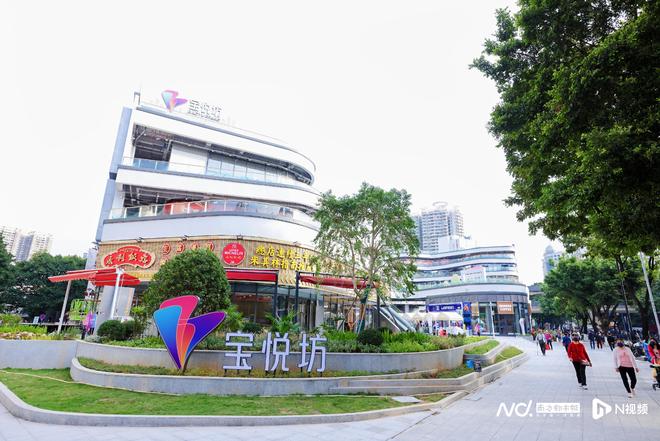
Core Viewpoint - The "Baoyuefang" project, a transformation of the popular "Xiaoye Street" on Baoye Road, officially opened on December 12, with a focus on late-night dining and a high occupancy rate of 90.5% for tenants [1][10]. Group 1: Opening Details - The opening event attracted many locals, leading to long queues at some stores [3]. - The current occupancy rate of Baoyuefang stands at 90.5%, with an opening rate of 62.5% [1]. - Notable brands include traditional restaurants and popular dining spots, such as "Yue·Xiangqun Restaurant" and "Hong Kong Xi Ji Abalone Crab" [1]. Group 2: Operational Philosophy - The operational philosophy emphasizes "night economy" and "all-day service," with many stores open until 4 or 5 AM [7]. - The design includes a three-story building with ample outdoor space, which is considered important by local diners [8]. Group 3: Community Engagement - The first floor has space for events and stalls, featuring local delicacies and cultural displays during the opening ceremony [8]. - A local vendor, known for his unique performances, attracted attention and engagement from the community [10]. Group 4: Future Plans - Baoyuefang is part of a larger urban renewal initiative in the Haizhu District, with plans for further phases that will introduce high-end brands and diverse experiences [10]. - The second phase aims to create a "city-level lifestyle experience," while the third phase will focus on family entertainment and trendy activities [10].
市场规模稳步拓展,综合运能不断提高——8月份我国快递业发展观察
Xin Hua Wang· 2025-09-11 13:07
Core Insights - The express delivery industry in China is experiencing steady growth in market scale and comprehensive capacity, with a notable increase in the delivery of fresh agricultural products during August [2][4]. Group 1: Market Growth - In August, the China Express Development Index reached 424.9, a year-on-year increase of 4.4%, with the development scale index at 567.4, up 11.2% [2]. - The express delivery business volume is expected to grow by approximately 12% year-on-year, while business revenue is projected to increase by 6% [2]. Group 2: Service Quality Improvement - The express service quality index for August was 605.1, reflecting a year-on-year increase of 0.3 percentage points, with public satisfaction expected to rise to 84.8 points, an increase of 1.2 points [3]. - Companies are enhancing service quality by building regional core warehouses and simplifying service processes, which improves overall service capabilities [3]. Group 3: Operational Enhancements - The express development capability index for August was 220, remaining stable compared to the previous year [4]. - Automation in processing centers and the introduction of new international cargo routes are enhancing operational efficiency and delivery capabilities [4]. Group 4: Future Outlook - The express delivery industry is expected to continue its positive development in September, supported by consumer promotion policies [4].