
全栈创新

Search documents
上海给未来五年 加了什么“燃料”? 5个指标提前剧透
Xin Lang Cai Jing· 2026-02-05 17:13
Group 1 - Shanghai's GDP is projected to grow at an average annual rate of 5% over the next five years, up from 4.9% during the "14th Five-Year Plan" period, indicating significant progress despite a seemingly small increase [1][3] - The achievement of this growth target relies on three key factors: stronger support from new drivers, greater release of core functions from five centers, and substantial backing from major projects, particularly in emerging industries [1][4] - By 2030, if the 5% growth rate is maintained, Shanghai's GDP is expected to exceed 7 trillion yuan, positioning it among the top three global cities, following New York and Los Angeles [1] Group 2 - The three leading industries in Shanghai are expected to maintain an average annual growth rate of over 10% during the "15th Five-Year Plan" period [2][3] - Key indicators for Shanghai's economic development include labor productivity exceeding 520,000 yuan per person, digital economy core industries accounting for over 20% of GDP, and R&D expenditure reaching over 5% of GDP by 2030 [2] Group 3 - The "15th Five-Year Plan" outlines a modern industrial system characterized by "2+3+6+6," focusing on advanced manufacturing and the establishment of world-class high-end industrial clusters [3][5] - The plan emphasizes the digital and green transformation of traditional industries and the acceleration of the three leading industries, which include integrated circuits, biomedicine, and artificial intelligence [4][5] Group 4 - The three leading industries have a significant driving effect on Shanghai's economy, with their combined scale surpassing 2 trillion yuan [4] - Specific strategies for the three leading industries include enhancing the capabilities of the integrated circuit sector, accelerating drug development in biomedicine, and advancing AI technologies [4][6] Group 5 - Shanghai aims to maintain a reasonable industrial proportion while focusing on enhancing quality and competitiveness in manufacturing, which is crucial for supporting technological innovation and the construction of five centers [5][6] - The city plans to solidify its industrial system and leverage existing industrial foundations to foster new growth engines and optimize resource allocation [5][6] Group 6 - The "15th Five-Year Plan" proposes the development of six emerging pillar industry clusters and anticipates six future industries, including advanced materials and quantum technology [7] - The focus on future industries includes areas such as brain-computer interfaces, controlled nuclear fusion, and biomanufacturing, which are expected to have high growth potential [7] Group 7 - Labor productivity is a key indicator for economic and social development, with a continued emphasis on improving productivity during the "15th Five-Year Plan" [9][10] - Enhancing labor productivity will depend on talent development, technological innovation, and systemic reforms to create a favorable business environment [10]
上海给未来五年加了什么buff?5个指标提前剧透
Di Yi Cai Jing· 2026-02-05 14:09
Group 1 - Shanghai aims for an average annual GDP growth rate of 5% over the next five years, up from 4.9% during the "14th Five-Year Plan" period, indicating significant progress despite a seemingly small numerical difference [1][3] - The growth strategy focuses on three key areas: stronger support from new drivers, greater release of core functions from five centers, and substantial backing from major projects, particularly in emerging industries [1][4] - The three leading industries—integrated circuits, biomedicine, and artificial intelligence—are expected to maintain an annual growth rate of over 10%, contributing significantly to Shanghai's economic development [4][5] Group 2 - By 2030, if the 5% growth target is met, Shanghai's GDP is projected to exceed 7 trillion yuan, positioning it among the top three global cities, following New York and Los Angeles [3] - The "15th Five-Year Plan" outlines specific targets, including a labor productivity exceeding 520,000 yuan per person and a digital economy's core industry value-added accounting for over 20% of GDP by 2030 [4][10] - Shanghai plans to establish a modern industrial system characterized by "2+3+6+6," focusing on advanced manufacturing and the development of six emerging pillar industries and six future industries [5][10] Group 3 - The city is committed to enhancing its international competitiveness and supporting technological innovation, with a focus on maintaining a stable industrial output value that aligns with GDP growth [7][8] - Recommendations include optimizing industrial land use and ensuring that industrial planning aligns with Shanghai's development needs, particularly in the biomedicine sector [8][9] - The emphasis on research and development is evident, with R&D expenditure expected to reach 5% of GDP by 2030, and a focus on fostering a culture of innovation among scientists and entrepreneurs [11][15]

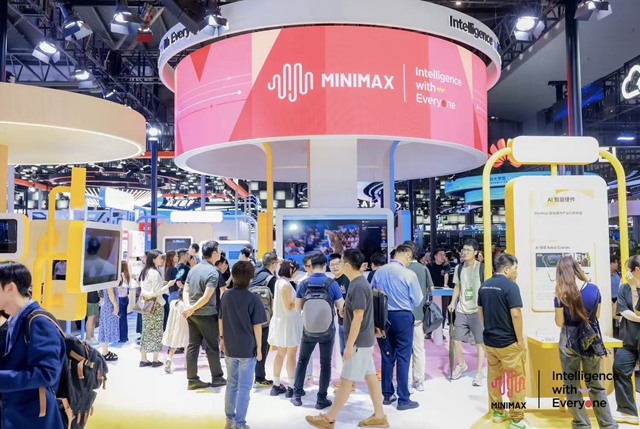
上海“十五五”三大先导产业关键词:全产业链整体突破、全栈创新
第一财经· 2026-01-19 15:18
Core Viewpoint - Shanghai aims to build a world-class high-end industrial cluster with advanced manufacturing as the backbone, as outlined in the "15th Five-Year Plan" [3][4]. Group 1: Modern Industrial System - The "2+3+6+6" modern industrial system includes two transformations of traditional industries (digitalization and greening), three leading industries (integrated circuits, biomedicine, and artificial intelligence), six emerging pillar industries (new generation electronic information, smart connected vehicles, high-end equipment, advanced materials, new energy and green low-carbon, and fashion consumer goods), and six future industries (future manufacturing, future information, future materials, future energy, future space, and future health) [3][4]. Group 2: Traditional Industries - Shanghai's traditional industries show strong support, high efficiency, and high-tech characteristics, with a revenue profit margin of 6.2% in 2024, exceeding the national average by 0.8 percentage points [5]. Group 3: Leading Industries - The plan emphasizes the development of three leading industries: enhancing the integrated circuit industry's capabilities, promoting biomedicine through innovative drug development, and advancing artificial intelligence through comprehensive innovation [6][7]. Group 4: Service Industry Development - The plan focuses on the high-quality development of the service industry, aiming to extend the productive service sector towards specialization and high-value chains, while also enhancing the quality of life services [7]. Group 5: Artificial Intelligence Growth - By 2025, the annual tasks of the "Shanghai Plan" for artificial intelligence are expected to be completed, with the AI industry projected to exceed 550 billion yuan in scale, growing at over 30% [8].
上海“十五五”三大先导产业关键词:全产业链整体突破、全栈创新
Di Yi Cai Jing· 2026-01-19 07:19
Core Viewpoint - Shanghai aims to build a world-class high-end industrial cluster by establishing a modern industrial system characterized by "2+3+6+6" during the 14th Five-Year Plan period, focusing on advanced manufacturing as the backbone [1][2]. Group 1: Modern Industrial System - The "2" in the "2+3+6+6" system refers to the digital and green transformation of traditional industries [1]. - The "3" represents the acceleration of three leading industries: integrated circuits, biomedicine, and artificial intelligence [1][2]. - The first "6" indicates the development of six emerging pillar industries: next-generation electronic information, intelligent connected new energy vehicles, high-end equipment, advanced materials, new energy and green low-carbon products, and fashion consumer goods [1]. - The second "6" focuses on six future industry fields: future manufacturing, future information, future materials, future energy, future space, and future health [1]. Group 2: Traditional Industries and Performance - Shanghai's traditional industries exhibit strong support, high efficiency, and high-tech characteristics, with a revenue profit margin of 6.2% in 2024, surpassing the national average by 0.8 percentage points [3]. - Nearly one-third of Shanghai's traditional industries are classified as strategic emerging industries, and they hold a significant share in international markets [3]. - Approximately 70% of Shanghai's traditional industries are technology-intensive, indicating a robust technological foundation [3]. Group 3: Leading Industries and Innovations - The integrated circuit industry aims for an overall breakthrough, focusing on building a secure and controllable local industrial ecosystem [4]. - The artificial intelligence sector is set to expand its innovation chain from application layers to foundational frameworks, core algorithms, and computing chips [4]. - By 2025, the artificial intelligence industry in Shanghai is expected to exceed 550 billion yuan, with a growth rate of over 30% [5].
上海:到2028年,新增年产值10亿元以上制造业企业100家
Xin Lang Cai Jing· 2026-01-09 10:26
Core Viewpoint - The Shanghai Municipal Government has issued a three-year action plan (2026-2028) to support the transformation and upgrading of advanced manufacturing, aiming to enhance the modern industrial system and promote collaborative development among enterprises of various sizes [1]. Group 1: Main Goals - By 2028, the plan aims to add 100 manufacturing enterprises with an annual output value exceeding 1 billion yuan, totaling over 600 such enterprises, and to drive the addition of 500 industrial enterprises above designated size in the supply chain [2]. Group 2: Implementation Actions - **Optimizing Traditional Advantage Industries**: The plan encourages traditional industries like petrochemicals and steel to innovate and expand into new materials, with financial support for qualifying projects [3]. - **Accelerating Leading Industry Strategies**: Support for integrated circuit companies to achieve breakthroughs across the entire industry chain, fostering internationally competitive leading enterprises [3]. - **Promoting Key and Emerging Industries**: Focus on developing new electronic information, smart connected vehicles, and advanced materials, while encouraging investment in emerging fields like low-altitude economy and commercial aerospace [3]. Group 3: Innovation and Technology - **Releasing Innovation Vitality**: Financial incentives for companies increasing basic research investments, with varying levels of support based on annual research expenditure [4]. - **Accelerating Core Technology Research**: Support for enterprises focusing on cutting-edge technologies such as laser manufacturing and quantum technology [4]. Group 4: Quality and Efficiency Enhancement - **Promoting Technological Transformation**: Financial support for projects aimed at upgrading production and R&D processes, with a cap on total support [4]. - **Deepening Digital Transformation**: Initiatives to enhance AI applications in manufacturing, aiming for full coverage of smart factory applications by 2028 [4]. Group 5: Resource and Support Actions - **Strengthening Talent Development**: Support for attracting high-level talent in key sectors, with financial incentives for successful candidates [5]. - **Enhancing Financial Support**: Encouragement for financial institutions to offer favorable loan products for manufacturing, with interest subsidies for key components and materials [5]. - **Expanding Logistics Support**: Development of industrial logistics facilities to integrate with manufacturing needs, enhancing transportation infrastructure [5]. Group 6: Market Development and Services - **Expanding Domestic and International Markets**: Establishing platforms for supply chain connections and promoting internet marketing for industrial enterprises [5]. - **Optimizing Enterprise Services**: Coordinating to address enterprise needs and ensuring that policies are effectively communicated and implemented [5].
上海:支持集成电路企业瞄准装备、先进工艺、光刻胶材料、3D封装,实现全产业链突破
Xin Lang Cai Jing· 2026-01-09 10:25
Core Viewpoint - The Shanghai Municipal Government has issued a three-year action plan (2026-2028) to support the transformation and upgrading of advanced manufacturing industries, focusing on strategic leadership in pioneering industries [1] Group 1: Industry Focus - The plan emphasizes accelerating the development of the integrated circuit industry, targeting breakthroughs in equipment, advanced processes, photoresist materials, and 3D packaging to cultivate internationally competitive leading enterprises [1] - It highlights the importance of innovation in pharmaceuticals and high-end formulations, advanced medical devices, synthetic biology, and cell and gene therapy, supporting the growth of companies in these sectors [1] Group 2: Innovation and Technology - The initiative aims to deepen full-stack innovation and promote the rapid development of high-performance intelligent computing chips [1]
云计算蓝皮书(2025年)
中国信通院· 2025-07-24 06:11
Investment Rating - The report does not explicitly provide an investment rating for the cloud computing industry Core Insights - Cloud computing is a critical infrastructure in the AI era, facilitating the deep integration of AI into various industries and driving the digital economy forward [7][8] - The global cloud computing market is projected to reach nearly $2 trillion by 2030, with a significant contribution from AI applications [8][20] - China's cloud computing market is expected to exceed 3 trillion yuan by 2030, driven by the integration of quantum computing, blockchain, and AI [9][45] Summary by Sections Global Cloud Computing Development Overview - Countries are accelerating cloud computing strategies to enhance competitiveness in the AI era, with the US investing over $100 billion in cloud infrastructure since 2018 [14][15] - The global cloud computing market is experiencing stable growth, with a market size of $692.9 billion in 2024, reflecting a year-on-year growth of 20.3% [19][20] - Cloud computing technologies are continuously integrating, becoming the engine for innovative development across various sectors [27] China's Cloud Computing Development Overview - China's cloud computing market reached 828.8 billion yuan in 2024, growing by 34.4% year-on-year, with public cloud services accounting for 621.6 billion yuan [45][46] - The integration of AI with cloud computing is becoming a key driver for market growth, with significant advancements in IaaS and SaaS sectors [48][51] - The dual drive of "cloud + AI" is accelerating the adoption of intelligent applications across industries, with a focus on government and transportation sectors [52][56] Cloud Computing Driving Service Paradigm Innovation - New service models such as AIIaaS, AIPaaS, and AIMSP are emerging, reflecting the evolution of cloud services towards AI integration [9][24] - The concept of "one cloud, multiple calculations" is gaining traction, allowing for efficient resource management and data integration across various computing needs [29][30] - The cloud excellence architecture is helping enterprises optimize their cloud usage, focusing on security, stability, and operational efficiency [34][35] Development Outlook - The report emphasizes the importance of cloud computing in supporting the digital transformation of traditional industries, with a focus on enhancing operational efficiency and service quality [57][58] - The integration of cloud computing with AI technologies is expected to create new business models and enhance the overall productivity of various sectors [36][38]