
全产业链自主可控

Search documents
165亿!恒力集团,聚酯新材料等两大项目签约
DT新材料· 2026-03-17 16:04
Core Viewpoint - The article discusses the collaboration between Hengli Group and Dalian City, focusing on the establishment of Dalian Shipping Co., Ltd. and the investment in two industrial parks, which aim to enhance the shipping and polyester new materials industries in the region [4][5]. Group 1: Company Initiatives - Hengli Group signed three cooperation agreements with Dalian City on March 17, establishing Dalian Shipping Co., Ltd. and investing in a ship power system industrial park and a polyester new materials industrial park [2][4]. - The total investment for the two industrial parks is approximately 16.5 billion yuan, with an expected annual output value of 35 billion yuan upon reaching full production [4][5]. - Dalian Shipping Co., Ltd. will focus on building a shipping fleet and port investment, aiming to quickly enhance fleet capacity and create a specialized fleet for bulk cargo [4][5]. Group 2: Industry Impact - The ship power system industrial park will address the core power system gaps in Dalian's shipbuilding industry, promoting a self-sufficient industrial chain for marine engineering equipment [5]. - The polyester new materials industrial park will leverage the raw material supply advantages of the Longxing Island petrochemical base, extending into high-end polyester and new materials, thus upgrading the petrochemical industry from basic chemicals to high-end fine chemicals [5]. - These projects are expected to significantly improve the supply capabilities of key components in the shipbuilding and marine engineering sectors, as well as enhance the independent innovation capacity of high-end new materials in Liaoning Province [5].


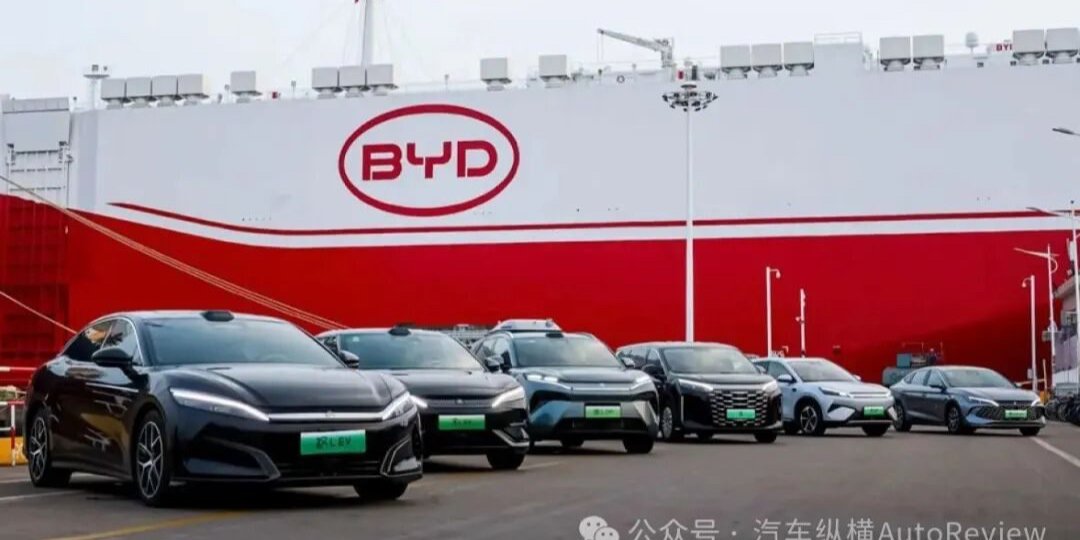
从追赶到领跑!比亚迪五年出海“狂飙” | 封面故事:汽车出海系统升级
Xin Lang Cai Jing· 2026-03-10 04:42
Core Viewpoint - Chinese automotive companies are entering a new phase of globalization, evolving from product export to ecosystem co-construction, establishing a competitive advantage in electrification and intelligence across the entire industry chain [2] Group 1: BYD's Global Expansion - BYD has transformed from a newcomer to a global leader in the electric vehicle market within five years, achieving overseas sales of 1.0496 million units by 2025, a staggering increase of 145% year-on-year [3][4] - In 2023, BYD's overseas sales reached 242,800 units, a year-on-year surge of 334%, and is projected to reach 417,200 units in 2024, marking a 72% increase [4] - BYD's global footprint now spans 119 countries and regions, with key markets in Europe, Southeast Asia, and Latin America [4] Group 2: Market Performance - In Europe, BYD's sales reached 187,700 units in 2025, a year-on-year increase of 268.6%, with Germany and the UK showing growth rates exceeding 500% [5] - BYD dominates the Brazilian electric vehicle market with a 92.16% share and has a 35.8% market share for hybrid models [5] - The company has established a strong presence in Southeast Asia, with the Yuan PLUS model leading sales in Thailand for 18 consecutive months [5] Group 3: Manufacturing and Localization - BYD is transitioning from product export to a full industry chain approach, with nine overseas factories planned or operational to enhance local production capabilities [6][7] - The factories in Uzbekistan, Thailand, Brazil, Hungary, and Indonesia are strategically located to reduce logistics costs and tariffs, ensuring efficient production and delivery [7] - BYD's localization strategy includes hiring local talent, with an average of 80% local employee ratio in overseas factories, enhancing market responsiveness [15] Group 4: Technological Innovation - BYD's core competitiveness lies in its self-developed technologies, with over 220 billion yuan invested in R&D over five years, leading to significant advancements in battery and intelligent systems [9][10] - The blade battery technology has become a key selling point in Europe due to its safety features, while the DM-i hybrid system addresses the needs of emerging markets [9][10] - BYD's self-developed chips and systems ensure supply chain stability and adaptability to local market demands [10][12] Group 5: Strategic Approach - BYD's globalization strategy emphasizes long-term planning over rapid expansion, focusing on quality and sustainable growth [17][18] - The company prioritizes emerging markets for initial expansion, gradually moving into mature markets, thereby avoiding risks associated with premature entry [18] - BYD's approach includes a dual focus on commercial and passenger vehicles, leveraging its experience in electric buses to build a robust service network before entering the passenger car market [18] Group 6: Policy and Market Support - The supportive domestic policies during the "14th Five-Year Plan" period have significantly reduced export costs for BYD, facilitating its global expansion [20][21] - The global shift towards electric vehicles, with the penetration rate expected to rise from 10% in 2021 to 30% by 2025, presents a substantial market opportunity for BYD [20] - BYD's success is attributed to its ability to align with both domestic and international market trends, positioning itself as a leader in the global automotive industry [21]

惠而浦(600983):深度二:如何看待大股东及二股东的赋能?
GOLDEN SUN SECURITIES· 2026-03-01 12:29
Investment Rating - The report maintains a "Buy" rating for the company [6]. Core Insights - The report emphasizes the empowerment from major shareholders, particularly Whirlpool Group and Galanz Group, which enhances operational capabilities and profit margins for the company [1][2]. - The company is expected to benefit from strategic adjustments at Whirlpool Group due to financial pressures, leading to potential order releases in both domestic and international markets [1][15]. - The company is projected to achieve significant profit growth, with net profits expected to reach 505 million, 610 million, and 729 million yuan from 2025 to 2027, reflecting year-on-year growth rates of 150.4%, 20.8%, and 19.4% respectively [3]. Summary by Sections 1. Empowerment from Whirlpool Group - The strong supply chain capabilities and product advantages of the Chinese home appliance industry position the company well for international expansion [1]. - Whirlpool Group's high local self-manufacturing rate and recent financial pressures are expected to drive strategic adjustments, potentially releasing specific orders in the U.S. market and seeking external suppliers in non-U.S. markets [15]. - The deep binding of commercial agreements and innovative product development based on overseas insights are key reasons for choosing Whirlpool China [1][29]. 2. Empowerment from Galanz Group - Galanz Group's comprehensive supply chain support and order collaboration are expected to significantly enhance profit margins for the company [2]. - The company is the only listed platform for Whirlpool, providing substantial opportunities for order and customer development [2]. - Galanz's strong supply chain autonomy and "Industry 4.0" smart manufacturing capabilities are foundational for optimizing component procurement and achieving cost reductions [2][41]. 3. Industry Competition and Financing - The resolution of industry competition issues allows the company to return to a conventional regulatory framework, potentially creating more capital operation opportunities [3]. - The company is expected to leverage orders from Whirlpool Group and OEM growth in Japan and Southeast Asia, alongside cost reductions from Galanz's influence, to drive future growth [3].

上海给未来五年 加了什么“燃料”? 5个指标提前剧透
Xin Lang Cai Jing· 2026-02-05 17:13
Group 1 - Shanghai's GDP is projected to grow at an average annual rate of 5% over the next five years, up from 4.9% during the "14th Five-Year Plan" period, indicating significant progress despite a seemingly small increase [1][3] - The achievement of this growth target relies on three key factors: stronger support from new drivers, greater release of core functions from five centers, and substantial backing from major projects, particularly in emerging industries [1][4] - By 2030, if the 5% growth rate is maintained, Shanghai's GDP is expected to exceed 7 trillion yuan, positioning it among the top three global cities, following New York and Los Angeles [1] Group 2 - The three leading industries in Shanghai are expected to maintain an average annual growth rate of over 10% during the "15th Five-Year Plan" period [2][3] - Key indicators for Shanghai's economic development include labor productivity exceeding 520,000 yuan per person, digital economy core industries accounting for over 20% of GDP, and R&D expenditure reaching over 5% of GDP by 2030 [2] Group 3 - The "15th Five-Year Plan" outlines a modern industrial system characterized by "2+3+6+6," focusing on advanced manufacturing and the establishment of world-class high-end industrial clusters [3][5] - The plan emphasizes the digital and green transformation of traditional industries and the acceleration of the three leading industries, which include integrated circuits, biomedicine, and artificial intelligence [4][5] Group 4 - The three leading industries have a significant driving effect on Shanghai's economy, with their combined scale surpassing 2 trillion yuan [4] - Specific strategies for the three leading industries include enhancing the capabilities of the integrated circuit sector, accelerating drug development in biomedicine, and advancing AI technologies [4][6] Group 5 - Shanghai aims to maintain a reasonable industrial proportion while focusing on enhancing quality and competitiveness in manufacturing, which is crucial for supporting technological innovation and the construction of five centers [5][6] - The city plans to solidify its industrial system and leverage existing industrial foundations to foster new growth engines and optimize resource allocation [5][6] Group 6 - The "15th Five-Year Plan" proposes the development of six emerging pillar industry clusters and anticipates six future industries, including advanced materials and quantum technology [7] - The focus on future industries includes areas such as brain-computer interfaces, controlled nuclear fusion, and biomanufacturing, which are expected to have high growth potential [7] Group 7 - Labor productivity is a key indicator for economic and social development, with a continued emphasis on improving productivity during the "15th Five-Year Plan" [9][10] - Enhancing labor productivity will depend on talent development, technological innovation, and systemic reforms to create a favorable business environment [10]
上海给未来五年加了什么buff?5个指标提前剧透
Di Yi Cai Jing· 2026-02-05 14:09
Group 1 - Shanghai aims for an average annual GDP growth rate of 5% over the next five years, up from 4.9% during the "14th Five-Year Plan" period, indicating significant progress despite a seemingly small numerical difference [1][3] - The growth strategy focuses on three key areas: stronger support from new drivers, greater release of core functions from five centers, and substantial backing from major projects, particularly in emerging industries [1][4] - The three leading industries—integrated circuits, biomedicine, and artificial intelligence—are expected to maintain an annual growth rate of over 10%, contributing significantly to Shanghai's economic development [4][5] Group 2 - By 2030, if the 5% growth target is met, Shanghai's GDP is projected to exceed 7 trillion yuan, positioning it among the top three global cities, following New York and Los Angeles [3] - The "15th Five-Year Plan" outlines specific targets, including a labor productivity exceeding 520,000 yuan per person and a digital economy's core industry value-added accounting for over 20% of GDP by 2030 [4][10] - Shanghai plans to establish a modern industrial system characterized by "2+3+6+6," focusing on advanced manufacturing and the development of six emerging pillar industries and six future industries [5][10] Group 3 - The city is committed to enhancing its international competitiveness and supporting technological innovation, with a focus on maintaining a stable industrial output value that aligns with GDP growth [7][8] - Recommendations include optimizing industrial land use and ensuring that industrial planning aligns with Shanghai's development needs, particularly in the biomedicine sector [8][9] - The emphasis on research and development is evident, with R&D expenditure expected to reach 5% of GDP by 2030, and a focus on fostering a culture of innovation among scientists and entrepreneurs [11][15]
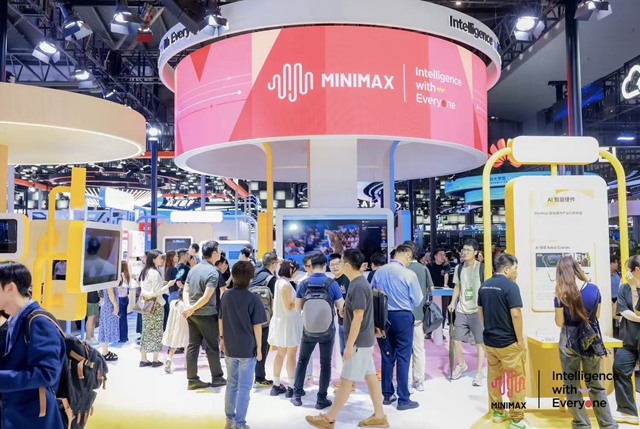
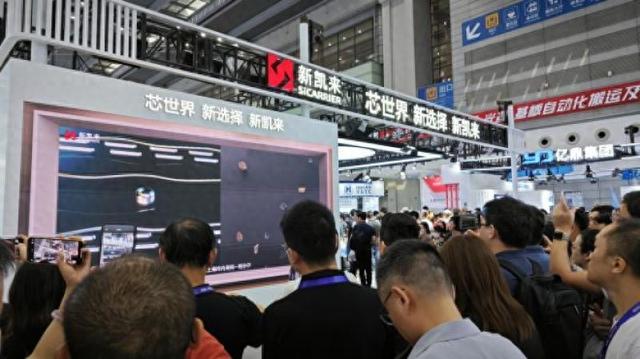
直击湾芯展:企业新品齐发,中国半导体产业从“低成本制造”转向“全产业链自主可控”
Hua Xia Shi Bao· 2025-10-17 08:26
Core Insights - The 2025 Bay Area Semiconductor Industry Ecosystem Expo (referred to as "Bay Chip Expo") showcases a significant transformation in China's semiconductor industry, moving from "low-cost manufacturing" to "fully autonomous and controllable industrial chain" [2][9] - The expo features over 600 participating companies, highlighting the industry's collaborative development across design, equipment, materials, and software [2][8] New Technologies and Products - Wanlian's 90GHz ultra-high-speed real-time oscilloscope has been launched, achieving a 500% improvement in key performance metrics compared to previous domestic products [4] - The oscilloscope features a sampling rate of 200 billion samples per second and a storage depth of 4 billion samples, supporting continuous recording of complex signals [4] - Qiyunfang, a subsidiary of Xinkailai, introduced two domestically developed EDA design software products, filling a gap in high-end electronic design software technology in China [6] Market Strategy and Innovation - Wanlian's CEO emphasized the importance of a young and focused R&D team, aiming to overcome technical challenges and respond quickly to customer needs [5] - The company plans to establish a market team to enhance customer communication and service across various regions in China [5] - The introduction of innovative features like "intelligent parameter optimization" in the oscilloscope significantly enhances testing efficiency [4] Industry Trends and Future Outlook - The Bay Chip Expo serves as a platform for showcasing China's semiconductor strength and global cooperation potential, with a focus on wafer manufacturing, advanced packaging, and chip design [8] - The industry is encouraged to shift from reliance on foreign architectures to developing autonomous chip design frameworks, aiming for high-quality development and differentiation in core technologies [9]
湖北绿色家园:乡镇小厂“搬”出隐形冠军
Zhong Guo Hua Gong Bao· 2025-06-16 02:22
Core Viewpoint - Hubei Green Home Material Technology Co., Ltd. has become a global leader in the benzyl alcohol market with a market share of 38%, following its strategic relocation and investment in advanced production facilities [1][3]. Group 1: Company Development - The company invested 1.45 billion yuan to relocate to a new industrial park in Xiangtan High-tech Zone, which allowed it to eliminate outdated equipment and adopt advanced safety and environmental technologies [1][2]. - After completing the relocation in 2019, the company increased its product variety to over 20 and quadrupled its annual production capacity to over 500,000 tons, becoming the largest producer of epoxy new materials globally [1][2]. Group 2: Technological Advancements - The company has developed its own molecular distillation technology, achieving a benzyl alcohol purity of 99.99%, and has become a core supplier for international giants like BASF and Air Products [2]. - Continuous improvements in process technology have led to the development of high-end products such as epoxy resin diluents and curing agents for wind turbine blades, marking a shift from traditional chemicals to new materials [2]. Group 3: Workforce and Safety - The company retained 100% of its employees with bachelor's degrees or higher during the relocation, ensuring a strong talent pool for ongoing research and development [2]. - Significant investments in safety and environmental facilities, including a wastewater treatment system with a daily capacity of 3,000 tons, have enabled the company to achieve near-zero emissions of pollutants [2]. Group 4: Financial Performance - The company's sales revenue surged from 900 million yuan in 2017 to 2.202 billion yuan in 2023, reflecting its successful transformation and market position [3].