全球产业重构

Search documents
中国企业出海趋势与香港机会|宏观经济
清华金融评论· 2026-02-28 09:01
Core Viewpoint - The article emphasizes that Chinese enterprises are at a critical juncture in their globalization journey, transitioning from product output to capital output, which is a natural result of decades of economic accumulation and a clear trend for future development [3][4][6]. Group 1: Economic Development and Transition - The economic development of any country follows a clear four-stage pattern: labor output, product output, capital output, and finally cultural and brand output, rooted in the logic of economic division of labor [3]. - China has completed two fundamental transitions in its economic journey: from a state of shortage to one of surplus, and from primarily attracting foreign investment to becoming a net capital exporter [5][6]. Group 2: Reasons for Going Global - Domestic overcapacity is a pressing reality, with many industries facing declining utilization rates and increasing competition, pushing enterprises to seek growth opportunities abroad [9]. - There is a shortfall in domestic market demand, as the income distribution still allows for potential increases in labor compensation, necessitating exploration of overseas markets for new demand [10][11]. - The global industrial restructuring, particularly influenced by Sino-American dynamics, compels Chinese enterprises to engage in global resource allocation, driven by rising domestic costs and declining investment returns [12]. Group 3: New Trends in Going Global - The current wave of globalization is characterized by advanced Chinese enterprises venturing abroad, focusing on technology, management, and supply chain advantages rather than merely transferring low-end production [14]. - Going global is no longer exclusive to large enterprises; small and medium-sized enterprises, as well as startups, are also finding their place in the global market, covering the entire industrial chain [14]. - Both state-owned and private enterprises play distinct roles in this globalization effort, with state-owned enterprises focusing on capital-intensive projects and private enterprises driving innovation and exports [14]. Group 4: The Role of Hong Kong - Hong Kong serves as a natural "bridgehead" for Chinese enterprises looking to go global, benefiting from its dual role as an international trade and financial center, and its unique legal and talent advantages [15]. - Approximately 70% of foreign investment in mainland China comes from Hong Kong, and over 60% of Chinese enterprises that go global first establish a presence in Hong Kong [15]. Group 5: Challenges and Opportunities - The journey of going global is fraught with challenges, requiring enterprises to adapt their business models and management capabilities to succeed in new markets [18]. - Despite the difficulties, the current wave of globalization presents a unique opportunity for Chinese enterprises to transition from being a major economic power to a strong economic nation, leveraging their competitive advantages in the global market [19].

解码大国工业的“韧性密码”:吉利如何在变局中重构全球价值链?
Huan Qiu Wang· 2025-12-31 01:57
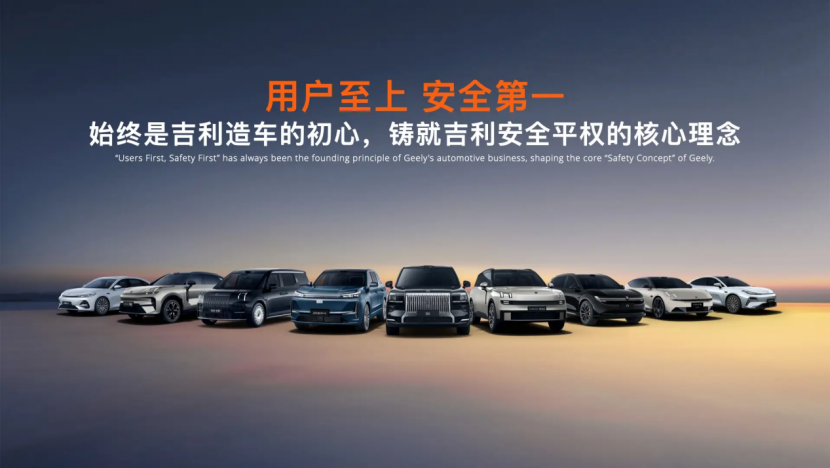
Core Viewpoint - The year 2025 marks a significant journey for China, characterized by resilience and determination in various sectors, particularly in the automotive industry, which is undergoing a profound transformation amidst global geopolitical changes [1][2]. Group 1: Globalization and Resilience - The Chinese automotive industry is transitioning from a traditional export model to a more integrated approach, focusing on embedding within global markets rather than merely exporting products [3][4]. - The launch of over a thousand Geely Galaxy Starship 7 EM-i vehicles to Europe symbolizes a pivotal moment in showcasing the resilience and global expansion of Chinese automotive brands [3][4]. Group 2: Technological Advancement and Safety Standards - Geely's establishment of a world-class safety testing center represents a significant milestone in enhancing China's automotive safety verification capabilities, aligning with global standards [10][12]. - The development of the "All-Domain Safety 2.0" system by Geely reflects a proactive approach to setting new safety standards in the intelligent and electric vehicle era, moving from a follower to a leader in global automotive safety [12][13]. Group 3: Performance and Competitive Edge - The success of the Lynk & Co Cyan Racing team in international racing events highlights China's growing capabilities in high-performance automotive engineering, marking a shift from being a passive participant to a competitive leader [16][19]. - The integration of racing technology into consumer vehicles demonstrates a strategic approach to enhance performance and innovation within the Chinese automotive sector [19][20]. Group 4: Industry Collaboration and Shared Growth - Geely's commitment to sharing core patents and safety testing resources with the industry exemplifies a collaborative spirit aimed at elevating the entire automotive sector, fostering a culture of shared growth and responsibility [14][22]. - The narrative of resilience in the Chinese automotive industry is not just about individual success but also about contributing to the sustainable development of the global automotive landscape through innovative solutions [22].

特朗普宣布对华加征100%关税 限制关键软件出口
半导体芯闻· 2025-10-11 10:34
Core Viewpoint - The article discusses the escalating trade tensions between the U.S. and China, particularly focusing on Trump's announcement of a 100% additional tariff on Chinese goods and the implementation of export controls on "critical software" [1][3]. Group 1: Tariffs and Trade Policies - Trump announced that starting November 1, a 100% additional tariff will be imposed on Chinese goods, raising the average tariff on Chinese imports to over 150% from the current 57% [1]. - This tariff increase is a response to China's recent export controls on rare earth elements, which require foreign companies to obtain special approval for exporting these materials [1][2]. Group 2: Rare Earth Elements - Rare earth elements are crucial for various high-tech industries, including renewable energy, defense, and advanced manufacturing, with China controlling approximately 60% of global rare earth mining and over 85% of processing [2]. - The tightening of China's rare earth policies aims to create a "technology sovereignty" framework, enhancing its competitive position by controlling high-value rare earth products [2]. Group 3: Software Export Controls - In addition to tariffs, Trump announced restrictions on the export of critical software, where the U.S. currently leads with $649 billion in software exports, accounting for 15.3% of the global market [3]. - The restrictions may target Chinese universities and research institutions, limiting their access to essential AI algorithms and industrial control systems, which are foundational for China's smart manufacturing and semiconductor design [3][5]. Group 4: Long-term Implications - The article suggests that these actions are not merely short-term conflicts but signal the beginning of a global industrial restructuring, where control over core resources and high-end manufacturing will dictate power dynamics [5]. - China's advancements in domestic software alternatives indicate a shift towards a "de-Americanized" technology ecosystem, potentially mitigating the impact of U.S. restrictions in the long run [4][5].

全球产业重构:从Wolfspeed破产到中国SiC碳化硅功率半导体崛起
Sou Hu Cai Jing· 2025-05-21 06:06
Group 1: Wolfspeed's Decline - Wolfspeed's bankruptcy reflects a failure of the U.S. semiconductor industry strategy, primarily due to stagnation in technology iteration and uncontrolled costs, relying on outdated 6-inch wafer technology while competitors in China have achieved breakthroughs with 8-inch substrates [3][4] - The company's supply chain vulnerabilities were exposed, heavily relying on Chinese suppliers for critical raw materials, and facing increased production costs due to tariffs [4] - Financially, Wolfspeed faced a net loss of $600 million in 2024 and over $5 billion in debt, leading to factory closures and significant layoffs [5] Group 2: Rise of Chinese SiC Industry - Chinese SiC power semiconductor companies have adopted a "hard fortification" strategy, focusing on technological independence and reliability validation, achieving significant improvements in manufacturing processes [10] - The vertical integration of domestic companies has created a closed-loop capability covering the entire supply chain from chip design to module packaging, with significant market penetration in the automotive sector [11] - The application ecosystem has evolved, with Chinese companies enhancing system efficiency and performance, facilitating penetration into renewable energy and storage markets [12] Group 3: Global Industry Restructuring - Chinese breakthroughs in SiC technology are reshaping global competition, with a 35% share of SiC patent applications by Q1 2025, laying the groundwork for international standardization [18] - The restructuring of supply chains includes acquisitions of European packaging plants and the establishment of manufacturing centers in Southeast Asia, creating a localized and globalized network [19] - Cost advantages are significant, with Chinese 6-inch substrate prices 50%-70% lower than international levels, leading to a drastic reduction in U.S. market share from 65% in 2022 to 18% by 2025 [20] Group 4: Challenges and Future Outlook - Despite notable achievements, the Chinese SiC industry faces challenges, including reliance on imports for high-voltage markets above 3300V and potential supply chain risks due to dependence on imported equipment [28] - International competition is intensifying, with Europe and Japan seeking to circumvent Chinese dominance in SiC technology [29] - The transition from Wolfspeed's decline to the rise of Chinese companies illustrates a shift in semiconductor industry power dynamics, emphasizing the importance of technological independence and market depth [29]