全球化并购

Search documents
谁人不识李东生
21世纪经济报道· 2026-01-31 02:45
Core Viewpoint - The article discusses the strategic evolution of TCL under the leadership of Li Dongsheng, highlighting key management changes and the company's transition into a new phase with a focus on long-term strategic direction and operational execution. Group 1: Management Transition - On January 19, 2026, TCL Technology announced that Li Dongsheng would step down as CEO, with COO Wang Cheng taking over, while Li continues as Chairman to focus on long-term strategy [1] - This management change signifies a shift to a model where the Chairman sets strategy and the CEO manages execution, indicating a mature corporate governance structure [1] Group 2: Strategic Upgrades - TCL has undergone four major strategic upgrades: global mergers and acquisitions (2001-2007), upward industry chain breakthroughs (2007-2015), business structure reorganization (2015-2020), and diversification into new energy (2020-2025) [4] - The global merger phase included the acquisition of Thomson's global TV business and Alcatel's mobile business, which, despite initial setbacks, laid the groundwork for TCL's international expansion [4] - The upward industry chain breakthrough involved a significant investment of 24.5 billion yuan in the Huaxing Optoelectronics project to address the "chip shortage" issue in the Chinese TV industry [5] Group 3: Business Structure Reorganization - In 2019, TCL underwent a major asset restructuring, splitting into TCL Technology and TCL Industry to focus on specialized operations [6] - TCL Technology concentrated on semiconductor displays and new energy, while TCL Industry focused on smart terminal products, enhancing operational efficiency [6] Group 4: New Energy Ventures - In 2020, TCL invested 12.5 billion yuan to acquire Tianjin Zhonghuan, marking its entry into the photovoltaic sector, which complements its semiconductor display business [6][8] - This strategic move aims to create a dual-core industry structure of "semiconductor display + new energy," enhancing TCL's competitive edge [8] Group 5: Globalization Efforts - TCL has made significant strides in international markets, with overseas sales accounting for 60% of its smart terminal business, driven by double-digit growth [13] - The company aims to establish a global manufacturing supply chain to enhance brand influence and commercial value [13] Group 6: Industry Context - The semiconductor display industry is characterized by rapid technological changes and intense competition, particularly among China, Japan, and South Korea [14] - TCL's strategic decisions, such as the establishment of Huaxing Optoelectronics, were driven by the need for stronger upstream capabilities in the display sector [15][16]


安踏“全球扫货”再添一巨头:宣布收购彪马近3成股权
Nan Fang Du Shi Bao· 2026-01-27 04:04
Core Viewpoint - Anta Sports has signed an agreement to acquire a 29.06% stake in German sports brand Puma from the French Pinault family’s investment company Artémis for €1.506 billion (approximately ¥12.28 billion), positioning Anta as Puma's largest single shareholder if the transaction is completed [2][4]. Group 1: Acquisition Details - The acquisition price is set at €35 per share, to be paid in cash using Anta's internal resources [6]. - The agreement includes additional payment clauses, requiring Anta to pay extra if a third-party acquisition occurs within 15 months post-transfer or if Anta initiates a delisting offer [6]. - The transaction is subject to several conditions, including antitrust reviews, approval from Anta's shareholders, and clearance from China's National Development and Reform Commission [6]. Group 2: Puma's Financial Challenges - Puma has been facing significant operational challenges, with revenue growth stagnating in 2023 and 2024, and a net loss of €247 million reported in the first half of 2025 [5]. - The company's third-quarter report indicated a 10.4% year-over-year decline in sales after currency adjustments, alongside a net loss of €62.3 million and a 17.3% increase in inventory [5]. - The sale of Puma shares by Artémis is viewed as a strategy to alleviate its financial burden due to high debt from multiple acquisitions [5]. Group 3: Strategic Considerations for Anta - Anta's Chairman, Ding Shizhong, emphasized the long-term value and potential of the Puma brand, expressing confidence in Puma's management and strategic transformation [6]. - The acquisition aligns with Anta's global strategy, which has seen successful integration of international brands like AmerSports and the operational success of FILA [7]. - Anta aims to leverage its supply chain management to enhance Puma's brand value while maintaining its operational independence [7].

从彪马到猛犸象,安踏的欧洲并购线索浮现
3 6 Ke· 2026-01-15 13:36
Core Viewpoint - Anta is pursuing the acquisition of a 29% stake in Puma from the Pinault family, indicating a strategic move rather than aggressive expansion, amidst ongoing negotiations that have encountered a stalemate [1][4][7]. Group 1: Acquisition Details - Anta has proposed a buyout for Puma's shares, with the Pinault family's investment firm expecting a price above €40 per share [1]. - The current market price for Puma shares is in the low twenties, reflecting cautious market sentiment regarding its future growth [5]. - The negotiations are complex, involving not just price but also board representation, strategic influence, and mechanisms for future stake increases or exits [6]. Group 2: Strategic Context - Anta's acquisition strategy has evolved over the years, focusing on governance structure, synergy potential, and predictable long-term returns rather than absolute control [3]. - The interest in Puma represents a strategic entry point into a well-established global brand, which has a strong presence in Europe, North America, and Latin America, but is currently facing growth challenges [4][8]. - The ongoing negotiations reflect a broader trend of Anta reassessing its position in the global sports brand landscape, seeking quality assets that align with its operational capabilities [11]. Group 3: Market Dynamics - The global sports brand market is undergoing significant restructuring, and Anta is actively seeking new opportunities while adopting a more cautious and focused approach to acquisitions [9][10]. - The potential acquisition of Mammut, a Swiss outdoor brand, is also in the early stages, with an estimated valuation of up to €500 million, indicating Anta's continued interest in expanding its portfolio [9][11].
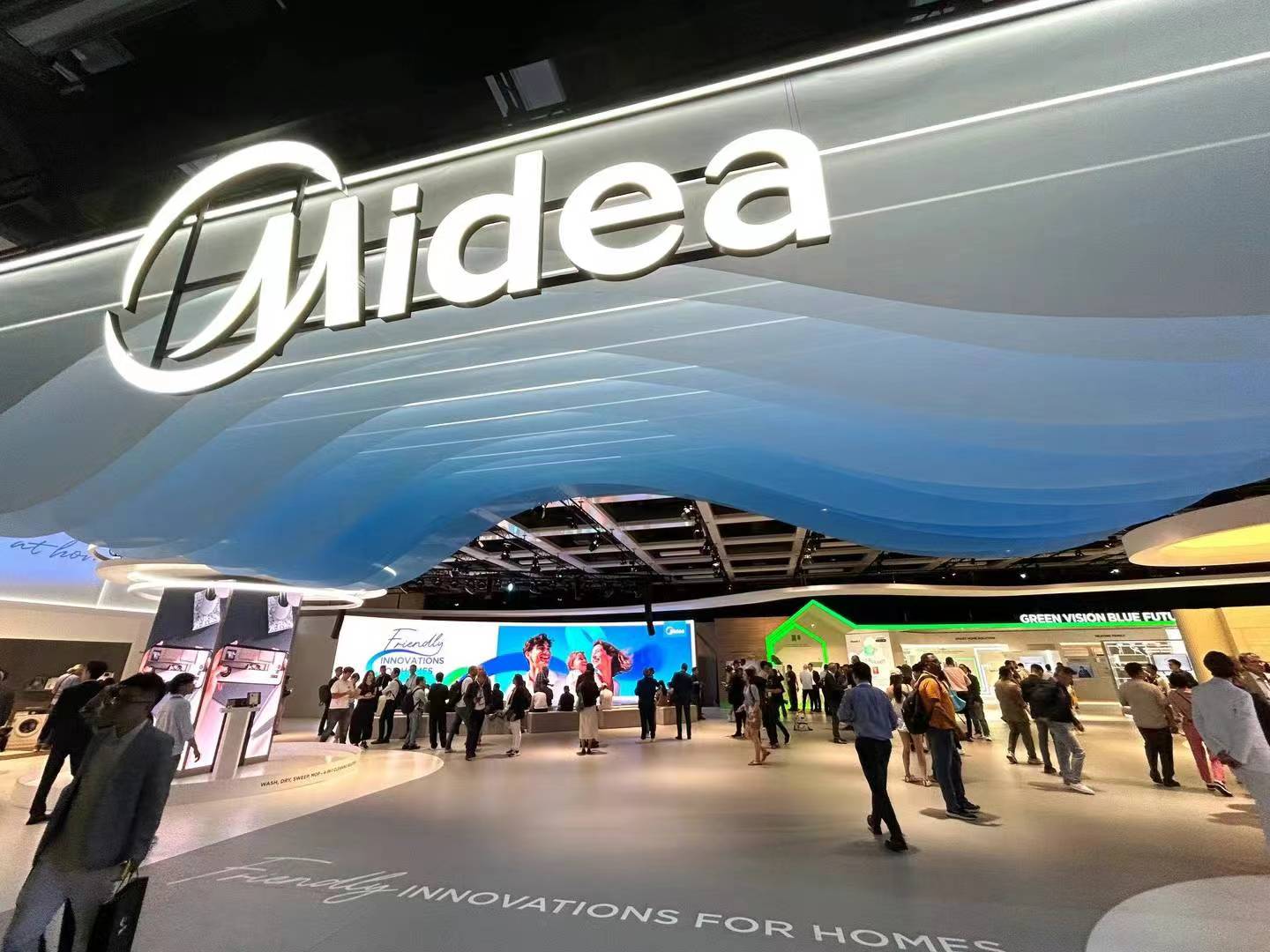
美的收购欧洲品牌 Teka,加强海外市场布局
Di Yi Cai Jing· 2025-04-30 13:42
Core Viewpoint - Midea Group's acquisition of Teka Group is a strategic move to enhance its presence in key markets amid increasing trade uncertainties [1][3]. Group 1: Acquisition Details - Midea Group announced the completion of the acquisition of Teka Group, excluding Teka's Russian subsidiary, to further enhance its global footprint [3]. - Teka Group, established in 1924 and headquartered in Germany, operates in over 120 countries and has 10 production bases across Europe, Asia, and America, focusing on kitchen appliances and related products [3][4]. Group 2: Strategic Implications - The acquisition is expected to strengthen Midea's position in the European and Latin American markets while facilitating breakthroughs in new business areas and rapid international expansion [4]. - Midea plans to retain Teka's existing organizational structure and core brands (Teka, Küppersbusch, and Intra), while optimizing operations and expanding product lines [4]. Group 3: Market Context - The European market presents high brand recognition barriers, particularly in the kitchen appliance sector, making the acquisition a timely strategy for Midea to enhance its influence [3]. - Successful precedents exist for Chinese companies breaking into the European market through effective resource integration [3]. Group 4: Challenges Ahead - Key challenges post-acquisition include resource integration, effective utilization of Teka's channel resources, positioning of Teka within Midea's brand portfolio, and cultural integration between the two companies [4].