全球宽松浪潮

Search documents
全球大放水,美联储再降息,外资回流,中国或将成为大赢家?
Sou Hu Cai Jing· 2025-12-11 18:47
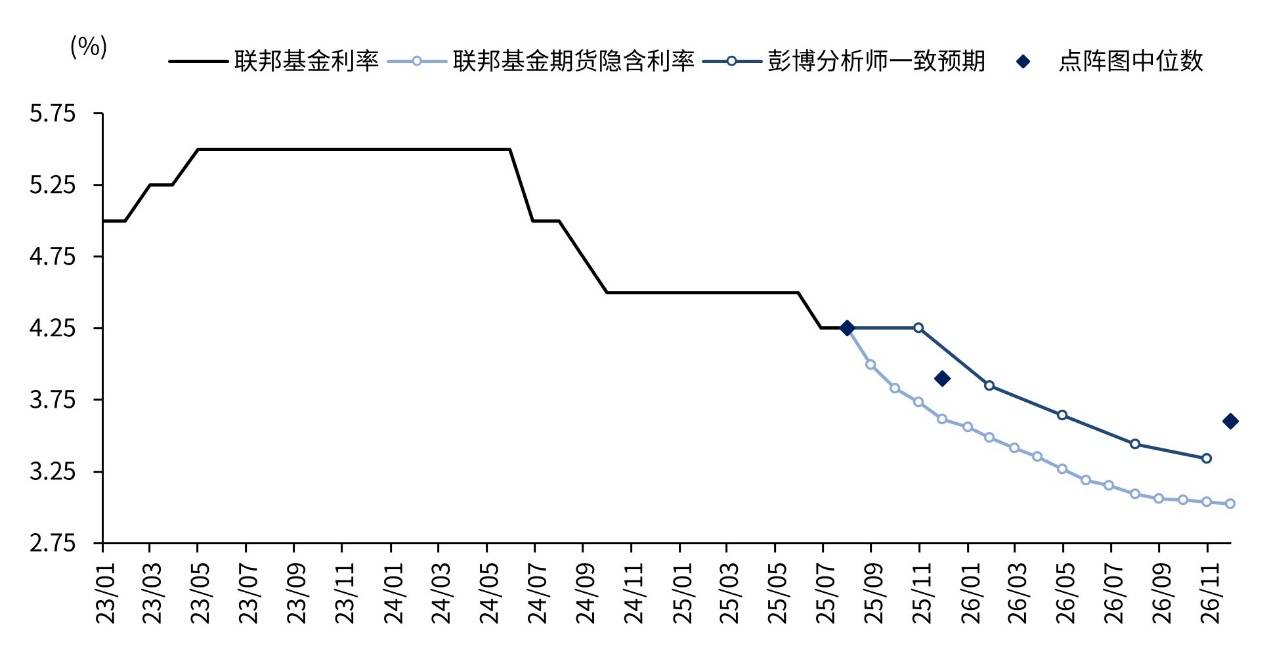
Group 1 - The Federal Reserve's recent interest rate cut of 25 basis points and the resumption of Treasury bond purchases signal a new wave of global monetary easing, impacting various sectors including housing, investments, and international relations [1][3][11] - The U.S. economy appears strong on the surface, but underlying issues such as slowing job growth, rising corporate financing costs, and a widening fiscal deficit indicate deeper structural problems [5][28] - The pressure from President Trump on the Federal Reserve to lower rates more aggressively has created unprecedented internal divisions within the Fed, highlighting the risks present in the economy [9][28] Group 2 - The Fed's actions aim to stabilize the financial system, lower long-term interest rates, and prevent the dollar from becoming overly strong, which could harm exports and manufacturing [11][21] - Global markets reacted positively to the Fed's decisions, with U.S. stocks rising and the dollar index weakening, indicating a shift from an anti-inflation stance to a focus on stable growth [13][21] - The interest rate differential between the U.S. and China has narrowed, but China's stable monetary policy makes its bonds attractive to foreign investors, especially as U.S. rates decline [15][19] Group 3 - The influx of foreign capital into Chinese assets is expected as global funds seek growth opportunities, particularly in China's core assets in the stock market [21][39] - The stability of the yuan and the easing of monetary policy in China provide a conducive environment for supporting the real economy and driving consumption [23][25] - The Fed's rate cut may lead to a short-term global economic recovery, benefiting China's manufacturing sector and improving cash flow for businesses [26][32] Group 4 - China must leverage this opportunity to address structural challenges, promote technological innovation, and reduce reliance on low-value manufacturing [32][34] - The current period of stable exchange rates and ample policy space allows China to accelerate infrastructure development and position itself for future economic competition [36][38] - The potential for increased employment and wage growth in China is tied to the Fed's actions, but there is a need for caution regarding the sustainability of this economic environment [38][39]

全球宽松浪潮重启,谁是下一轮流动性修复的核心受益?
Sou Hu Cai Jing· 2025-10-20 03:31
Group 1: Core Insights - The global liquidity environment is becoming more accommodative, with the Federal Reserve signaling a policy shift that enhances expectations for improved dollar liquidity [1] - The Hang Seng China Enterprises Index and its corresponding ETF are becoming core assets as they reflect the profitability and industrial trends of mainland enterprises [1] Group 2: Overseas Liquidity - The Federal Reserve's shift towards easing is expected to relieve pressure on the liabilities of H-share ETFs, with Powell indicating a pause in balance sheet runoff and potential rate cuts [1][2] - The downward adjustment of discount rates will elevate the present value of future cash flows, leading to valuation recovery, particularly in sectors sensitive to liabilities like technology and consumer goods [2] Group 3: Fundamentals - The overall EPS forecast for the Hong Kong market shows signs of stabilization and recovery, with a 0.35% increase in the Hang Seng Index EPS forecast since September 26 [5] - The Hang Seng China Enterprises Index consists entirely of mainland enterprises, with major sectors including consumer discretionary (29.5%), information technology (25.2%), and financials (23.0%), reflecting structural trends in consumption recovery and manufacturing upgrades [5] Group 4: Capital Flows - There has been a noticeable increase in net inflows from southbound funds, with significant investments in consumer discretionary and financial sectors amounting to 923 million HKD and 233 million HKD respectively over the past 20 trading days [8] - The rising proportion of southbound capital in the Hong Kong Stock Exchange indicates a growing reallocation interest from mainland investors towards Hong Kong stocks [8] Group 5: Overall Market Outlook - The combination of the Federal Reserve's easing policies, improving dollar liquidity, and the recovery of mainland economic performance is providing strong support for the Hong Kong stock market [13] - The Hang Seng China Enterprises Index is expected to benefit significantly from the recovery of the mainland economy, with H-share ETFs being ideal tools for investors to capitalize on the liquidity recovery window [13]