
全球战略稳定

Search documents
中国代表:美方做法,坚决反对
Xin Lang Cai Jing· 2026-02-11 23:56
Core Viewpoint - The Chinese government firmly denies U.S. accusations regarding China's nuclear testing, asserting that there is no factual basis for such claims and emphasizing its commitment to the Comprehensive Nuclear-Test-Ban Treaty (CTBT) [1][3]. Group 1: China's Position on Nuclear Testing - China has never conducted any nuclear tests since announcing a "moratorium" in 1996 and has consistently upheld its commitments under the CTBT, receiving high recognition from the international community [3]. - The CTBTO's monitoring system did not detect any events characteristic of a nuclear test on the date specified by the U.S., reinforcing China's stance against the accusations [1]. Group 2: U.S. Nuclear Policy Critique - The U.S. is criticized for distorting China's nuclear policy and is accused of seeking nuclear hegemony while evading its own nuclear disarmament responsibilities [3]. - The U.S. is described as the primary disruptor of international nuclear order and global strategic stability, with actions such as allowing bilateral nuclear arms control treaties to expire and pursuing a first-use nuclear policy [3]. Group 3: Call for Global Cooperation - China urges the U.S. to reaffirm its commitment to a moratorium on nuclear testing and to take concrete actions to uphold the global consensus on nuclear testing prohibition [5]. - China maintains a defensive nuclear strategy and aims to play a constructive role in maintaining international peace and security [5].

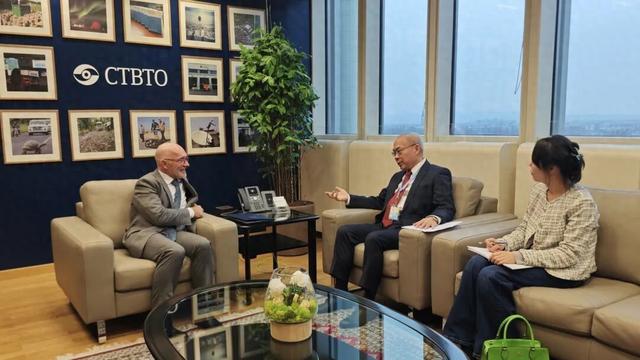
外交部:反对美方为自身重启核试验编造借口
第一财经· 2026-02-11 07:54
Group 1 - The core viewpoint of the article is that the U.S. is distorting China's nuclear policy to seek nuclear hegemony and evade its own nuclear disarmament responsibilities [1] - The Chinese Foreign Ministry spokesperson Lin Jian stated that the U.S. is the biggest source of disruption to international nuclear order and global strategic stability [1] - The expiration of the New START treaty by the U.S. undermines mutual trust among major powers and impacts global strategic stability [1] Group 2 - The article mentions that the U.S. accusations against China regarding nuclear explosion tests lack factual basis [1] - China firmly opposes the U.S. creating excuses to restart nuclear tests [1]
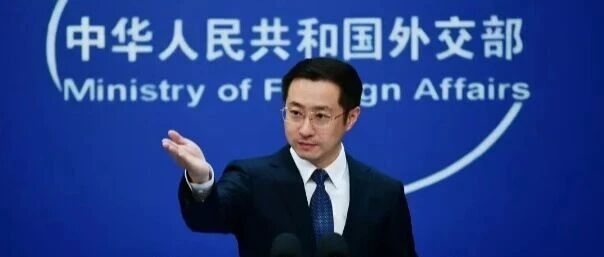
美俄失去最后一道核军控“护栏”
Xin Lang Cai Jing· 2026-02-06 12:41
Core Viewpoint - The expiration of the New Strategic Arms Reduction Treaty (New START) between the U.S. and Russia raises concerns about a potential new arms race and threats to global strategic stability as no agreement for extension or replacement has been reached [2][8]. Summary by Sections Treaty Overview - The New START treaty, signed in 2010, aimed to limit the number of strategic nuclear weapons held by the U.S. and Russia, capping deployed strategic warheads at 1,550 and deployed delivery systems at 700 [3]. - The treaty included verification mechanisms such as on-site inspections and data exchanges, enhancing transparency and reducing the risk of accidental conflict [3]. Current Status and Responses - Russia's President Putin suggested a voluntary limitation of weapons to treaty limits for at least one year post-expiration, but the U.S. has not officially responded to this proposal [4]. - Analysts note that the treaty's continuation is complicated by a lack of trust between the two nations, exacerbated by the deterioration of U.S.-Russia relations due to the Ukraine conflict [6]. Challenges to Renewal - The U.S. perception of threats has evolved, with a focus on advanced conventional weapons and hypersonic systems, leading to a diminished interest in traditional arms control frameworks [6]. - Domestic political factors in the U.S., including skepticism from the Republican party and previous administration's push for new multilateral agreements, contribute to the challenges in extending the treaty [6][7]. Implications of Treaty Expiration - The end of the treaty could lead to a significant increase in nuclear arsenals, with projections suggesting that the number of deployed nuclear warheads could exceed 6,000 within a decade [8]. - The absence of constraints may complicate crisis management and increase the risk of miscalculations, heightening global strategic risks [8]. Call for New Arrangements - Experts emphasize the need for new arms control measures or trust-building initiatives to prevent escalation and maintain international security [9].
外交部回应“成为中国人”成为网络热门话题
证券时报· 2026-02-06 09:28
Group 1 - The core viewpoint of the article highlights the increasing global interest in China, particularly through the trending topic "Becoming Chinese," which reflects a blend of traditional and modern experiences in the country [2][3] - The Chinese Ministry of Foreign Affairs reported that by 2025, the number of foreign visitors entering and exiting China is expected to exceed 82 million, representing a year-on-year increase of 26.4%, with visa-free entries rising by nearly 50% [3] - The upcoming Chinese New Year is seen as a significant cultural event, with recent data indicating that foreign tourist flight bookings to China for the holiday have surged over 400% compared to the previous year [3] Group 2 - The article also addresses the call from China for the United States to resume strategic stability dialogues with Russia regarding the New START treaty, emphasizing the importance of maintaining global strategic stability [4] - In response to questions about the U.S.-Iran nuclear negotiations, the Chinese Ministry of Foreign Affairs expressed a desire for all parties to resolve differences through dialogue to maintain regional peace and stability [6]
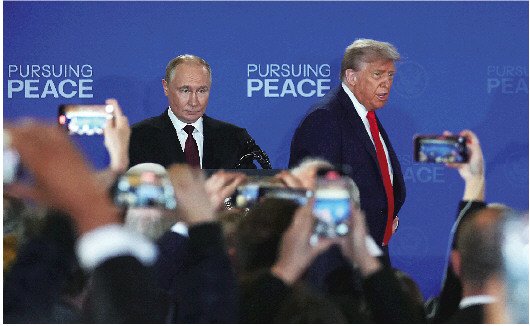
这项条约到期,这两个核大国的较量少了道“紧箍”
Xin Jing Bao· 2026-02-06 06:13
Core Points - The New START treaty, the last existing agreement limiting nuclear weapons between Russia and the U.S., is set to expire on February 5, 2026, highlighting its critical importance as other nuclear treaties have been abandoned [1][2] - The treaty, signed in 2010, limits both countries to 1,550 nuclear warheads and a maximum of 700 deployed intercontinental ballistic missiles, submarine-launched ballistic missiles, and heavy bombers [2] - The treaty was extended for five years in 2021, but recent tensions have led to Russia suspending its participation in verification mechanisms and expressing a willingness to take military countermeasures [2][4] Group 1 - The New START treaty is the only remaining agreement that includes notification, verification, and compliance mechanisms between the U.S. and Russia, who together hold 87% of the world's nuclear weapons [1] - Russia's Foreign Ministry announced a temporary withdrawal from the treaty's verification mechanisms in August 2022, citing U.S. actions that undermine mutual trust [2] - In February 2023, President Putin announced Russia's suspension of participation in the treaty, although the Kremlin stated that Russia would still adhere to the treaty's limits on nuclear weapons [2][4] Group 2 - The relationship between Trump and Putin was initially seen as potentially beneficial for treaty renewal, but Trump's later stance on nuclear testing raised concerns [3] - Analysts suggest that Russia's strong rhetoric may be a strategy to negotiate from a position of strength, as nuclear weapons serve primarily as a deterrent [5] - The U.S. is reportedly negotiating with Russia to continue adhering to the treaty, with discussions taking place in Abu Dhabi [4] Group 3 - Trump's administration aims to include China in a new nuclear arms control treaty, rather than extending the New START treaty [6] - China's stance on nuclear weapons is characterized by a commitment to a defensive strategy and a refusal to engage in an arms race, maintaining its nuclear capabilities at a minimum level [6] - The U.S. may need to revert to bilateral negotiations with Russia on nuclear arms control, given the complexities of involving China [7] Group 4 - Criticism of Trump's approach to nuclear arms control has emerged from U.S. lawmakers, who argue that his administration has neglected this critical area [8] - The UN Secretary-General has expressed concern over the lack of binding constraints on the nuclear arsenals of the two countries, warning of a potential new arms race [8] - The expiration of the New START treaty is viewed as a significant threat to global strategic stability, with fears that it could lead to a breakdown in the international nuclear arms control framework [8]
中方表示遗憾
Xin Jing Bao· 2026-02-05 08:09
Core Viewpoint - China expresses regret over the expiration of the US-Russia New Strategic Arms Reduction Treaty, emphasizing its significance for global strategic stability [1] Group 1: Treaty Importance - The treaty is deemed crucial for maintaining global strategic stability [1] - The expiration is expected to have negative implications for the international arms control system and global nuclear order [1] Group 2: International Response - There is widespread concern within the international community regarding the treaty's expiration [1] - China calls for the US to respond positively to Russia's suggestion to continue adhering to the treaty's core limitations [1] - The restoration of strategic stability dialogue between the US and Russia is seen as a common expectation of the international community [1]
中方对美俄《新削减战略武器条约》到期失效表示遗憾
Xin Lang Cai Jing· 2026-02-05 07:52
Core Viewpoint - China maintains a cautious and responsible attitude towards nuclear weapons, adhering to a self-defense nuclear strategy and a no-first-use policy [1] Group 1: China's Nuclear Policy - China commits to not using or threatening to use nuclear weapons against non-nuclear weapon states and nuclear-weapon-free zones [1] - The country keeps its nuclear capabilities at the minimum level required for national security and does not intend to engage in an arms race with any nation [1] Group 2: Nuclear Disarmament and Treaties - China emphasizes that nuclear disarmament must uphold global strategic stability and ensure that the security of all nations is not compromised [1] - The Chinese nuclear arsenal is not comparable in scale to those of the US and Russia, and China will not participate in nuclear disarmament negotiations at this stage [1] Group 3: Reaction to the New START Treaty - China expresses regret over the expiration of the US-Russia New START Treaty, highlighting its significance for global strategic stability [1] - There are widespread concerns that the treaty's expiration will negatively impact the international nuclear arms control system and global nuclear order [1] - China calls for the US to respond positively to Russia's suggestion to continue adhering to the treaty's core limitations and to responsibly address the treaty's follow-up arrangements [1]
美俄唯一军控条约今天失效
财联社· 2026-02-05 04:40
Core Viewpoint - The expiration of the New START treaty between the US and Russia signifies the potential collapse of the nuclear arms control framework established during the Cold War, leading to an escalation in the arms race and increased risks of conflict [1][2]. Group 1: Implications of Treaty Expiration - The failure to extend or replace the New START treaty means there will be no legally binding limits on the number of nuclear weapons held by the US and Russia, which could intensify the arms race [1]. - The expiration of the treaty may disrupt verification, data exchange, and notification mechanisms, leaving both parties unaware of each other's nuclear capabilities, thus increasing the risk of misinterpretation during military exercises and deployments [2]. Group 2: Impact on Global Security - The global security environment is likely to deteriorate, with the international nuclear non-proliferation regime facing significant challenges. If both the US and Russia refuse to impose limitations, other nations may feel justified in expanding their arsenals, potentially leading to nuclear proliferation [5]. - Nuclear-armed states may feel compelled to respond to the perceived threats, while non-nuclear states could question the fairness of the Non-Proliferation Treaty, prompting countries like Japan and South Korea to consider nuclear sharing or independent development of nuclear weapons, which poses systemic risks to global strategic stability [5].

维护全球战略稳定,中国发挥关键作用
Huan Qiu Wang· 2026-02-04 22:40
Group 1 - The core viewpoint of the articles emphasizes China's proactive role in international diplomacy, particularly through high-level interactions with Russia and the United States, showcasing its commitment to global strategic stability [1][2][3] - The video meeting between President Xi Jinping and President Vladimir Putin reflects the deep personal friendship and strategic cooperation between China and Russia, with both leaders planning to strengthen their partnership further in the face of a complex international landscape [1] - In the phone call with President Donald Trump, President Xi expressed a desire to navigate U.S.-China relations positively, aiming for mutual respect and cooperation, which is seen as a sign of stability in bilateral relations [2] Group 2 - The articles highlight the increasing frequency of diplomatic engagements between China and various countries, indicating a "diplomatic surge" led by China, which aims to foster positive international relations and stability [2][3] - China's approach to international relations is characterized by advocating for multilateralism and cooperation, positioning itself as a stabilizing force amid global uncertainties [3] - The current geopolitical context is marked by a shift towards a multipolar world, with China promoting the concept of a community with a shared future for mankind, emphasizing equality and inclusivity in global governance [3]
社评:维护全球战略稳定,中国发挥关键作用
Huan Qiu Wang· 2026-02-04 18:16
Group 1 - The core message of the articles highlights China's diplomatic efforts to strengthen relationships with major powers, particularly through interactions between President Xi Jinping and leaders of Russia and the United States, showcasing China's commitment to global strategic stability [1][2][3] - The video meeting between Xi and Putin emphasized the deep personal friendship and strategic cooperation between China and Russia, with both leaders planning to enhance collaboration and uphold international justice and the UN-centered international system [1][2] - Xi's phone call with Trump indicated a willingness to navigate challenges in US-China relations, focusing on dialogue, managing differences, and expanding practical cooperation, which is seen as a positive sign for stability in bilateral relations [2][3] Group 2 - The articles discuss the changing international landscape, where countries are reflecting on their positions amid rising unilateralism and the need for multilateralism, with many leaders seeking stability through engagement with China [3] - China's approach to fostering comprehensive strategic partnerships with Russia and the US, as well as improving relations with Europe and the Global South, aligns with its vision of building a community with a shared future for mankind [3] - The current period is described as crucial for China's development, with expectations that a growing China will contribute significantly to global stability and progress during the 14th Five-Year Plan [3]