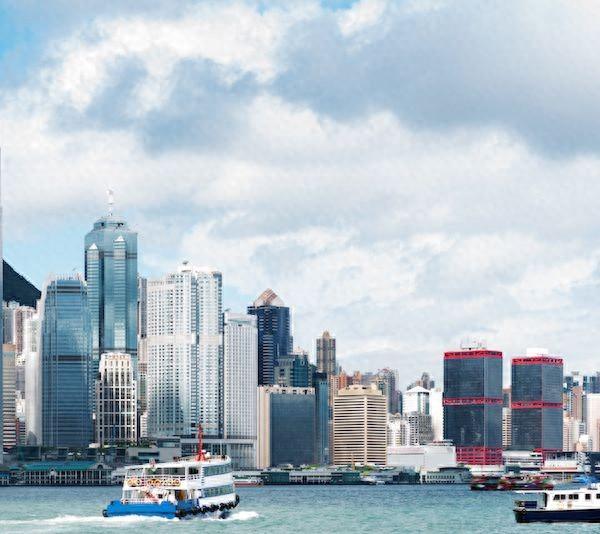
全球金融中心指数

Search documents
中国真正的国际大都市只有这8座,其他城市不要再争了,差距太大
Sou Hu Cai Jing· 2025-12-13 08:23
Core Viewpoint - The article discusses the status of Chinese cities as international metropolises, emphasizing the importance of data from authoritative sources to assess their global competitiveness and influence [1][3]. Group 1: Global City Rankings - The 2024 Kearney Global Cities Index ranks Beijing, Shanghai, and Hong Kong in the top ten globally, while Hangzhou and Chengdu are in the top fifty, indicating a strong presence of Chinese cities in international rankings [3][5]. - The GaWC classification identifies six Alpha-level cities in China, including Hong Kong, Beijing, Shanghai, Shenzhen, Guangzhou, and Taipei, but highlights that none are in the top tier (Alpha++) alongside cities like London and New York [5][8]. Group 2: Financial and Comprehensive Strength - The 2024 Global Financial Centers Index ranks Shanghai fifth globally, marking a historical high, but still trails behind London, New York, Singapore, and Dubai, indicating a gap in financial competitiveness [7][8]. - The 2025 GYBrand report lists 14 Chinese cities in the top 100 most valuable cities, with only a few like Shanghai, Beijing, and Hong Kong ranking prominently, suggesting a disparity in comprehensive strength among cities [7][8]. Group 3: Identifying International Metropolises - The article identifies eight cities as true international metropolises: Beijing, Shanghai, Hong Kong, Shenzhen, Hangzhou, Chengdu, Wuhan, and Suzhou, based on their global recognition and influence [8][10]. - The first tier includes Beijing, Shanghai, Hong Kong, and Shenzhen, which consistently rank high in various international assessments, while the second tier comprises cities like Hangzhou and Chengdu, which show significant upward momentum [8][9]. Group 4: Reasons for Disparities - Four key reasons for the disparities in international status among Chinese cities are identified: the concentration of international enterprises, the ability to attract global talent, the status as international transportation hubs, and the level of political influence [11][12]. - The article emphasizes that becoming an international metropolis requires long-term strategic development rather than short-term efforts, highlighting the need for substantial international engagement and recognition [12][13].

大连位列全球金融中心榜第70位
Sou Hu Cai Jing· 2025-09-28 03:25
Core Insights - The 38th Global Financial Centre Index (GFCI 38) report indicates that Dalian ranks 70th globally, improving by 4 positions and increasing its score by 11 points, reflecting a positive development trend [2] Group 1: Ranking and Performance - Dalian has been included in the GFCI index for 22 consecutive times since its first entry in March 2015, making it one of the 12 cities in mainland China to be listed [2] - Since the 14th Five-Year Plan, Dalian's ranking has improved from 111th to 70th, a total increase of 41 positions, showcasing the progress in financial center development [2] Group 2: Future Plans and Focus Areas - During the 15th Five-Year Plan, Dalian aims to implement central government decisions on financial work, focusing on risk prevention, strong regulation, and promoting development [2] - Key areas of focus will include the integration of futures and spot markets, shipping finance, technology finance, and pension finance, aimed at enhancing the financial support for the real economy [2]

香港全球金融中心指数排名第三 与前两名分差收窄
Xin Hua Wang· 2025-09-26 01:49
Group 1 - The core report indicates that Hong Kong's overall score increased by 4 points to 764, maintaining its position as the third global financial center and the first in the Asia-Pacific region, with the score gap to New York and London narrowing to 2 points and 1 point respectively [1] - Hong Kong's ranking in financial technology rose from fourth to first globally, while its rankings in "business environment," "infrastructure," and "reputation and comprehensive" also improved to first globally [1] - The report highlights Hong Kong's strong performance in various financial sectors, ranking in the top three globally for banking, investment management, insurance, and financing [1] Group 2 - The Chief Executive of Hong Kong, John Lee, announced a series of policy measures aimed at strengthening the financial system, promoting the development of the stock market, fixed income market, and asset and wealth management [2] - The government emphasizes the importance of national support in enhancing Hong Kong's status as a leading international financial center, with ongoing improvements in international rankings validating the government's policy direction [2] - New growth areas are being accelerated, including the establishment of an international gold trading market and the development of a commodities trading ecosystem to further solidify Hong Kong's international financial center position [2]
全球金融中心指数报告发布 香港维持全球金融中心第三位
Shang Hai Zheng Quan Bao· 2025-09-25 14:05
Core Insights - The report indicates that Hong Kong maintains its position as the third global financial center and continues to lead in the Asia-Pacific region [1] - Hong Kong ranks first globally in the fintech sector, showcasing its competitive edge in insurance, business environment, infrastructure, and reputation [1] Group 1: Financial Center Ranking - The 38th Global Financial Center Index (GFCI 38) was released by Z/Yen Group and the Comprehensive Development Research Institute [1] - Hong Kong's overall ranking remains strong, reflecting its robust financial ecosystem [1] Group 2: Regulatory and Infrastructure Development - The Hong Kong Financial Development Bureau welcomes the report, emphasizing the importance of a solid infrastructure and forward-looking regulatory framework for enhancing competitiveness [1] - The recently announced "Fixed Income and Currency Market Development Roadmap" is seen as a strategic move to solidify Hong Kong's position as a leading hub for fixed income and currency [1] Group 3: Industry Trends - There is a positive trend in recruitment across banking, insurance, and asset management sectors, indicating increased confidence in the industry [1] - Hong Kong's resilient infrastructure, vibrant talent pool, and innovative drive are highlighted as key factors in maintaining its leadership as an international financial center [1]
第38期“全球金融中心指数”:中国内地金融中心表现突出
Sou Hu Cai Jing· 2025-09-25 12:57
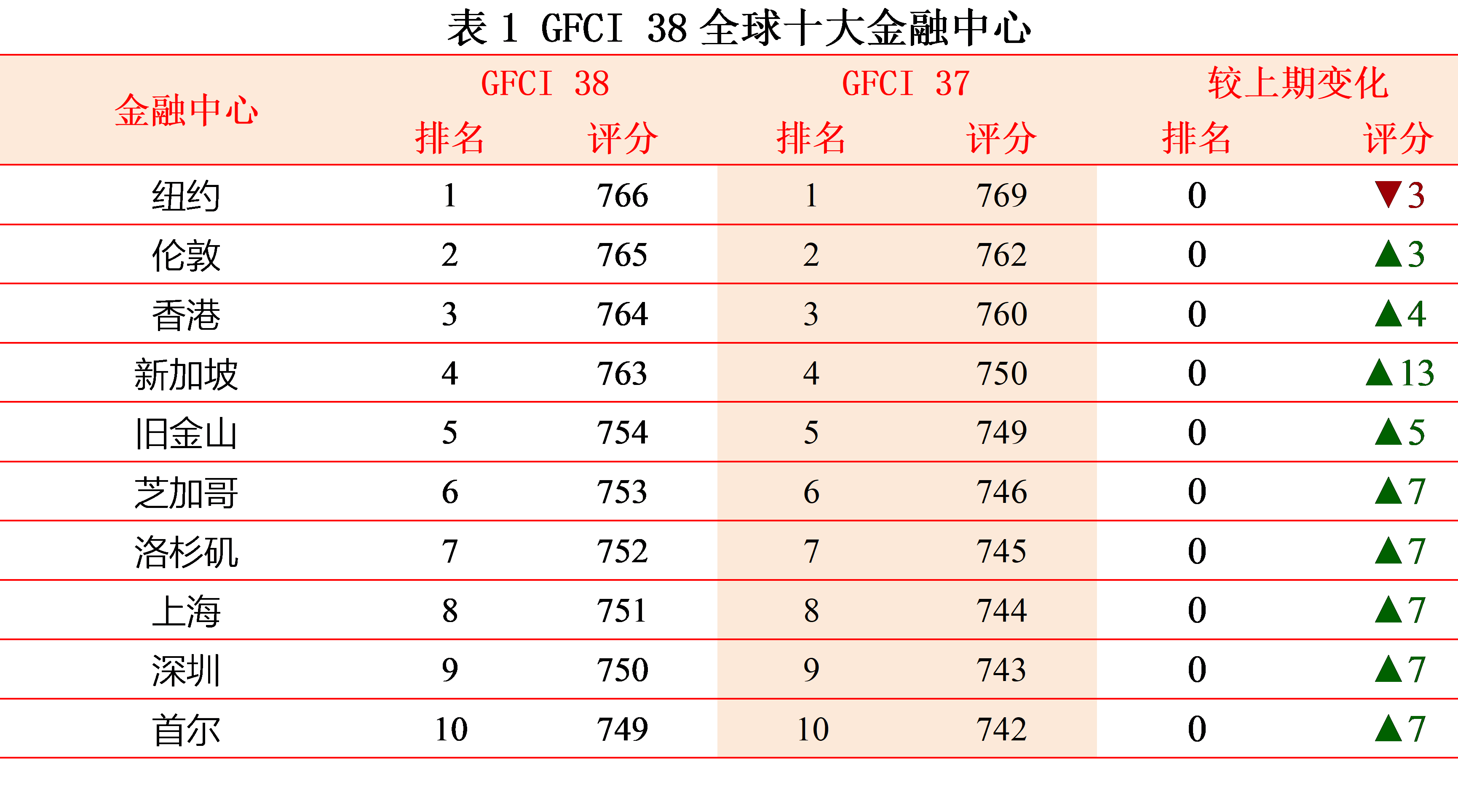
Core Insights - The 38th Global Financial Centre Index (GFCI38) report indicates that Chinese mainland financial centers are performing exceptionally well, with Xi'an rising 9 places in the rankings [1][4] - The report includes 120 financial centers, with the top ten being New York, London, Hong Kong, Singapore, San Francisco, Chicago, Los Angeles, Shanghai, Shenzhen, and Seoul [1][3] Financial Center Rankings - The overall average score of global financial centers has increased by 0.6%, with 50 centers rising in rank, 19 remaining unchanged, and 51 declining [3] - The top ten financial centers are divided into two tiers: the first tier includes New York, London, Hong Kong, and Singapore, with a score gap of only 1 point among them; Singapore's score increased by 13 points, while New York's score decreased by 2 points [3] - The second tier consists of San Francisco, Chicago, Los Angeles, Shanghai, Shenzhen, and Seoul, with a score gap of nearly 10 points from the first tier, but only 1 point difference among themselves, indicating fierce competition [3] Performance of Chinese Financial Centers - A total of 12 financial centers from mainland China made it to the index, with Shanghai (8th), Shenzhen (9th), Beijing (22nd), Guangzhou (33rd), and Qingdao (35th) leading the rankings [4] - All Chinese financial centers saw an increase in scores, with eight centers improving their rankings, including Guangzhou, Chengdu, Hangzhou, Dalian, Nanjing, Wuhan, Tianjin, and Xi'an [4] Fintech Development - In the fintech sector, Hong Kong, Shenzhen, and New York are the top three financial centers, with Hong Kong achieving the highest ranking for the first time [5] - Shanghai's fintech ranking improved by 9 places, placing it in the global top ten, while Guangzhou, Beijing, and Chengdu also saw slight increases [5] - The report highlights the dominance of the US and China in the fintech space, despite the rising positions of other global financial centers [5]
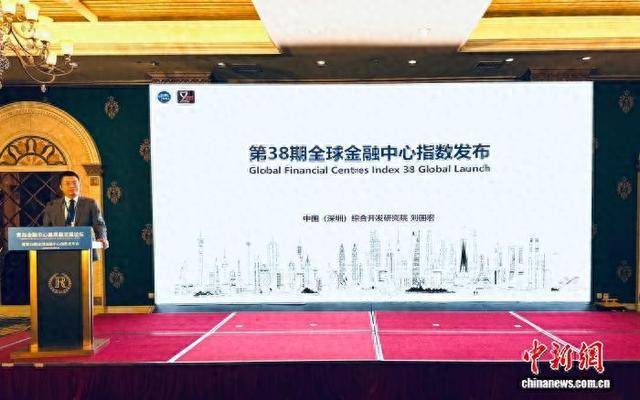
全球金融中心最新排名出炉,新加坡再次逼近第三名香港
Di Yi Cai Jing· 2025-09-25 08:48
Core Insights - Chinese cities continue to perform robustly in the global financial center competition, with three cities entering the top ten, while Hong Kong faces strong challenges from Singapore [1][4]. Summary by Categories Global Financial Center Rankings - The latest GFCI report ranks the top ten financial centers as follows: New York, London, Hong Kong, Singapore, San Francisco, Chicago, Los Angeles, Shanghai, Shenzhen, and Seoul [1][4]. - The overall average score of global financial centers increased by 0.6%, indicating stable optimism among financial professionals regarding the industry's development [4]. Performance of Asian Financial Centers - The Asia-Pacific region has six financial centers in the global top 15, with an average score increase of 1.27%, while only one center saw a decline [5]. - Hong Kong has maintained its position as the third global financial center for three consecutive periods, with plans to strengthen its international financial center status [5]. Chinese Financial Centers - Twelve financial centers from mainland China are included in the GFCI rankings, with Shanghai (8th), Shenzhen (9th), Beijing (22nd), Guangzhou (33rd), and Qingdao (35th) leading the list [5]. - All Chinese financial centers saw score increases, with seven centers improving their rankings, including Guangzhou and Chengdu [8]. Financial Technology Rankings - Hong Kong ranks first globally in financial technology, with Shenzhen achieving its best performance, followed closely by New York and Singapore [12]. - Shanghai's financial technology ranking rose by nine places, placing it in the global top ten, while Guangzhou, Beijing, and Chengdu also saw improvements [12].
第38期“全球金融中心指数”:粤港澳大湾区有三座城市进入金融科技前十名
Zheng Quan Shi Bao Wang· 2025-09-25 08:24
Core Insights - The GFCI 38 report indicates a positive outlook for global financial centers, with an overall average score increasing by 0.6% compared to the previous report [1] - Hong Kong ranks first in fintech development for the first time, while Shenzhen achieves its best performance historically [1][3] Group 1: Global Financial Center Rankings - The top ten global financial centers are New York, London, Hong Kong, Singapore, San Francisco, Chicago, Los Angeles, Shanghai, Shenzhen, and Seoul [1] - The first tier of financial centers (New York, London, Hong Kong, Singapore) has a score gap reduced to just 1 point, with Singapore's score increasing by 13 points [2] - The second tier includes San Francisco, Chicago, Los Angeles, Shanghai, Shenzhen, and Seoul, with an overall score gap of nearly 10 points from the first tier [2] Group 2: Chinese Financial Centers - Twelve financial centers from mainland China are included in the index, with Shanghai, Shenzhen, Beijing, Guangzhou, and Qingdao being the top five [2] - Shanghai and Shenzhen rank in the top 15 globally across five categories: business environment, human capital, infrastructure, financial industry development level, and reputation [2] Group 3: Fintech Development - The fintech development level is assessed for 116 financial centers, with Hong Kong ranking first and Shenzhen achieving its best performance [3] - The Greater Bay Area has three financial centers in the top ten for fintech, highlighting regional strengths [3] - The rankings show a growing diversity in fintech, with significant representation from both the US and China [3]
港交所IPO热潮折射香港金融活力与经济韧性
Zhong Guo Xin Wen Wang· 2025-08-08 08:00
Group 1 - Over 160 companies are waiting to conduct Initial Public Offerings (IPOs) in Hong Kong, with the IPO fundraising amount in the first half of 2025 surpassing the total for the entire year of 2024 [1] - The active IPO market reflects the vitality and economic resilience of Hong Kong's financial market, supporting high-quality development [1][4] - Hong Kong's unique international positioning and institutional advantages under the "One Country, Two Systems" framework contribute to its attractiveness as a financial hub [1][3] Group 2 - Hong Kong serves as a "super connector" between mainland China and international markets, facilitating the outbound expansion of domestic enterprises and the inflow of international capital [3] - The city boasts a mature and diversified capital market, including stocks, bonds, and derivatives, supported by an efficient trading system and professional financial services [3][4] - Continuous optimization of the listing system by the Hong Kong government aims to attract more high-tech companies, enhancing market competitiveness [3][4] Group 3 - The vibrant IPO market positively impacts Hong Kong's economy by driving the development of related professional services [4] - The listing of more companies from emerging sectors like technology and biomedicine will promote economic diversification and inject new growth momentum into Hong Kong's economy [4][5] - The wealth effect generated by an active stock market is expected to stimulate the consumption market, accelerating economic recovery and transformation in Hong Kong [4][5]

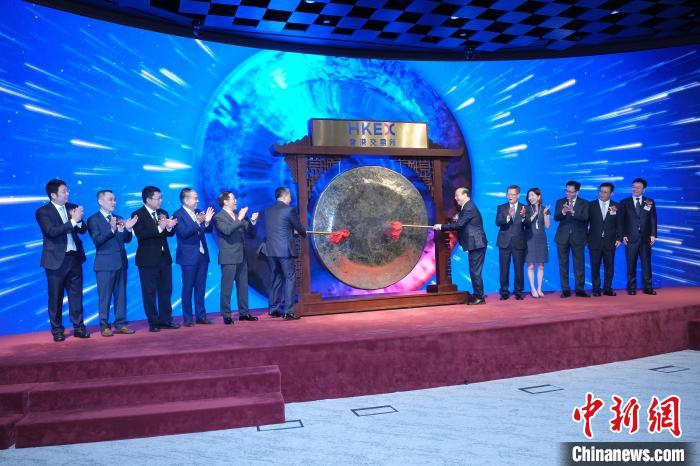
香港VS新加坡:港股上半年IPO全球第一,亚洲金融中心之争悬念再起
Hua Xia Shi Bao· 2025-07-12 07:30
Group 1 - The core viewpoint of the articles highlights that Hong Kong has regained its status as a leading financial center in Asia, with significant growth in IPO activities and overall market confidence [2][4][5] - In the first half of 2025, Hong Kong's stock market welcomed 43 new IPOs, a 43.3% increase compared to the same period in 2024, with total financing amounting to 1,067 million HKD, surpassing both its 2024 annual total and the Nasdaq [2][4] - The Global Financial Centers Index (GFCI) report indicates that Hong Kong's score increased by 11 points, maintaining its position as the third globally and first in the Asia-Pacific region, widening its lead over Singapore [2][4] Group 2 - The competition between Hong Kong and Singapore is characterized by their respective strengths, with Hong Kong focusing on technology innovation and serving as a financial hub for mainland enterprises, while Singapore has a more diversified economic structure [6][8] - Recent measures by the China Securities Regulatory Commission and the Hong Kong Stock Exchange have led to a surge in mainland companies seeking to list in Hong Kong, with a record number of applications in June 2025 [5][6] - The confidence in Hong Kong's market is reflected in the positive sentiment from American businesses, with 70% expressing trust in Hong Kong's future development [7][8]