
全球金融格局重构

Search documents
你抛美债我抛中债,外资减持中国债,大量资金涌向美国?
Sou Hu Cai Jing· 2026-01-15 13:47
Core Viewpoint - China is no longer the second-largest holder of U.S. Treasury bonds, reflecting a significant shift in the global financial landscape and investment strategies [2][12]. Group 1: U.S. Treasury Bonds and China's Position - The U.S. national debt has surpassed $38 trillion, with $9.2 trillion maturing by 2025, raising concerns about the long-term safety of U.S. debt among global investors [4][6]. - The high level of short-term bonds and the Federal Reserve's maintained high interest rates have resulted in annual interest payments exceeding $1 trillion, which is 1.3 times the military budget [6]. - The politicization of financial tools by the U.S., such as using the SWIFT system for pressure, has destabilized international financial markets and prompted countries to diversify their foreign exchange reserves away from U.S. dollar assets [8][10]. Group 2: China's Bond Market and Foreign Investment - China's financial market has become more accessible to foreign investors through mechanisms like "Bond Connect" and "Swap Connect," making Chinese bonds an attractive option for global asset diversification due to their relatively stable yields and manageable currency risks [10][24]. - Despite the appeal of Chinese bonds, geopolitical risks and changes in U.S.-China interest rate differentials have led some foreign investors to temporarily reduce their holdings for risk aversion and profit-taking [10][20]. - The reduction of U.S. Treasury holdings by China during the Trump administration was a strategic decision influenced by the political environment and trade tensions, with a gradual decrease from over $1.3 trillion to below $700 billion by 2025 [15][17]. Group 3: Global Financial Dynamics - The changes in U.S. and Chinese bond holdings reflect a broader adjustment in the global economic landscape and strategic rebalancing among nations [26]. - The increase in the renminbi's share in global foreign exchange reserves and the IMF's adjustment of its weight in the SDR basket indicate a solid strategic position for Chinese bonds in global diversification [24][26]. - The fluctuations in foreign investment in Chinese bonds are tactical responses to short-term factors rather than a long-term rejection of the value of Chinese debt [10][20].


中俄黄金贸易大爆单,这可不是简单的贵金属买卖!
Sou Hu Cai Jing· 2025-12-22 19:32
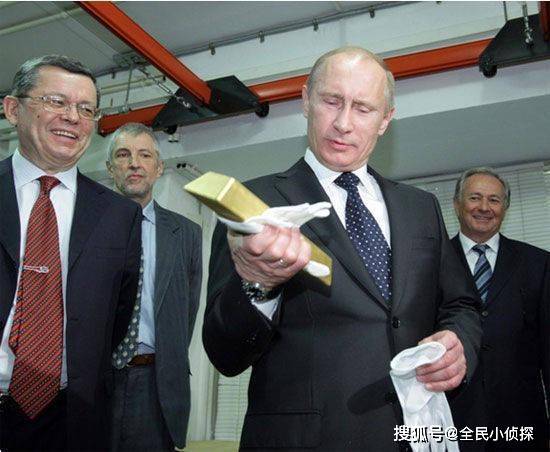
Group 1 - The core viewpoint is that the significant increase in China's purchase of Russian gold reflects a strategic move towards de-dollarization between the two countries [1][5]. - China has purchased a record amount of Russian gold, spending $961 million in November alone, with total purchases reaching $1.9 billion in the first eleven months of the year, which is over nine times last year's total [1][3]. - The rapid growth in gold purchases from almost negligible levels to a ninefold increase indicates a strong and consistent trend rather than a one-time spike [3]. Group 2 - Western sanctions have led to a situation where Russian gold is banned from being purchased by Western countries, allowing China to acquire it at a discount while mitigating risks associated with dollar assets [5]. - This gold trade exemplifies a restructuring of the global financial landscape, highlighting the increasing steps towards de-dollarization [5].
很好!俄罗斯发行“人民币主权债”,激活沉睡资金,全球第一次
Sou Hu Cai Jing· 2025-11-07 10:58
Core Insights - Russia plans to issue RMB bonds domestically for the first time to activate dormant RMB reserves and supplement government finances [1][5] - This move is significant as it marks a shift from traditional offshore RMB bond issuance to onshore issuance, reflecting Russia's pivot away from Western currencies [5][8] Group 1: RMB Bond Issuance - Other countries issue RMB bonds as "Panda bonds" in mainland China or "Dim Sum bonds" in offshore markets, primarily in Hong Kong [3][5] - Indonesia's recent issuance of RMB Dim Sum bonds indicates a growing acceptance of RMB assets in international markets [5][6] Group 2: Strategic Implications for Russia - Russia's decision to issue RMB bonds domestically is a strategic response to its economic isolation from Western nations post-Ukraine conflict, aiming to utilize the substantial RMB reserves accumulated through trade with China [5][8] - The planned issuance includes up to four bonds totaling 400 billion rubles (approximately 35 billion RMB), with maturities ranging from 3 to 10 years, addressing both short-term liquidity and long-term development needs [6][9] Group 3: Impact on RMB Internationalization - The issuance of RMB bonds in Russia signifies a qualitative leap in the international status of the RMB, transitioning from a trade settlement currency to an investment and reserve currency [8][9] - This initiative may encourage other countries with close trade ties to China to adopt similar practices, contributing to a more diversified and resilient international financial ecosystem [9][11] Group 4: Broader Financial Trends - The diversification of RMB bond issuance models, including Panda bonds, Dim Sum bonds, and now domestic RMB sovereign bonds, reflects a trend towards a more flexible and multi-faceted integration of the RMB into global finance [9][11] - Russia's pioneering move not only provides an outlet for dormant funds but also offers a new strategy for other nations to mitigate single currency risks in a multipolar economic landscape [11]

格局重构金价升沪金内强外稳
Jin Tou Wang· 2025-10-20 06:08
Core Insights - The gold market has seen a remarkable increase this year, with prices rising over 60% and spot gold recently surpassing $4,380 per ounce, reflecting significant changes in the global financial landscape [3] - The proportion of gold in global foreign exchange and gold reserves has risen from 24% to 30% since late June, while the dollar's share has decreased from 43% to 40%, indicating a shift in reserve preferences [3] - A potential new world order is emerging, with countries increasingly distrusting fiat currencies and turning to gold as a stable asset, leading to heightened interest from investors [3][4] Market Dynamics - Central banks worldwide expect the proportion of gold in their reserves to continue increasing over the next five years, while the dollar's reserve proportion is anticipated to decline [4] - Current uncertainties in policies, trade issues, and inflation concerns are driving individual investors towards the gold market [4] - Despite the bullish outlook for gold, factors such as the absence of a predicted economic recession and a fragile ceasefire between Israel and Palestine may limit further price increases [4] Technical Analysis - Key resistance levels for gold futures are identified between 1,000 to 1,020 yuan per gram, while significant support levels are noted between 874 to 900 yuan per gram [5]