
公关策略

Search documents
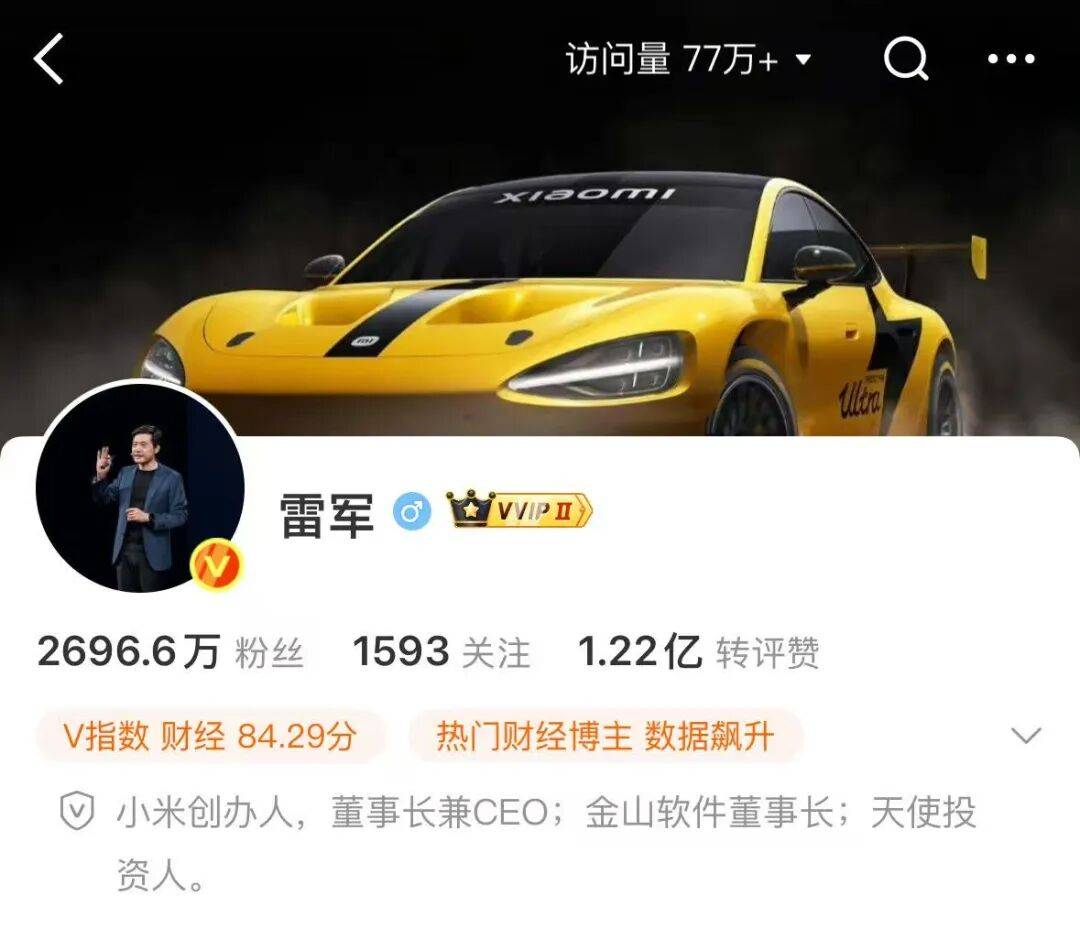
雷军不再“沉默”
Sou Hu Cai Jing· 2025-11-19 11:41
Core Viewpoint - Xiaomi's CEO Lei Jun has recently made strong statements regarding the safety of Xiaomi cars, responding to previous criticisms and controversies surrounding the brand's safety standards and public relations approach [2][5][15]. Group 1: Safety Concerns and Public Response - Lei Jun emphasized the importance of safety in his recent social media posts, stating that "safety is the foundation" and "safety is paramount," while addressing previous comments that were perceived as prioritizing aesthetics over safety [7][8][10]. - The company faced significant backlash following two serious accidents involving Xiaomi vehicles, which resulted in fatalities and raised concerns about the cars' safety features, such as the inability of doors to open after collisions [10][11][31]. - Despite a recent quarterly report showing profitability in Xiaomi's automotive and AI sectors, the stock price fell over 4%, indicating that public sentiment remains affected by safety concerns [5][6]. Group 2: Changes in Public Relations Strategy - Reports suggest that Xiaomi's public relations head, Wang Hua, may be reassigned, indicating a potential shift in the company's communication strategy in response to recent controversies [16][20]. - Wang Hua has been a key figure in managing Xiaomi's public image, often countering negative rumors and defending the brand's reputation [21][22][25]. - The anticipated change in leadership within the public relations department may lead to a new approach in how Xiaomi engages with consumers and addresses public concerns [26]. Group 3: Consumer Sentiment and Brand Loyalty - Xiaomi has historically built a loyal customer base, known as "Mi Fans," who have supported the brand due to its reputation for high-quality, cost-effective products [27][28]. - However, recent issues, including poor customer service and product quality complaints, have led some former supporters to become critical of the brand, expressing their dissatisfaction on social media [30][31]. - The company's handling of safety issues and customer grievances will be crucial in regaining the trust of its consumer base, as many former fans have voiced their disappointment over the lack of adequate responses to safety concerns [31][33].


雷军周日亲自下场回应,能改变小米的风评么?
Sou Hu Cai Jing· 2025-11-16 15:00
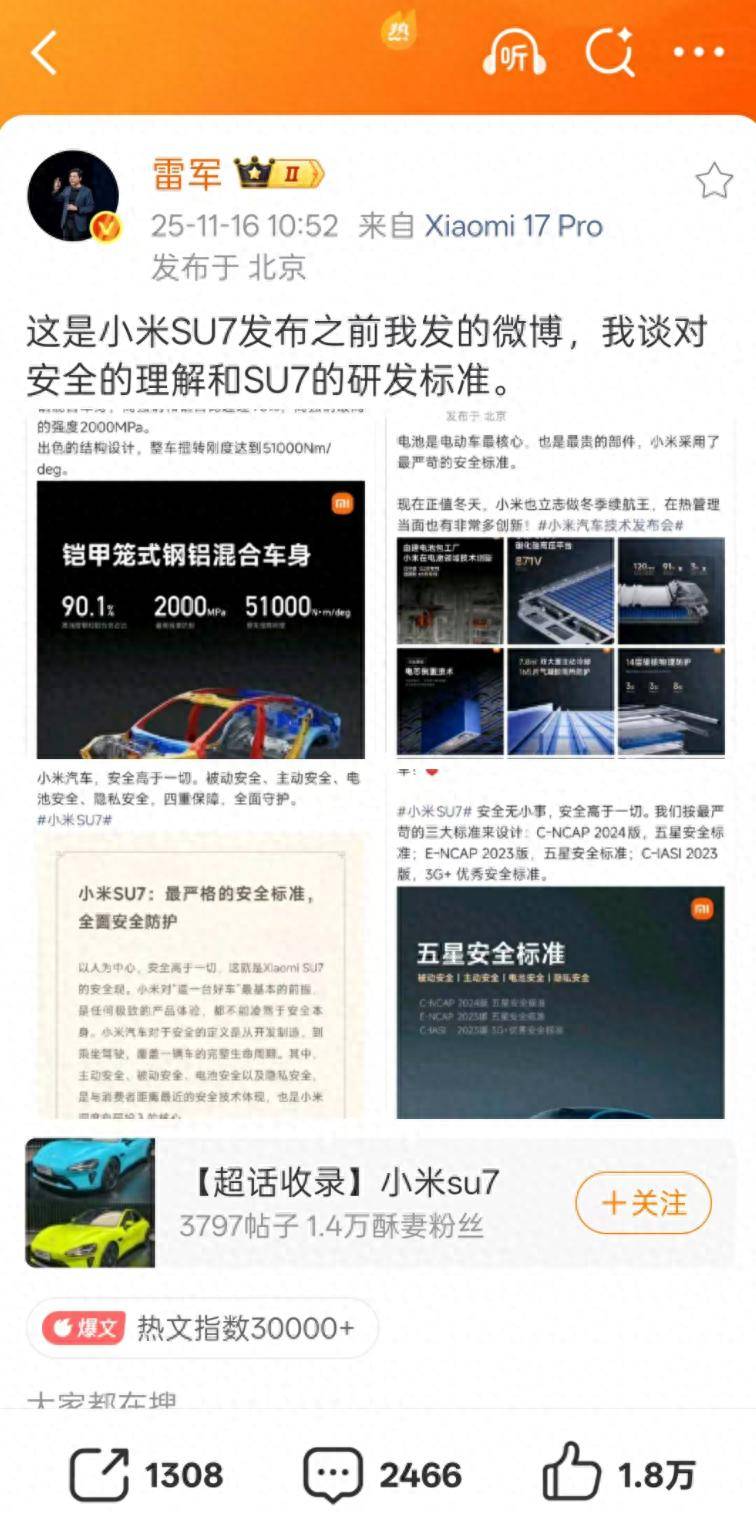
Core Viewpoint - Lei Jun emphasizes the importance of safety in the design and development of the Xiaomi SU7, asserting that safety standards are paramount in the automotive industry [1][2]. Group 1: Safety Standards and Design - The Xiaomi SU7 is designed with a focus on safety, featuring a structural strength of 2000MPa and a torsional rigidity of 51,000Nm, highlighting the company's commitment to rigorous safety standards [1]. - The vehicle aims to be a leader in winter range performance, showcasing innovative thermal management solutions [1]. Group 2: Public Relations and Response - Lei Jun's recent social media activity appears to be a response to public criticism, indicating a serious tone and a desire to address safety concerns directly [2][5]. - Despite his efforts, the public relations strategy may not be effective, as ongoing skepticism and criticism persist in the comments [5][8]. - The response strategy has been criticized for lacking logical coherence, with some statements potentially exacerbating the situation rather than alleviating it [8][12]. Group 3: Implications for Brand Management - The incident illustrates the dual-edged nature of a CEO as a brand spokesperson, where both positive and negative perceptions can significantly impact the brand [14]. - The automotive industry must prioritize safety in both marketing and product development to withstand consumer scrutiny [14]. - The rapid dissemination of information in the digital age can amplify both praise and criticism, suggesting that companies must navigate public perception carefully [14].
都在特朗普的算计之中?一场“神级”公关轰然上演
Jin Shi Shu Ju· 2025-04-22 03:09
Core Viewpoint - The article argues that President Trump is adept at public relations and manipulating public opinion, particularly in his recent attacks on Federal Reserve Chairman Jerome Powell, which serve to deflect blame for economic turmoil away from himself [1][3]. Group 1: Economic Impact - Trump's actions have led to a depreciation of the dollar, which has fallen approximately 6% since "Liberation Day," with specific declines against the euro (4%), Swiss franc (7%), gold (10%), and Mexican peso (3%) [2]. - The depreciation of the dollar makes imports more expensive and exports cheaper for foreign consumers, potentially benefiting certain non-dollar assets like cryptocurrencies [2]. - Long-term interest rates have risen, with the 10-year U.S. Treasury yield increasing by 20 basis points to 4.4% since "Liberation Day," and 30-year fixed mortgage rates rising from 6.7% to 6.9% [7]. Group 2: Political Strategy - Trump has successfully shifted blame for economic issues onto Powell and the Federal Reserve, despite being the one who appointed Powell, creating a narrative that absolves himself of responsibility [3][4]. - The article highlights that having a clear enemy, such as Powell, fuels tribalism and helps maintain Trump's support among his base, with 35% of the public strongly approving of his performance [3][4]. - The potential for Trump to dismiss Powell is seen as a strategy to maintain a scapegoat for future economic turmoil, as it would be difficult for him to blame anyone else if he were to install a puppet successor [6].