
具身学习

Search documents
幼儿中华民族共同体意识培育新路径探索
Xin Lang Cai Jing· 2026-02-02 18:02
Core Viewpoint - The integration of national identity education into preschool education in Qinghai Province is essential for fostering children's recognition of the country, culture, and community, addressing challenges such as uneven educational resource distribution [1][8] Group 1: Theoretical Logic of Provincial Education - The educational practice at Qinghai Provincial Party Committee Kindergarten utilizes a large painted map of Qinghai as a tool to cultivate a sense of national identity among preschoolers, reflecting a clear educational logic [2] - The core of preschool education is to instill the concept of "one family" in children through tangible and engaging experiences, transforming abstract national narratives into relatable content [2][3] - The unique geography and cultural diversity of Qinghai provide a rich foundation for this educational approach, allowing children to connect their local environment with broader national concepts [2][3] Group 2: Practical Pathways of Education - The kindergarten has developed a collaborative practice model that integrates environmental immersion, curriculum deepening, and home-community linkage to enhance children's understanding of provincial identity and national community awareness [5][7] - An interactive educational environment has been created, turning the outdoor space into a giant, engaging educational area that promotes regional identity and community values [5] - The curriculum includes themes that merge local culture and historical resources, elevating geographical knowledge to deeper emotional recognition and value guidance [6] Group 3: Community and Family Engagement - The kindergarten has established a collaborative mechanism involving families, the kindergarten, and the community to enhance participation in early childhood education [7] - Regular events such as "Map Exploration" open days encourage family involvement and intergenerational sharing of local history, fostering cultural memory and emotional resonance [7] - This collaborative approach extends educational experiences beyond the kindergarten, promoting natural interactions among families of different ethnic backgrounds [7] Group 4: Exemplary Practices for Regional Education - The practices at Qinghai Provincial Party Committee Kindergarten serve as a reference for enhancing national identity education in underdeveloped areas, demonstrating the feasibility of low-cost, high-content educational development [8][9] - Successful strategies for transforming grand narratives into relatable activities for children can be disseminated through teacher training and research communities [8] - The established family-kindergarten-community model showcases the potential of multi-stakeholder collaboration in extending educational impact and promoting ethnic interactions [8]
通往AGI的快车道?大模型驱动的具身智能革命 | Jinqiu Select
锦秋集· 2025-09-01 15:29
Core Insights - Embodied intelligence is seen as a key pathway to achieving Artificial General Intelligence (AGI), enabling agents to develop a closed-loop system of "perception-decision-action" in real-world scenarios [1][2] - The article provides a comprehensive overview of the latest advancements in embodied intelligence powered by large models, focusing on how these models enhance autonomous decision-making and embodied learning [1][2] Group 1: Components and Operation of Embodied AI Systems - An Embodied AI system consists of two main parts: physical entities (like humanoid robots and smart vehicles) and agents that perform cognitive functions [4] - These systems interpret human intentions from language instructions, explore environments, perceive multimodal elements, and execute actions, mimicking human learning and problem-solving paradigms [4] - Agents utilize imitation learning from human demonstrations and reinforcement learning to optimize strategies based on feedback from their actions [4][6] Group 2: Decision-Making and Learning in Embodied Intelligence - The core of embodied intelligence is enabling agents to make autonomous decisions and learn new knowledge in dynamic environments [6] - Autonomous decision-making can be achieved through hierarchical paradigms that separate perception, planning, and execution, or through end-to-end paradigms that integrate these functions [6] - World models play a crucial role by simulating real-world reasoning spaces, allowing agents to experiment and accumulate experience [6] Group 3: Overview of Large Models - Large models, including large language models (LLMs), large vision models (LVMs), and vision-language-action (VLA) models, have made significant breakthroughs in architecture, data scale, and task complexity [7] - These models exhibit strong capabilities in perception, reasoning, and interaction, enhancing the overall performance of embodied intelligence systems [7] Group 4: Hierarchical Autonomous Decision-Making - Hierarchical decision-making structures involve perception, high-level planning, low-level execution, and feedback mechanisms [30] - Traditional methods face challenges in dynamic environments, but large models provide new paradigms for handling complex tasks by combining reasoning capabilities with physical execution [30] Group 5: End-to-End Autonomous Decision-Making - End-to-end decision-making has gained attention for directly mapping multimodal inputs to actions, often implemented through VLA models [55][56] - VLA models integrate perception, language understanding, planning, action execution, and feedback optimization into a unified framework, representing a breakthrough in embodied AI [58] Group 6: Enhancements and Challenges of VLA Models - VLA models face limitations such as sensitivity to visual and language input disturbances, reliance on 2D perception, and high computational costs [64] - Researchers propose enhancements in perception capabilities, trajectory action optimization, and training cost reduction to improve VLA performance in complex tasks [69][70][71]


具身学习专属!硬件结构迭代12版,这款双足机器人平台稳定性提升了300%......
具身智能之心· 2025-07-21 08:24
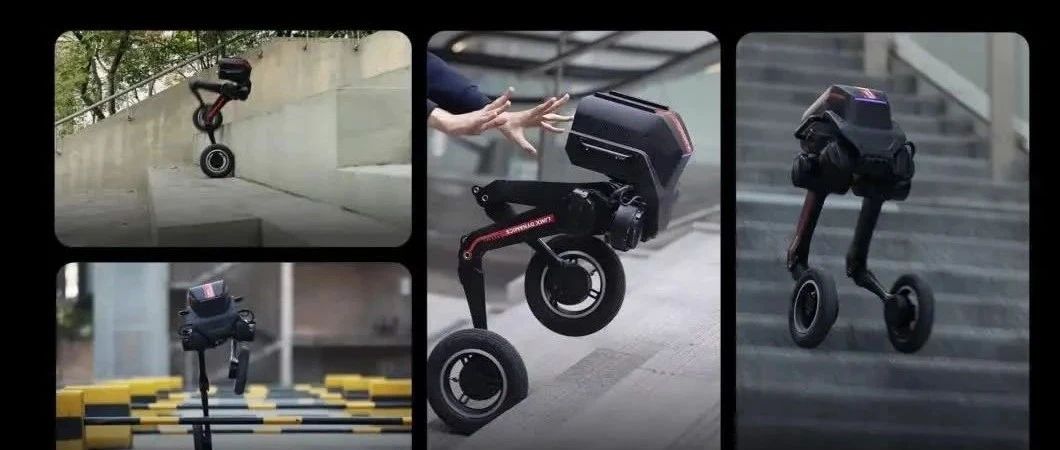
Core Viewpoint - TRON1 is a cutting-edge research platform designed for educational and scientific purposes, featuring a modular design that supports multiple locomotion forms and algorithms, maximizing research flexibility [1]. Function Overview - TRON1 serves as a humanoid gait development platform, ideal for reinforcement learning research, and supports external devices for navigation and perception [6][4]. - The platform supports C++ and Python for development, making it accessible for users without C++ knowledge [6]. Features and Specifications - The platform includes a comprehensive perception expansion kit with specifications such as: - GPU: NVIDIA Ampere architecture with 1024 CUDA Cores and 32 Tensor Cores - AI computing power: 157 TOPS (sparse) and 78 TOPS (dense) - Memory: 16GB LPDDR5 with a bandwidth of 102.4 GB/s [16]. - TRON1 can integrate various sensors, including LiDAR and depth cameras, to facilitate 3D mapping, localization, navigation, and dynamic obstacle avoidance [13]. Development and Customization - The SDK and development documentation are well-structured, allowing for easy secondary development, even for beginners [34]. - Users can access online updates for software and model structures, enhancing convenience [36]. Additional Capabilities - TRON1 supports voice interaction features, enabling voice wake-up and control, suitable for educational and interactive applications [18]. - The platform can be equipped with robotic arms for various mobile operation tasks, supporting both single-arm and dual-leg configurations [11]. Product Variants - TRON1 is available in standard and EDU versions, both featuring a modular design and similar mechanical parameters, including a maximum load capacity of approximately 10kg [26].
感觉捕手
3 6 Ke· 2025-07-08 09:04
Group 1 - The article discusses the importance of intuitive and embodied intelligence, emphasizing that true understanding comes from experience rather than abstract reasoning [1][39][84] - It highlights the concept of "world models" in AI, which aim to enable machines to understand and interact with the physical world in a more human-like manner [23][76][84] - The text draws parallels between human cognitive processes and AI development, suggesting that both rely on a form of non-verbal, intuitive understanding [17][29][72] Group 2 - The article references the limitations of current AI systems in understanding the physical world compared to human capabilities, particularly in spatial reasoning and perception [18][22][25] - It discusses the evolution of intelligence, noting that human cognitive abilities have been shaped by millions of years of evolution, which AI is still trying to replicate [21][75] - The piece concludes with the notion that as AI develops its own "taste" through embodied experiences, it may reach a level of understanding that parallels human intuition [72][84][85]