
养老金金融

Search documents
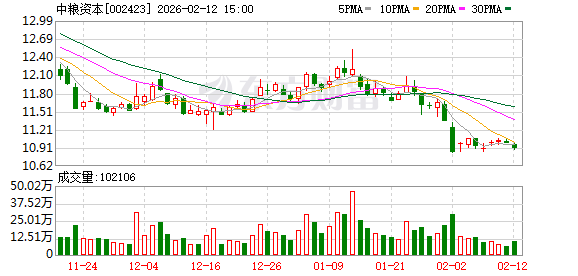
中粮资本:公司是央企控股上市公司,并非地方国资委上市公司
Zheng Quan Ri Bao· 2026-02-12 13:41
Core Viewpoint - The company emphasizes its role as a central enterprise-controlled listed company, focusing on financial empowerment of its main business and serving national strategies while exploring new fields like pension finance [2] Group 1: Company Overview - The company is a central enterprise-controlled listed company, not a local state-owned enterprise [2] - The company aims to solidify and enhance its intrinsic value through strategic initiatives [2] Group 2: Market Dynamics - The company's stock price fluctuations are influenced by various complex factors, including macroeconomic conditions, industry policies, market sentiment, and the company's fundamentals [2] - There is significant uncertainty regarding the secondary market trading risks, prompting the company to advise investors to make rational decisions and invest cautiously [2]


发展养老金融赋能银发经济
Xin Lang Cai Jing· 2026-01-31 22:37
Core Viewpoint - China is facing a significant aging population challenge, necessitating the development of a comprehensive pension finance system to support the elderly economy and enhance the quality of life for senior citizens [1][2]. Group 1: Overview of Pension Finance - Pension finance encompasses a range of financial activities using credit, insurance, bonds, equity, and wealth management tools to meet diverse retirement needs and support the elderly economy [2]. - The pension finance system is structured around two main components: pension financial activities for economic security and pension industry finance for service security [3]. Group 2: Pension Financial System - The pension financial system consists of a three-pillar structure: - The first pillar includes basic pension insurance with 54.35 million urban employees and 53.02 million rural residents participating, with a fund investment scale exceeding 27.2 trillion yuan [4]. - The second pillar comprises supplementary pension insurance, with 175,000 employers and 33.32 million participants, and an investment scale over 7.7 trillion yuan [4]. - The third pillar includes personal pensions, with over 150 million accounts opened, alongside various commercial pension financial products [4]. Group 3: Pension Industry Finance - Pension industry finance provides financing support for the elderly economy through indirect and direct financing methods, with a focus on long-term loans and innovative financial service models [5]. - Financial institutions are encouraged to invest in elderly care facilities and develop smart elderly care technologies, enhancing the overall financing landscape for the pension industry [5]. Group 4: Policy Recommendations for Pension Finance Development - To enhance economic security, it is essential to solidify the three-pillar pension insurance system and innovate financial products and services [7]. - Improving service security involves establishing specialized pension financial institutions and increasing financial support for the elderly economy, including credit schemes and financing for elderly care enterprises [7]. Group 5: Trends in Elderly Wealth Management - There is a growing awareness among residents regarding the importance of retirement planning, with a notable shift towards younger individuals initiating their pension planning earlier [9][10]. - The average age for starting pension planning has decreased to 37 years, indicating a trend towards proactive wealth management for retirement [9]. Group 6: Challenges in Pension Wealth Accumulation - Current pension wealth accumulation faces several challenges, including a significant gap in savings, uneven development across the three pillars, and a mismatch between pension financial products and consumer needs [10]. - The third pillar, while having over 1,200 personal pension products, suffers from high homogeneity and inflexibility in fund withdrawal, leading to a disparity between account openings and actual contributions [10]. Group 7: Innovations in Pension Financial Services - Various regions are exploring innovative financial products tailored to the elderly economy, such as specialized credit products and financing models that utilize non-physical collateral [15][16]. - Financial institutions are also enhancing their services to better cater to the elderly population, including mobile banking initiatives and tailored financial products for seniors [17]. Group 8: Future Directions for Pension Finance - The future of pension finance requires a focus on market-oriented, sustainable practices that meet the diverse needs of different age groups and ensure long-term stability [18]. - A multi-layered and diversified pension financial system is essential for promoting high-quality development in both finance and elderly care sectors [18].
情系林海桑榆 诺安基金启动大爱老区(鄂伦春)公益计划
Jin Rong Jie· 2025-12-31 10:00
Core Viewpoint - The article highlights the commitment of Nuon Fund to support rural elderly care in China, particularly in the Ewenki Autonomous Banner, through the "Great Love Old District (Ewenki) Public Welfare Program," which involves a donation of 1.2 million yuan to enhance local elderly care services [1][2]. Group 1: Program Overview - The "Great Love Old District (Ewenki) Public Welfare Program" is the third initiative in a series aimed at improving elderly care in rural areas, following similar programs in Anhui and Yunnan [1][3]. - The program focuses on addressing the significant gaps in rural elderly care services, including facilities, support for vulnerable elderly individuals, and cultural needs [1][2]. Group 2: Demographics and Needs - As of the end of 2024, there are approximately 62,942 individuals aged 60 and above in the Ewenki Autonomous Banner, representing 28.1% of the total registered population, with 10,178 individuals aged 80 and above [1]. - The region faces challenges due to its geographical conditions, including rugged roads and harsh winters, which complicate the provision of centralized elderly care [1]. Group 3: Social Responsibility and Cultural Values - Nuon Fund emphasizes its commitment to social responsibility by aligning its public welfare initiatives with national strategies, focusing on the well-being of the elderly [2]. - The program aims to enhance not only the material needs of the elderly but also their spiritual and cultural well-being through various activities and services [2]. Group 4: Historical Commitment - Since 2017, Nuon Fund has invested over 8 million yuan in various public welfare areas, including disaster relief, education, and elderly care, demonstrating a long-term commitment to addressing the needs of underprivileged communities [3].
工商银行(01398) - 2025 Q2 - 业绩电话会
2025-08-29 10:00
Financial Data and Key Indicator Changes - Total assets reached TWD 52 trillion, with loans exceeding TWD 30 trillion, an increase of TWD 1.8 trillion, and customer deposits nearly TWD 37 trillion, up by TWD 2.1 trillion [4] - Operating income was TWD 409.1 billion, up by 1.8% [4] - Net profit reached TWD 168.8 billion, maintaining a leading position [5] - Return on Assets (ROA) and Return on Equity (ROE) were 0.67% and 8.82% respectively, with a cost-to-income ratio of 25.27% [5] - Non-Performing Loan (NPL) ratio was 1.33%, with a provision coverage ratio of 217.71%, indicating stable asset quality [6][30] Business Line Data and Key Indicator Changes - Corporate loans increased by TWD 1.35 trillion, with personal loans maintaining rapid growth [8] - SciTech loans totaled TWD 6 trillion, up by 20%, while green loans exceeded TWD 6 trillion, up by 16.4% [8] - Pension finance loans increased by 17.3%, with over 2 million customers [9] - Loans in the digital economy sector surpassed TWD 1 trillion, up by 19.3% [10] Market Data and Key Indicator Changes - The number of personal customers in mobile banking and users in e-commerce continued to lead the market [10] - The bank's international network reached 69 countries and regions, with over 400 overseas institutions [14] Company Strategy and Development Direction - The company focuses on five transformations: intelligent risk control, modern layout, digital driver, diversified structure, and ecological foundation [3][11] - Emphasis on supporting the real economy and aligning with national strategies [12][36] - Plans to enhance digital capabilities and optimize the diversified structure [21] Management's Comments on Operating Environment and Future Outlook - Management expressed confidence in achieving positive growth amid uncertainties, with a focus on maintaining stability and supporting the real economy [24][30] - The outlook for NIM is cautious, expecting a continued downward trend but with a narrowing pace [66] - The company aims to create stable and sustainable value returns for shareholders through high-quality development [21][92] Other Important Information - The company distributed TWD 109.8 billion in cash dividends, with a dividend yield of approximately 4.25-4.58% [7][33] - The bank's capital adequacy ratio was 19.54%, ranking among the leaders in the industry [90] Q&A Session Summary Question: What are the operational highlights in the first half and the outlook for the full year? - Management highlighted that ICBC achieved positive growth in operating income and net profit, aligning with market trends and supporting the real economy [24][26] Question: What measures were taken to maintain asset quality? - Management detailed measures including optimizing investment and loans, improving the risk control system, and enhancing intelligent risk control [40][42] Question: How did ICBC advance internationalization and diversification? - The company reported steady progress in international operations, with a focus on serving foreign trade enterprises and enhancing competitiveness [51][55] Question: What is the outlook for NIM? - Management indicated that while NIM is expected to continue declining, the pace may moderate due to effective asset-liability management [66] Question: What are the achievements in supporting new quality productive forces? - The bank reported significant growth in technology finance and green finance, with targeted loans supporting strategic industries [71][76] Question: What is the capital planning and future dividend policy? - Management confirmed a focus on maintaining a strong capital adequacy ratio and a stable dividend payout ratio, with plans for continued high dividend payments [90][92]

建设银行(00939) - 2025 Q2 - 电话会议演示
2025-08-29 09:30
Financial Performance - Total assets increased by 9.52% to RMB 444328 million[12] - Total liabilities increased by 9.73% to RMB 408480 million[12] - Operating income increased by 2.95% year-on-year to RMB 3859 million[12,18] - Net profit decreased by 1.45% to RMB 1626 million[12] - Net fee and commission income increased by 4.02% to RMB 652 million[12,25] Asset and Liability Structure - Gross loans to customers reached RMB 27.44 trillion[14] - Financial investments reached RMB 11.77 trillion[14] - Deposits from customers reached RMB 30.47 trillion, a 6.11% increase[16] - Net fee and commission income accounted for 16.90% of the income structure[25] Risk Management - Non-performing loan (NPL) ratio decreased by 0.01 percentage points to 1.33%[12,28,59] - Allowances to NPLs increased by 5.80 percentage points to 239.40%[12,28,59] - Cost-to-income ratio was 23.72%[12,28] Strategic Initiatives - Loans to technology-related industries grew by 16.81% to RMB 5.15 trillion[37] - Green loans grew by 14.88% to RMB 5.72 trillion[37] - Balance of inclusive loans for SMEs grew by 9.80% to RMB 3.74 trillion[37] - Cross-border RMB settlement volume increased by 23.21% year-on-year to RMB 3.14 trillion[44]
当“35岁失业焦虑”撞上“60岁延迟退休”,如何体面养老
Jin Rong Shi Bao· 2025-05-13 11:16
Core Viewpoint - The article discusses the urgent need for a comprehensive pension financial ecosystem in China to address the challenges of aging population and retirement planning, emphasizing the integration of finance, technology, and elder care services [1][6]. Group 1: Pension Financial Ecosystem - The pension financial ecosystem encompasses three main areas: pension finance, elder care service finance, and elder care industry finance, aiming to provide a holistic service system throughout an individual's life stages [2][3]. - Key elements of the ecosystem include participants such as government, financial institutions, elder care service providers, and technology companies, each playing a crucial role in policy-making, product offerings, and service delivery [2]. Group 2: Pension System Structure - The core of pension finance is the "three-pillar" pension system, which includes basic pension insurance, enterprise/professional annuities, and personal pensions, alongside a specialized asset management system to ensure safety and returns [3]. - The elder care service finance should establish comprehensive payment tools that integrate insurance, savings, and credit functions to enhance the accessibility of elder care services [3]. Group 3: Strategies for Different Life Stages - During the working phase (pension wealth accumulation), it is essential to enhance education and awareness about pension planning, innovate products and services, and foster collaboration with enterprises to provide tailored pension solutions [4]. - In the retirement phase (pension wealth consumption), expanding pension financial products and optimizing elder care service finance are critical, including the promotion of a "personal pension account+" model and improving service facilities [5]. Group 4: Future Development - The construction of a comprehensive pension financial ecosystem is a complex task requiring collaboration among government, financial institutions, technology companies, and consumers to provide personalized and sustainable pension solutions [5][6]. - The continuous development of financial technology and improvement of pension financial policies will create greater opportunities for the pension financial ecosystem, supporting the response to the challenges of an aging population [6].
构建养老金融全生命周期综合服务生态
Jin Rong Shi Bao· 2025-05-12 01:55
Core Viewpoint - The Chinese government is actively promoting the development of a comprehensive pension financial service ecosystem to address the challenges of an aging population and enhance the quality of life for the elderly [1][3][4]. Summary by Relevant Sections Overview of Pension Financial Ecosystem - The pension financial ecosystem encompasses a comprehensive service model integrating financial institutions, government agencies, healthcare providers, and social organizations to meet individual pension needs throughout their life cycle [2][5]. - It includes three main areas: pension finance, pension service finance, and pension industry finance, aiming to provide personalized and sustainable financial solutions for individuals [2][5]. Strategic Significance - The establishment of this ecosystem contributes to social stability by providing economic security for the elderly, reducing family financial burdens, and promoting social equity [3][4]. - It supports sustainable economic development by channeling pension funds into infrastructure, technology, and green industries, thus enhancing market stability and efficiency [4]. - The ecosystem is crucial for addressing the challenges posed by an aging population by ensuring adequate pension funding and promoting diverse and professional pension services [3][4]. Core Elements Determining Ecosystem Quality - The ecosystem's quality relies on foundational elements such as participant roles (government, financial institutions, service providers, and technology companies) and product design tailored to various demographic needs [6][7]. - Professional elements include a multi-tiered pension system, effective pension asset management, and innovative financial products that cater to the elderly's diverse needs [8]. Pathways for Constructing the Ecosystem - The construction of the pension financial ecosystem is divided into two phases: the wealth accumulation phase during employment and the wealth consumption phase during retirement [9][10]. - During the accumulation phase, emphasis is placed on education, product innovation, and collaboration with enterprises to enhance employee pension planning [11]. - In the consumption phase, the focus shifts to expanding the range of pension products, improving service accessibility, and fostering collaboration with healthcare providers to create a comprehensive support system for the elderly [12][13].