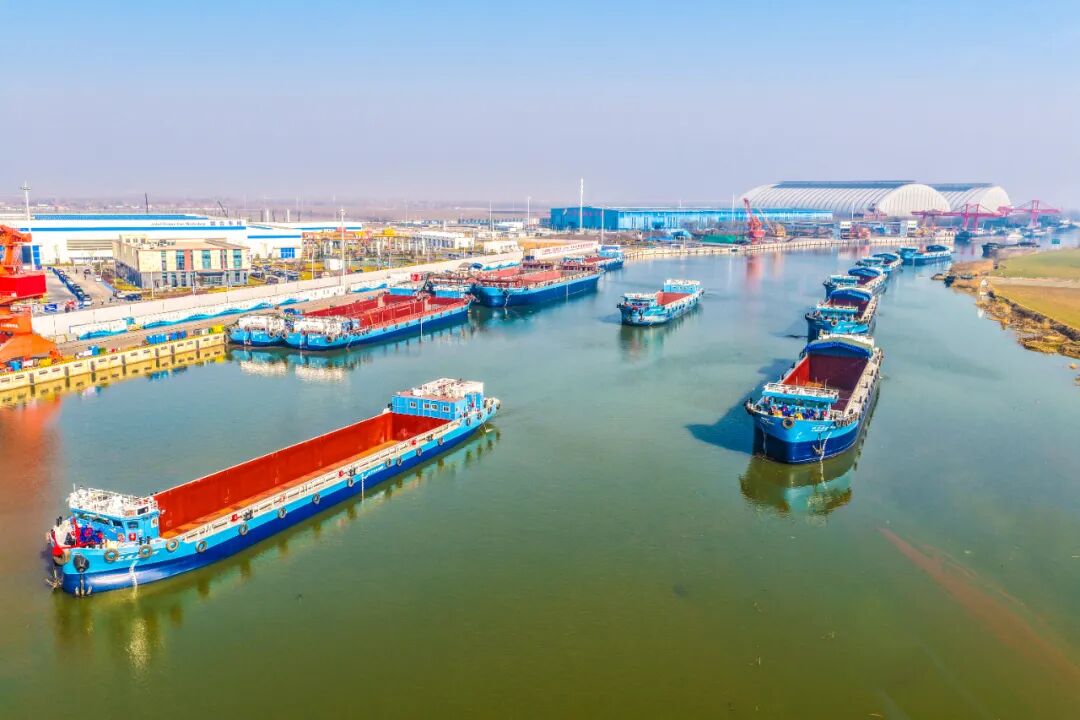
纯电动多用途船

Search documents
内陆城市靠什么跻身亿吨大港
Jing Ji Ri Bao· 2026-02-04 05:35
Core Insights - Jining Port is set to achieve a cargo throughput of 116 million tons by 2025, becoming the first inland port in northern China to surpass this milestone, indicating a significant transformation in logistics and transportation capabilities [1][5][6] Group 1: Port Development and Strategic Positioning - Jining, an inland city, is leveraging its strategic location along the Grand Canal to become a new logistics hub, enhancing its role in the national transportation network [1][2] - The establishment of Liangshan Port as a key coal emergency reserve base is pivotal, with a projected coal throughput of over 40 million tons by 2025, accounting for 70% of Shandong's coal supply [2][3] - The port's geographical advantage allows it to connect energy resources from the west to the economically vibrant Yangtze River Delta [3] Group 2: Multi-Modal Transportation and Cost Efficiency - The integration of multi-modal transport has significantly improved logistics efficiency, with transportation costs reduced to one-third of rail and one-seventh of road transport, saving 50 to 60 yuan per ton [3] - Liangshan Port has successfully diversified its operations by introducing container services, optimizing transport methods, and expanding its cargo types beyond coal to include steel, grain, and industrial salt [3][4] Group 3: Automation and Technological Advancements - The fully automated container terminal at Longgong Port exemplifies the use of advanced technologies such as AI and 5G, achieving a container handling time of just two minutes [4] - Longgong Port aims to handle 335,000 TEUs by 2025, reflecting a 25% increase, showcasing the effectiveness of its smart port transformation [4] Group 4: Economic Impact and Future Goals - Jining's port industry is projected to generate over 100 billion yuan in revenue, with a 20% year-on-year growth in cargo throughput, indicating a robust economic impact [5][6] - The provincial plan aims to establish Jining as a northern inland shipping center, with a target of 200 million tons in cargo throughput and 1.5 million TEUs by 2030 [6][7] Group 5: Industrial Integration and Urban Transformation - The integration of port operations with local industries, such as the steel and grain sectors, is fostering a new economic model that enhances supply chain efficiency and reduces costs [7][8][10] - Jining's approach to port development emphasizes a "port-industry-city" model, aiming to create a seamless connection between logistics, manufacturing, and urban development [10][11] Group 6: Green and Smart Shipping Initiatives - The introduction of LNG-powered vessels and electric ships is part of Jining's commitment to sustainable development, addressing environmental concerns while enhancing operational efficiency [12][13][14] - The establishment of a smart manufacturing base for new energy vessels aims to standardize production and reduce costs, facilitating the growth of a green shipping industry [13][15]
内陆城市靠什么跻身亿吨大港 ——山东济宁加快打造北方内河航运中心调查
Jing Ji Ri Bao· 2026-02-04 02:36
Core Viewpoint - Jining, an inland resource-based city, is set to achieve a cargo throughput of 116 million tons by 2025, becoming a significant player in China's inland port sector, driven by strategic development and multi-modal transport initiatives [1][5]. Group 1: Port Development and Strategic Positioning - Jining's strategic location along the Grand Canal has positioned it as a vital logistics hub, enhancing its role in national transportation networks [1]. - The city has transformed its port infrastructure, with Liangshan Port expected to handle over 40 million tons of coal by 2025, accounting for 70% of Shandong's coal supply [2]. - The development of Liangshan Port is part of a broader strategy to shift towards inland waterway transport, significantly improving logistics efficiency and reducing costs [3]. Group 2: Technological Advancements and Automation - Longgong Port has implemented full automation in container handling, achieving a two-minute turnaround for container loading and unloading, showcasing advancements in operational efficiency [4]. - The integration of AI, 5G, and digital twin technologies at Longgong Port has set a benchmark for smart transformation in inland ports [4]. Group 3: Economic Impact and Future Goals - Jining's port network, comprising eight major port areas, is projected to achieve a cargo throughput of 116 million tons by 2025, with a revenue exceeding 100 billion yuan [5]. - The city aims to establish itself as a northern inland shipping center, with plans to enhance its port capabilities and expand its logistics infrastructure by 2030 [6]. Group 4: Industry Integration and Urban Transformation - The integration of port operations with local industries, such as steel and grain processing, is fostering urban transformation and economic growth in Jining [7][8]. - The establishment of industrial parks around ports is creating a comprehensive ecosystem that supports logistics, trade, and manufacturing, enhancing the region's economic resilience [10][11]. Group 5: Green and Smart Shipping Initiatives - Jining is focusing on green development in its shipping industry, with initiatives to promote LNG and electric-powered vessels, aiming for a sustainable and efficient transport system [12][13]. - The introduction of standardized shipbuilding processes and smart energy solutions is expected to lower operational costs and enhance the economic viability of electric vessels [15].
山东首个规模化电动船队在济宁邹城交付
Qi Lu Wan Bao· 2025-12-30 04:29
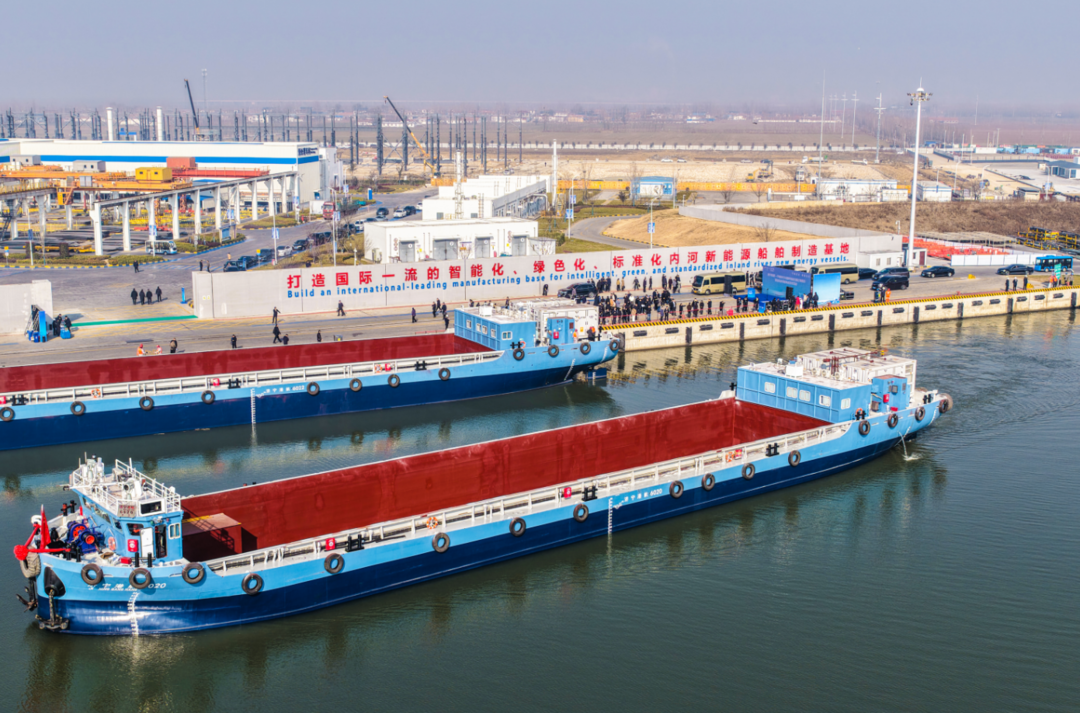
Core Viewpoint - The launch of the first large-scale electric cargo ship fleet in Shandong marks a significant step towards the commercialization and green transformation of inland shipping, utilizing advanced battery technology and innovative operational models [1][5][6]. Group 1: Project Overview - The first batch of 5 pure electric cargo ships has been delivered, with an additional order of 50 ships signed, all to operate in the Grand Canal region, establishing a green shipping route from the Yangtze River Delta to North China [2][5]. - Each ship has a cargo capacity of 2,000 tons and can achieve zero emissions and low noise operation, with an estimated annual carbon dioxide reduction of over 1,300 tons [4][10]. Group 2: Technological Innovations - The fleet employs a "ship-electric separation" business model and containerized battery swapping technology, allowing for quick energy replenishment and addressing range anxiety [4][9]. - The "Jining Port Shipping 6006" vessel, a 2,000-ton electric transport ship, has a full charge range of 230 kilometers and can replace approximately 200 tons of fuel annually, significantly reducing emissions and operational costs [8][10]. Group 3: Economic and Environmental Impact - The project is expected to boost local industry chain output and create numerous high-tech jobs, positioning Jining as a hub for green shipping technology [4][11]. - The development of electric vessels is driving local production of batteries, motors, and control systems, as well as the construction of charging and swapping infrastructure [11]. Group 4: Strategic Importance - The initiative represents a shift from traditional coal-based shipping to a green and intelligent shipping model, contributing to the ecological protection of the Grand Canal [4][6][12]. - The successful implementation of this project serves as a reference model for the green and intelligent transformation of inland shipping across the country [4][5][12].


山东首条纯电动货船绿色航线来了
Xin Lang Cai Jing· 2025-12-29 13:44
Core Viewpoint - The successful launch of the first batch of five pure electric multi-purpose vessels marks a significant step towards establishing a green shipping route in Shandong Province, with a total of 50 electric vessels ordered for operation on the Grand Canal [2][8]. Group 1: Company Developments - Jining Energy Group and CATL signed a contract for 50 pure electric vessels, with the first five vessels delivered for operation on the Grand Canal, creating Shandong's first large-scale electric cargo fleet [2][8]. - The new fleet utilizes an innovative "ship-electric separation" business model and containerized battery swapping technology, allowing each vessel to carry 2,000 tons and achieve zero emissions and low noise operation [2][8]. - Jining Energy Group's subsidiary, New Energy Shipbuilding Co., has signed over 180 vessel orders to date, with plans to launch 100 vessels and deliver 80 by 2025 [3][9]. Group 2: Industry Context - China's inland waterways are extensive, with a freight volume ranking first globally; however, approximately 300,000 vessels still operate on traditional diesel power, with around 60,000 on the Grand Canal [5][11]. - The Shandong Province government is committed to supporting the development of intelligent electric vessels, encouraging organized deployment and operation of electric vessels along rivers [5][11]. - Infrastructure improvements, including the establishment of charging and battery swapping facilities, are being prioritized to enhance service capabilities for electric vessels [5][11].