
港产融合

Search documents
确保货物节日期间按时进出港口|“幸福加马过湘年”
Chang Sha Wan Bao· 2026-02-15 00:31
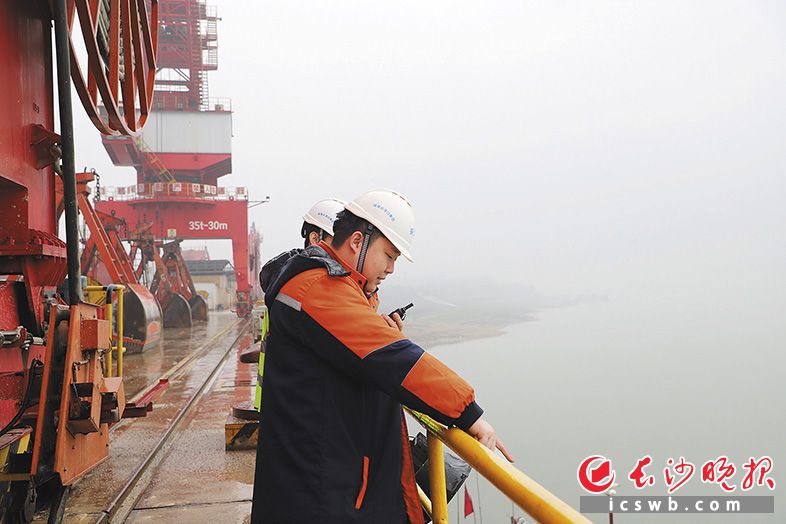
Core Viewpoint - The article highlights the operational efficiency and strategic importance of Changsha Port's Tongguan Port area, emphasizing its role in supporting the industrial growth of the surrounding region, particularly in the context of timely cargo handling and logistics optimization [1][5][7]. Group 1: Operational Efficiency - The port is currently handling a shipment of 30,000 tons of mineral powder, which is critical for steel production and must be completed without delay, especially during the busy Spring Festival period [3][4]. - The port's operations are managed by experienced personnel like the chief dispatcher, who ensures safety and efficiency by closely monitoring equipment and adjusting work plans as needed to prevent delays caused by weather conditions [3][4]. - The port has implemented a pre-scheduling mechanism and continuous maintenance support to enhance loading and unloading efficiency, thereby improving service quality and operational capacity [5][6]. Group 2: Infrastructure and Development - Changsha Port's Tongguan Port area has a planned coastline of 5.34 kilometers and a navigation guarantee rate of 98% for 2,000-ton vessels, establishing it as a key logistics hub in the Xiangjiang River basin [5]. - The port area is witnessing rapid industrial growth, with numerous companies, including Yihai Kerry, Yongshan Lithium, and Dongfang Yuhong, establishing operations there, which helps reduce logistics costs [7]. - A dedicated railway line project of 2.1 kilometers is underway to connect the port with the Jingguang Railway, enhancing the multimodal transport system and facilitating efficient cargo movement [7]. Group 3: Economic Impact - By 2025, the cargo throughput of Changsha Port's Tongguan Port area is projected to reach 2.8856 million tons, marking a historical high and providing significant momentum for the development of the Tongguan industrial area [6]. - The industrial output value of the Tongguan industrial area is expected to reach 20.459 billion yuan by 2025, reflecting the growing economic dynamism in the region [7].

内陆城市靠什么跻身亿吨大港——山东济宁加快打造北方内河航运中心调查
Jing Ji Ri Bao· 2026-02-06 03:41
Core Insights - Jining, an inland resource-based city, is set to achieve a cargo throughput of 116 million tons by 2025, becoming one of China's "billion-ton ports" [1] - The city is leveraging its strategic location along the Grand Canal to transform into a new logistics hub through multimodal transport [1][6] - Jining's port development is supported by a comprehensive port network and a focus on integrating industry and logistics [6][13] Multimodal Transport Activation - Liangshan Port, a key coal emergency reserve base, is expected to handle over 40 million tons of coal by 2025, accounting for 70% of Shandong's coal supply [3] - The port's strategic location allows for efficient connections between coal, grain, and the Yangtze River Delta, enhancing logistics capabilities [4] - Multimodal transport significantly reduces costs, with transportation expenses being one-third of rail and one-seventh of road costs, saving 50-60 yuan per ton [4] Containerization and Automation - Longgong Port has implemented full automation in container handling, achieving a container loading and unloading time of just 2 minutes [5] - By 2025, Longgong Port is projected to handle 335,000 TEUs, marking a 25% increase [5] - The port's focus on containerization and multimodal transport positions it as a benchmark for smart transformation in inland ports [5] Port Network Development - Jining has established a well-structured port network with eight major port areas and 30 container shipping routes, aiming for a throughput of 116 million tons by 2025, a 20% increase year-on-year [6] - The port industry is expected to generate over 100 billion yuan in revenue, reflecting simultaneous growth in scale and efficiency [6] Strategic Future Planning - Jining aims to become a northern inland shipping center, with plans to enhance its port capabilities and expand its infrastructure [7] - The provincial planning outlines a "one main, four auxiliary, multiple points" layout for the inland port cluster, indicating a significant strategic opportunity for Jining [7] Industry Integration and Urban Transformation - The integration of port and industry is crucial for Jining's urban transformation, with a focus on creating a "front port—middle warehouse—backyard" industrial model [12] - The establishment of industrial parks around ports is designed to attract logistics, trade, and financial services, enhancing the regional economic ecosystem [12][13] - Jining's approach aims to convert shipping flows into tangible economic growth, moving beyond traditional port functions [12][13] Green and Intelligent Development - Jining is prioritizing green development in its shipping industry, with a focus on transitioning to LNG and electric-powered vessels [15] - The establishment of a smart manufacturing base for inland new energy vessels aims to enhance the sustainability of the shipping sector [15][16] - The introduction of standardized shipbuilding processes is expected to lower costs and improve operational efficiency in the long term [16][18]
内陆城市靠什么跻身亿吨大港
Jing Ji Ri Bao· 2026-02-04 05:35
Core Insights - Jining Port is set to achieve a cargo throughput of 116 million tons by 2025, becoming the first inland port in northern China to surpass this milestone, indicating a significant transformation in logistics and transportation capabilities [1][5][6] Group 1: Port Development and Strategic Positioning - Jining, an inland city, is leveraging its strategic location along the Grand Canal to become a new logistics hub, enhancing its role in the national transportation network [1][2] - The establishment of Liangshan Port as a key coal emergency reserve base is pivotal, with a projected coal throughput of over 40 million tons by 2025, accounting for 70% of Shandong's coal supply [2][3] - The port's geographical advantage allows it to connect energy resources from the west to the economically vibrant Yangtze River Delta [3] Group 2: Multi-Modal Transportation and Cost Efficiency - The integration of multi-modal transport has significantly improved logistics efficiency, with transportation costs reduced to one-third of rail and one-seventh of road transport, saving 50 to 60 yuan per ton [3] - Liangshan Port has successfully diversified its operations by introducing container services, optimizing transport methods, and expanding its cargo types beyond coal to include steel, grain, and industrial salt [3][4] Group 3: Automation and Technological Advancements - The fully automated container terminal at Longgong Port exemplifies the use of advanced technologies such as AI and 5G, achieving a container handling time of just two minutes [4] - Longgong Port aims to handle 335,000 TEUs by 2025, reflecting a 25% increase, showcasing the effectiveness of its smart port transformation [4] Group 4: Economic Impact and Future Goals - Jining's port industry is projected to generate over 100 billion yuan in revenue, with a 20% year-on-year growth in cargo throughput, indicating a robust economic impact [5][6] - The provincial plan aims to establish Jining as a northern inland shipping center, with a target of 200 million tons in cargo throughput and 1.5 million TEUs by 2030 [6][7] Group 5: Industrial Integration and Urban Transformation - The integration of port operations with local industries, such as the steel and grain sectors, is fostering a new economic model that enhances supply chain efficiency and reduces costs [7][8][10] - Jining's approach to port development emphasizes a "port-industry-city" model, aiming to create a seamless connection between logistics, manufacturing, and urban development [10][11] Group 6: Green and Smart Shipping Initiatives - The introduction of LNG-powered vessels and electric ships is part of Jining's commitment to sustainable development, addressing environmental concerns while enhancing operational efficiency [12][13][14] - The establishment of a smart manufacturing base for new energy vessels aims to standardize production and reduce costs, facilitating the growth of a green shipping industry [13][15]
变“水路”为“出路”
Jing Ji Ri Bao· 2026-02-04 02:38
Core Insights - The article highlights the strategic repositioning of the Grand Canal by Jining, transforming it from a cultural relic into a vital economic artery that connects domestic and international markets [1][2] - Jining's port is redefined as a "flow entry" and "value highland," facilitating seamless integration between port services and manufacturing, thereby creating a vibrant port industry cluster [1] Group 1 - Jining has initiated high-standard dredging and rehabilitation projects to awaken the Grand Canal, turning it into a crucial transportation route [1] - The port's function has been strategically aligned with industrial development, promoting deep integration of logistics and industrial chains, which significantly reduces logistics costs for enterprises [1] - The "port-industry integration" model has led to the emergence of dynamic port industry clusters, enhancing economic activity in the region [1] Group 2 - The "Three-Year Action Plan for Accelerating High-Quality Development of Inland Waterway Transportation in Shandong Province (2023-2025)" emphasizes the need for integrated planning of ports, industries, and urban areas [2] - The deep integration of ports and industries will elevate the city's comprehensive carrying capacity, necessitating upgrades in infrastructure and public service systems [2] - Jining is transitioning from "port-industry integration" to "port-industry-city integration," breaking traditional spatial and functional separations to achieve a new integrated development pattern [2]
内陆城市靠什么跻身亿吨大港 ——山东济宁加快打造北方内河航运中心调查
Jing Ji Ri Bao· 2026-02-04 02:36
Core Viewpoint - Jining, an inland resource-based city, is set to achieve a cargo throughput of 116 million tons by 2025, becoming a significant player in China's inland port sector, driven by strategic development and multi-modal transport initiatives [1][5]. Group 1: Port Development and Strategic Positioning - Jining's strategic location along the Grand Canal has positioned it as a vital logistics hub, enhancing its role in national transportation networks [1]. - The city has transformed its port infrastructure, with Liangshan Port expected to handle over 40 million tons of coal by 2025, accounting for 70% of Shandong's coal supply [2]. - The development of Liangshan Port is part of a broader strategy to shift towards inland waterway transport, significantly improving logistics efficiency and reducing costs [3]. Group 2: Technological Advancements and Automation - Longgong Port has implemented full automation in container handling, achieving a two-minute turnaround for container loading and unloading, showcasing advancements in operational efficiency [4]. - The integration of AI, 5G, and digital twin technologies at Longgong Port has set a benchmark for smart transformation in inland ports [4]. Group 3: Economic Impact and Future Goals - Jining's port network, comprising eight major port areas, is projected to achieve a cargo throughput of 116 million tons by 2025, with a revenue exceeding 100 billion yuan [5]. - The city aims to establish itself as a northern inland shipping center, with plans to enhance its port capabilities and expand its logistics infrastructure by 2030 [6]. Group 4: Industry Integration and Urban Transformation - The integration of port operations with local industries, such as steel and grain processing, is fostering urban transformation and economic growth in Jining [7][8]. - The establishment of industrial parks around ports is creating a comprehensive ecosystem that supports logistics, trade, and manufacturing, enhancing the region's economic resilience [10][11]. Group 5: Green and Smart Shipping Initiatives - Jining is focusing on green development in its shipping industry, with initiatives to promote LNG and electric-powered vessels, aiming for a sustainable and efficient transport system [12][13]. - The introduction of standardized shipbuilding processes and smart energy solutions is expected to lower operational costs and enhance the economic viability of electric vessels [15].
以港兴产、以产强港,锚定北方内河航运中心再开新局
Da Zhong Ri Bao· 2026-01-26 08:56
Core Viewpoint - Jining Port has achieved significant milestones in 2025, becoming the first inland river port in northern China to reach a throughput of 116 million tons and 520,000 TEUs, marking its entry into the national league of major ports [1] Group 1: Port Development and Achievements - Jining's port and shipping industry revenue has surpassed 100 billion yuan for the first time, establishing it as a trillion-yuan industry [1] - The city has developed a comprehensive inland shipping network with 360 kilometers of high-grade waterways and 103 berths capable of accommodating vessels over 1,000 tons [1] - Jining has launched 30 container shipping routes, connecting logistics networks to 152 cities nationwide [1] Group 2: Infrastructure and Strategic Initiatives - Jining is accelerating port construction, exemplified by the Liangshan Port, which integrates rail and water transport, enhancing connectivity [2] - The establishment of the first inland river customs supervision site in Shandong province at Longgong Port facilitates efficient customs processes for local businesses [2] - The city is focusing on building a northern inland shipping center as part of its 14th Five-Year Plan, emphasizing the importance of inland shipping in future economic development [2] Group 3: Future Plans and Projects - Jining is set to enhance its commercial logistics center by improving connections with major economic regions and launching new container shipping routes [3] - The city plans to develop a multi-modal transport center, expediting the construction of key port projects and enhancing waterway infrastructure [4] - Jining aims to strengthen its green ship manufacturing capabilities, with plans to produce over 200 new energy vessels and collaborate with industry leaders to set standards for inland new energy ships [4][5] Group 4: Innovation and Technology - The city is promoting innovation in shipping services by fostering partnerships between shipping companies and academic institutions to create research and development bases [5] - Jining is integrating advanced technologies such as IoT and big data into its shipping systems to enhance operational efficiency and service offerings [5]
铜陵港连续三年 跻身全国内河亿吨大港行列
Xin Lang Cai Jing· 2026-01-05 16:39
Core Insights - The article highlights the significant growth in cargo throughput at Tongling Port, achieving a total of 100.54 million tons by the end of November 2025, with foreign trade cargo throughput reaching 810,900 tons and container throughput at 53,933 standard containers, representing year-on-year increases of 7.13%, 63.13%, and 11.92% respectively [1] Group 1: Port Development - Tongling Port has successfully completed its overall planning ahead of schedule, focusing on expanding development to areas such as Zongyang, Yongfeng, and Jiangbei [1] - The port has integrated several major projects into provincial planning, including the Zongyang hub port [1] Group 2: Investment and Infrastructure - During the 14th Five-Year Plan period, Tongling invested 950 million yuan in water transport fixed assets, increasing the number of productive berths to 66, which includes the addition of three 10,000-ton berths and three 3,000-ton liquid chemical product berths [1] - The 3,000-ton hazardous chemical terminal in the Lihatsan operation area has commenced operations, addressing the gap in public liquid chemical terminals [1] Group 3: Shipping Operations - The port has stabilized operations for the "Tongling-Shanghai" container foreign trade feeder line and has established regular direct shipping routes to Fukuyama, Japan [1] - It is projected that by 2025, the "water-water transshipment" business volume at Tongling Port will reach 2.529 million tons, with key material transportation including 18.48 million tons of coal and 10.76 million tons of metal ores [1]
“船少了、货多了”如何实现? 3亿吨背后的“软实力”与“硬支撑”
Zhen Jiang Ri Bao· 2026-01-01 19:35
Core Insights - Zhenjiang Port has achieved a historic milestone by surpassing a cargo throughput of 300 million tons in 2025, joining the "300 million ton club" of national ports, driven by port structural optimization and integration with industry [1][4] - The port has seen a significant change characterized by fewer ships but increased cargo volume, attributed to the larger capacity of individual vessels, which necessitates higher standards for navigation conditions and safety [1][2] Group 1: Port Development and Capacity - The increase in the maximum allowable draft for Capesize vessels at Zhenjiang Port from 11.8 meters to 12 meters has been recognized as a significant breakthrough, enhancing operational efficiency and reducing logistics costs [2] - In 2025, Zhenjiang Port received 179 Capesize vessels, achieving a throughput of 16.62 million tons, marking year-on-year growth of 21.9% and 23.6% respectively, reinforcing its position as a key hub for Capesize vessels [2] Group 2: Efficiency and Service Improvement - The Zhenjiang Maritime Safety Administration has launched a new service brand, "Zhenheyi·Jianghehui," which streamlines the approval process for international vessels, allowing for online processing and zero waiting time for vessel entry [3] - The port has doubled its capacity for handling Capesize vessel transfers, while key shipping routes for iron ore and agricultural materials have seen significant growth, contributing to the port's stable growth [3] Group 3: Future Development and Strategic Goals - The transition from 295 million tons to 300 million tons signifies not just a numerical increase but an overall enhancement in port governance and service levels [4] - Future plans include further increasing draft capacity at suitable terminals and improving the comprehensive efficiency of the "big ship, big port" model, alongside the completion of the "three reforms to two" project in southern Jiangsu, which will enhance intermodal transport [4][5]
积蓄新动能 厚植新希望——全市上下牢记嘱托感恩奋进推动高质量发展谱新篇
Xin Lang Cai Jing· 2025-12-24 09:46
Group 1: Economic Development and Investment - Cangzhou signed 51 projects with a total investment of 13.9 billion yuan, including the establishment of 7 central enterprise subsidiaries [4][19] - The total cargo throughput at Huanghua Port exceeded 300 million tons, with significant investments in green chemical and new energy projects [17][8] - The city aims to build a modern coastal economic powerhouse, leveraging the achievements of the 14th Five-Year Plan [17] Group 2: Agricultural Advancements - The planting area of drought-resistant alkaline wheat reached 1.8498 million acres, with a total yield of 535,500 tons, representing year-on-year increases of 19.6% and 33.1% respectively [10][27] - The expected total output value of the entire industry chain for alkaline wheat is projected to reach 14.1 billion yuan [27] - Cangzhou is focusing on the comprehensive utilization of saline-alkali land, enhancing agricultural productivity through innovative practices [25][10] Group 3: Transportation Infrastructure - The Rongwu Expressway expansion project has officially opened, enhancing transportation connectivity in the region [5][20] - Significant investments have been made in key railway projects, with cumulative investments of 155.24 billion yuan, 61.91 billion yuan, and 46.5 billion yuan for various rail projects [20] - The city is working to create a comprehensive transportation network that facilitates efficient movement within the Beijing-Tianjin-Hebei region [20] Group 4: Industrial Collaboration - The Cangzhou Biopharmaceutical Industrial Park has successfully attracted multiple projects, including those from Beijing, marking a significant step in the transfer of the pharmaceutical industry [18][19] - The establishment of a venture capital fund for advanced membrane materials has attracted 105 million yuan in investment from social capital [20] - Cangzhou is actively promoting industrial collaboration as a core engine for regional development [4][19] Group 5: Port Development - Huanghua Port is undergoing transformation to become a modern, multifunctional port, with a total investment of 77.5 billion yuan in 30 key projects [23] - The port has achieved full-process intelligent operations, becoming the world's first fully automated bulk cargo port [23][22] - The city is focusing on enhancing the port's capacity and competitiveness through resource integration and infrastructure upgrades [23][24]

济宁港成北方内河亿吨大港
Xin Lang Cai Jing· 2025-12-22 17:14
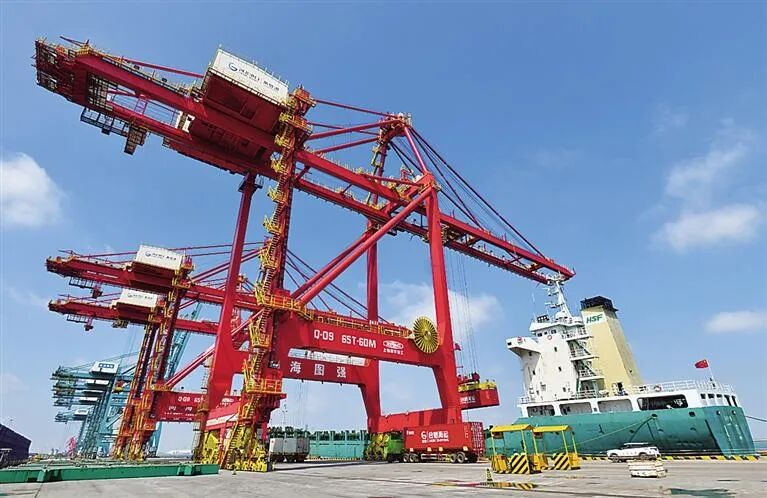
Core Insights - Jining Port has achieved a historic milestone by surpassing 100 million tons in cargo throughput, becoming the first inland port in northern China to reach this level, reflecting a significant transformation from a coal-centric hub to a diversified logistics center [13]. Infrastructure Development - Jining Port's success is rooted in decades of infrastructure development, with the Jining section of the Grand Canal accounting for 24% of the total navigation length and 58% of high-grade waterways in Shandong Province [2]. - Liangshan Port, as the largest bulk cargo hub in northern Jiangsu, supports this growth through a multimodal transport model that integrates road, rail, and water transport, significantly reducing transportation time from 5 days to 3 days for coal shipments [2]. Operational Efficiency - Liangshan Port has seen a remarkable increase in operational efficiency, with average loading rates for coal exceeding 780 tons per hour and container throughput surpassing 190,000 TEUs, marking a year-on-year growth of over 40% [2][3]. - The port's innovative "Fifteen Lines" management model has stabilized daily cargo handling at over 60,000 tons, with monthly throughput exceeding 4 million tons in June and August [3]. Cargo Diversification - The cargo composition at Jining Port has evolved from over 70% coal five years ago to a more diversified mix including steel, machinery, and food products, reflecting a shift towards a manufacturing-driven economy [6]. - The introduction of cold chain logistics at Longkong Port has enabled rapid delivery of agricultural products, such as garlic, to international markets, enhancing the port's role in global trade [6]. Economic Impact - The integration of port and industry has led to the establishment of seven industrial parks, with the potential for significant economic growth, including projected revenues exceeding 30 billion yuan from the second phase of Liangshan Port [3][9]. - Jining Port's logistics network now spans 20 provinces and 152 cities, with international logistics extending to 19 countries, demonstrating its role as a catalyst for regional economic development [11]. Future Prospects - Jining is committed to enhancing its position as a northern inland shipping center through ongoing projects aimed at upgrading waterways and developing new energy vessel manufacturing [12]. - The port's strategic initiatives are expected to further drive the integration of industry and urban development, fostering a robust economic environment along the Grand Canal [12].
