
出口信保

Search documents
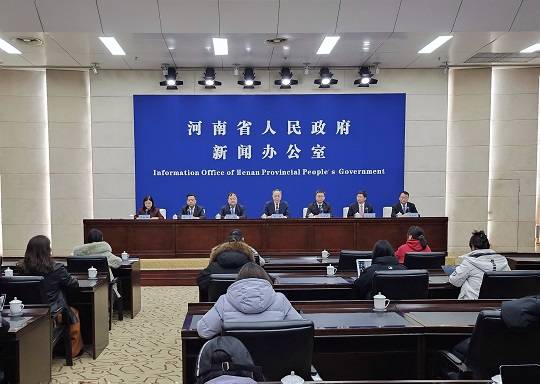
智能眼镜纳入补贴范围 河南2亿元消费券在路上
Sou Hu Cai Jing· 2026-01-06 05:52
Core Viewpoint - In 2026, Henan Province aims to enhance consumption and stabilize foreign trade, contributing significantly to the province's economic growth, with specific measures announced to support these goals [1]. Group 1: Consumption Promotion - The province will implement a "policy + activities + scenarios" approach to promote consumption, focusing on initiatives like trade-in programs for consumer goods and various promotional activities [3]. - The 2026 consumer goods trade-in program has been launched, including subsidies for automobiles, home appliances, and digital products, with smart glasses now included in the subsidy range [4]. - The "Enjoy Henan" Spring Consumption Season will feature over 1,000 events, with the provincial government issuing 200 million yuan in consumption vouchers to stimulate spending in key sectors such as retail, dining, and tourism [5]. Group 2: Foreign Trade Stabilization - The province will fully implement national policies to stabilize foreign trade, innovating and refining local measures to target key markets, industries, and enterprises [3]. - A total of 300 key international exhibitions will be recommended in the first quarter, with participation in over 50 major exhibitions, including the Cologne Furniture Fair and the Hong Kong International Jewelry Show [7][8]. - Support policies for key industries will be optimized to stabilize mobile phone exports and expand exports of automobiles, computing equipment, agricultural products, and textiles [9]. Group 3: Business Support and New Models - Continuous subsidies will be provided to enterprises for international market expansion and export credit insurance projects, enhancing cooperation between government, banks, and businesses [10]. - A list of 200 cross-border e-commerce source factories will be published in the first quarter, along with 30 "cross-border e-commerce + industrial belt" activities to promote new business models [11].

2025泰达论坛:中国汽车出海8大难关
Zhong Guo Qi Che Bao Wang· 2025-09-15 01:21
Group 1: Challenges in Internationalization of Chinese Automotive Industry - The rise of regional integration and the trend of multi-center globalization will lead to increased fragmentation in industry standards, markets, and supply chains [2] - Trade protectionism is intensifying, with multiple countries imposing tariffs and raising technical standards, which undermines China's price advantage and increases compliance complexity [3] - The phenomenon of "involution" among Chinese brands may affect sustainable international expansion, potentially impacting supply chain quality and reducing trust among overseas consumers [4] Group 2: Data Cross-Border Issues - As the scale of Chinese automotive exports continues to grow, the competition over trade rules and digital economy regulations between China, the US, and Europe is intensifying, making data cross-border a critical issue for the automotive export industry [5] - There are currently about 146 countries that have enacted over 190 data security-related laws and regulations, with increasing demands for data localization and stricter compliance requirements [5] Group 3: Battery Recycling and Compliance - The rapid development of the new energy sector has positioned China as a leader in the lithium-ion battery industry, with manufacturing costs reduced to one-eighth of what they were a decade ago [7] - Many countries, particularly in Europe, are emphasizing the importance of battery recycling, with established regulatory frameworks that set clear requirements for recycling capacity and lithium recovery rates [7] Group 4: Intellectual Property Challenges - Despite the growth in automotive exports, China's intellectual property layout remains relatively lagging, with a noticeable increase in patent litigation against Chinese companies as export volumes rise [8] - The cost of intellectual property litigation can significantly impact profit margins, with estimates suggesting that the return on investment for intellectual property is approximately 1:10 [9] Group 5: Technical Barriers - The automotive industry faces complex and multi-dimensional technical certification barriers, especially under the trends of smart connectivity and new energy, requiring compliance with various standards [10] - New emerging barriers, such as ethical and green barriers, necessitate a comprehensive understanding of related industries to meet market entry requirements [12] Group 6: Logistics and Shipping Challenges - Roll-on/roll-off shipping remains the primary method for automotive exports, with 75% of vehicles shipped this way in the first half of the year, but domestic shipping capacity is still insufficient [13] - The number of Chinese roll-on/roll-off ships is limited, accounting for only 7.6% of the global fleet, which poses challenges for the growth of automotive exports [13] Group 7: Export Credit Insurance - Export credit insurance is a government-supported tool designed to assist domestic companies in expanding into international markets, particularly during challenging global economic conditions [14] - Companies are advised to consider various insurance products, including comprehensive export trade insurance and specific contract insurance for individual countries [14]

