分布式光储

Search documents
国泰海通|电新:欧洲天然气价格暴涨,光储将迎来需求爆发
国泰海通证券研究· 2026-03-04 14:52
Core Viewpoint - Qatar's cessation of natural gas production has led to a significant surge in natural gas prices, with European electricity prices also facing substantial increases. This situation is expected to drive a considerable rise in demand for distributed solar and storage solutions [1][2]. Group 1: Natural Gas Market Impact - Qatar has shut down its Ras Laffan LNG export facility following drone attacks, causing European natural gas prices to spike over 50%. This facility accounts for approximately 20% of global LNG supply, exacerbating supply concerns as tanker traffic through the Strait of Hormuz, which handles about 20% of global LNG transport, has nearly halted [1]. - The supply disruption is expected to have a significant impact on countries in Europe and Asia, as Qatar is a crucial LNG exporter, and finding quick alternatives may prove challenging in the short term [1]. Group 2: Electricity Market Dynamics - The European electricity market operates on a marginal pricing model, where the last generator called to meet demand sets the market clearing price. As natural gas prices rise, wholesale electricity prices in Europe are anticipated to increase correspondingly due to supply issues leading to resource competition [2]. - The surge in natural gas prices is likely to stimulate demand for distributed solar and storage solutions, as these systems can provide self-consumption capabilities and flexibility. Distributed solar systems can store solar energy during the day and discharge it at night, meeting user electricity needs effectively [2]. Group 3: Future Outlook - If the conflict persists, both natural gas and electricity prices in Europe may continue to rise, with residential solar and storage solutions poised to benefit first. The ongoing trends in this sector warrant close monitoring [2].


国泰海通 · 晨报260304|固收、交运、光储
国泰海通证券研究· 2026-03-03 14:08
Group 1: Fixed Income - Historical data indicates that geopolitical conflicts primarily create "emotional pulses" rather than driving trends in U.S. Treasury yields, with limited fluctuations observed during events like the Gulf War and the Vietnam War [3] - As of February, the 10-year U.S. Treasury yield has decreased by approximately 28 basis points to 3.95%, driven by factors such as heightened risk aversion due to geopolitical tensions, weak macroeconomic indicators, and strong institutional demand for U.S. Treasuries [3] - Short-term support for U.S. Treasuries remains due to ongoing reassessment of interest rate cuts, a strong credit market, and unchanged allocation logic from international institutions [4] Group 2: Transportation - The Spring Festival travel demand is robust, with a year-on-year increase of 5.8% in overall personnel flow, and air travel showing a growth rate of 6.9% [9] - Air ticket prices have continued to rise post-holiday, with an estimated increase of 4-5% year-on-year for domestic ticket prices during the Spring Festival period, indicating strong profitability potential for airlines [10] - The escalation of the Middle East situation has led to increased geopolitical oil price risks, but this does not alter the long-term value of airlines, suggesting a strategic opportunity for investment in the aviation sector [11] Group 3: Energy and Renewables - Qatar's cessation of natural gas production has caused a significant spike in European natural gas prices, increasing by over 50%, which is expected to drive demand for distributed solar and storage solutions [16] - The European electricity market is likely to experience upward pressure on prices due to the surge in natural gas prices, which will affect the wholesale electricity market [17] - The ongoing conflict may lead to sustained increases in natural gas and electricity prices, benefiting household solar and storage solutions, with a focus on the potential for demand growth in these sectors [18]
逆变器Q3出口跟踪:澳洲、亚非需求向好
Ping An Securities· 2025-10-23 09:11
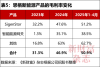
Investment Rating - The report maintains an "Outperform" rating for the power equipment and new energy sector [1]. Core Insights - In the first three quarters of 2025, China's inverter export value reached 48.5 billion yuan, marking an 8% year-on-year increase. The third quarter saw an export value of 17.9 billion yuan, with a year-on-year increase of 8% but a quarter-on-quarter decrease of 3% [2][12]. - The European market showed slight recovery with inverter exports amounting to 19.1 billion yuan, a 4% increase year-on-year. The Australian market experienced rapid growth, with exports reaching 2.3 billion yuan, up 79% year-on-year [2][17]. - Emerging markets in Asia and Africa showed growth, while Latin America exhibited weaker performance. Exports to Asia totaled 17 billion yuan, up 13%, while exports to Latin America fell by 16% to 4.8 billion yuan [2][17]. Summary by Sections 1. Inverter Export Overview - China's inverter exports in the first three quarters of 2025 totaled 48.5 billion yuan, with Europe and Asia being the primary markets, accounting for 40% and 35% of exports, respectively [12][17]. 2. Developed Markets: Europe and Australia - Europe experienced a slight recovery with inverter exports of 19.1 billion yuan, a 4% increase year-on-year. The Australian market saw significant growth, with exports reaching 2.3 billion yuan, a 79% increase year-on-year [2][17]. - The demand for large-scale storage and commercial storage in Europe is expected to grow, with potential in the Australian market driven by favorable project returns and supportive policies [26][40]. 3. Emerging Markets: Asia, Africa, and Latin America - In Asia, inverter exports reached 17 billion yuan, a 13% increase year-on-year, with significant contributions from the Middle East and Southeast Asia [52][56]. - Latin America saw a decline in inverter exports, totaling 4.8 billion yuan, down 16% year-on-year, primarily due to high interest rates affecting demand in Brazil [63]. - Africa's inverter exports increased by 31% year-on-year, reaching 3.6 billion yuan, with notable growth in markets like Nigeria [64].


与特斯拉、宁德时代角逐,“华友”三年打造IPO,近三成员工持股,高瓴又大赚|原创
Xin Lang Cai Jing· 2025-10-21 12:10
Core Insights - Xu Yingtong, former president of Huawei's photovoltaic and Ascend computing business, founded Sige New Energy in May 2022, focusing on the rapidly growing energy storage sector [1][2][3] - Sige New Energy has achieved significant growth, with a valuation increase of 40 times in three years and plans for an IPO in Hong Kong [1][2][14] - The company aims to leverage its innovative products and market positioning to compete with industry giants like Tesla and CATL [2][4] Company Overview - Sige New Energy was established in May 2022 and submitted its IPO application to the Hong Kong Stock Exchange in February 2025, which later expired due to delays [2] - The company specializes in energy storage solutions, with a focus on stackable distributed energy storage systems [5][6] - In its first year, Sige New Energy reported no revenue, but projected revenues for 2023 and 2024 are 0.58 billion and 1.33 billion CNY, respectively, marking rapid growth [2][4] Financial Performance - The company reported a loss of 0.76 million CNY in 2022, which expanded to 3.73 million CNY in 2023, but is expected to turn a profit of 0.84 million CNY in 2024 [2][13] - By the first four months of 2025, Sige New Energy is projected to achieve a net profit of 1.87 million CNY, with an annual target of 4 million CNY [2][13] - The company has undergone six rounds of financing, raising a total of 7.15 billion CNY, with significant investments from notable firms like Hillhouse Capital [14][16] Market Position - Sige New Energy's products are gaining traction in the European market, with a focus on household users, while domestic sales have significantly declined [6][7] - The company holds a market share of 8.2% in the distributed energy storage sector and ranks first in the stackable distributed energy storage solutions market with a 28.6% share [5][6] - Despite the competitive landscape, Sige New Energy's innovative product design and pricing strategy have positioned it favorably in the market [8][9] Product Insights - The flagship product, SigenStor, is a five-in-one energy storage solution that has seen substantial sales growth, increasing from 18 MWh in 2023 to 447 MWh in 2024 [9][10] - SigenStor's pricing has decreased, with a cost of 3.17 CNY per watt-hour in 2023, dropping to 2.54 CNY in early 2025 [10][11] - The product's design allows for easy installation, catering to the high labor costs in Europe and the remote areas of Australia [9][10] Strategic Focus - Sige New Energy plans to use IPO proceeds to expand production capacity, diversify its product offerings, and enhance its research and development capabilities [13][22] - The company is heavily reliant on its flagship product for revenue, with SigenStor accounting for over 90% of total income [9][12] - The management team, primarily composed of former Huawei employees, is focused on leveraging their industry experience to drive growth [17][20]