
创始人特质

Search documents
创始人的自我觉察
3 6 Ke· 2025-12-17 03:32
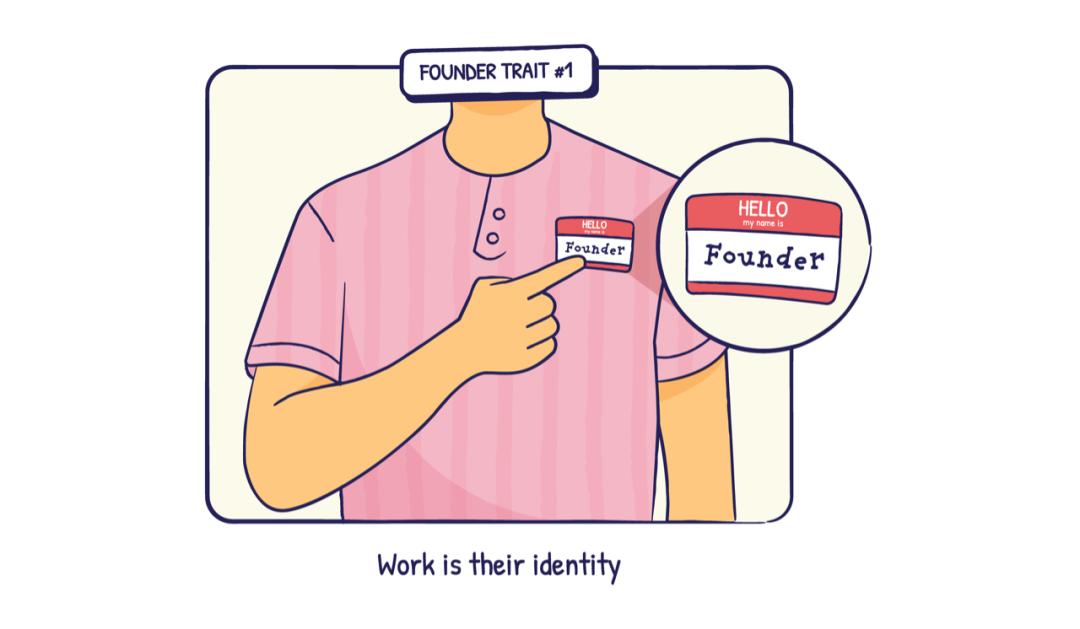
Core Insights - The article discusses five key traits of high-impact founders that contribute to their success while also potentially hindering their development [1][3][5]. Group 1: Founder Traits - Trait 1: Work as Identity - Founders often blur the lines between their personal lives and work, making their identity closely tied to their company's success [7][10]. - Trait 2: Strong Delayed Gratification - Founders work in ways that others may not, sacrificing personal relationships and accepting lower salaries for the chance of future success [15][19]. - Trait 3: Value Autonomy and Independence - Many founders prefer to control their own destinies, which can lead to challenges in trusting others and seeking help [22][23]. - Trait 4: Coexistence of Narcissism and Impostor Syndrome - Founders often possess a healthy level of narcissism that drives them, while also grappling with feelings of inadequacy [30][31]. - Trait 5: Need to Prove Themselves - Founders often feel a pressure to validate their worth to themselves and others, which can motivate them but also cloud their judgment [32][34]. Group 2: Advantages and Disadvantages of Traits - Advantage of Work as Identity - This trait fosters deep commitment and focus, essential for navigating the challenges of early-stage startups [8][10]. - Disadvantage of Work as Identity - It can lead to burnout and difficulty in delegating tasks, as founders may struggle to separate their self-worth from their work [11][12]. - Advantage of Strong Delayed Gratification - Founders are often willing to endure hardships for long-term gains, which is crucial for sustainable growth [16][19]. - Disadvantage of Strong Delayed Gratification - The constant pursuit of new goals can prevent founders from celebrating achievements, leading to a lack of fulfillment [20][21]. - Advantage of Autonomy - Independence allows founders to innovate and make decisions without bureaucratic constraints [23][24]. - Disadvantage of Autonomy - This independence can hinder collaboration and the ability to build effective teams [22][24]. - Advantage of Narcissism - A healthy level of self-confidence can help founders push through challenges and rejection [30]. - Disadvantage of Narcissism - Excessive self-confidence may lead to ignoring constructive feedback, which is essential for growth [31]. - Advantage of Need to Prove - This drive can fuel persistence and resilience in the face of adversity [33]. - Disadvantage of Need to Prove - It may cause founders to become inflexible and resistant to necessary changes in their business strategy [34]. Group 3: Strategies for Improvement - Founders are encouraged to identify early warning signs of burnout and seek accountability partners to help monitor their well-being [14]. - It is suggested that founders celebrate small victories and recognize the contributions of their team to foster a positive work environment [21][22]. - Founders should work on delegating responsibilities and trusting their teams to enhance collaboration and efficiency [26][27].

当王宁、王兴兴、张俊杰的投资人坐在一起
暗涌Waves· 2025-07-01 11:35
Core Insights - The article discusses the importance of understanding people in the investment industry, particularly focusing on the characteristics of successful entrepreneurs and the investors who back them [2][3] - It highlights the emergence of a new generation of entrepreneurs, particularly in the AI and technology sectors, and how they are being recognized and supported by investors [3][4] Group 1: Insights on Founders - The conversation features three investors discussing their experiences with notable founders: He Yu with Wang Ning of Pop Mart, Cao Xi with Wang Xingxing of Yushu Technology, and Hu Boyu with Zhang Junjie of Bawang Tea [5][6] - He Yu describes Wang Ning as a blend of artistic sensibility and strong business acumen, emphasizing his meticulous attention to cost management [6][7] - Cao Xi characterizes Wang Xingxing as pure and focused, noting his practical approach to business decisions, such as pursuing humanoid robots due to demand [9][10] - Hu Boyu describes Zhang Junjie as undergoing transformative growth, highlighting his unique background and rapid development in the business [10][11] Group 2: Investment Decision-Making - Investors emphasize the importance of understanding the underlying qualities of founders, such as strategic thinking and self-awareness, rather than superficial traits [13][14] - The challenge lies in recognizing new knowledge and business models that may initially seem unfamiliar, as seen with Pop Mart's innovative approach [14][15] - Investors also discuss the difficulty of conveying their insights about founders to their investment committees, given the complexity of the information received during meetings [14][15] Group 3: Personal Reflections - The investors share their perspectives on each other, highlighting traits such as curiosity, empathy, and a focus on simplicity in decision-making [23][30] - They reflect on how their experiences in the investment industry have shaped their understanding of human nature and the importance of respecting it in business [37][38] - The article concludes with thoughts on the ongoing evolution of personal insights and the significance of human connections in both entrepreneurship and investment [39][42]


投资人眼中的理想创始人是这样的
Tai Mei Ti A P P· 2025-04-10 07:20
Core Insights - The article emphasizes the importance of exceptional founders in the success of entrepreneurial ventures, highlighting 18 key traits that investors look for in founders. Group 1: Founder's Ambition and Spirit - A first-class ambition drives founders to seek broader business horizons, as exemplified by Elon Musk's goal of human colonization of Mars through SpaceX [2] - Entrepreneurial spirit is crucial, characterized by a willingness to take risks and seize opportunities, demonstrated by Jack Ma's founding of Alibaba amidst uncertainties in the early internet era [3] Group 2: Resilience and Learning - A strong belief system supports founders through challenges, as seen in Wang Chuanfu's commitment to the future of electric vehicles with BYD despite initial setbacks [4] - Lifelong learning is essential for founders to adapt to rapid technological changes, with Elon Musk exemplifying this by applying knowledge across various fields [5] Group 3: Emotional and Ethical Management - Effective emotional management is vital for decision-making under pressure, illustrated by Steve Jobs' ability to remain calm during Apple's ups and downs [6] - Integrity and honesty are foundational for building trust with stakeholders, as demonstrated by Huawei's commitment to ethical business practices [8] Group 4: Innovation and Market Insight - Innovative thinking is a core competitive advantage, with Steve Jobs revolutionizing consumer technology through unique product designs [9] - Market insight allows founders to understand consumer needs and industry trends, as shown by Lei Jun's success with Xiaomi in the smartphone market [10] Group 5: Decision-Making and Execution - Strong decision-making skills are critical for navigating complex challenges, exemplified by Ma Huateng's strategic choice to offer free QQ services initially [11] - Excellent execution capabilities ensure that strategies are effectively implemented, as seen in Jeff Bezos' establishment of Amazon's logistics and technology systems [12] Group 6: Experience and Networking - Deep industry experience equips founders with the knowledge to identify opportunities and challenges, as demonstrated by Sun Piaoyang's leadership at Hengrui Medicine [13][14] - A broad network of industry contacts can facilitate business growth and problem-solving, illustrated by Jack Ma's connections that supported Alibaba's expansion [15] Group 7: Leadership and Communication - Exceptional leadership skills are necessary for guiding teams towards achieving business goals, as shown by Jack Welch's transformative leadership at General Electric [16] - Strong communication abilities are essential for engaging with various stakeholders, with Steve Jobs effectively conveying Apple's innovations to consumers [17] Group 8: Team Management and Resource Integration - Effective team management ensures high operational efficiency, as seen in Google's culture that fosters innovation and collaboration [18] - The ability to integrate resources effectively is crucial for optimizing business operations, exemplified by Elon Musk's resource consolidation at Tesla [19][20] Group 9: Adaptability and Financial Acumen - Good adaptability allows founders to respond to market changes swiftly, as demonstrated during the COVID-19 pandemic when businesses pivoted to online models [21] - Strong financial awareness is key for maintaining a healthy business, enabling founders to manage budgets and funding effectively [22]