非共识投资

Search documents
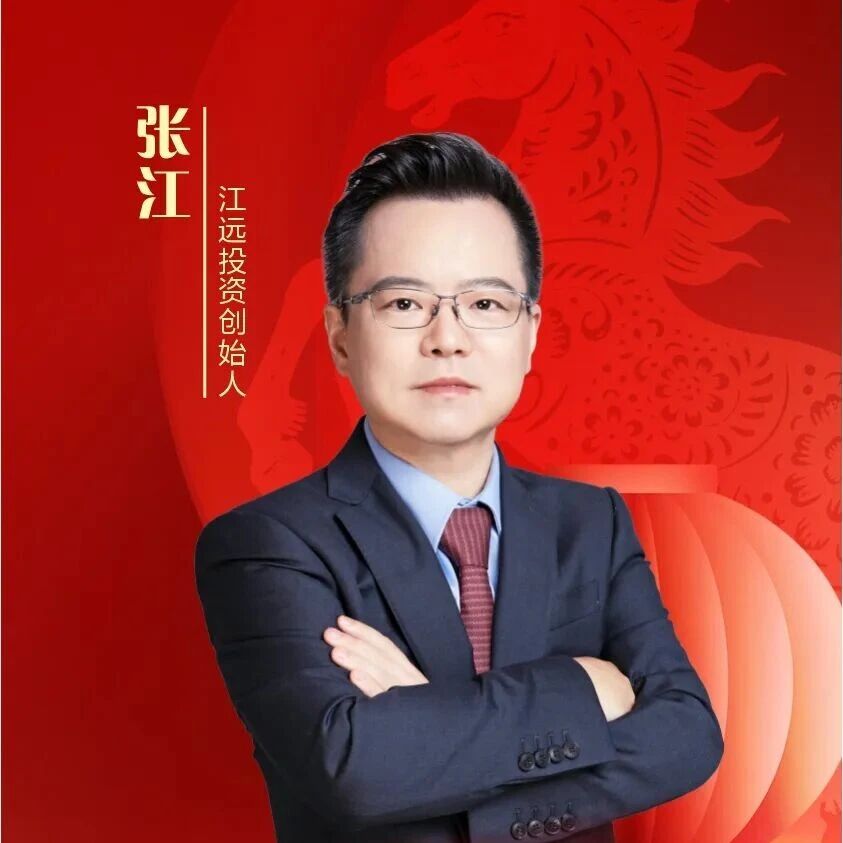
江远投资张江:在大趋势下发掘“非共识”,寻找第一或唯一丨创投贺新春
证券时报· 2026-02-20 05:38
Core Viewpoint - The article emphasizes the need for emerging VC firms to continuously identify value and create incremental growth amidst paradigm shifts in the market, particularly focusing on healthcare and technology sectors in 2025 [3]. Group 1: Investment Strategy - Jiangyuan Investment executed nearly 40 investments in 2025, with almost 60% of new projects in Series A or earlier stages, focusing on biomedicine, AI applications, and advanced manufacturing [3]. - The essence of VC is to find heterogeneity beyond the average, discovering potential in chaos and creating certainty in uncertain environments [5]. - Jiangyuan Investment prioritizes "not doing something" over "doing something," emphasizing the importance of focus and deep understanding to support entrepreneurs effectively [5]. Group 2: Global Expansion - With the approval of asset management and securities consulting licenses in Hong Kong and the establishment of a UK office, Jiangyuan's global capabilities have been enhanced, transforming China's advantages into global business opportunities [5]. - The firm aims to connect founders with strong motivation, clear vision, and rapid execution to the global innovation ecosystem, promoting differentiated value for Chinese innovation on the world stage [6]. Group 3: Entrepreneurial Support - Jiangyuan Investment seeks to resonate with outstanding entrepreneurs, aiming to be their earliest or most significant partner [4]. - The company supports entrepreneurs in refining their business models through real-world scenarios, solidifying their competitive advantages [5].

一家“手艺人”VC的水下8年丨入局
3 6 Ke· 2025-12-11 03:12
Core Insights - The article highlights the successful fundraising of over 1 billion RMB by a market-oriented RMB fund, Jing Shui Hu Venture Capital, within a year, indicating a positive trend in the RMB fund market [2][3] - The founder, Zhang Yi, emphasizes a focus on identifying alpha companies rather than following market trends, showcasing a pragmatic investment philosophy [3][11] Fundraising and Investment Strategy - Jing Shui Hu Venture Capital has raised a total of over 1 billion RMB in less than 12 months, including a recent 500 million RMB blind pool fund [2] - The fund has successfully attracted new limited partners (LPs) such as Yuan He Chen Kun and Xiamen Capital, while maintaining government-guided fund contributions below 30% [2][12] - The firm maintains a controlled fund size of around 500 million RMB per fund to optimize investment strategies and avoid the pitfalls of larger fund sizes [16][17] Investment Philosophy - Zhang Yi's investment approach is characterized by a focus on early-stage companies with strong fundamentals, as demonstrated by successful investments in companies like Wo Tai Energy and Polymaker [4][6][10] - The firm prioritizes investments in sectors such as smart energy, industrial technology, and algorithm-driven companies, primarily in regions like Beijing and the Yangtze River Delta [11][12] - The strategy includes a disciplined approach to exiting investments, with a focus on liquidity and timely returns to LPs [18][21] Market Position and Trends - The firm has adapted to market challenges, such as the IPO bottleneck, by establishing S funds to provide liquidity and enhance returns for existing LPs [20][21] - Zhang Yi's insights into market dynamics emphasize the importance of understanding cycles and focusing on micro-level project evaluations rather than macroeconomic predictions [22]

一家“手艺人”VC的水下8年丨入局
暗涌Waves· 2025-12-10 01:05
Core Viewpoint - The article highlights the successful fundraising of over 1 billion RMB by a relatively low-profile venture capital firm, Jing Shui Hu Chuang Tou, emphasizing its unique investment philosophy focused on identifying alpha companies in a changing market environment [4][5]. Group 1: Fundraising Success - Jing Shui Hu Chuang Tou has raised over 1 billion RMB in less than 12 months, including a recent 500 million RMB blind pool fund [4]. - The firm has successfully attracted new limited partners (LPs) such as Yuan He Chen Kun and Xiamen Capital, indicating a strong interest in its investment strategy [4]. - The firm maintains a government-guided fund attribute below 30%, avoiding forced return metrics typically associated with such funds [4]. Group 2: Investment Philosophy - The firm focuses on finding alpha companies rather than chasing beta opportunities, demonstrating a commitment to quality over quantity in investments [5][11]. - Jing Shui Hu Chuang Tou's investment strategy includes a cautious approach to market trends, opting to avoid overhyped sectors while seeking undervalued opportunities [11][12]. - The firm emphasizes a hands-on approach post-investment, providing support to portfolio companies, especially those nearing IPO [11][25]. Group 3: Case Studies - A notable investment was made in Wo Tai Energy, which was initially overlooked by mainstream VCs but later became a unicorn, showcasing the firm's ability to identify potential in emerging sectors [7][8]. - The firm also invested in Polymaker, a 3D printing materials developer, after observing significant industry shifts, leading to substantial returns as the company grew [10][11]. - The investment in Mu Xing Intelligent, a logistics robotics company, highlights the firm's preference for companies with strong overseas market potential, which have shown significant growth [12][13]. Group 4: Fund Management and LP Relations - The firm maintains a high re-investment rate of over 70% from existing LPs, attributed to a shared understanding of the technology investment landscape [15][20]. - Jing Shui Hu Chuang Tou controls its blind pool fund size to around 500 million RMB, which is seen as optimal for early to mid-stage alpha investments [19]. - The firm has demonstrated a unique approach by returning uninvested funds to LPs rather than forcing investments into unsuitable projects [19][20]. Group 5: Market Strategy and Adaptation - The establishment of an S fund in collaboration with Yuan He Chen Kun was a strategic response to liquidity challenges in the IPO market, aiming to enhance returns for existing LPs [22][23]. - The firm’s approach to managing liquidity and maintaining influence over portfolio companies is seen as a key factor in building trust with LPs [25][26]. - The firm emphasizes a micro-focused investment strategy, avoiding macroeconomic predictions and instead concentrating on the fundamentals of each project [26].

非共识投资消亡:VC不再判断未来,而只是管理资本
3 6 Ke· 2025-11-20 08:13
Core Insights - The most profound change in the VC industry over the past three years is the systematic disappearance of non-consensus investing, rather than fundraising difficulties or valuation corrections [1][2][4] Group 1: Industry Transformation - Major firms like a16z and Sequoia America are transitioning to RIA (Registered Investment Advisor) structures, establishing evergreen funds, and expanding cross-asset investment capabilities, indicating a shift towards scale, institutionalization, and asset management [1][3][5] - This transition allows for greater flexibility and compliance, enabling these firms to invest across various asset classes, including public markets, structured credit, and cryptocurrencies, thus evolving from traditional VC to cross-asset capital platforms [3][4][7] Group 2: Impact of Systematic Changes - The core mechanisms of non-consensus investing—information asymmetry, foresight, and long-term patience—are being diluted by institutional capital logic, leading to a crisis in the industry [4][8] - The VC industry is increasingly characterized by capital concentration, project homogeneity, and fragmented opportunities, with only 30 firms capturing 75% of VC funding in the U.S. in 2024 [9][10] Group 3: Emergence of Consensus Capital - The industry is bifurcating into two distinct capital systems: "consensus capital," which focuses on scale and efficiency, and "risk capital," which bets on unformed market directions and relies on deep technological insights [14][16] - The characteristics of consensus capital include large checks, clear trend identification, and a focus on long-term asset management, while risk capital emphasizes independent insights and high conviction in non-consensus opportunities [15][16] Group 4: Future of VC - The definition of VC is evolving, with a need to establish clearer boundaries between consensus and risk capital, as well as between RIA institutions and fund managers [16][24] - The most valuable VC firms in the future will be those that can maintain independent judgment and are willing to take on non-consensus risks, as the industry shifts from "discovering the future" to "configuring the future" [20][24]

智能制造内卷破局:一份投资人密藏的“机会清单”
创业邦· 2025-10-15 11:00
Core Insights - The article emphasizes the importance of identifying undervalued opportunities in the hard technology sector amidst a consensus-driven investment landscape [2][5] - It highlights the shift in focus from popular sectors like humanoid robots and commercial aerospace to deeper, less recognized areas such as industrial automation and energy supply-side innovations [2][5] Group 1: Investment Opportunities - Investment institutions are looking at opportunities arising from de-globalization, particularly in industrial automation and energy supply-side technology restructuring [2][5] - There is a significant potential for Chinese smart manufacturing to expand internationally, filling gaps left by Western suppliers [2][9] - The article discusses the disruptive potential of satellite internet and next-generation computing architectures [2][10] Group 2: Insights from Industry Experts - Experts at the DEMO CHINA event shared insights on avoiding overheated sectors and focusing on undervalued opportunities in manufacturing [4][8] - They noted the challenges faced by companies going overseas, including longer cash flow cycles, which can range from 6 months to 2 years [8][9] - The discussion included the importance of aligning investment strategies with industry trends and technological advancements [5][11] Group 3: Non-Consensus Investment Strategies - The article stresses the value of identifying non-consensus investment opportunities that can lead to significant returns [5][10] - Examples include investments in quantum computing and GPU companies, which were initially seen as non-consensus but have since gained traction [10][11] - The importance of understanding unique insights and market dynamics to make informed investment decisions is highlighted [11][12]

吴世春:为什么我一直不投预制菜?
创业家· 2025-09-16 10:28
Core Viewpoint - The article emphasizes the importance of investing in unique, non-consensus sectors rather than crowded, low-barrier industries, which are seen as wasteful of social wealth [4][7]. Investment Strategy - The company avoids investing in popular sectors like prepared food, shared bicycles, and community group buying due to their low entry barriers and high competition [3][4]. - The focus is on sectors with scarcity and uniqueness, requiring independent judgment from investors [7][8]. Case Study: Canban - The success of Canban, which achieved over 2 billion in sales within a year, is highlighted as a non-consensus investment decision [13][15]. - The founder of Canban, who lacked formal educational credentials, exemplifies the type of ambitious and resourceful entrepreneurs the company seeks to support [15][16][19]. Future Investment Plans - The company plans to invest no less than 1.5 billion in the upcoming months, indicating a strong financial position [24][25]. - An upcoming event in Sichuan aims to explore innovative growth engines and connect with entrepreneurs [26][30]. Entrepreneurial Characteristics - The article discusses the traits of successful entrepreneurs, emphasizing that educational background is not a determining factor for success [19][20]. - The narrative includes examples of other successful entrepreneurs with similar backgrounds, reinforcing the idea that ambition and resilience are key [17][18].

当王宁、王兴兴、张俊杰的投资人坐在一起
暗涌Waves· 2025-07-01 11:35
Core Insights - The article discusses the importance of understanding people in the investment industry, particularly focusing on the characteristics of successful entrepreneurs and the investors who back them [2][3] - It highlights the emergence of a new generation of entrepreneurs, particularly in the AI and technology sectors, and how they are being recognized and supported by investors [3][4] Group 1: Insights on Founders - The conversation features three investors discussing their experiences with notable founders: He Yu with Wang Ning of Pop Mart, Cao Xi with Wang Xingxing of Yushu Technology, and Hu Boyu with Zhang Junjie of Bawang Tea [5][6] - He Yu describes Wang Ning as a blend of artistic sensibility and strong business acumen, emphasizing his meticulous attention to cost management [6][7] - Cao Xi characterizes Wang Xingxing as pure and focused, noting his practical approach to business decisions, such as pursuing humanoid robots due to demand [9][10] - Hu Boyu describes Zhang Junjie as undergoing transformative growth, highlighting his unique background and rapid development in the business [10][11] Group 2: Investment Decision-Making - Investors emphasize the importance of understanding the underlying qualities of founders, such as strategic thinking and self-awareness, rather than superficial traits [13][14] - The challenge lies in recognizing new knowledge and business models that may initially seem unfamiliar, as seen with Pop Mart's innovative approach [14][15] - Investors also discuss the difficulty of conveying their insights about founders to their investment committees, given the complexity of the information received during meetings [14][15] Group 3: Personal Reflections - The investors share their perspectives on each other, highlighting traits such as curiosity, empathy, and a focus on simplicity in decision-making [23][30] - They reflect on how their experiences in the investment industry have shaped their understanding of human nature and the importance of respecting it in business [37][38] - The article concludes with thoughts on the ongoing evolution of personal insights and the significance of human connections in both entrepreneurship and investment [39][42]